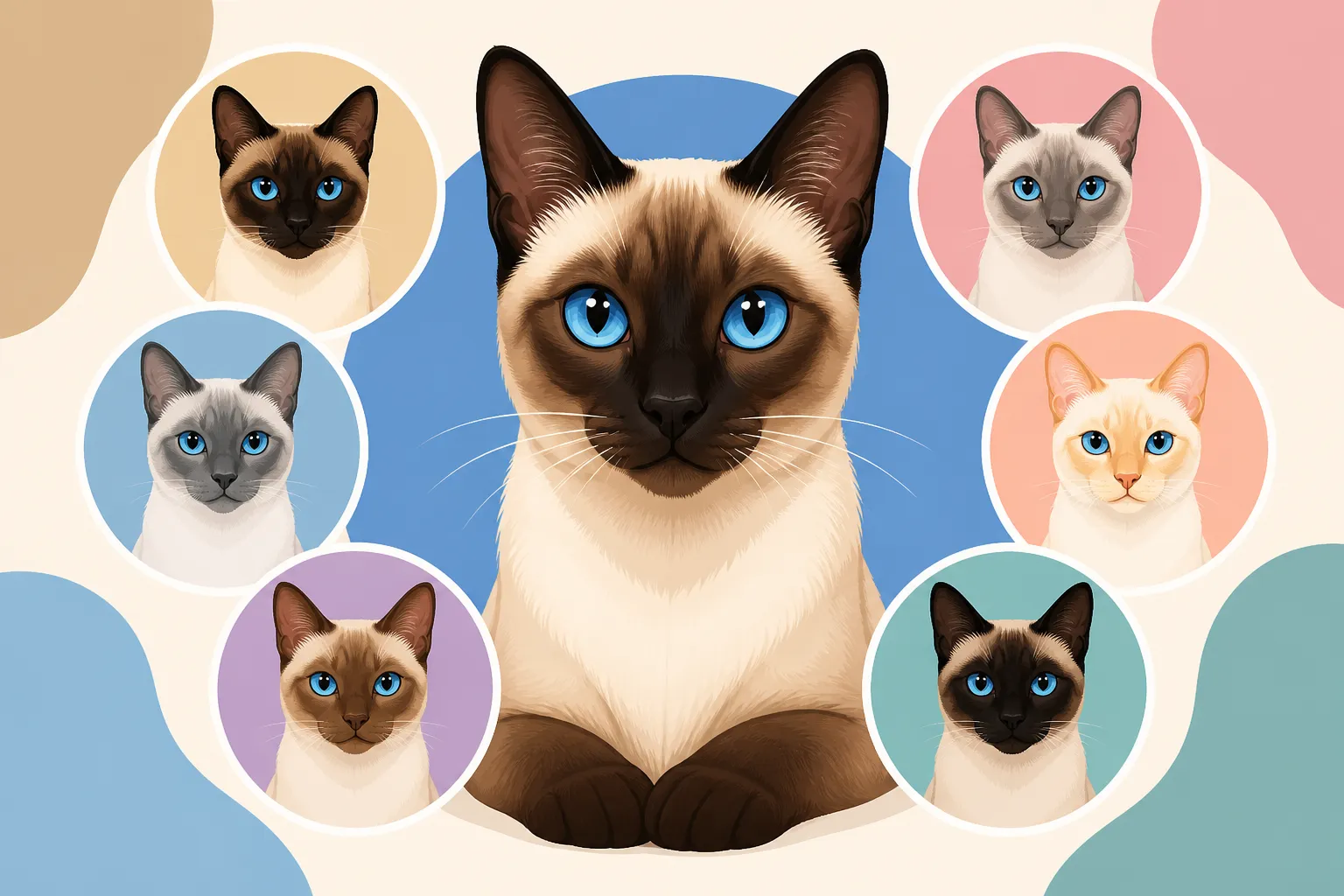
Which Colors a Siamese Cat Comes In
Many prospective Siamese cat parents often have a picture in their mind of a sleek, cream-bodied cat with dark brown points, and they’d be right, that's the iconic Seal Point. But it’s a common misconception that this incredible breed only comes in one hue! In reality, the Siamese cat boasts a stunning array of color variations, all stemming from that unique temperature-sensitive gene, and understanding them will help you appreciate the full spectrum of their beauty and history.
The Foundation Four: Classic Siamese Point Colors
When you delve into the world of Siamese cats, you'll quickly learn about the "Traditional Four" or "Foundation Four" point colors. These are the classic shades recognized universally and are often what people picture when they think of a Siamese. Each has its own distinct charm and history, but all share that mesmerizing blue eye color and the signature pointed pattern.
Seal Point: The Iconic Classic
Ah, the Seal Point! This is the granddaddy of all Siamese colors, the one that first captivated Western audiences and truly put the breed on the map. When you see old photographs or illustrations of early Siamese cats, they are almost always Seal Points. Their charm lies in the striking contrast between their rich, dark brown – almost black – points (ears, mask, paws, tail) and their warm, creamy fawn-to-light tan body. It’s a bold statement, and there’s no mistaking a Seal Point.
The intensity of their points really stands out, often deepening further as the cat ages. Imagine a beautiful old Seal Point, curled up on a soft blanket, the points on its face and paws a deep, luxurious chocolate. Their nose leather and paw pads are typically a matching dark brown. This strong contrast is what many breeders strive for, a clear definition between body and points. It's truly a testament to the breed's elegant design.
Blue Point: The Softer Silhouette
If the Seal Point is a bold declaration, the Blue Point is a sophisticated whisper. This color variant emerged early in the breed's development and quickly gained a devoted following for its delicate, cooler tones. Blue Points feature deep, slate grey-blue points that are strikingly beautiful against their cool, icy white or bluish-white bodies. There’s a softness to their appearance that’s utterly captivating, reminiscent of a misty morning.
The contrast with the body isn't as stark as with a Seal Point, but it's still very clear and refined. Their nose leather and paw pads will also be a coordinating slate blue, often with a hint of pinkish undertone if you look closely. A Blue Point lounging on a pale sofa almost blends in, only to reveal its stunning points when it stretches out. This ethereal quality is what makes the Blue Point a perennial favorite, embodying elegance in every shade.
Chocolate Point: The Sweet & Warm Alternative
For those who adore warm, inviting tones, the Chocolate Point is an absolute delight. This color came about through careful breeding, often initially mistaken for a poor-quality Seal Point until its true beauty was recognized and celebrated. Chocolate Points boast lovely, warm milk-chocolate brown points that are lighter and more reddish-brown than a Seal Point's. Their body color is a beautiful ivory or creamy white, creating a gentle yet distinct contrast.
Think of a freshly made hot chocolate – that's the color you're aiming for in the points! Their nose leather and paw pads are a warm, cinnamon-pinkish brown. There’s an undeniable sweetness to their appearance, and they often have a slightly softer, more playful look than their darker-pointed cousins. If you're looking for a Siamese with all the classic traits but a touch more warmth, a Chocolate Point might just steal your heart. They're like a cozy hug in cat form, often found snoozing in sunbeams, their points glowing with rich, earthy tones.
Lilac Point: The Delicate Dove
The Lilac Point is often considered the most refined and delicate of the traditional Siamese colors, and certainly one of the most unique. It represents a further dilution of the blue gene, resulting in points that are a frosty, pinkish-grey or dove-grey, appearing almost lavender in certain lights. Their body color is a stunning glacial white, with virtually no shading. It's an incredibly elegant and ethereal look, making them truly stand out.
Their nose leather and paw pads are a delicate lavender-pink, completing the soft, pastel palette. Imagine a fresh spring bloom, or the subtle color of a morning sky just as the sun rises – that's the kind of delicate beauty a Lilac Point embodies. They possess an understated elegance that makes them incredibly sought after. It's a testament to the breed's genetic diversity that such a gentle, almost shimmering color can emerge. Caring for such a pale coat means being mindful of anything that might stain, but their self-grooming habits usually keep them pristine.
Beyond the Basics: Expanding the Siamese Color Palette
While the "Foundation Four" are the bedrock of Siamese coloration, the breed's genetic potential, combined with selective breeding, has introduced a wonderful array of additional point colors. These variations, sometimes classified differently depending on the cat registry, offer even more choices for those enchanted by the Siamese personality.
Lynx Point: The Tabby Twist
The Lynx Point Siamese, also known as a Tabby Point, is a truly captivating variation that combines the classic Siamese point pattern with distinct tabby markings. Instead of solid colored points, a Lynx Point will display clear tabby stripes on its mask, ears, legs, and tail. Imagine delicate "M" markings on their forehead and distinct rings around their tail – it’s a beautiful fusion of two beloved patterns. Their body color can range from a paler, creamy white to a more shaded, warmer tone, depending on the base point color (e.g., Seal Lynx, Blue Lynx, Chocolate Lynx, Lilac Lynx).
These cats often have eye-catching white "eyeliner" that really makes their blue eyes pop, and their paw pads can be a mix of solid color and rosy pink, sometimes mottled. They're often recognized by most major cat registries, though some, like the CFA, classify them under "Colorpoint Shorthairs" rather than pure Siamese. Regardless of classification, their striking appearance and the continuation of the quintessential Siamese personality make them incredibly popular. They bring a little wild charm to the elegant Siamese form. Whether a Lynx Point Is a Siamese Cat or a Colorpoint Shorthair dives deeper into these distinctions.
Red Point and Cream Point: Fiery & Faded Hues
The Red Point Siamese, sometimes called Flame Point, introduces a vibrant warmth to the breed's palette. These cats have points that range from a deep, rich reddish-orange to a lighter apricot, reminiscent of a sunset. Their bodies are typically a creamy white, often with subtle peachy shading. This is a truly stunning color that stands out from the cooler, more muted traditional points. Their nose leather and paw pads are usually pink.
Following the logic of color dilution, the Cream Point is a softer, diluted version of the Red Point. Their points are a much paler, softer cream or buff color, almost like a faded peach, against an off-white body. They have a very delicate and gentle appearance. Both Red and Cream Points derive from the red gene, which also influences other cat breeds. Due to their genetic origin, most Red and Cream Point Siamese are male. The intensity of the red pigment can vary greatly from cat to cat, even within the same litter. These are undeniably beautiful variations, adding a splash of vibrant warmth to the Siamese family.
Tortie Point: The Patchwork Perfection
The Tortie Point Siamese is a truly unique and beautiful variant, characterized by a mosaic of two or more colors within their points. "Tortie" stands for tortoiseshell, referring to the patched appearance of red or cream intermingled with one of the traditional point colors (seal, blue, chocolate, or lilac). So, you might see a Seal Tortie Point with patches of dark brown and red on her ears, mask, and tail, or a Blue Tortie Point with slate grey and cream patches.
Due to the genetics of coat color, Tortie Point Siamese cats are almost exclusively female. The male equivalent (if it exists, which is rare and often associated with genetic anomalies) would be a different genetic pathway entirely. Each Tortie Point is a unique work of art, with no two patterns ever exactly alike. Their bodies are typically lighter, displaying the underlying point color. Their nose leather and paw pads can also show this charming patchwork, combining both the point color and pink. They're a favorite among those who appreciate individuality and a touch of artistic flair in their feline companions.
The Science Behind the Shades: The Temperature-Sensitive Gene
The amazing array of Siamese colors, from the classic Seal to the delicate Lilac and the vibrant Red, all boils down to fascinating genetics and a truly unique biological quirk. It’s not just magic that makes their points dark and their bodies light; it's pure science at play.
The Tyrosinase Enzyme and Melanin Production
At the heart of Siamese coloration is a specific genetic mutation that affects the tyrosinase enzyme. This enzyme is crucial for the production of melanin, the pigment responsible for hair, skin, and eye color. In most cats, this enzyme works efficiently regardless of temperature, leading to a uniform coat color. However, in Siamese cats, this mutated tyrosinase enzyme is temperature-sensitive.
This means the enzyme only functions effectively at cooler body temperatures. In areas where the cat's body is naturally cooler – the extremities like the ears, face, paws, and tail – the enzyme can produce melanin, resulting in dark points. Conversely, on the warmer core of the cat's body, the enzyme is inactive, and no melanin is produced, leaving the fur a pale, unpigmented white or cream. This is Which Gene Makes a Siamese Cat's Points so unique and why they look the way they do!
Why a Siamese Kitten is Born White
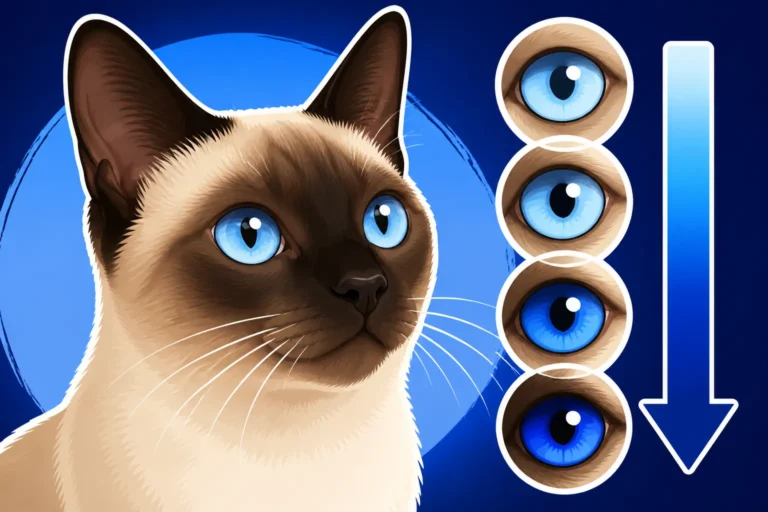
One of the most charming facts about Siamese cats is that all kittens are born pure white or a very pale cream. This often surprises new owners who expect to see tiny versions of their pointed parents. But if you understand the temperature-sensitive gene, it makes perfect sense. Inside the mother's womb, the environment is uniformly warm.
This warmth prevents the tyrosinase enzyme from working, meaning no melanin is produced, and the kittens are born without any visible color on their fur. It's only after they are born and exposed to the cooler ambient air that their points begin to develop. Over the first few weeks and months, as their extremities cool, the pigment starts to appear, gradually revealing their true point color. It’s like watching a masterpiece slowly reveal itself. Why a Siamese Cat Kitten Is Born White is a truly beautiful part of their development.
Environmental and Age Influence on Point Darkness
The fascinating thing about this temperature-sensitive gene is that it means a Siamese cat's coloration can actually change throughout its life and even with its environment. If a Siamese cat lives in a consistently cool climate or a cooler house, their points might deepen and spread more, and their body color might even take on a bit more shading. Conversely, a Siamese living in a very warm climate or a house kept quite warm might have paler, less defined points.
Aging also plays a role. As a Siamese cat gets older, their metabolism can slow down, and their body temperature might fluctuate, often leading to their body color darkening or "toasting" over time, especially along their spine. It's a natural process, and it means your Siamese will continue to evolve in appearance throughout their The Fifteen to Twenty Years a Siamese Cat Gets. It's why A Siamese Cat's Points Are Made by Temperature and How Much a Siamese Cat Darkens in a Cold House. Even a shaved patch for surgery will grow back darker because the skin is cooler during hair regrowth!
What's Not a Siamese Color (and Why)
With all these beautiful point colors, it's easy to wonder if Siamese cats come in every color. However, the strict genetic definition of a Siamese cat, particularly as recognized by major cat registries, means there are many coat patterns and colors that simply aren't part of the purebred Siamese spectrum. Understanding these distinctions helps appreciate the unique genetic heritage of the breed.
Solid Colors and Other Patterns
A true, purebred Siamese cat will always display the pointed pattern. This means their body will be a lighter color, with darker coloration restricted to their extremities. Therefore, you will never find a solid black Siamese, a solid white (unless it's an albino, which is different from a pointed cat), a solid brown, or a completely grey cat that is a purebred Siamese. If a cat has a solid coat color, it is either a different breed entirely, or a Siamese mix.
Similarly, other common feline coat patterns like full tabbies (where stripes cover the entire body, not just the points), calico, or tortie patterns that encompass the whole body are not found in purebred Siamese cats. The unique gene responsible for the pointed pattern fundamentally dictates the color distribution, making these other patterns genetically impossible for a true Siamese. Sometimes people might mistake a "colorpoint" version of another breed for a solid Siamese, but that's a different genetic story.
The Colorpoint Shorthair Distinction
This is where things can get a little confusing, especially for new enthusiasts. Historically, some cat registries, most notably the Cat Fanciers' Association (CFA), made a distinction between the "classic" four point colors (Seal, Blue, Chocolate, Lilac) and other point colors like Red Point, Cream Point, and Lynx Point. These "non-traditional" point colors, while undeniably having Siamese ancestry and all the quintessential Siamese traits (body type, blue eyes, personality), were sometimes classified as a separate breed called the Colorpoint Shorthair.
The rationale behind this was often to maintain the historical purity of the original Siamese lines for show purposes, while still recognizing these beautiful color variations. Other registries, like The International Cat Association (TICA) and the Governing Council of the Cat Fancy (GCCF) in the UK, simply consider all these point colors as variations within the Siamese breed itself, a much more inclusive approach. So, while a Lynx Point might be called a "Colorpoint Shorthair" in a CFA show ring, it's often simply a "Siamese" in a TICA show. This distinction is mostly about registration and show rules, not about the cat's actual genetic heritage or personality. What a Colorpoint Shorthair Is Next to a Siamese Cat goes into more detail on this topic.
The Role of Cat Registries in Defining Color Standards
Cat registries play a crucial role in establishing and maintaining breed standards, including specific acceptable colors. These standards help guide breeders and judges, ensuring that the characteristics defining a breed, like the Siamese, are preserved. However, as we've touched upon, not all registries agree on every detail, leading to some interesting nuances in how Siamese colors are recognized.
CFA, TICA, and GCCF: Different Strokes for Different Folks
Major cat registries around the world, such as the Cat Fanciers' Association (CFA) in North America, The International Cat Association (TICA), and the Governing Council of the Cat Fancy (GCCF) in the United Kingdom, each have their own standards for the Siamese breed. While they largely agree on the core characteristics, there are differences, particularly when it comes to color.
- CFA: Traditionally the most conservative, the CFA recognizes only the four original point colors (Seal, Blue, Chocolate, Lilac) as "Siamese." Any other point color, such as Red Point, Cream Point, or Lynx Point, is classified under the separate but related "Colorpoint Shorthair" breed. This is a historical distinction aimed at preserving the original bloodlines, but it means a cat that looks and acts every bit a Siamese might be called something else depending on its color.
- TICA: TICA takes a broader view. They recognize a wider range of point colors as belonging to the Siamese breed, including Seal Point, Blue Point, Chocolate Point, Lilac Point, Red Point, Cream Point, and various Lynx Points and Tortie Points. Their philosophy is often to be more inclusive of new color developments within a breed that clearly shares the core genetic and physical traits.
- GCCF: The GCCF in the UK also recognizes a comprehensive list of colors within the Siamese breed, including the four classic colors, and various "self" (solid point) colors like Red and Cream, as well as patterned points like Tortie and Tabby (Lynx). They tend to categorize these variations more directly under the Siamese breed.
These differences can be a source of confusion for new owners or those looking to show their cats. It’s always important to check the specific registry's standards if you have a particular color or showing aspiration in mind. However, for a pet owner, these distinctions are largely administrative; the cat's personality and health remain paramount. Which Siamese Cat Colors the Registries Accept provides a helpful overview.
The Evolution of Standards and New Colors
Breed standards are not set in stone; they can evolve over time as new colors emerge through selective breeding and become established. What might have been considered "non-standard" a few decades ago could today be a fully recognized color. This evolution reflects both the dedication of breeders to expand the beauty of the breed and the acceptance of these variations by the wider cat fancy community.
For example, the Chocolate and Lilac points themselves were once considered "diluted" or "poor quality" Seal or Blue points before their unique genetic basis and stunning appearance were fully appreciated and accepted into the standard. The introduction of Red and Cream points involved careful cross-breeding with other breeds carrying the red gene, and then back-crossing to re-establish the Siamese type and personality, before eventually gaining widespread acceptance. It's a testament to the dynamic nature of cat breeding and the continuous quest for beauty and diversity within the Siamese lineage.
Caring for a Siamese and Their Ever-Changing Coat
Beyond just appreciating their beauty, understanding a Siamese cat's unique coloration and coat properties can inform how you care for them, from grooming to keeping them comfortable. Their short, sleek coats are relatively low-maintenance, but there are a few considerations.
Grooming for Coat Health and Shine
One of the lovely things about Siamese cats is their incredibly short, fine coat. It lies close to their body and has a luxurious, almost silky feel. This means they are relatively low-shedding compared to many other breeds, making them a popular choice for those who want a sleek companion. While they are meticulous self-groomers, a little help from you can keep their coats in top condition, highlighting their beautiful colors.
A weekly brush with a soft rubber curry brush or a grooming glove is usually plenty to remove loose hairs and stimulate the skin, encouraging that healthy sheen. Most Siamese cats adore the attention and the gentle massage. It’s a great bonding experience and helps distribute natural oils, keeping their coats vibrant and free of mats, which are rarely an issue for this breed. Plus, it minimizes the stray hairs you find on your furniture! You don't need fancy tools or extensive sessions; Grooming a Siamese Cat Takes Five Minutes a Week is generally true for most of these beauties.
Temperature and Comfort: Keeping Their Colors True
Given their temperature-sensitive gene, a Siamese cat's comfort level can subtly influence their coat color over time. While you shouldn't try to manipulate their environment solely to keep their points lighter or darker, understanding this characteristic can help you provide a comfortable home. Siamese cats, with their short coats and lack of an insulating undercoat, tend to feel the cold more than some longer-haired or thicker-coated breeds.
You'll often find them seeking out warm spots – basking in sunbeams, snuggling under blankets, or perching on radiators. Providing cozy beds, perhaps even a heated cat bed from brands like Chewy, can be greatly appreciated, especially in cooler months or for older cats. Ensuring your home is kept at a comfortable ambient temperature will not only keep your Siamese happy and healthy but also help maintain their natural coat coloration without extreme darkening or fading that might occur from prolonged exposure to very cold or very hot conditions. Keeping a Siamese Cat Warm is genuinely important for their well-being and appearance.
The Link to Overall Health
While a Siamese cat's changing colors are mostly a charming genetic quirk, sometimes drastic changes can hint at underlying health issues. A Siamese whose points suddenly become very pale or dull might be experiencing certain health problems that affect metabolism or body temperature. Similarly, if a shaved patch (say, from surgery or a blood draw) grows back too dark and stays that way, it could be a sign of a localized issue, although usually, it's just the natural temperature effect.
Conversely, a very thin or unwell Siamese might not maintain its vibrant coat as effectively. Paying attention to the overall luster and texture of How a Siamese Cat's Coat Feels Like can be a subtle indicator of their general well-being. A healthy Siamese will have a sleek, shiny, and tight coat, regardless of their specific point color. Always consult your vet if you notice any unusual or concerning changes in your cat's coat or overall health.
Understanding the Variety of Siamese Cat Colors
| Point Color | Point Description | Body Color | Nose Leather / Paw Pads |
|---|---|---|---|
| Seal Point | Deep, rich seal brown (almost black) | Warm cream to fawn-tan | Dark brown/black |
| Blue Point | Deep slate grey-blue | Icy white to bluish-white | Slate blue |
| Chocolate Point | Warm milk-chocolate brown | Ivory to creamy white | Cinnamon-pinkish brown |
| Lilac Point | Frosty pinkish-grey (dove grey/lavender) | Glacial white | Lavender-pink |
| Red Point | Rich reddish-orange to apricot | Creamy white, often peachy | Pink |
| Cream Point | Pale, soft cream or buff | Off-white | Pink |
| Lynx Point | Tabby stripes on points (e.g., Seal Lynx, Blue Lynx) | Varies by base point color | Can be mixed (point color & pink), often mottled |
| Tortie Point | Patches of red/cream over base point color (e.g., Seal Tortie, Blue Tortie) | Varies by base point color | Can be mixed (point color & pink), often mottled |
This table provides a quick reference to the beautiful spectrum of Siamese cat colors, helping you to differentiate between them and appreciate the subtle nuances that make each one special. No matter which color your Siamese cat sports, you can be sure you're getting a cat with immense personality and charm!
Disclaimer
This article is for general informational purposes only and does not constitute professional advice. Laws, prices and regulations vary by location and change over time. Consult a qualified professional for guidance on your specific situation.