How Big a Siamese Cat Gets
It’s a common sight for Siamese cat owners: you look at your sleek, elegant companion and then compare them to a fluffy tabby next door, and a little worry creeps in. Are they too thin? Are they growing properly? Siamese cats have a distinctive build, and understanding what's normal for them can save you a lot of unnecessary concern. This guide will walk you through everything you need to know about the typical size and growth patterns of our beloved Meezers, helping you recognize what’s healthy and when it might be time to check in with your vet.
Understanding the Typical Siamese Cat Build
Siamese cats are often described as having a "slinky" or "athletic" build, and for good reason. They are not built like your average domestic shorthair or a fluffy Persian. Their physique is one of their defining characteristics, known for its long, lean lines and graceful appearance. This can be a point of confusion, and sometimes even concern, for new owners who might expect a more robust or 'chunky' cat.
The Sleek, Athletic Frame of a Siamese
When you picture a Siamese, think of a feline athlete. They have a long, tubular body, slender legs, and a whip-like tail that tapers to a fine point. Their heads are typically wedge-shaped, with large ears that are set wide apart and contribute to their overall angular, refined look. This isn't just about aesthetics; this build supports their active, agile nature. They are jumpers, climbers, and often surprisingly powerful despite their delicate appearance. Many owners comment on how solid yet lithe their Siamese feel when picked up, a testament to their muscularity beneath that short, fine coat. It's a structure built for movement, not for carrying extra bulk.
Why They Appear So Slender
The perception of slenderness in a Siamese cat is a combination of factors. Firstly, their short, close-lying coat doesn't add any visual volume, unlike the dense fur of many other breeds. There's no fluff to hide their lean musculature or their narrow waist. Secondly, their bone structure itself is fine-boned, but strong. They don't have the heavy, stocky frame you might see in a Maine Coon or a British Shorthair. This combination means that what might look "skinny" on another cat is perfectly normal and healthy for a Siamese. Owners sometimes feel self-conscious when friends or family comment on their cat's perceived thinness, but it's important to remember that this is their breed standard, a hallmark of their elegance. You might find yourself reassuring people that, no, your Siamese isn't starving, they're just built like a supermodel!
Comparing Modern and Traditional Siamese Builds
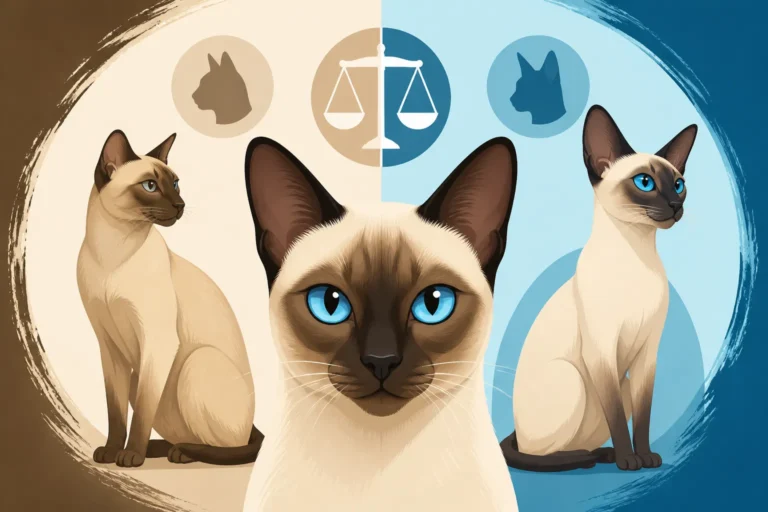
It's worth noting that there's been an evolution in the Siamese cat's appearance over the decades, particularly in show lines. Traditionally, Siamese cats (often referred to as "applehead" or "old-style" Siamese) had a slightly more rounded head and a more robust, though still athletic, body. Think of the Siamese cats in old movies or photographs; they had a substantial, yet still elegant, presence. Over time, selective breeding in certain show circuits led to the development of the "modern" or "wedge-head" Siamese, characterized by an extremely elongated, angular head, larger ears, and an even more slender, almost ethereal body. This distinction can sometimes lead to confusion regarding expected size. While both types are undeniably Siamese, a modern wedge-head will generally appear and be more delicately built than an applehead or traditional Siamese. If you have an applehead, it's perfectly normal for them to carry a bit more muscle and appear a touch less "fragile" than their wedge-headed cousins. Understanding these nuances helps temper expectations about size. What an Applehead Siamese Cat Looks Like and What a Modern Wedge Siamese Cat Looks Like dive deeper into these fascinating differences.
Average Size and Weight Ranges
Getting down to the nitty-gritty, let's talk numbers. While individual cats will always vary, there are general ranges for what you can expect in terms of size and weight for a healthy adult Siamese cat. These figures provide a good benchmark, but remember, every cat is unique, and factors like genetics and diet play a significant role.
How Much a Male Siamese Cat Typically Weighs
Male Siamese cats are generally larger and more muscular than females. When fully grown, a healthy male Siamese typically weighs in the range of 8 to 12 pounds (approximately 3.6 to 5.4 kg). Don't be surprised if your boy feels incredibly solid for his weight; it's that dense muscle mass we talked about earlier. They often have a slightly broader chest and a more powerful overall build compared to their female counterparts. Their length, from nose to the tip of their tail, can be quite impressive, sometimes reaching up to 20-25 inches. Many owners are surprised by how long their male Siamese is when stretched out! It's important to check How Much a Male Siamese Cat Weighs for a more detailed look at what's considered healthy.
How Much a Female Siamese Cat Typically Weighs
Female Siamese cats are, on average, a bit smaller and more delicate than males. A healthy adult female Siamese usually weighs between 6 to 10 pounds (approximately 2.7 to 4.5 kg). They share the same long, lithe body type but with a slightly finer bone structure. While they might be lighter, they are no less athletic or energetic. Like males, their length can be considerable, typically ranging from 18 to 22 inches. It's not uncommon for a female Siamese to feel almost weightless in your arms compared to a heftier breed, but this lightness is characteristic of their breed. Again, if you're ever concerned about your queen's weight, How Much a Female Siamese Cat Weighs offers more specific guidance.
Measuring Your Siamese Cat's Length and Height
If you're curious to measure your Siamese (and if they'll cooperate!), you can get a good idea of their dimensions. For length, wait until your cat is relaxed and stretched out – perhaps while napping – and measure from the tip of their nose to the base of their tail, and then add the length of their tail. For height, measure from the floor to the top of their shoulder (their "withers") while they are standing. A typical adult Siamese will stand about 8 to 11 inches tall at the shoulder.
Here’s a general idea of typical ranges:
| Measurement | Male Siamese Cat (Adult) | Female Siamese Cat (Adult) |
|---|---|---|
| Weight | 8 – 12 lbs (3.6 – 5.4 kg) | 6 – 10 lbs (2.7 – 4.5 kg) |
| Length (nose to tail tip) | 20 – 25 inches (51 – 64 cm) | 18 – 22 inches (46 – 56 cm) |
| Height (shoulder) | 9 – 11 inches (23 – 28 cm) | 8 – 10 inches (20 – 25 cm) |
Keep in mind these are averages, and a slightly smaller or larger cat can still be perfectly healthy. The key is their overall body condition and energy levels, which we'll discuss next.
Factors Influencing a Siamese Cat's Size
It’s easy to look at a Siamese and assume their size is simply predetermined, but just like us, a variety of factors play into how big a Siamese cat ultimately gets. It's a fascinating interplay of their genetic blueprint, what's put into their food bowl, and even the environment they grow up in.
The Role of Genetics and Lineage
Genetics are arguably the biggest factor in determining a Siamese cat's potential size. Just like humans inherit traits from their parents, a Siamese kitten's adult size is heavily influenced by the size of its dam and sire. If a kitten comes from a line of smaller, more delicate Siamese, it's likely to mature into a similar build. Conversely, if the parents are on the larger side of the breed standard, their offspring might also lean that way. This is why a reputable breeder will often be able to give you an idea of a kitten's likely adult size based on their knowledge of the parents and previous litters. Certain breeding lines might also favor the more extreme 'wedge' type, which tends to be more slender, while lines that prioritize the 'applehead' or traditional look might produce slightly more robust individuals. Whether an Applehead Siamese Cat Is Healthier touches on these ancestral considerations.
Impact of Diet and Exercise
While genetics set the potential, diet and exercise are the sculptors of a cat's physique. A Siamese cat's high metabolism means they burn through calories pretty efficiently, but that doesn't mean they can't become overweight or underweight if their nutrition and activity levels are off.
- Nutrition: Growing kittens need a high-quality diet rich in protein and essential nutrients to support healthy bone and muscle development. If a kitten is underfed or fed a poor-quality diet during its crucial growth phases, it might not reach its full genetic potential in terms of size. However, overfeeding can lead to obesity, which is unhealthy for any cat, Siamese included, even if they appear lean. An adult Siamese needs a balanced diet tailored to their energy needs. Many owners find a high-protein wet food or a quality dry kibble (or a combination) works well. Brands like Chewy offer a wide selection of premium cat foods, making it easier to find something that suits your Siamese's specific needs. Getting the right food is crucial for maintaining their healthy, athletic build. Which Food Suits a Siamese Cat provides excellent details on making the best choices.
- Exercise: Siamese cats are bundles of energy! They thrive on play and activity. Regular exercise, whether it's chasing a laser pointer, batting at wand toys, or climbing a cat tree, helps build and maintain lean muscle mass. A sedentary Siamese, even if fed appropriately, might lose some of that distinctive athletic tone. Sufficient exercise ensures their muscles are developed, contributing to their overall healthy and lean appearance, rather than becoming frail.
Age and Hormonal Influences on Growth
A Siamese cat's growth isn't a straight line. They grow rapidly in kittenhood, with much of their bone and muscle development happening within the first year.
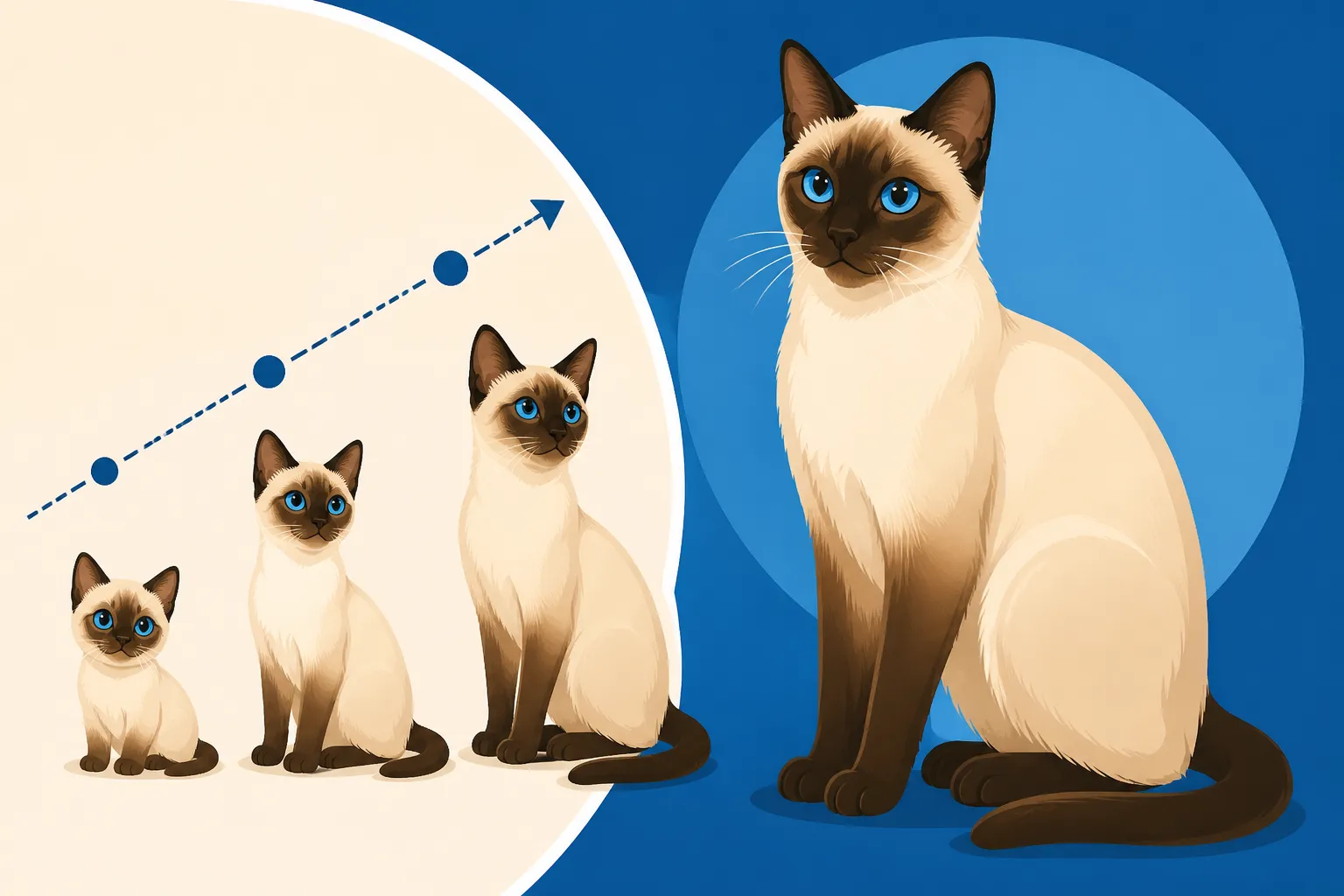
- Kittenhood: From birth, Siamese kittens are tiny, growing quickly. By around 6-8 months, they've often reached much of their adult height and length, though they may still fill out a bit. How old a Siamese Cat kitten is when points show also gives some perspective on their early development.
- Maturity: Most Siamese cats reach their full physical size by 12 to 18 months of age. While they might continue to develop a bit more muscle or mature in appearance slightly beyond that, significant growth spurts are generally over by this point. This is why When a Siamese Cat Reaches Full Size is a helpful read for new owners.
- Hormones: Neutering or spaying can also have a subtle impact. While it doesn't dramatically change their potential size, altered cats sometimes have a slightly different metabolism. It's often easier for them to gain weight if their caloric intake isn't adjusted, as their energy needs might decrease. This emphasizes the importance of monitoring their food and activity throughout their lives.
When a Siamese Cat Reaches Full Maturity
It's natural to watch your tiny Siamese kitten grow and wonder when they'll finally hit their full adult size. The good news is that Siamese cats, like most felines, have a fairly predictable growth trajectory, even if they continue to mature in subtle ways for a bit longer.
Growth Milestones from Kittenhood to Adulthood
From the moment they're born, Siamese kittens are a flurry of growth. They're typically born very small and pure white or cream, and their points start to develop as they get older and their body temperature varies.
- Birth to 3 Months: This is a period of incredibly rapid growth. Kittens gain weight quickly, their bones are lengthening, and their coordination improves daily. They'll transition from nursing to solid food, and their playful energy will skyrocket. It's vital they receive excellent nutrition during this time to support their developing systems. What a Siamese Cat Kitten Should Eat is a great resource for this crucial stage.
- 3 to 6 Months: Growth remains strong, but you might notice the pace slowing slightly compared to the earliest weeks. They'll start to look more like miniature adult Siamese cats, gaining height and length. Their personality truly begins to shine, and their energy levels are usually at an all-time high!
- 6 to 12 Months: By six months, many Siamese have reached a significant portion of their adult height and length, though they might still be a bit "leggy" or gangly. The next few months involve filling out, adding muscle, and consolidating their physique. You'll notice their bodies becoming more proportionate.
- 12 to 18 Months: While many Siamese appear fully grown by their first birthday, most will continue to mature and develop lean muscle mass up to about 18 months. They might gain a pound or two, not in fat, but in solid muscle, and their facial features can become more defined. This period marks the true end of their physical growth phase.
The Timeline for Reaching Full Physical Size
Generally, you can consider your Siamese cat fully grown, in terms of their physical dimensions, by the time they are 12 to 18 months old. This doesn't mean their personality or intelligence stops developing, of course, but their skeletal and muscular growth largely plateaus.
After 18 months, any significant weight changes should be monitored carefully. If they start gaining a lot of weight, it's usually due to too many calories or too little exercise, not continued growth. Conversely, unexpected weight loss after this age could be a sign of an underlying health issue. The good news is that once they hit this mature stage, you'll have a good baseline for what their healthy adult weight should be, making it easier to spot deviations.
Distinguishing Healthy Thinness from Underweight Concerns
This is perhaps the most common worry among Siamese cat owners. Their lean build can make them look "skinny" even when they are perfectly healthy. It's a fine line to walk, understanding when their natural svelteness is normal, and when it's a cause for concern.
Signs of a Healthy, Lean Siamese Cat
A healthy Siamese, despite their delicate appearance, should be robust and energetic. Here’s what to look for:
- Visible Ribs (but not protruding): You should be able to feel their ribs easily under a thin layer of muscle and skin, without having to press hard. Sometimes, in certain postures or lighting, you might even see the outline of their last few ribs, especially if they're stretching. This is normal for their body type.
- Defined Waist: When viewed from above, your Siamese should have a noticeable waist that tucks in behind their ribs. From the side, their belly should tuck up slightly rather than hanging down.
- Visible Spine (but not sharp): Similar to ribs, you should be able to feel their spine segments easily when running your hand down their back, and perhaps see a subtle ripple. It shouldn't feel sharply angular or bony. Why a Siamese Cat Feels Bony delves into this perception.
- Energetic and Playful: A healthy Siamese is full of beans! They should be active, engaged, and have a good appetite. If they're zooming around the house, playing with toys, and eating well, chances are their weight is fine.
- Bright Eyes and Glossy Coat: Their eyes should be clear and bright blue, and their short coat should be soft and have a healthy sheen.
- Good Appetite: They should eat regular meals with enthusiasm. Siamese cats generally have a hearty appetite, which helps maintain their high metabolism. How Many Calories a Siamese Cat Needs a Day can help you determine if you're feeding them enough.
Red Flags for an Underweight Siamese Cat
While lean is good, too thin is not. Here are signs that your Siamese might actually be underweight and need attention:
- Ribs, Spine, and Hip Bones Are Very Prominent: If these bones are not just easily felt but are sharply protruding and clearly visible with no discernible muscle or fat covering, your cat may be underweight.
- Sunken Abdomen: A healthy Siamese has a tucked-in waist, but an underweight one might have a severely sunken abdomen, making them look almost hollow.
- Loss of Muscle Mass: You might notice that their muscles, particularly on their hindquarters and along their spine, appear wasted or significantly reduced. This makes their bony structures even more obvious.
- Lethargy or Reduced Activity: If your normally energetic Siamese seems unusually tired, less playful, or generally subdued, it could be a sign that they're not getting enough nutrition or that there's an underlying health issue.
- Poor Coat Condition: A dull, dry, or sparse coat can sometimes indicate poor nutrition or ill health.
- Changes in Appetite: While some conditions can lead to increased appetite with weight loss, a sudden loss of appetite or a significant decrease in food intake is always a red flag.
- Chronic Diarrhea or Vomiting: These symptoms prevent nutrient absorption and will inevitably lead to weight loss if persistent.
- Eating Fabric or Non-Food Items (Pica): Sometimes, an underlying nutritional deficiency or gastrointestinal discomfort can contribute to behaviors like wool sucking or eating plastic, leading to weight issues. Why a Siamese Cat Chews Wool and Swallows It details this complex behavior.
If you observe these signs, it's crucial to consult your veterinarian. Whether a Thin Siamese Cat Is Underweight provides more detailed guidance on assessing your cat's condition.
When to Consult Your Vet About Weight Concerns
Trust your gut feeling as an owner. If something just doesn't seem right with your Siamese cat's weight or body condition, it's always best to err on the side of caution and talk to your vet. Don't wait until the problem is severe.
Here are specific scenarios when a vet visit is warranted:
- Sudden or Rapid Weight Loss: Any unexplained weight loss, especially if it happens quickly, is a serious concern and needs immediate veterinary attention. It can be a sign of various underlying health issues, from dental problems to kidney disease or hyperthyroidism, which is common in older Siamese.
- Consistent Weight Loss Despite Good Appetite: If your Siamese is eating well but still losing weight, their body isn't absorbing nutrients properly, or they have an excessively high metabolism due to an illness.
- Lack of Appetite or Picky Eating: While Siamese can be a bit particular about their food sometimes, a sustained loss of appetite or refusal to eat for more than 24 hours is a medical emergency.
- Changes in Behavior: Lethargy, hiding, changes in litter box habits, or any other significant shift in personality coupled with weight changes should trigger a vet visit.
- Visible Protrusions or Lumps: While feeling bones is normal, feeling any unusual lumps or rigid areas could indicate a problem.
- Kitten Not Gaining Weight: If your Siamese kitten isn't growing consistently or seems smaller than its littermates, it’s important to have them checked to rule out any developmental or health issues.
Your vet can perform a thorough examination, including blood work or other diagnostics, to determine the cause of any weight issues. They can also provide guidance on appropriate feeding strategies, recommend specific diets (perhaps available through retailers like Chewy if a special formula is needed), or prescribe medication if necessary. Remember, early detection and intervention are key to managing any health concerns and ensuring your Siamese lives a long, healthy, and wonderfully active life. How Healthy the Siamese Cat Actually Is offers valuable insight into their overall health profile.
Disclaimer
This article is for general informational purposes only and does not constitute professional advice. Laws, prices and regulations vary by location and change over time. Consult a qualified professional for guidance on your specific situation.