When a Siamese Cat Reaches Full Size
A Siamese kitten can look nearly grown before its body has finished filling out, which makes it tricky to know whether a lean frame is normal or a sign of a problem. Most Siamese cats reach close to their adult height and length around their first birthday, but muscle, weight, and overall maturity may continue developing beyond that. This guide explains what to expect and when to ask your vet.
When a Siamese cat is usually full size
Height and length come before a fully mature build
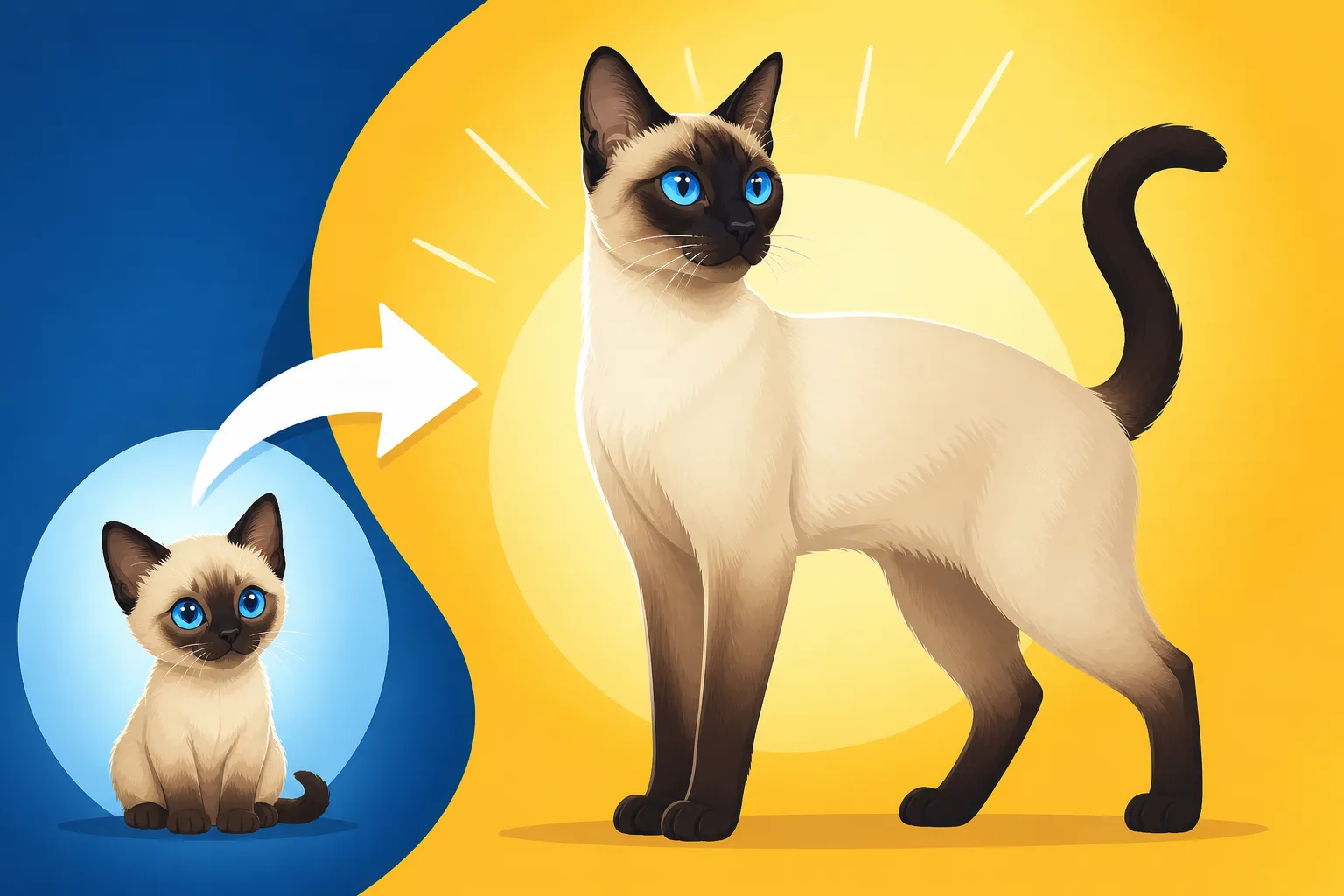
For many Siamese cats, the fastest growth happens during kittenhood and slows considerably as the cat approaches a year old. By around 10 to 12 months, a cat may be close to its adult height and body length. That does not necessarily mean it has reached its final weight or has the same muscular condition it will have as an adult.
It helps to separate “full size” into a few different things. A cat’s frame may be close to its adult dimensions, while its body is still gaining muscle and settling into an adult shape. A Siamese may therefore look long-legged and grown-up but remain a little gangly, especially during adolescence.
The exact timing varies. Genetics, sex, nutrition, health, and individual development all play a part. A kitten from one litter may finish growing sooner than a sibling, and two adult Siamese cats can have noticeably different builds. For background on adult proportions, see How Big a Siamese Cat Gets and When a Siamese Cat Reaches Full Size.
Weight and body condition can keep changing
Weight is not a reliable stand-alone marker of maturity. A Siamese cat that weighs less than another cat is not automatically underweight, just as a heavier cat is not necessarily healthier or more fully grown. Body frame and condition matter more than a number viewed on its own.
Some Siamese cats continue to gain a little weight and muscle after their first birthday. Development can extend into the second year, though the pace is usually slower than during kittenhood. This is one reason owners sometimes wonder whether their cat is still growing when what they are seeing is a gradual change in muscle and body condition rather than a sudden increase in height.
A vet can help assess whether a particular cat is developing appropriately by considering its growth over time, body condition, appetite, and general health. If your cat’s weight is a concern, What a Siamese Cat Should Weigh and Whether a Thin Siamese Cat Is Underweight offer useful context—but neither a breed average nor an online comparison can replace an individual assessment.
Adult does not always mean emotionally mature
Physical growth and behavioral maturity do not arrive on the same schedule. A Siamese cat can be close to adult size and still behave like a lively adolescent: racing around the house, investigating cupboards, demanding play, and getting into things it has only just learned to reach.
That energy can make a young cat seem “fully grown” one minute and very much like a kitten the next. It is normal for activity levels, confidence, and social habits to keep changing as a cat matures. Continue offering play, safe climbing opportunities, and attention rather than assuming that a nearly adult-sized cat no longer needs kitten-style engagement.
What affects how quickly a Siamese cat grows
Genetics and sex influence the final build
A Siamese cat’s adult size is partly inherited. The size of its parents and close relatives can provide a rough clue, but it is not a guarantee. Kittens from the same litter may grow at different rates and end up with different builds.
Male cats are often larger or more substantial than females, but there is plenty of overlap. A female Siamese may be larger than a particular male, and sex alone cannot tell you whether a cat is growing normally. The individual cat’s frame, body condition, and growth pattern are more useful than a simple comparison between males and females.
Breed appearance can also confuse the issue. Siamese cats are known for a long, slender outline, so a healthy adult may look lighter or less solid than a cat with a stockier build. If you are comparing your cat with photographs, remember that camera angle, posture, and differences between individual cats can make those comparisons misleading. Why a Siamese Cat Looks So Slender explains why a lean outline can be typical of the breed.
Food and health matter, but more is not always better
Kittens need food formulated for growth, with feeding amounts suited to their age and condition. As they approach adulthood, your vet can advise when and how to transition to an adult diet. The right timing depends on the cat’s development and health, so do not use a birthday alone as a reason to make a sudden change.
More food will not make a Siamese cat grow taller or develop a larger frame than its genetics allow. Overfeeding can instead add excess body fat, making it harder to judge the cat’s condition and potentially creating health concerns. Follow the food’s feeding guidance as a starting point, then adjust with veterinary advice based on your cat’s body condition and growth.
Some owners find it helpful to keep feeding notes and record weights at home, using the same scale and similar conditions each time. If you buy food or basic pet supplies through a retailer such as Chewy, check the feeding directions on the specific product and discuss any diet change with your vet. Food choice should support healthy development, not chase a target weight that may not suit your cat’s frame.
Illness, parasites, dental problems, or difficulty eating can affect growth and weight. A cat that is losing weight, failing to gain as expected, or showing a marked change in appetite deserves attention rather than a bigger scoop of food. For more on feeding and individual weight differences, see How Much an Adult Siamese Cat Eats and How to Tell If a Siamese Cat Is Too Thin.
Environment affects wellbeing, not the breed’s genetic size
A warm, comfortable home, regular meals, clean water, play, and a predictable routine help a kitten thrive. They do not change its inherited adult frame. Likewise, indoor or outdoor living does not determine whether a Siamese cat will be tall or small.
Stress can affect appetite and behavior, so a quiet place to eat and rest may help a kitten feel settled. In a busy household, provide a safe retreat where the cat can sleep undisturbed. If you have other pets, make sure the kitten can reach its food, water, and litter box without being chased or blocked.
When you are arranging supplies, focus on practical fit rather than buying everything in an adult size immediately. A kitten should be able to use its food bowls, litter box, carrier, and resting spots comfortably now, while equipment can be replaced as needed. Chewy is one place owners may look for routine pet supplies, but the important thing is choosing items that suit the cat’s current size and are safe to use.
How to tell whether your Siamese kitten is growing well
Track the trend rather than one weigh-in
A single weight tells you only what the cat weighs that day. A series of measurements, taken consistently, can show whether growth is steady, slowing as expected, or changing unexpectedly. Your vet may track weight during kitten visits and can help you interpret the pattern.
At home, weigh your cat periodically if you can do so safely. A small pet scale is convenient, but you can also weigh yourself while holding the cat and subtract your own weight, recognizing that this method is less precise. Use the same scale and similar conditions each time, and note the date and any major changes in appetite, activity, or food.
| What to track | What it can help you notice | What to do with the information |
|---|---|---|
| Weight over time | A steady trend, a plateau, or unexpected loss | Share the record with your vet if the pattern concerns you |
| Appetite | A sudden increase, decrease, or difficulty eating | Note when it began and whether other symptoms are present |
| Body shape | Changes in waist, ribs, and muscle | Ask your vet to assess body condition rather than relying on appearance alone |
| Energy and behavior | Unusual tiredness, hiding, or reduced play | Arrange veterinary advice if the change is persistent or sudden |
| Food and portion changes | Whether a diet change coincides with weight changes | Record the food and amount so your vet can review it |
Do not try to make the numbers match a breed chart. A healthy growth pattern for one Siamese cat may not look exactly like another’s. The goal is to understand your cat’s own development and spot meaningful changes early.
Check body condition, not just the scale
A vet can assess body condition by looking at and gently feeling the cat’s ribs, waist, and abdomen. A lean appearance can be normal for a Siamese, but there is a difference between a naturally fine-boned cat and one that is losing muscle or carrying too little body fat. Looking at the cat from above and from the side may help you notice changes, but it is not a substitute for a professional assessment.
Pay attention to changes over time. If the ribs or spine become more prominent than usual, the waist looks sharply tucked, or the cat’s muscles seem to be shrinking, mention it to your vet. It is also worth seeking advice if the body becomes rounder quickly or the cat’s waist disappears. A change in body condition can reflect diet, activity, or a health issue.
Photographs taken from similar angles can be a useful supplement to weight records. They will not diagnose a problem, but they can help you describe a gradual change that is hard to remember from day to day. For an overview of routine monitoring, read How Often a Siamese Cat Needs a Wellness Exam.
Know which changes deserve prompt attention
A kitten who is a little smaller than expected but playful, eating well, and steadily gaining may simply be a smaller individual. A kitten who stops eating, loses weight, becomes unusually quiet, vomits repeatedly, or has persistent diarrhea needs veterinary advice. Young cats can become unwell quickly, so do not wait for them to “grow out of it” if concerning symptoms appear.
Contact your vet if growth seems to stall for a prolonged period, if weight drops without explanation, or if eating becomes difficult. Mention any recent food changes, household changes, medications, and changes in litter-box habits. Those details can make it easier to work out whether a growth concern is part of normal development or needs investigation.
If you are comparing your kitten with littermates or social-media photos, remember that appearances rarely show the full picture. A cat can be healthy without matching a particular weight or look. Your vet can interpret growth in the context of your cat’s age, frame, and medical history.
What to expect as your Siamese cat grows up
The move from kitten food to adult care
As your cat nears adult size, the focus gradually shifts from supporting rapid growth to maintaining a healthy adult body condition. Your vet can recommend when to transition from kitten food and how to make the change. A gradual transition is often easier on a cat than switching foods abruptly, especially if the cat is selective about meals.
Keep monitoring portions after the transition. Feeding instructions are useful starting points, but activity level and individual metabolism vary. A Siamese that spends the day racing through a lively home may have different needs from one that mostly naps in a quiet apartment. Your vet can help adjust the amount if the cat’s body condition changes.
It is also a good time to establish everyday routines: regular meals, fresh water, play, dental care, and preventive veterinary visits. For more on the longer-term transition, see When a Siamese Cat Moves to Adult Food and What Care a Siamese Cat Needs Its Whole Life.
A simple way to think about the timeline
A Siamese cat is generally close to its adult frame around the end of the first year, but there is no exact birthday when every part of growth stops. Some cats continue filling out gradually into their second year. Their adult size is shaped by genetics and individual development, while healthy nutrition and veterinary care help them grow well within that range.
If you are unsure whether your cat is growing as expected, bring a weight record and a list of questions to the next appointment. That is more useful than trying to decide from a photograph or a single number. And if the concern involves sudden weight loss, poor appetite, or other illness signs, contact your vet rather than waiting for the next routine visit.
Disclaimer
This article is for general informational purposes only and does not constitute professional advice. Laws, prices and regulations vary by location and change over time. Consult a qualified professional for guidance on your specific situation.