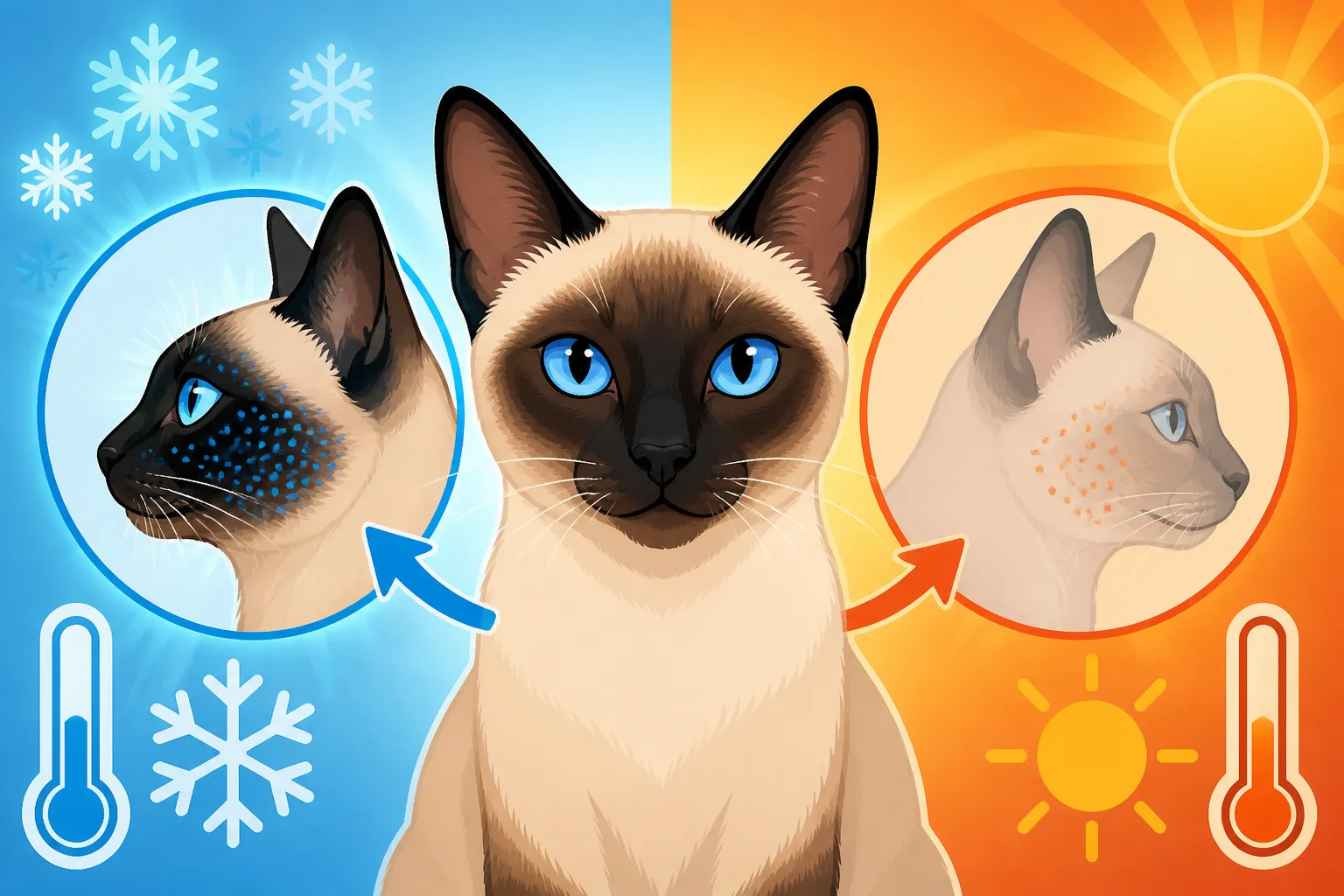
Why a Siamese Cat’s Pigment Only Works When Cool
It's quite a common sight: a stunning Siamese cat with those signature dark points on its ears, face, paws, and tail, while its body remains a beautiful, creamy white or pale fawn. But have you ever wondered why these colors appear in such a distinct pattern, and why they can sometimes seem to shift or deepen over time? This unique coloration isn't just a random genetic quirk; it's a fascinating display of biology where temperature plays the ultimate role in painting your Siamese, and understanding it helps us appreciate these wonderful felines even more.
The Genetic Blueprint Behind the Siamese Cat's Unique Coat
The striking appearance of a Siamese cat isn't magic; it's pure genetics at play, specifically a unique mutation that affects how pigment is produced in their fur. It's truly a marvel of nature that results in the beautiful coats we all adore.
Understanding the Colorpoint Gene
At the heart of the Siamese cat's distinctive look is a specific gene, often referred to as the "colorpoint gene" or Himalayan gene. This gene carries a mutation that makes the enzyme responsible for pigment production — tyrosinase — incredibly sensitive to temperature. Think of it like a tiny internal thermometer that dictates where color can and cannot develop on your cat's body. Most cats have a fully functional tyrosinase enzyme that produces pigment uniformly across their body, resulting in a solid color or a tabby pattern that isn't temperature-dependent. But for our Siamese friends, it's a different story entirely, which gives them their iconic look. This is fundamental to What Point Coloration in a Siamese Cat Is.
Tyrosinase: The Temperature-Sensitive Enzyme
So, what exactly is tyrosinase? It's an enzyme that plays a crucial role in the production of melanin, the pigment that gives color to skin, hair, and eyes. In most mammals, this enzyme works efficiently regardless of external temperature, ensuring a consistent coat color. However, the specific mutation found in Siamese cats produces a thermosensitive version of tyrosinase. This means the enzyme functions properly only within a certain temperature range. When the temperature is cooler, the enzyme is active, and pigment can be produced, leading to darker fur. When the temperature rises above this critical threshold, the enzyme essentially "shuts off," and no pigment is produced, resulting in lighter fur. This delicate balance is why you see such a clear distinction between the warmer core body and the cooler extremities. Which Tyrosinase Mutation a Siamese Cat Carries delves into the specific scientific details of this fascinating genetic trait.
Why the Siamese Kitten is Born White
One of the most surprising aspects for new Siamese owners is discovering that their kittens are born entirely white or a very pale cream. This isn't a mistake or an anomaly; it's a direct consequence of the temperature-sensitive tyrosinase. Inside the mother's womb, the kitten's body temperature is consistently warm – too warm for the tyrosinase enzyme to be active and produce pigment. So, for the entire gestation period, the kittens develop without any color. It's only after birth, when they are exposed to the cooler ambient air of the outside world, that their body temperature begins to differentiate, allowing the pigment to start forming in the cooler extremities. It’s like a blank canvas waiting for the world to add its artistic touch. This stunning transformation is why you might wonder Why a Siamese Cat Kitten Comes Out White.
How Temperature Activates and Suppresses Pigment
The magic truly begins when a Siamese cat enters the world and its body starts interacting with ambient temperatures. It's a continuous, dynamic process that shapes their unique aesthetic throughout their lives.
The Ideal Temperature for Pigment Production
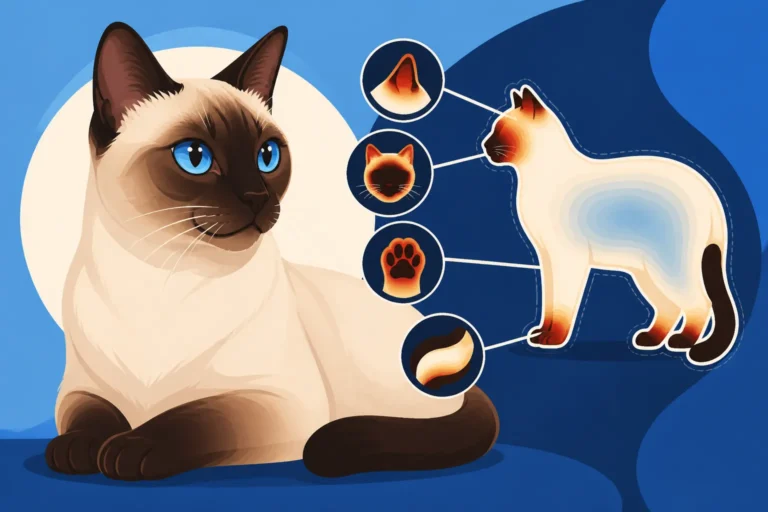
For the thermosensitive tyrosinase enzyme in Siamese cats, there's a sweet spot for activity. Generally, this enzyme functions optimally at temperatures below normal cat body temperature, which is around 100-102.5°F (37.8-39.2°C). The extremities—ears, nose, paws, and tail—are naturally cooler than the core body. Think about your own hands and feet; they're often a bit chillier than your torso, and it's the same for cats. In these cooler regions, the enzyme can do its job, diligently producing melanin, which results in the striking dark points. If you could somehow keep your entire Siamese cat at a consistently low temperature (which, for their health, you absolutely shouldn't!), their whole body might eventually darken.
Why Cooler Areas Darken and Warmer Areas Stay Pale
This leads us directly to the elegant pattern we recognize. The core of the Siamese cat's body – its trunk, belly, and upper legs – remains consistently warm due to internal body heat. In these areas, the temperature is too high for the mutated tyrosinase enzyme to activate. Consequently, no melanin is produced, and the fur remains light-colored, ranging from creamy white to a pale fawn, depending on the individual cat's genetic base color.
Conversely, the "points" – the ears, mask, paws, and tail – are furthest from the body's core and have a larger surface area relative to their mass, causing them to be naturally cooler. In these cooler zones, the tyrosinase enzyme springs to life, kicking off melanin production and resulting in the darker shades: seal, chocolate, blue, or lilac, to name a few. It’s a beautiful, natural thermoregulation visible right on their fur. You can actually see How Old a Siamese Cat Kitten Is When Points Show by observing this progression.
Environmental Factors That Influence Coloration
Beyond their internal thermostat, external environmental factors can also play a noticeable role in your Siamese cat's coat color. A cat living in a consistently cooler environment might develop slightly darker overall body shading compared to a Siamese living in a much warmer climate, even if they share the same genetics. This isn't to say your cat will change dramatically, but subtle differences can be observed.
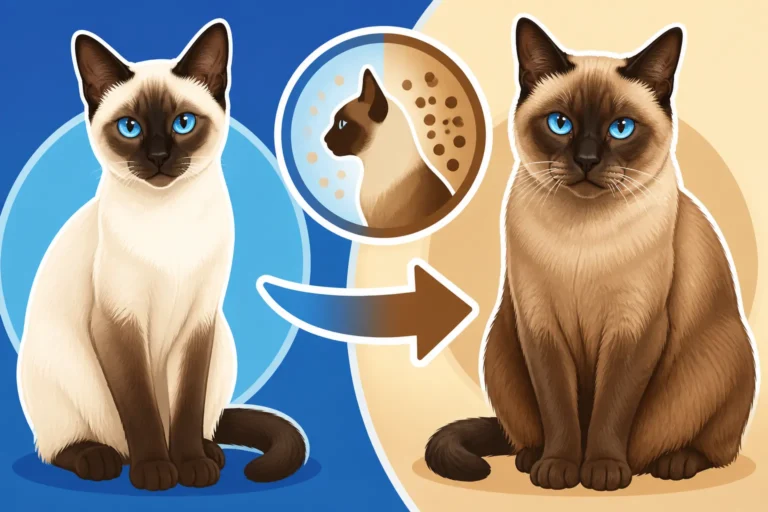
For instance, a Siamese that enjoys lounging in sunny spots might experience some lightening of its points over time, while one that snuggles under blankets in a cool room might show slightly deeper coloration. It's a gentle interplay, not a drastic overhaul. Providing a warm bed, perhaps from a selection found on Amazon or Chewy, especially in winter, helps keep your Siamese cozy, but won't fundamentally alter their genetic predisposition for point coloration. On the flip side, some owners might notice their Siamese getting a bit darker as they age, regardless of ambient temperature. This fascinating nuance is discussed further in Why an Older Siamese Cat's Body Goes Brown.
Real-World Manifestations of Temperature-Dependent Color
Understanding the science is one thing, but seeing it play out in your everyday life with a Siamese cat is truly captivating. There are a few common scenarios where this temperature-sensitive pigment becomes overtly obvious.
The Shaved Patch Phenomenon
One of the most striking examples of temperature influencing pigment is the "shaved patch" phenomenon. If your Siamese cat needs surgery or a vet visit that requires shaving a patch of fur – perhaps for an IV line, a surgical incision, or an ultrasound – you might be surprised by what grows back. Initially, the fur will likely grow back darker than the surrounding body coat. Why? Because shaving removes the insulating layer of fur, making the skin in that area cooler. This lower temperature reactivates the tyrosinase enzyme, allowing pigment to be produced where it normally wouldn't be on the main body.
It’s a temporary effect, of course. As the fur grows back and provides insulation, the area warms up, and the new fur will eventually lighten to match the surrounding body color. It can take several months for the patch to fully blend, and it’s a constant source of wonder (or mild alarm for the unprepared owner!). This interesting phenomenon is explored more deeply in Why a Shaved Siamese Cat Grows Back Dark and How Long a Shaved Siamese Cat Stays Dark.
Age-Related Darkening: A Natural Process
It's a common observation that Siamese cats tend to darken with age. That bright, creamy body coat from their youth often deepens into a fawn or even a light brown over the years. This isn't just your imagination! As a cat ages, its metabolism can slow, and blood circulation might become a little less efficient in certain areas. This can lead to a slight, consistent decrease in overall body temperature. While not a dramatic drop, this subtle cooling can be enough to allow the temperature-sensitive tyrosinase to produce a small amount of pigment across more of the body, leading to a general darkening.
It's a gradual process, often so subtle that you might not notice it day-to-day, but looking back at kitten photos will certainly highlight the change. It's a natural part of their unique physiology and a sign of their journey through life. The Age a Siamese Cat Starts Darkening is a topic many owners find themselves researching as their beloved feline companions mature.
Keeping Your Siamese Comfortable to Manage Color Variation
While you can't fundamentally change your Siamese cat's genetic programming, understanding how temperature affects their coat can help you keep them comfortable and appreciate their unique color shifts. Siamese cats, with their short, fine coats and lack of an insulating undercoat, can be more sensitive to cold than some other breeds. This is why you often find them seeking out sunny spots, warm laps, or cozy blankets.
Providing plenty of warm, inviting resting places is key, especially during cooler months. Heated cat beds, soft blankets, or even a nice cat tree positioned near a window (but not in a drafty area) can make a huge difference to their comfort. While keeping them warmer won't make their points disappear, it can help prevent excessive body darkening that might occur in a consistently chilly environment. After all, a comfortable cat is a happy cat, regardless of their exact shade! This ties into the general concept of Keeping a Siamese Cat Warm.
Debunking Myths and Understanding Health Connections
It’s easy to create misconceptions when dealing with something as unique as the Siamese cat's color genetics. Let's clear up a few points and touch on any health connections.
Does Color Change Indicate Illness?
While a Siamese cat's coat can subtly change with age or in response to shaving, a sudden, drastic, or patchy change in color that isn't related to a shaved area is not a typical sign of health problems. For example, if your cat's points suddenly lighten significantly, or large dark patches appear rapidly on their body without any prior shaving, it's highly unlikely to be directly related to illness. Their point coloration is a stable genetic trait, influenced by temperature, not directly by a fever or a common sickness.
However, a sudden change in coat quality – dullness, excessive shedding, or greasy fur – can be a sign of underlying health issues. A healthy Siamese will have a sleek, soft coat. If you notice these kinds of changes, it's always best to consult your veterinarian. The color itself is usually just a fascinating genetic display. To understand more about overall feline health, consider reading Whether a Siamese Cat's Color Says Anything About Health.
The Link Between Pigment and Eye Color
It’s not just the fur that’s affected by this unique genetic pathway; the same genetic mutation that causes point coloration also influences eye color. All true Siamese cats will have striking blue eyes. This is because the same enzyme, tyrosinase, is also involved in producing pigment in the iris of the eyes. The specific mutation in Siamese cats restricts pigment production in the iris, allowing only the blue wavelength of light to be reflected, resulting in their characteristic brilliant blue gaze.
So, if you ever see a cat that looks like a Siamese but has green or yellow eyes, it’s either a mixed breed or another breed entirely. The blue eyes are as much a hallmark of the Siamese breed as their distinct point coloration. It's a beautiful, intricate package of genetic traits that makes them truly unique among felines.
Here's a quick overview of how temperature affects different point colors:
| Point Color | Base Pigment Gene | Temperature Effect | Typical Body Color | Notes |
|---|---|---|---|---|
| Seal Point | Black | Strong | Cream/Fawn | Darkest points, classic Siamese look. |
| Blue Point | Dilute Black | Strong | Bluish-White | Steel-blue points, slate gray nose/paw pads. |
| Chocolate | Brown | Moderate | Ivory | Warm brown points, cinnamon nose/paw pads. |
| Lilac Point | Dilute Brown | Moderate | Glacier White | Pinkish-grey points, lavender-pink nose/pads. |
This table illustrates that while the intensity of the point color varies based on the underlying pigment gene (black, dilute black, brown, or dilute brown), the mechanism of temperature-dependent expression remains the same across all traditional Siamese varieties.
Ultimately, your Siamese cat's constantly shifting canvas is just one more incredible aspect of their unique charm. It’s a living, breathing testament to their genetics and the environment they live in, and it's something truly special to observe throughout their long and expressive lives. Understanding these nuances only deepens our connection to these wonderfully intelligent and vocal companions, making What Care a Siamese Cat Needs Its Whole Life a truly enjoyable journey.
Disclaimer
This article is for general informational purposes only and does not constitute professional advice. Laws, prices and regulations vary by location and change over time. Consult a qualified professional for guidance on your specific situation.