Why a Siamese Cat’s Eyes Look Red in Photos
It's a familiar scenario for any Siamese cat parent: you snap what you think is the perfect picture of your gorgeous, vocal companion, only to find their beautiful blue eyes staring back at you with an unsettling, demonic red glow. It's not your cat's fault, and it's certainly not a sign of some spooky apparition! This common photography phenomenon, especially prevalent with our pointed pals, has a scientific explanation, and understanding it will not only help you capture better photos but also deepen your appreciation for your Siamese's unique genetics. This guide will unravel the mystery of why your Siamese cat's eyes appear red in photos and equip you with practical tips to avoid it.
Understanding Red Eye in Photography
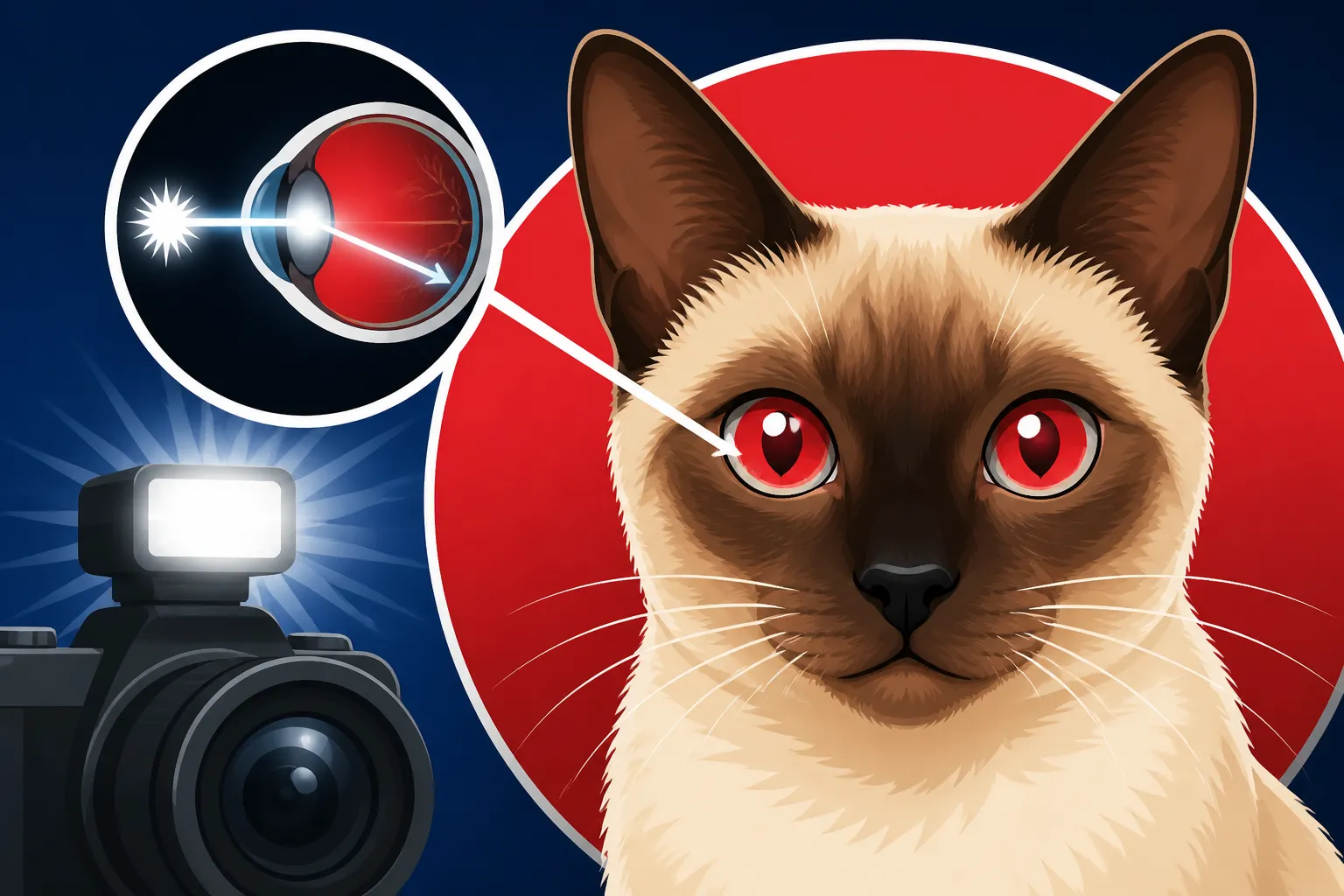
Before we get to our specific Siamese cat conundrum, let's talk about red eye in general photography. You've probably seen it in human photos too, right? That little red dot staring back from Uncle Bob's eyes. It happens when a camera's flash, which is usually very close to the lens, fires directly into the subject's eyes. The light beams through the pupil, hits the retina at the back of the eye, and then reflects directly back into the camera lens.
The retina is crisscrossed with tiny blood vessels that are rich in red blood. When the light from the flash bounces off this blood-rich tissue, it carries that red color back to the camera, creating the dreaded red-eye effect. It's not a flaw in the eye itself, but rather a trick of light and reflection. It's an optical phenomenon, pure and simple, and it's something photographers have been grappling with since flashes became commonplace. So, while it can be frustrating to see your beloved feline friend with glowing red eyes, know that it's a common and well-understood occurrence across the animal kingdom, including us humans.
The Tapetum Lucidum: A Cat's Night Vision Superpower
Now, here's where cats, and indeed many nocturnal animals, throw a fascinating wrench into the mix: they have something called a tapetum lucidum. This is a highly reflective layer of tissue located behind the retina in their eyes. Think of it as a biological mirror. Its primary job is to enhance night vision. When light enters the eye in low-light conditions, it passes through the retina, hits the tapetum lucidum, and then bounces back through the retina again. This gives the photoreceptor cells a second chance to absorb the light, effectively maximizing the available light and allowing cats to see much better in dim environments than we can.
This tapetum lucidum is what gives most cats that eerie, glowing "eye shine" you often see in photos or at night when car headlights hit their eyes. Depending on the cat's genetics, the pigment in their eyes, and even the angle of the light, this eye shine can appear in various colors – green, yellow, orange, or even blue-green. It's not usually red in most cats because the tapetum itself is often tinted or there's enough pigment in the surrounding structures to mask the blood vessels. This reflective layer is truly a marvel of evolution, a testament to how animals adapt to their environments.
Why Siamese Cats Are Different: The Albinism Gene Connection
Here's the crucial part for Siamese cat owners: your beautiful blue-eyed companion carries a specific genetic mutation that affects pigment production. This isn't just about their stunning point coloration; it impacts their eyes too. Siamese cats have what's known as partial albinism, or more accurately, a temperature-sensitive albinism gene. This gene is responsible for their distinctive color pattern, where pigment only develops in cooler parts of the body (ears, paws, tail, face points) and not in the warmer core.
This same genetic mutation also affects the pigment within their eyes. Specifically, it reduces the amount of melanin in the iris, which is why their eyes are always a striking blue. But even more pertinent to our red-eye discussion, it also reduces pigment in a layer behind the retina called the choroid. Most cats have a good amount of pigment in this choroid, which acts as a sort of "darkroom" for the eye, preventing light from scattering too much and helping to absorb excess light after it's reflected by the tapetum. In Siamese cats, with their reduced pigment, the choroid is much less effective at absorbing that light. This is why their particular genetic makeup makes them prime candidates for red eye in flash photography. It's a direct consequence of the very genes that give them their iconic looks, making them truly unique. Why a Siamese Cat Has Blue Eyes at All delves deeper into this fascinating genetic trait.
The Science Behind the Red Glow in Siamese Cat Photos
So, we've established that Siamese cats are genetically predisposed to this red-eye effect, but let's really dig into the mechanics of why that red color appears so vividly in their photographs compared to other breeds. It's not just a subtle difference; it's a profound one that ties directly into their unique coloration and eye structure. It's a dance between light, genetics, and the intricate biology of the feline eye, resulting in that striking, and sometimes frustrating, ruby glow.
Less Pigment, More Red Reflection
In a typical cat, even with its highly reflective tapetum lucidum, there's usually a good amount of melanin (dark pigment) in the choroid, the vascular layer of the eye between the retina and the sclera (the white outer layer). This melanin acts as a light absorber. When the flash fires and the light reflects off the tapetum, any light that isn't absorbed by the retina on its first pass, and then subsequently by the tapetum, is usually "caught" by this dark choroid. This prevents a pure, unadulterated reflection of the blood vessels.
However, in Siamese cats, due to that specific temperature-sensitive albinism gene, the amount of melanin in the choroid is significantly reduced. It's much paler than in other cats, almost translucent. This means there's less pigment to absorb that stray light. When the camera flash hits the eye, the light reflects off the tapetum, and because there's so little pigment to soak up the excess, the light bounces back, picking up the rich red color of the underlying blood vessels in the choroid with very little interference. It's like having a bright red wall behind a sheer curtain – the red is going to show through clearly. This lack of a "darkroom" effect within the eye is the primary reason for the intense red glow.
Blue Eyes and Red Eye: A Related Phenomenon
It's no coincidence that Siamese cats, with their striking blue eyes, are also the ones most prone to red eye in photos. These two traits are inextricably linked by the same underlying genetic mutation. The blue eye color itself is a result of the reduced melanin in the iris. Melanin is the pigment that gives eyes their color – brown, green, amber, etc. When melanin is sparse or absent, light scatters within the iris, and only the shortest wavelengths (blue) are reflected back, giving the eyes their beautiful sapphire hue.
So, the gene that dictates that gorgeous blue eye color is the very same gene that leads to the reduced pigment in the choroid layer behind the retina. This means that if your Siamese has those captivating blue eyes, they also have the internal eye structure that's going to make them highly susceptible to reflecting the red from their blood vessels when a flash is used. It's a package deal, a direct consequence of their unique genetic heritage. You can't have one without the other, and it's a testament to the intricate way genetics shapes the appearance and, in this case, even the photographic peculiarities of our beloved feline companions. Why a Siamese Cat's Eyes Cross is another interesting optical phenomenon related to their unique genetic makeup.
Here's a quick comparison of eye shine in different cat types:
| Feature | Most Cats (Green/Yellow Eye Shine) | Siamese Cats (Red Eye) |
|---|---|---|
| Tapetum Lucidum | Present, highly reflective | Present, highly reflective |
| Choroid Pigment | Ample melanin, absorbs excess light | Reduced melanin, less light absorption |
| Iris Pigment | Varied (green, yellow, amber, brown) | Significantly reduced (results in blue eyes) |
| Reflected Color (Flash) | Green, yellow, or blue-green | Red (due to exposed blood vessels) |
| Underlying Cause | Normal eye structure, varied pigment | Temperature-sensitive albinism gene |
Tips for Photographing Your Siamese Cat Without Red Eye
Dealing with red eye in photos can be a real pain, especially when you're trying to capture the stunning beauty of your Siamese cat. But fear not, there are plenty of strategies you can employ to minimize or even eliminate this issue. It's all about understanding light, camera settings, and a little bit of patience. With these tips, you'll be on your way to taking gallery-worthy photos of your beloved meezer without the glowing red eyes.
Lighting Techniques to Minimize Red Eye
The flash is the main culprit, so the most effective way to combat red eye is to control or avoid it.
- Embrace Natural Light: This is always your best friend when photographing pets. Position your Siamese near a window or outdoors (in a safe, enclosed space like a catio or on a harness and leash if they're trained for it) where there's plenty of soft, diffused natural light. This eliminates the need for a harsh flash altogether. Early morning or late afternoon light (the "golden hour") can create particularly beautiful, warm tones without any red-eye issues.
- Use External Flash, Off-Axis: If you must use a flash, ditch the built-in pop-up flash on your camera. These are almost always too close to the lens, creating direct reflection. Instead, invest in an external flash unit. The key here is to use it off-axis, meaning the flash unit is not directly above or beside the camera lens. You can hold it in your hand, or use a trigger to place it to the side, above, or even bounce it off a ceiling or wall. Bouncing the flash diffuses the light, making it softer and less likely to hit the eyes head-on. Many photographers find an external flash invaluable. You can find a wide range of external flash options on Amazon, from entry-level to professional.
- Increase Ambient Light: If you're shooting indoors without natural light, turn on all the lights in the room. The more ambient light available, the less your camera will rely on its flash. A well-lit room means a lower likelihood of the pupil being widely dilated, which also helps reduce the red-eye effect. Think about supplementing with softbox lighting or even just a few lamps with diffusers to create a more even light distribution.
Camera Settings and Post-Processing
Sometimes, even with the best lighting techniques, a little red eye might sneak into your photos. That's where your camera's features and a bit of digital wizardry come in handy.
- Red-Eye Reduction Mode: Most modern cameras, especially those with built-in flashes, have a red-eye reduction mode. This usually works by firing a series of pre-flashes before the main flash. The idea is that these initial flashes cause the subject's pupils to contract, reducing the amount of light that can enter and reflect off the retina when the main flash fires. It's not foolproof, but it's worth trying if you're stuck with a built-in flash.
- Adjust ISO and Aperture: To compensate for lower light when avoiding flash, you'll need to adjust your camera settings. Increase your ISO sensitivity, which makes the camera's sensor more sensitive to light. This allows for faster shutter speeds, which is great for capturing a moving cat, without needing a flash. You can also open up your aperture (use a lower f-number) to let in more light. Be mindful that a wider aperture will result in a shallower depth of field, meaning less of the scene will be in focus, which might be desirable for portraits but less so for full-body shots.
- Post-Processing Tools: Even if you get some red eye, it's often fixable in editing software. Most photo editing programs, from basic phone apps to professional suites like Adobe Photoshop or Lightroom, have a "red eye removal" tool. This tool typically allows you to click on the red pupil, and it intelligently replaces the red with a natural-looking dark pupil. It's a quick and easy fix that can salvage an otherwise perfect shot.
Patience and Positioning
Photographing cats, especially active and curious Siamese cats, requires a generous dose of patience and strategic positioning. They rarely pose on command, but with a few tricks, you can increase your chances of getting a great shot.
- Eye-Level Shots: Getting down to your cat's eye level can make a huge difference, both aesthetically and for red-eye reduction. When you're at their level, the angle of the flash (if used) is less likely to hit their eyes directly. It also creates a more intimate and engaging portrait. Don't be afraid to get on the floor with them!
- Distraction and Engagement: A bored cat is a moving cat, and a moving cat is hard to photograph. Engage your Siamese cat with their favorite toy. A feather wand or a laser pointer can grab their attention, making their eyes bright and expressive, and often looking away from the direct flash. Some cats respond well to crinkly balls or small plush toys found on pet supply sites like Chewy. Just be ready to snap quickly!
- Capture Candid Moments: Sometimes the best photos are the unposed ones. Instead of forcing a shot, observe your Siamese cat as they play, nap, or interact with their environment. Keep your camera handy, and when you see a perfect moment unfolding, quietly capture it. Natural poses are often the most charming, and without the pressure of a staged shot, you're less likely to rely on a flash.
- Use Treats for Motivation: A delicious treat can be a powerful motivator. Hold a favorite treat slightly to the side and above your camera lens to get your cat's attention without them staring directly into the lens. This subtle angle can reduce the direct reflection. While not directly linked to red-eye, providing a high-quality diet can contribute to your cat's overall health and vitality, which will naturally show in their vibrant appearance for photos.
When Red Eye Might Mean More (And When It Doesn't)
It's natural to worry when you see something unusual with your cat's eyes, especially when it comes to that bright red glow in photos. For the most part, the photographic red-eye effect in Siamese cats is a harmless optical phenomenon. However, it's always good to be an informed and observant pet parent. There are times when unusual eye reflections or changes in your cat's eyes might warrant a closer look.
Normal vs. Abnormal Eye Shine
Understanding the difference between the typical photographic red-eye and something potentially more serious is key.
- Normal Photographic Red Eye: This is almost always a symmetrical, uniform red glow coming from both eyes in flash photos, and it disappears when you're looking at your cat in normal lighting conditions. It's a direct result of the flash hitting the unpigmented choroid layer. If your Siamese has their characteristic blue eyes and this red glow only appears in flash photos, it's almost certainly the normal red-eye effect we've been discussing. You'll see it consistently in flash photos, especially if the flash is direct and close to the lens. It's not something you can usually see with the naked eye in everyday light; it's specific to the photography.
- Abnormal Eye Shine or Reflection: This is where you need to be more vigilant. If you notice any of the following, it's time for a vet visit:
- Asymmetrical Reflection: One eye shows a normal glow (green/yellow/red), but the other shows a different color or no reflection at all. This could indicate an issue in one eye, such as a tumor, retinal detachment, or other structural problems.
- White or Cloudy Reflection (Leukocoria): If you see a white, cloudy, or dull reflection in the pupil, especially in low light or with a flash, this is a serious red flag. It can be a sign of cataracts, glaucoma, retinal detachment, or even some types of cancer. This isn't the vibrant red of typical red eye.
- Persistent Reflection: If you notice an unusual reflection or glow that is visible even in normal ambient light, or appears consistently without a flash, this is not normal and should be checked by a veterinarian immediately.
- Accompanying Symptoms: Any strange eye reflection combined with other symptoms like squinting, discharge, redness, pawing at the eye, sensitivity to light, or changes in vision (e.g., bumping into things, hesitation to jump) requires immediate veterinary attention. These are signs that something more than just photographic red-eye is going on. It’s always better to be safe than sorry when it comes to your cat’s vision and overall health. Signs a Siamese Cat Is Unwell offers a broader look at identifying potential health issues.
Other Eye Conditions to Be Aware Of
While Siamese cats are generally a healthy breed, like all purebreds, they can be predisposed to certain conditions. It's important to differentiate general health concerns from the unique red-eye phenomenon.
- Progressive Retinal Atrophy (PRA): This is a degenerative disease that affects the retina, leading to blindness. While the red-eye effect is about light reflection, PRA is about the breakdown of light-sensing cells. Early signs might include night blindness or bumping into objects. It won't directly cause a red reflection in photos, but it's an important inherited eye condition in some breeds, including Siamese. What PRA Does to a Siamese Cat's Sight provides more information on this condition.
- Glaucoma: This is a painful condition caused by increased pressure within the eye. It can lead to blindness if not treated promptly. Symptoms often include a cloudy appearance of the cornea, a dilated pupil that doesn't respond to light, redness, and pain. While it might affect how light reflects, it’s not the cause of the photographic red eye and presents with much more obvious clinical signs.
- Cataracts: These involve clouding of the lens inside the eye, which can impair vision. A cataract will appear as a milky or opaque area within the pupil and will certainly affect light transmission and reflection, but it's a structural change, not merely a flash effect.
- Conjunctivitis: This is inflammation of the conjunctiva, the pink membrane lining the eyelids. Symptoms include redness, swelling, and discharge. Again, while it affects the eye's appearance, it's an external inflammation and not related to the internal red reflection from a flash.
The key takeaway here is that if the red reflection is uniform, appears only in flash photographs, and your Siamese shows no other signs of discomfort or changes in their eyes or vision, it's almost certainly the normal photographic red-eye effect unique to their gorgeous blue-eyed genetics. However, any deviation from this pattern or any other concerning eye symptoms should always prompt a call to your veterinarian. Early detection and intervention are crucial for many feline eye conditions. Regular wellness exams, as outlined in How Often a Siamese Cat Needs a Wellness Exam, are vital for monitoring your cat's ocular health.
Disclaimer
This article is for general informational purposes only and does not constitute professional advice. Laws, prices and regulations vary by location and change over time. Consult a qualified professional for guidance on your specific situation.