Who Pho and Mia the Siamese Cats Were
Many Siamese cat enthusiasts know that their beloved breed arrived in the Western world centuries ago, but the specific individuals who pioneered its introduction are often lost to history. This guide delves into the fascinating story of Pho and Mia, the two foundational Siamese cats whose journey to England in the late 19th century irrevocably shaped the breed's future and established its presence outside of Siam.
The First Glimpses: Early European Encounters with Siamese Cats
Before Pho and Mia ever set paw on British soil, there were undoubtedly whispers and occasional sightings of these striking felines from the East. European travelers, diplomats, and merchants venturing into Southeast Asia would have encountered these unique cats, marveling at their distinctive pointed coloration and sleek physiques. However, these were often isolated observations, more curiosities than a concerted effort to introduce a new breed to the Western world. Imagine the stories these early explorers might have brought back, describing cats with dark faces and paws, bright blue eyes, and a vocal nature unlike any cat they had known.
These early encounters were fragmented and often anecdotal, lacking the organized effort that would eventually lead to the Siamese cat's establishment as a recognized breed in Europe. The cats remained a rare sight, mostly confined to their native lands, revered and sometimes even considered sacred. In Siam, these cats were known as Wichianmat, and their history stretches back centuries, documented in ancient texts like the What the Tamra Maew Manuscripts Show About the Siamese Cat. The idea of bringing them back to distant lands was a considerable undertaking, often fraught with the challenges of long sea voyages and the general difficulties of keeping exotic animals healthy in new environments.
It’s crucial to understand that at this point, there wasn't a "breed standard" in the Western sense for these cats. Each one was simply a unique, beautiful animal from a faraway land. The descriptions would have varied widely, based on individual observation rather than a shared understanding of what defined the "Siamese" look. The true appreciation and systematic breeding of the Siamese cat would only begin once a dedicated effort was made to transport them and introduce them to a broader audience, which is where the story of Pho and Mia truly begins to shine.
Whispers from the East: Early European Travelers and Cats of Siam
For centuries, the cats of Siam (modern-day Thailand) were largely unknown to the Western world. Travelers and colonial administrators who ventured into the kingdom of Siam would occasionally report on these unusual animals. Imagine a Victorian explorer, accustomed to European tabbies and long-haired Persians, suddenly encountering a lean, elegant cat with startling blue eyes and a face masked in dark chocolate or seal. These were truly creatures from another world, embodying an exotic beauty that captivated those fortunate enough to see them. Their striking appearance, combined with their intelligent and often demanding personalities, left a lasting impression.
These early accounts, however, rarely led to the successful establishment of the breed in the West. Transportation was arduous, and the cats often succumbed to the stresses of travel or the unfamiliar climate and diseases of Europe. It wasn't as simple as hopping onto Chewy to order all the necessary supplies for a long journey; every item, from food to bedding, would have been a challenge to acquire and maintain. Such early attempts to bring Siamese cats to Europe were more akin to collecting rare specimens for a zoo than establishing a sustainable breeding population, leading to fleeting appearances rather than widespread recognition.
The descriptions from these early encounters sometimes romanticized the cats, imbuing them with mystical qualities often associated with their regal owners. It fueled a growing curiosity among European cat fanciers, who were always on the lookout for new, distinct breeds to cultivate. This quiet fascination laid the groundwork for a more deliberate effort, signaling that the time was ripe for a proper introduction of the Siamese cat to Western society, setting the stage for the groundbreaking journey of Pho and Mia.
Diplomatic Gifts and Isolated Appearances
The first documented Siamese cats to arrive in the West often did so as royal gifts or diplomatic gestures. Kings of Siam sometimes presented these prized felines to foreign dignitaries, a symbol of goodwill and an offering of a living treasure. One notable example includes "Siam," a Siamese cat given to President Rutherford B. Hayes's wife, Lucy, in 1878, by the American Consul in Bangkok. This particular cat caused quite a stir in Washington D.C., being hailed as the first Siamese cat in America, though her stay was tragically short.
These diplomatic gifts, while significant, were still isolated incidents. They introduced the cats to a very select, high-profile audience, but didn't necessarily mean the breed would thrive or even survive beyond that initial presentation. The challenges of care, diet, and understanding their specific needs in a vastly different environment were immense. There was no vast knowledge base or network of breeders to consult, no easy access to specialized veterinary care or the kind of carefully formulated cat food readily available from a retailer like Chewy today.
Each such arrival, however brief, added to the mystique and allure of the Siamese cat. It created a ripple of excitement among those who loved animals and exotic wonders. These individual cats, though they may not have contributed directly to the long-term breeding lines, were vital in generating public interest and fostering the desire for more of these beautiful, enigmatic creatures from the East. They made the Siamese cat a talked-about entity, moving it from the realm of legend to a tangible, albeit rare, presence in Western society.
The Growing Fascination with Exotic Breeds
By the late 19th century, the Victorian era saw a burgeoning interest in all things exotic, and cat fancying was no exception. There was a burgeoning movement to recognize and categorize distinct breeds, moving beyond the simple "domestic shorthair" and "domestic longhair" classifications. This era fueled a desire to import and develop breeds from around the globe, and cats from faraway lands held particular appeal. The Siamese cat, with its striking appearance and captivating history, was perfectly positioned to capture the imagination of this emerging cat fancy community.
This fascination wasn't just about aesthetics; it was also about status and the thrill of the novel. Owning a rare and exotic cat from a distant land was a mark of sophistication and an indication of one's ability to procure such unique treasures. It spurred adventurers, diplomats, and even wealthy individuals to seek out these cats and bring them back to Europe, often at great personal expense and effort. The groundwork was being laid for more organized importation and breeding programs, as enthusiasts began to realize the potential of these unique felines.
This period was a crucible for the modern cat fancy, shaping how breeds were defined, exhibited, and propagated. Without this widespread interest in exotic animals and the development of formal cat shows, the Siamese cat might have remained a rare curiosity rather than becoming one of the most beloved and recognizable breeds in the world. This fervent curiosity created the perfect climate for individuals like Owen Gould, and his charges, Pho and Mia, to make their unforgettable entrance onto the scene.
Pho and Mia's Pivotal Arrival in England
The story of the Siamese cat in the Western world truly begins in earnest with the arrival of two specific cats: Pho and Mia. Their journey from Siam to England was not just a simple transportation of animals; it was a watershed moment that would forever change the trajectory of the breed, establishing it as a beloved fixture in homes and show halls across the globe. Their arrival in 1884 sparked a sensation and initiated the formal development of the Siamese cat in the West.
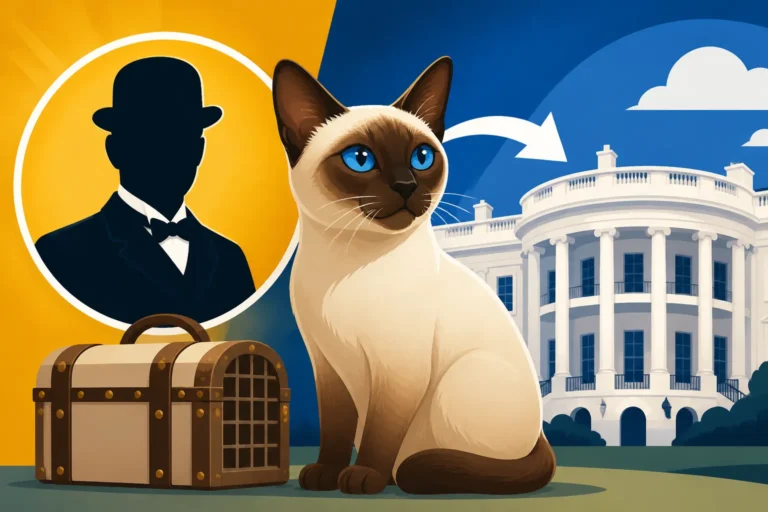
Owen Gould, a British Consul-General stationed in Bangkok, played the pivotal role in bringing these two cats to British shores. He wasn't just bringing pets; he was bringing ambassadors of a new breed, cats whose distinct appearance and vocal nature would captivate and, at times, bewilder the British public. The decision to bring them, along with two other Siamese cats, was a deliberate act that aimed to share the unique beauty of these felines with the world.
Their grand entrance at the Crystal Palace Cat Show in 1884 was nothing short of a spectacle. Imagine the hushed awe and murmurs of the crowd as these sleek, elegant creatures, so different from any other cat on display, were presented. Judges and spectators alike were divided; some were enthralled by their exotic charm, while others found them strange or even unsettling. Regardless of individual opinion, Pho and Mia, along with their companions, ensured that the Siamese cat would never again be merely a whisper from the East but a vibrant, undeniable presence.
Owen Gould: The Man Who Brought Them West
Owen Gould was a British diplomat, serving as Consul-General in Bangkok during the late 19th century. While his official duties focused on diplomacy and trade, he developed a profound appreciation for the indigenous cats of Siam. He recognized their unique beauty and striking characteristics, seeing in them the potential for a new and exciting breed to introduce to the British cat fancy. Unlike earlier, more casual importations, Gould's intention was clearly to establish a breeding program, making his efforts particularly significant. His discerning eye picked out what he considered fine examples of the breed, including Pho and Mia.
In 1884, Gould sent four Siamese cats back to England. These were Pho, Mia, and a pair of kittens named Duen and Khrom. The journey from Bangkok to London was long and arduous, spanning thousands of miles across oceans and continents. Ensuring the health and well-being of the cats during such a voyage, especially without the modern amenities we take for granted today (like specialized travel carriers, temperature control, or easy access to diverse cat foods from a company like Chewy), would have been a monumental task. It speaks volumes about Gould's dedication and foresight that these cats arrived safely and in a condition to be shown.
Gould's contribution goes beyond merely transporting the cats; he initiated a legacy. He understood the value of these animals and took the necessary steps to ensure their arrival in a context where they could be appreciated and bred. His actions were instrumental in making the Siamese cat accessible to a wider European audience and directly led to the establishment of the breed in the West, paving the way for everything that followed in the history of the Siamese cat fancy. Who Brought the First Siamese Cat to Britain article elaborates on his pivotal role.
Their Grand Entrance and the Crystal Palace Cat Show
Upon their arrival in England, Pho and Mia, along with Duen and Khrom, were quickly prepared for exhibition. Their debut was made at the famed Crystal Palace Cat Show in 1884, an event that drew considerable public attention and was a crucial platform for introducing new breeds to the burgeoning cat fancy. Imagine the scene: rows of familiar British Shorthairs, Persians, and other domestic breeds, and then, standing out dramatically, these sleek, dark-pointed felines with their intense blue eyes and slender forms. It was an unprecedented sight, one that certainly turned heads and sparked intense debate among attendees.
The visual contrast must have been astounding. The Siamese cats were a stark departure from the fluffy, often round-faced cats that dominated Victorian shows. Their angular lines, short, close-lying coats, and distinctive coloring were genuinely exotic. This appearance was unlike anything the judges or the public had ever formally encountered in a cat show setting. It highlighted their unique origins and the special characteristics that made them so captivating, ensuring they were the talk of the event.
Their appearance at the Crystal Palace Cat Show was more than just a display; it was an official introduction to the British public and the cat fancy community. It marked the moment the Siamese cat transitioned from an anecdotal curiosity to a recognized, albeit new and controversial, presence within the structured world of pedigree cats. This show became the initial stage upon which the Siamese cat would begin to carve out its enduring place in feline history. Which Show the First Siamese Cats Appeared At discusses this event in more detail.
The Public's Reaction to These "Royal Cats"
The public's reaction to Pho and Mia, and their accompanying kittens, was a mix of awe, bewilderment, and even some apprehension. Descriptions from the time reveal a clear division of opinion. Many were instantly captivated by their elegant posture, striking blue eyes, and unusual "points" (darker coloration on the extremities). They were seen as mysterious and regal, earning them the nickname "Royal Cats of Siam," a moniker that still resonates today. Their vocal nature, often described as a distinctive "yowl," was also a new experience for many, adding to their exotic appeal.
However, not everyone was immediately enamored. Some judges and spectators found their appearance somewhat alarming, describing them as "unnatural" or even "creepy." Their lean, almost angular build, and particularly the "wedge" shape of their heads (though not as extreme as the modern show Siamese) were a departure from the more familiar, rounder-faced cats. One contemporary account famously described them as "an unnatural, nightmare kind of cat," highlighting the initial shock and unfamiliarity with their unique aesthetics. This polarizing reaction underscored just how novel these cats were to the Western eye.
Despite some initial reservations, the sheer novelty and exoticism of the Siamese cats ensured that they garnered significant attention. They were a talking point, generating curiosity and a desire to learn more about these fascinating felines from Siam. This public discourse, whether positive or negative, was crucial in elevating the breed's profile and cementing its place in the public consciousness, laying the foundation for future enthusiasts to champion their cause. What Judges Thought of the First Siamese Cats provides further insight into these early opinions.
Establishing a Foothold: Life and Early Breeding Efforts
After their sensational debut at the Crystal Palace, the focus shifted from mere exhibition to establishing a sustainable breeding population. Pho and Mia, being a breeding pair, were central to this endeavor. Their presence allowed for the first systematic attempts to breed Siamese cats in England, a crucial step in ensuring the continuity of the breed outside its native land. However, this process was not without its significant challenges, as early breeders navigated unfamiliar genetics and health concerns.
The early breeding efforts were driven by a handful of dedicated enthusiasts who recognized the potential of these unique cats. They meticulously documented litters and observed the physical and temperamental traits passed down. This period was characterized by a steep learning curve, as they sought to understand the specific needs of the Siamese cat, from diet to environmental conditions, without the wealth of information and specialized products available today from retailers like Chewy. Every successful litter was a triumph, and every setback a hard-won lesson.
Unfortunately, the early years of Siamese breeding in England were also marked by a somber reality: many of the imported cats, and even some of their early offspring, had surprisingly short lifespans. This presented a significant hurdle for breeders, leading to a constant need for new imports and a desperate search for answers regarding their health. It underscored the fragility of establishing a new breed in a foreign land and the long journey ahead to ensure their robust health and longevity.
The First British-Born Siamese Kittens
Following their arrival and public exhibition, Pho and Mia quickly proved their worth as a breeding pair. They produced several litters, marking the advent of the first British-born Siamese kittens. These kittens were crucial; they represented the earliest generation of Siamese cats successfully bred in the Western world, carrying forward the genetic torch from their imported parents. Each new kitten was a testament to the dedication of their owners and the viability of the breed in a new climate.
These early kittens were meticulously documented, their development keenly observed. Breeders were eager to see if the distinctive Siamese traits – the pointed coloration, the blue eyes, the lean build, and the vocal nature – would be consistently passed down. These initial litters confirmed that the breed could reproduce successfully outside of Siam, providing the foundation stock from which all subsequent Western Siamese lines would eventually descend. What the First British Siamese Cat Kittens Were Named provides details on some of these historic offspring.
The successful birth of these kittens was not just a biological event; it was a psychological boost for the burgeoning cat fancy. It demonstrated that the Siamese cat was not merely a fleeting novelty but a breed with genuine potential for establishment. These kittens, though few in number at first, symbolized the future of the Siamese cat in England and across the Western world, offering a glimmer of hope that this exotic breed could thrive far from its ancestral home.
Challenges of Acclimatization and Health Issues
The journey from Siam to England was not only physically taxing for the cats but also introduced them to a dramatically different climate, environment, and set of potential pathogens. Early breeders faced significant challenges in helping these cats acclimatize. The colder, damp British weather was a stark contrast to the tropical warmth of Siam, and without proper heating or understanding of their needs, many struggled. Their short, single coats, while elegant, offered less protection against the chill, leading to concerns about Keeping a Siamese Cat Warm.
More critically, early imported Siamese cats, including some of Pho and Mia's direct offspring, often suffered from surprisingly short lifespans. Many succumbed to illnesses or conditions that were poorly understood at the time. This was a heartbreaking reality for their owners and a frustrating barrier for breeders trying to establish a healthy population. The lack of extensive veterinary knowledge specific to the breed, coupled with rudimentary diagnostic tools, meant that many ailments went undiagnosed or untreatable. For example, some may have suffered from hereditary conditions like Amyloidosis, which would have been completely unknown at the time, or simply succumbed to respiratory infections in the damp climate.
This period was a steep learning curve, highlighting the urgent need for a deeper understanding of Siamese cat health and genetics. Breeders had to contend with everything from finding appropriate nutrition (again, not as simple as clicking a few buttons on Chewy back then!) to managing common illnesses in a pre-antibiotic era. The early losses underscored the fragility of these pioneering cats and emphasized the importance of careful breeding practices and diligent health monitoring, lessons that continue to inform responsible breeding today. The average lifespan of a modern Siamese cat, which is typically much longer, stands in stark contrast to these early difficulties, as detailed in How Long a Siamese Cat Lives on Average.
The Importance of Their Offspring for the Breed's Future
While Pho and Mia themselves were significant as the original imports, it was their offspring that truly secured the Siamese cat's future in the West. These first British-born kittens formed the initial gene pool for the entire Western Siamese population. Without successful reproduction and the propagation of their unique traits, the story of the Siamese cat in England might have ended as a brief, fascinating interlude. Their litters ensured that the breed's distinct characteristics were passed on, allowing for the systematic development of the breed.
The progeny of Pho and Mia became the foundational stock for many of the early Siamese catteries. Breeders used these kittens to establish their lines, carefully selecting individuals for specific traits that aligned with the emerging ideals for the breed. This initial genetic blueprint, though small, was vital for creating a sustainable population that didn't rely solely on continuous imports from Siam. It gave breeders the ability to begin shaping the breed, albeit with limited diversity in the very beginning.
The legacy of Pho and Mia's kittens is thus monumental. They were the bridge between the original Siamese cats of Siam and the thriving, diverse population we see today. Every Siamese cat in the Western world can likely trace its ancestry back to these pioneering felines, making their successful breeding and the survival of their early offspring absolutely critical to the breed's enduring popularity and presence. They were the living proof that the Siamese cat could not only survive but also flourish outside its ancestral home, a testament to its resilience and the dedication of its early champions.
Shaping the Siamese Cat Fancy
The arrival of Pho and Mia and the subsequent birth of their kittens did more than just introduce a new cat breed; it galvanized a community. The interest generated by these unique felines quickly led to the formation of dedicated groups of enthusiasts, keen to protect, promote, and define the Siamese cat. This collective effort was crucial in shaping what would become the "Siamese Cat Fancy" – a structured network of breeders, exhibitors, and admirers committed to the breed's development.
At the heart of this movement was the establishment of the Siamese Cat Club. This club provided a formal platform for discussing breeding practices, sharing knowledge (which was scarce at the time), and setting standards. It was through these organized efforts that the informal admiration for the "Royal Cat of Siam" transformed into a systematic approach to breed development, ensuring its longevity and consistency.
The early enthusiasts faced the daunting task of articulating what made a Siamese cat a Siamese cat. This led to the creation of the first breed standard, a written document outlining the desired physical characteristics. This standard, though it would evolve over time, was a foundational step, providing a unified vision for breeders and judges alike. It was through these efforts that the unique beauty of the Siamese cat was not only celebrated but also formally recognized and preserved for future generations.
Founding of the Siamese Cat Club
The intense interest sparked by Pho and Mia's arrival, and the growing number of Siamese cats in England, soon necessitated a formal organization. In 1901, the Siamese Cat Club was officially founded, marking a significant milestone in the breed's history. This club brought together dedicated breeders and enthusiasts, providing a forum for discussion, a means to promote the breed, and a framework for its future development. Before this, enthusiasts were largely working in isolation, sharing knowledge informally.
The club's formation was a direct response to the need for standardization and collective action. It allowed members to pool their limited knowledge about breeding, care, and genetics, which was particularly vital given the health challenges faced by early imports. It also provided a unified voice for advocating on behalf of the breed, ensuring its representation in cat shows and promoting responsible breeding practices. Without such a formal body, the breed's development might have remained fragmented and uncoordinated.
The Siamese Cat Club played a critical role in popularizing the breed and ensuring its proper classification within the broader cat fancy. It organized shows, published information, and set guidelines that helped to refine the breed's characteristics. This institutional framework, born from the enthusiasm surrounding Pho and Mia, became the engine for the Siamese cat's growth and widespread recognition, laying the groundwork for other clubs and organizations to follow suit across the globe. When the Siamese Cat Club Was Founded delves into this topic in more detail.
Crafting the Initial Breed Standard
One of the primary objectives of the newly formed Siamese Cat Club was to establish a definitive breed standard. This was a crucial step, as it provided a written description of the ideal Siamese cat, guiding breeders in their selection and judges in their evaluations. Before a standard, opinions on what constituted a "good" Siamese cat could vary wildly, leading to inconsistent breeding goals and judging decisions. The standard aimed to create a unified vision, based on the characteristics observed in the initial imports like Pho and Mia.
The early standards focused on key features: the slender, elegant body, the distinctive pointed pattern, the piercing blue eyes, and the short, fine coat. They also touched upon temperament, recognizing the Siamese cat's intelligent and vocal nature. Crafting this document was a collaborative effort, drawing on the collective experience of those who had studied and bred these cats from Siam. It represented a formalized attempt to capture the essence of the breed's unique beauty and character.
While the initial standard has evolved significantly over the decades, leading to variations like the modern wedge-headed Siamese, its creation was a monumental achievement. It provided a stable foundation upon which the breed could be developed and refined. It gave both breeders and the public a clear understanding of what a Siamese cat was supposed to be, moving it from a mere exotic curiosity to a formally recognized and admired breed with its own distinct criteria. What the Siamese Cat Standard Asks For highlights the requirements of the modern standard.
Early Enthusiasm and the Spread of the Breed
The combined effect of Pho and Mia's dramatic introduction, the subsequent breeding successes, and the formation of the Siamese Cat Club ignited a wave of enthusiasm across Britain. What started as a niche interest quickly began to spread, captivating more and more cat lovers. People were drawn not only to the breed's striking appearance but also to its famously intelligent, interactive, and vocal personality. The Siamese cat was not just a pretty face; it was a companion that demanded attention and engaged with its human family in a way many other breeds did not.
This growing popularity led to an increased demand for Siamese kittens, encouraging more individuals to take up breeding. While initially confined to a small group of dedicated fanciers, the breed's appeal soon reached a wider audience, prompting a desire to own one of these unique "Royal Cats." The early breeders often shared their insights and experiences, creating a supportive network that helped new enthusiasts navigate the nuances of Siamese care and breeding.
The spread of the Siamese cat was a testament to its inherent charm and the tireless efforts of its early champions. From a handful of imported cats, a thriving community of breeders and owners emerged, ensuring that the Siamese cat's presence in Britain, and eventually beyond, would be permanent. This period of rapid growth and widespread admiration laid the groundwork for the breed to become one of the most recognizable and beloved cat breeds globally, solidifying its place in the annals of feline history.
The Enduring Legacy of Pho and Mia
While the lives of Pho and Mia themselves were relatively short, their impact on the Siamese cat breed is immeasurable and continues to resonate today. They were not just two cats; they were the progenitors of an entire lineage, the genetic starting point for almost every Siamese cat living in the Western world. Their journey was the catalyst that transformed a rare Asian curiosity into a globally cherished and recognized feline companion. Their legacy is woven into the very fabric of the breed's history and its genetic makeup.
Their appearance, as described by early fanciers and depicted in historical records, became the initial template for the Siamese cat standard. Although the breed ideal has undergone significant transformations over the decades – moving from the "applehead" or traditional look to the more extreme "wedge" head championed in modern show rings – it all began with the features observed in these foundational cats. They set the benchmark against which future generations would be measured and selectively bred.
Remembering Pho and Mia is more than just recalling historical figures; it's acknowledging the very beginning of the Siamese cat's Western story. It’s a nod to the pioneering spirit of those who brought them over, the dedication of early breeders, and the inherent allure of the cats themselves. Their story reminds us of the profound journey of a breed from a distant land to a beloved member of countless households worldwide.
Their Genetic Contribution to Modern Siamese Lines
Pho and Mia's most profound legacy lies in their genetic contribution. As the original breeding pair to successfully establish litters in England, they became the foundational ancestors for a vast number of Western Siamese cats. Every Siamese cat you see today in Europe, North America, and many other parts of the world can trace at least some, if not all, of its lineage back to these two trailblazers. This makes their genetic material incredibly significant, a bottleneck through which the breed's genes had to pass.
Their offspring carried the genes responsible for the characteristic point coloration, the deep blue eyes, and the sleek, muscular physique that define the Siamese breed. While later imports occasionally introduced new genetic diversity, the initial stock from Pho and Mia was critical for getting the breed off the ground. Without their successful reproduction, the early British Siamese gene pool would have been non-existent, and the breed's establishment would have been significantly delayed or even prevented.
This genetic inheritance means that the very essence of the Siamese cat, its unique phenotype, and its inherent characteristics, are direct descendants of these two pioneering felines. They are the Adam and Eve of the Western Siamese cat, their genes intricately woven into the tapestry of the breed's history, a constant reminder of their pivotal role in its development. This enduring genetic link ensures their story continues to be relevant for every Siamese cat lover.
How Their Appearance Influenced Breed Ideals
When Pho and Mia first arrived, their appearance set the initial benchmark for what a Siamese cat "should" look like in the Western world. Their slender bodies, relatively moderate heads (by today's standards), and striking point coloration became the mental image upon which the first breed standards were formed. Early standards were written to reflect the beauty and uniqueness observed in these first imported specimens. While details were refined, the overall impression they made guided the initial direction of breed development.
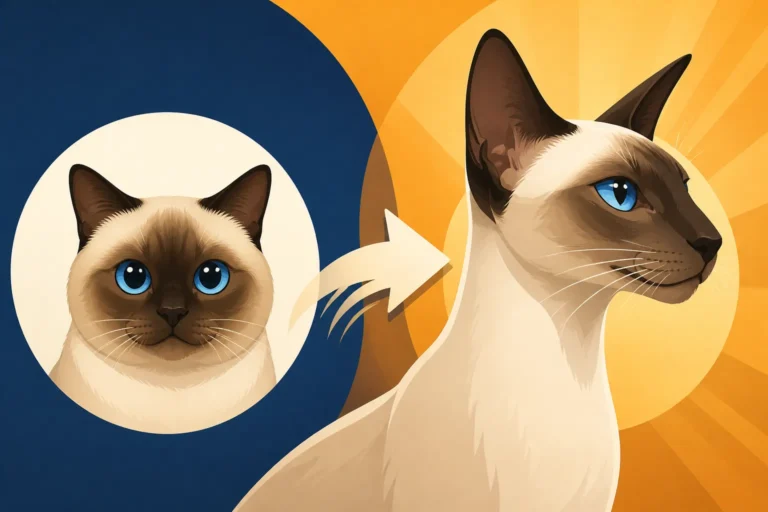
Over time, as breeders sought to enhance certain features or respond to evolving tastes in the cat fancy, the ideal Siamese appearance began to shift. The original, more moderate "applehead" or "traditional" Siamese look, exemplified by cats like Pho and Mia, gradually gave way to the more extreme, elongated "wedge" head and tubular body preferred in modern show rings. This evolution, as detailed in How the Applehead Siamese Cat Became the Wedge, shows a conscious effort by breeders to refine and exaggerate certain features, sometimes to the point of creating a cat that looks quite different from its ancestors.
Despite these changes, the fundamental elements of the Siamese cat's appearance – the points, the blue eyes, the elegant stature – remained, directly traceable to the visual impact of those first imports. Pho and Mia established the core aesthetic that would forever be associated with the breed, even as breeders experimented and sculpted new interpretations of that beauty. Their initial impression shaped the very concept of the Siamese cat in the Western mind, influencing decades of selective breeding and aesthetic preferences.
Remembering the Pioneers Who Started It All
The story of Pho and Mia is more than just a historical footnote; it's a testament to the passionate individuals who dedicate themselves to preserving and promoting specific animal breeds. They represent the spark that ignited the widespread love for Siamese cats outside of their native Siam. Remembering them is a way to honor the roots of the breed, acknowledging the initial challenges, the dedication of early enthusiasts, and the sheer wonder these cats inspired in a new world.
Their legacy is a reminder that every beloved breed has a beginning, often marked by a few courageous individuals and their animal companions who ventured into the unknown. Just as modern cat owners can easily acquire a wide range of products for their Siamese from Chewy, from specialized food to engaging toys, the early owners of Pho and Mia faced a world where such resources were unimaginable. Their success, despite these limitations, underscores the profound connection humans have always had with animals.
Today, as Siamese cats continue to captivate with their beauty, intelligence, and vocal charm, it is important to reflect on the two pioneering felines who started it all. Pho and Mia were more than just cats; they were the ambassadors of a breed, whose journey bridged continents and cultures, leaving an indelible mark on the world of cat fancying and on the hearts of countless cat lovers. Their story is a cornerstone of Siamese cat history, reminding us of the breed's exotic origins and its remarkable journey to global prominence.
| Characteristic | Early Siamese Cats (e.g., Pho & Mia Era, 1880s) | Modern Show Siamese Cat (e.g., Present Day) |
|---|---|---|
| Head Shape | More rounded, often described as "applehead" | Extreme wedge, long, and angular |
| Body Type | Lean, muscular, but often more robust | Long, tubular, and svelte |
| Ears | Moderately large, set fairly high | Very large, wide at the base, set low |
| Eye Shape | Almond-shaped | Oriental, slanted towards the nose |
| Point Coloration | Seal Point and Blue Point most common | All four traditional points (Seal, Blue, Chocolate, Lilac) and often Colorpoint Shorthair colors are recognized |
| Tail | Often featured kinks, seen as a charming fault | Long, tapering to a fine point, no kinks are ideal (though still appear genetically) |
| Voice | Known for loud, distinctive "meezer yowl" | Still renowned for its vocal nature |
| Temperament | Highly intelligent, social, demanding | Highly intelligent, social, demanding |
Disclaimer
This article is for general informational purposes only and does not constitute professional advice. Laws, prices and regulations vary by location and change over time. Consult a qualified professional for guidance on your specific situation.