Whether a Lynx Point Registers as a Siamese Cat
It can be incredibly confusing for prospective cat parents who fall in love with the striking beauty of a Lynx Point cat, only to wonder if this gorgeous feline is "officially" recognized as a Siamese. You see them advertised, you admire their unique striped points, but then you hear whispers that they're not quite a true Siamese in the eyes of some registries. This guide is here to unravel that mystery, explaining the intricate world of cat pedigrees, genetics, and the sometimes-strict rules of feline associations so you can understand exactly where the Lynx Point stands.
Understanding the Siamese Cat Standard and Point Colors
When we talk about the Siamese cat, most of us conjure an image of a sleek, elegant feline with deep blue eyes and distinct dark points—ears, face mask, paws, and tail—against a much lighter body. This iconic look is what draws so many to the breed. However, the world of cat fancy, much like any hobby with a rich history, has its precise definitions and standards that dictate what a "true" Siamese entails.
The Traditional Siamese Cat Colors
Historically, the Siamese cat was recognized in only four core point colors: Seal Point, Chocolate Point, Blue Point, and Lilac Point. These are often referred to as the "traditional" or "classic" Siamese colors, and for many years, they were the only colors accepted by the major cat registries for a cat to carry the title "Siamese." A Seal Point, with its dark brown, almost black points, is perhaps the most famous, while the Lilac Point, a dilute of the Chocolate, offers a softer, grayish-pink hue that is absolutely stunning. These colors are all variations of the same genetic mutation that causes partial albinism, where pigment only develops in cooler parts of the body. You can learn more about What a Siamese Cat's Points Are Made by Temperature and how this fascinating genetic trait works.
The reason these four colors became the standard is rooted in the breed's origins. When Siamese cats first arrived in the Western world from Siam (now Thailand), these were the colors observed and documented. Breeders worked diligently to maintain these specific point patterns and body coloration, adhering to a very strict visual ideal. Any deviation from these established norms was often considered a disqualification for show or even for registration as a purebred Siamese.
What Defines a Siamese Cat's Appearance
Beyond color, the Siamese cat has a very specific body type and head shape that contribute to its overall definition. Depending on the registry and the "style" of Siamese, this can range from the more robust, rounded "Applehead" type to the extremely slender, angular "Wedge" head favored in modern show lines. Regardless of the head shape preference, a Siamese is expected to have a svelte, muscular body, long legs, a whip-like tail, and those piercing blue, almond-shaped eyes. The contrast between the points and the body color should be clear, defining the "pointed" pattern. The texture of the coat is also a key characteristic: very short, fine, and lying close to the body, without an undercoat. If you're curious about the lineage, exploring The Breeds a Siamese Cat Founded can offer more insight into how these traits were passed on and diversified.
The breed standard is essentially a blueprint for what a perfect example of the breed should look like. It's used by judges in cat shows to evaluate individual cats and by breeders to guide their breeding programs. When a cat possesses a trait not listed in the standard, such as a different point color or pattern, it typically cannot be registered as a purebred Siamese by registries that hold to the traditional view. This is where our beautiful Lynx Point friends enter a bit of a gray area, depending on who you ask and which rulebook you're reading.
The Emergence of the Lynx Point Pattern
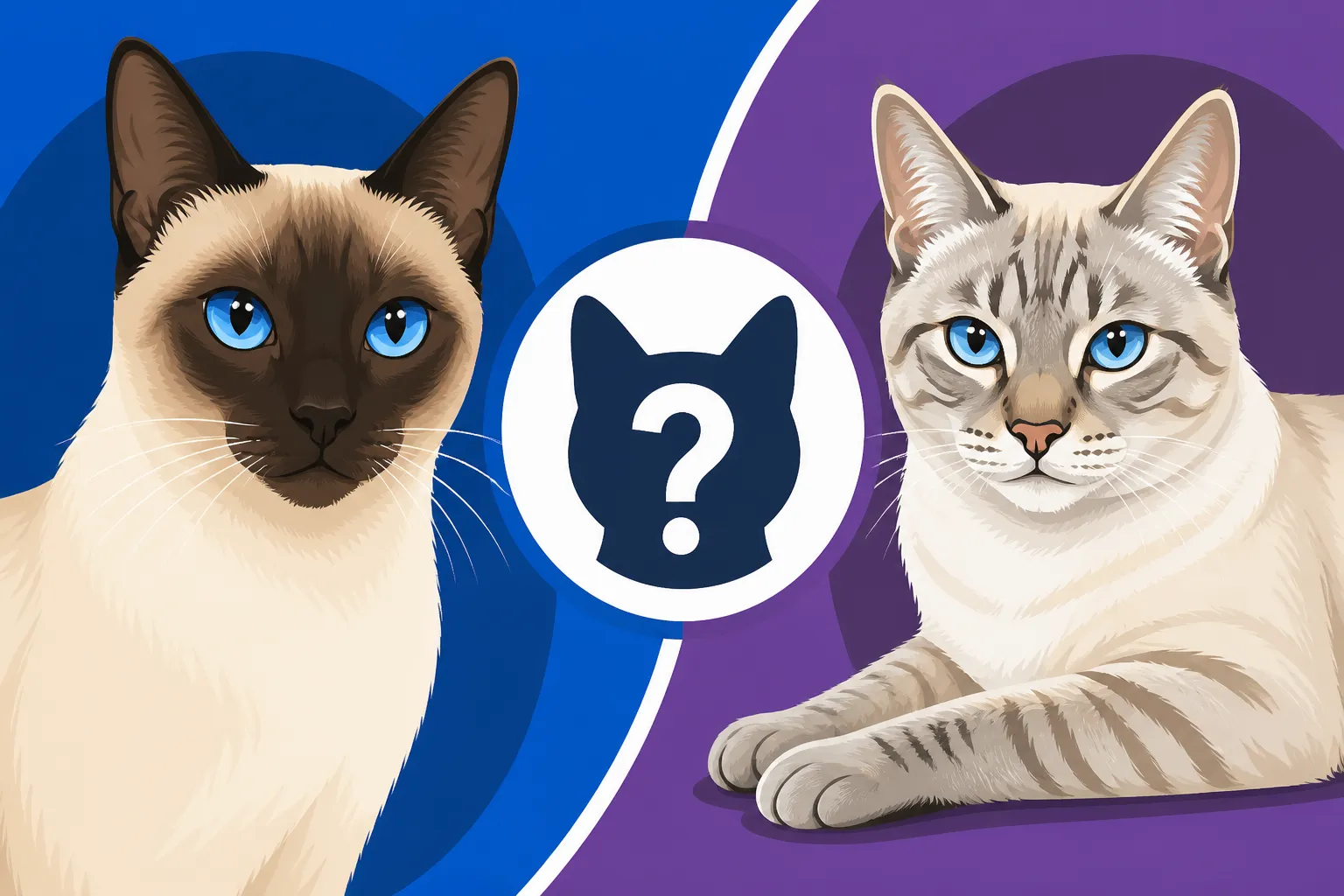
The Lynx Point Siamese, often called a Tabby Point Siamese in some parts of the world, is truly a sight to behold. It combines the classic Siamese point coloration with the distinctive tabby stripes on the points. Instead of solid-colored ears, mask, and paws, you see clear tabby markings, including an "M" on the forehead and rings on the tail. It’s a stunning variation that many find incredibly appealing, offering the best of both worlds: the elegance of the Siamese with the wild charm of a tabby.
How Lynx Point Genetics Work
The appearance of Lynx Points isn't some random occurrence; it's all thanks to a specific genetic combination. Essentially, a Lynx Point cat carries the gene for Siamese point coloration and the gene for the tabby pattern. The tabby gene, which is dominant, would normally cause stripes across the entire body. However, when combined with the temperature-sensitive gene responsible for the Siamese color restriction, the tabby pattern is only expressed in the cooler areas of the cat's body – the points! This creates those beautiful stripes on the mask, ears, legs, and tail, while the body remains largely unstriped, or at least very subtly so. It's a fascinating display of feline genetics at play.
The "M" on the forehead is a hallmark of the tabby pattern, and you'll see it clearly defined on a Lynx Point's mask. The rings on the tail and the faint stripes on the legs are also characteristic. These cats come in various point colors too, just like traditional Siamese. You can find Seal Lynx Points, Blue Lynx Points, Chocolate Lynx Points, and Lilac Lynx Points, among others, each offering a unique hue to their striped points. It's quite different from What a Siamese Cat's Eyes Cross and Its Tail Kinks, which are generally considered faults in the breed standard.
The History of the Colorpoint Shorthair
The development of the Lynx Point and other non-traditional Siamese colors often goes hand-in-hand with the creation of a separate breed: the Colorpoint Shorthair. This breed was developed through careful outcrossing programs, primarily in the United States, to introduce new colors and patterns into the Siamese lineage while maintaining the distinctive Siamese body type and temperament. Breeders specifically bred Siamese cats with American Shorthairs (or other domestic shorthairs carrying the tabby gene) and then bred back to Siamese to refine the look and body type.
The goal was to produce cats that looked and acted exactly like a Siamese, but with a broader palette of colors, including Lynx Points and Red Points. These cats are genetically Siamese, carrying the same point restriction gene, but they also carry the genes for these "new" colors or patterns. Many registries, particularly in North America, chose to create a new breed category for these cats to protect the integrity of the original Siamese standard while still recognizing and celebrating these beautiful new variations. This created a bit of a split in the cat fancy world, which we'll delve into next. If you want to dive deeper into the distinctions, read about What a Colorpoint Shorthair Is Next to a Siamese Cat.
Navigating Cat Registries: Siamese vs. Colorpoint Shorthair
This is where the rubber meets the road for Lynx Point cats. The question of whether a Lynx Point registers as a Siamese isn't a simple yes or no; it depends entirely on which cat registry you're consulting and where you are in the world. Different organizations have different historical approaches and philosophical views on breed standards and genetic diversity.
The Cat Fanciers' Association (CFA) Perspective
In North America, the Cat Fanciers' Association (CFA) is one of the largest and most influential cat registries. Their stance on the Lynx Point is quite clear: it is not registered as a Siamese cat. Instead, Lynx Points (along with Red Points and Cream Points) are registered under the breed name Colorpoint Shorthair.
The CFA maintains a very traditional view of the Siamese breed, strictly adhering to the original four point colors: Seal, Chocolate, Blue, and Lilac. Any deviation from these four colors, even if the cat has the quintessential Siamese body type and temperament, means it falls into a different breed category. This approach ensures that the Siamese breed, as recognized by the CFA, remains true to its historical roots and appearance. So, if you're looking at a Lynx Point in a CFA-affiliated show, it will be competing as a Colorpoint Shorthair, not a Siamese. This distinction is paramount for breeders who show their cats and for owners who wish to understand their cat's pedigree.
The International Cat Association (TICA) and Other Registries
Now, let's look across the aisle. The International Cat Association (TICA) takes a more inclusive approach. TICA, which is a global registry, recognizes Lynx Points (which they call Tabby Points) as a color variation within the Siamese breed. This means that a Lynx Point with the correct Siamese conformation and temperament can indeed be registered as a Siamese cat with TICA. This reflects a more modern perspective that embraces genetic diversity and new color patterns as acceptable evolutions within a breed, rather than requiring a separate breed designation.
Many other registries around the world, particularly in Europe and Australia, also follow a similar philosophy to TICA, accepting Lynx Points as a valid color of the Siamese. For instance, the Governing Council of the Cat Fancy (GCCF) in the UK accepts Lynx Point Siamese, often referring to them as "Tabby Point Siamese."
Here's a simplified breakdown of how different major registries typically classify Lynx Points:
| Registry | Classification of Lynx Point | Implication |
|---|---|---|
| Cat Fanciers' Association (CFA) | Colorpoint Shorthair (separate breed) | Not a Siamese; competes in Colorpoint Shorthair category. |
| The International Cat Association (TICA) | Siamese (a color variation within the breed) | Registered as Siamese; competes in Siamese category. |
| Governing Council of the Cat Fancy (GCCF) | Siamese (Tabby Point Siamese, a color variation) | Registered as Siamese; competes in Siamese category. |
| Fédération Internationale Féline (FIFe) | Siamese (recognizes various tabby point colors) | Registered as Siamese; competes in Siamese category. |
This table highlights the differing views, which can be a real headache for owners or breeders trying to navigate the system. It means that a cat perfectly acceptable as a Siamese in one organization might be a Colorpoint Shorthair in another. This is a critical point when choosing a breeder or understanding your cat's pedigree papers.
Practical Implications for Breeders and Owners
For breeders, this distinction is huge. If a breeder is aiming to produce CFA-registered Siamese cats, they cannot breed Lynx Points and call them Siamese. They would need to register them as Colorpoint Shorthairs, which is a different show ring and often a different set of breeding goals. However, a breeder who registers with TICA or GCCF can confidently produce and register Lynx Point Siamese. This difference influences breeding programs, genetic lines, and how they market their kittens. Which tests the Siamese Cat health panel covers might be consistent across both, but the pedigree classification won't be.
For owners, understanding this can help manage expectations, especially if they aspire to show their cat or are particular about pedigree papers. It doesn't make a Lynx Point any less beautiful or any less "Siamese" in personality, but it does affect its official classification. When you're looking for a kitten, always ask the breeder which registries they use and how their Lynx Points are classified. This transparency is key to finding the right match for your home and avoiding any surprises down the line. If a breeder is upfront about their cats and their registration, it's a good sign they're reputable.
Beyond Registration: What Does it Mean for Your Cat?
Setting aside the nuances of cat show rules and official pedigrees, what does being a Lynx Point really mean for your actual cat, living its life in your home? The truth is, it means very little in terms of daily life, health, or temperament. Whether your cat is officially a "Siamese" or a "Colorpoint Shorthair" on paper, its core characteristics are likely to be very much aligned with what you expect from a Siamese.
Health and Temperament in Lynx Point Cats
A Lynx Point, regardless of its specific registry classification, typically possesses the same vibrant personality and distinctive vocalizations that Siamese cats are famous for. They are highly intelligent, incredibly affectionate, and notorious for their "Meezer" yowls and conversational nature. You can expect a Lynx Point to be highly interactive, demanding of attention, and forming strong bonds with their human companions. They are often described as "dog-like" in their loyalty and their desire to be involved in everything you do. They'll follow you from room to room, "talk" to you about their day, and snuggle under the covers at night. Their energy levels are typically high, and they thrive on mental stimulation and play. What a Siamese Cat's Temperament Is Really Like applies just as much to a Lynx Point.
In terms of health, Lynx Point cats generally share the same health profile as traditional Siamese cats. They are known for being a relatively healthy breed with a good lifespan, often living The Fifteen to Twenty Years a Siamese Cat Gets. However, like all purebred cats, they can be predisposed to certain genetic conditions such as amyloidosis or progressive retinal atrophy (PRA). A good breeder, whether their Lynx Points are registered as Siamese or Colorpoint Shorthairs, should be screening their breeding cats for these potential issues. For example, some may offer testing for PRA, which can affect vision, as discussed in Whether the rdAc DNA Test Works on a Siamese Cat. It's always a good idea to discuss the health history of the parents and grandparents with any breeder you consider. Many owners also opt for pet insurance, like policies from Healthy Paws, to help manage unexpected veterinary costs, regardless of their cat's specific breed classification.
Finding a Reputable Breeder
Finding a reputable breeder is crucial, no matter if you're looking for a traditional Seal Point Siamese or a stunning Lilac Lynx Point. A good breeder prioritizes the health and temperament of their kittens above all else. They will be transparent about their breeding practices, health screenings, and the registration status of their cats.
When searching for a Lynx Point, look for a breeder who:
- Is affiliated with recognized cat registries: Even if you don't plan to show, registration indicates adherence to breed standards and ethical breeding practices. Ask them if they register with TICA, GCCF, or if they breed Colorpoint Shorthairs registered with CFA.
- Screens for common health issues: They should be knowledgeable about potential genetic predispositions in Siamese and Colorpoint Shorthairs and take steps to mitigate risks. They should openly discuss their screening processes.
- Provides a clean, stimulating environment: Kittens should be raised in a home environment, well-socialized, and accustomed to household sights and sounds. This helps them grow into confident, well-adjusted companions.
- Offers a health guarantee and a clear contract: This shows their commitment to the health of their kittens.
- Is knowledgeable and willing to answer all your questions: A good breeder will be passionate about their cats and happy to educate you. They won't rush you or be evasive.
- Doesn't rehome kittens too young: Kittens should stay with their mother until at least 12 weeks of age for crucial socialization and development.
Don't be afraid to ask for references, visit the cattery if possible, and engage in thorough conversations. A truly ethical breeder will also ask you a lot of questions, making sure their kittens are going to loving, appropriate homes. You might even discuss what types of food the kittens are accustomed to and whether the breeder recommends a specific diet. The focus should always be on finding a healthy, well-adjusted companion, whose official breed classification is secondary to their well-being and suitability for your family.
Disclaimer
This article is for general informational purposes only and does not constitute professional advice. Laws, prices and regulations vary by location and change over time. Consult a qualified professional for guidance on your specific situation.