Whether a Cross Eyed Siamese Cat Sells for Less
It's perfectly natural to wonder about every little unique trait our beloved Siamese cats possess, especially when it comes to something as distinctive as crossed eyes. For a long time, this endearing quirk was almost synonymous with the breed, but these days, you might see fewer of them. This can lead to a very real question for potential owners: does this unique look impact the price tag, and what does it mean for the cat itself? This guide will dive deep into the history, genetics, and market realities surrounding crossed eyes in Siamese cats, helping you understand what to expect.
What Causes Crossed Eyes in Siamese Cats?
The phenomenon of crossed eyes, or strabismus, in Siamese cats is quite fascinating and directly tied to their unique genetics, specifically the same genetic mutation that gives them their distinctive point coloration and striking blue eyes. It's not just a random occurrence; there's a biological reason behind it, and it's something deeply embedded in the breed's origins.
The Genetic Link to Coloration
The gene responsible for the Siamese cat's famous color points, known as the Himalayan gene (or cs allele), is a temperature-sensitive albinism gene. This gene produces the enzyme tyrosinase, which is essential for melanin production (the pigment that gives fur its color). However, this enzyme only functions at cooler temperatures. That's why Siamese cats have darker points on their cooler extremities—ears, nose, paws, and tail—and a lighter body where their core temperature is warmer.
This very same genetic mutation also has a quirky side effect on the optic nerves. In Siamese cats, the optic nerves, which carry visual information from the eyes to the brain, are wired differently. Instead of the typical pattern where some nerves cross over and some stay on the same side, a higher percentage of optic nerves in Siamese cats cross over. To compensate for this unusual wiring and ensure they can still interpret visual information correctly, their eyes naturally cross. It's an adaptation, not a defect, to help their brains process the visual input properly. This is the core reason Why a Siamese Cat's Eyes Cross.
Is it a Health Concern?
For the vast majority of Siamese cats, crossed eyes are purely an aesthetic trait and do not pose a significant health problem or lead to severe vision impairment. They aren't typically "blind" or unable to navigate their world effectively. Their brains have simply adjusted to the visual input, allowing them to lead perfectly normal, active lives. You'll see them jump, play, and chase toys with the same enthusiasm as any other cat.
However, in very rare cases, severe strabismus could be associated with other underlying neurological conditions. But for the characteristic crossed eyes seen in the breed, it's generally considered benign. It’s important to distinguish this genetic trait from strabismus caused by injury, illness, or other neurological issues, which would indeed be a health concern and something a vet would want to investigate. If you're concerned about a sudden onset of crossed eyes in an adult cat, that's always a good reason for a veterinary visit.
The History and Breed Standard of Crossed Eyes
The perception and acceptance of crossed eyes in Siamese cats have evolved significantly over the decades. What was once considered a defining characteristic has, for many, become a trait to be selectively bred out. Understanding this historical shift helps explain why you might see varying attitudes toward this feature today, and how it impacts pricing and availability.
From Defining Trait to "Fault"
In the early days of the Siamese cat breed, particularly when they first arrived in the Western world from Siam (now Thailand), crossed eyes were incredibly common. Many of the original Siamese cats exhibited this trait, and it was simply part of their exotic charm. Legends even arose to explain it, like the tale of Siamese cats guarding a royal goblet and crossing their eyes in concentration. This trait was so prevalent that it was, for a time, even accepted within early breed standards.
However, as cat fancy evolved and selective breeding became more sophisticated, breeders began to favor certain physical characteristics. The "perfect" look, as defined by various associations like the Cat Fanciers' Association (CFA) or The International Cat Association (TICA), shifted. Over time, crossed eyes transitioned from an accepted characteristic to a "fault" or even a "disqualification" in the show ring, particularly for the modern "wedge" head type. This meant that cats with strabismus could not compete for top honors, which naturally led breeders aiming for show success to select against the trait. You can learn more about these standards in The Siamese Cat Standard Asks For.
Traditional vs. Modern Siamese and the "Look"
The divergence in breed standards and desired aesthetics also led to a split in what people consider a "Siamese cat." On one side, you have the modern, "wedge-head" Siamese, characterized by a long, tubular body, large ears set wide apart, and a distinctively triangular head. Breeders focusing on this type have often worked diligently to eliminate crossed eyes, as it's not considered desirable by current show standards. Their goal is a sleek, refined, and often extreme appearance.
On the other side, there are "traditional" or "applehead" Siamese cats. These cats retain a more rounded, robust body, a softer, apple-shaped head, and generally have a less extreme appearance than their modern counterparts. In these lines, crossed eyes can still be found more frequently, and some breeders even embrace them as part of the historical "look" of the breed. For enthusiasts of the traditional type, a slight eye crossing might even be seen as an authentic throwback to the breed's origins. Understanding these different aesthetic preferences is key to grasping the market dynamics. Whether an Applehead Siamese Cat Is Registrable often comes up in this context, too.
Market Demand and Breeder Practices
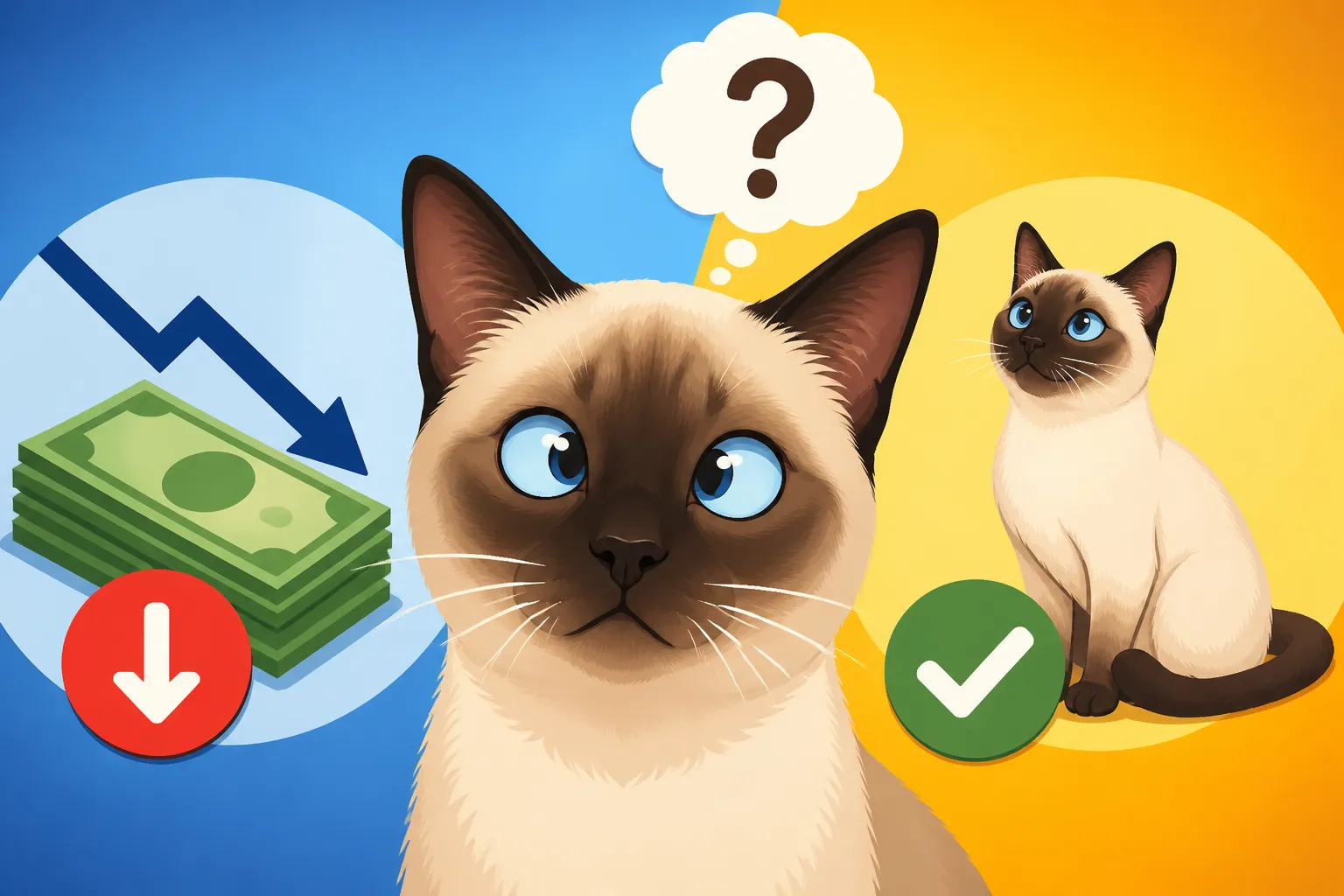
So, does a cross-eyed Siamese cat sell for less? The answer isn't a simple yes or no; it largely depends on the breeder, the buyer's priorities, and the specific market segment. While show breeders typically price them lower (or not sell them for breeding), ethical pet breeders might see little difference, focusing more on health and temperament.
The Impact on Price and Availability
For breeders who adhere strictly to modern show standards, a kitten with crossed eyes might indeed be offered at a lower price point. These kittens are often sold as "pet quality" rather than "show quality" or "breeding quality," because the strabismus would prevent them from competing successfully. A show breeder might have a tiered pricing structure, where a kitten with a conformational fault like crossed eyes would be at the lower end. This isn't because the kitten is unhealthy or less loving, but simply because it doesn't meet the stringent visual criteria for showing.
Conversely, for a breeder specializing in traditional Siamese lines, or for smaller, hobby breeders who prioritize health and temperament over strict show conformity, a kitten with crossed eyes might not see a significant price reduction. If the kitten is healthy, well-socialized, and has a wonderful personality, its crossed eyes might simply be seen as part of its unique charm. These breeders understand that many pet owners are looking for a beloved companion, not a show contender, and are less concerned with aesthetic "faults."
The price of any What a Siamese Cat Kitten Costs From a Breeder can vary wildly based on lineage, breeder reputation, location, and demand, but crossed eyes are typically a minor factor compared to overall health, temperament, and pedigree for pet homes.
Finding a Cross-Eyed Siamese
If you're specifically looking for a cross-eyed Siamese cat, your best bet might be to seek out breeders who focus on traditional Siamese lines or to inquire with breeders about kittens that might be deemed "pet quality" due to this trait. It's perfectly acceptable to express your preference for this historical feature. Be upfront with breeders about what you're looking for. Some will consider it a non-issue for a pet home, while others might explain their breeding goals and why they aim for straight eyes.
Another excellent avenue is Siamese cat rescues. Many wonderful Siamese and Siamese-mix cats end up in rescues for various reasons, and some of them will undoubtedly have crossed eyes. Adopting from a rescue is often a more affordable option than buying from a breeder, and it gives a deserving cat a loving home. When considering a rescue, always ask Whether a Rescue Siamese Cat Has Any History to ensure you understand their background and needs.
Adopting a Cross-Eyed Siamese Cat
Bringing any cat into your home is a big decision, and it’s especially exciting with a Siamese! When you’re considering a cross-eyed Siamese, your focus should always be on their overall health, temperament, and how well they’ll fit into your life, rather than solely on the specific aesthetic or a perceived discount. Remember, these cats are so much more than their looks!
Prioritizing Health and Temperament
No matter how striking or charming a cat's appearance, their health and personality should always be your top priorities. A reputable breeder or rescue will be transparent about any known health issues in their lines and will be able to tell you a lot about the kitten's temperament. Even if a Siamese has crossed eyes, they should still be bright, playful, and show signs of being well-socialized. Look for clear eyes, clean ears, a healthy coat, and an energetic demeanor.
Ask about the kitten's parents and their health history. While crossed eyes are generally benign, ensuring the overall health of the lineage is crucial. You want a cat that is genetically sound and has been raised in a stimulating, loving environment. This focus ensures you bring home a companion who will thrive and bring joy for many years, regardless of their visual quirks. After all, the cost of ongoing vet care can far outweigh the initial purchase price, so starting with a healthy cat is paramount.
Living with a Cross-Eyed Companion
Living with a cross-eyed Siamese is, for all intents and purposes, just like living with any other Siamese cat. They are incredibly intelligent, vocal, and affectionate companions. Their unique vision typically doesn't hinder their ability to navigate your home, play, or bond with you. Many owners report that their cross-eyed Siamese shows no noticeable difference in their daily activities compared to straight-eyed cats. They may have slightly less depth perception, but cats are incredibly adaptable, relying on whiskers, hearing, and memory to compensate.
Focus on providing a stimulating environment, plenty of playtime, and lots of interaction. These cats are known for their strong personalities and their desire to be involved in everything you do. They'll follow you from room to room, "talk" to you constantly, and demand your attention. Their loyalty and charm are what truly define them, far more than any physical trait. Remember, a cat's What a Siamese Cat's Temperament Is Really Like is its most important feature.
Budgeting for Long-Term Care
When considering the "cost" of a Siamese cat, the initial purchase price is just a small piece of the puzzle. The long-term costs of food, litter, veterinary care, toys, and general enrichment add up significantly over the Twenty Years of a Siamese Cat, Priced Out. Whether your Siamese has crossed eyes or not, these ongoing expenses will be largely the same.
It's wise to budget for things like high-quality cat food, regular vet check-ups, vaccinations, and potential emergency care. Pet insurance, such as a policy from Healthy Paws, can be a lifesaver for unexpected medical bills, helping to cover a significant portion of the costs if your cat faces an illness or injury. While crossed eyes themselves aren't usually a medical problem, ensuring your cat's overall well-being throughout their life is a considerable financial commitment. Don't let the potential for a slightly lower initial price for a cross-eyed cat overshadow the importance of preparing for the full twenty-year journey.
Comparison of Siamese Cat Eye Traits
To further illustrate the nuances we've discussed, here's a quick comparison of the perceived impacts of crossed versus straight eyes in Siamese cats:
| Trait | Common Historical Perception | Modern Show Standard View | Impact on Pet Home Value | Impact on Show/Breeding Value |
|---|---|---|---|---|
| Crossed Eyes | Common, endearing, part of breed's exotic look | Fault or disqualification, undesirable | Minimal, sometimes preferred for "classic" look | Significantly reduced or none (pet quality only) |
| Straight Eyes | Less common in early breed, desired by some | Highly desirable, essential for show champions | No impact, standard look | High, essential for show/breeding lines |
This table highlights that for a pet owner seeking a companion, the presence of crossed eyes is far less of a factor than it is for someone looking to compete in cat shows.
Final Thoughts on Crossed Eyes and Value
Ultimately, the question of whether a cross-eyed Siamese cat sells for less is less about the cat's inherent worth and more about human perceptions and the specific goals of breeders. For show-focused breeders, it's a fault that will reduce the price of a kitten. For pet owners, it's often a charming, unique characteristic that hearkens back to the breed's origins.
These cats are just as loving, vocal, and intelligent as their straight-eyed counterparts, and often just as healthy. If you fall in love with a cross-eyed Siamese, embrace their unique beauty and focus on providing them with a happy, healthy home. Their value lies not in their price tag, but in the immense joy and companionship they bring to your life. The visual quirk of Why a Siamese Cat's Eyes Cross is a part of their unique heritage, and for many, it only adds to their undeniable appeal.
Disclaimer
This article is for general informational purposes only and does not constitute professional advice. Laws, prices and regulations vary by location and change over time. Consult a qualified professional for guidance on your specific situation.