Whether Eye Color Changes a Siamese Cat’s Price
It’s a common misconception that a Siamese cat with a particularly vibrant blue eye color, or even a perceived "rare" eye hue, might command a higher price tag. Many prospective owners, enchanted by the piercing blue gaze of these magnificent felines, wonder if certain shades or intensities of blue push the cost up. However, the reality for purebred Siamese cats is much simpler: eye color doesn't change their price, because by definition, a purebred Siamese cat must have blue eyes.
The Unchanging Blue: Why Siamese Cats Always Have Blue Eyes
When you're looking at a true Siamese cat, one of their most defining and captivating features is undoubtedly their startlingly blue eyes. This isn't just a preferred trait; it's a fundamental characteristic of the breed, hardwired into their genetics. Unlike many other cat breeds that can sport a rainbow of eye colors from green to gold to amber, the Siamese is a one-trick pony in this department, and that trick is always blue.
The Genetic Link Between Points and Blue Eyes
The reason behind this consistent blue is fascinating and entirely genetic. Siamese cats carry a specific gene mutation, often referred to as the "Himalayan gene" or "colorpoint gene." This gene is responsible for their distinctive point coloration—the darker fur on their ears, face, paws, and tail—and it's directly linked to their eye color. This gene affects an enzyme called tyrosinase, which is crucial for melanin production, the pigment that gives color to skin, hair, and eyes.
In Siamese cats, this mutated tyrosinase enzyme is temperature-sensitive. It only works efficiently in cooler parts of the body, which is why their extremities (the "points") develop darker pigmentation, while their core body remains a lighter shade. Why a Siamese Cat's Pigment Only Works When Cool is a deep dive into this fascinating process. Critically, this same genetic mechanism also affects eye pigmentation. The mutation prevents melanin from developing fully in the iris, resulting in the absorption of light that gives the illusion of blue eyes. It's not a pigment in itself, but rather the way light interacts with the unpigmented layers of the iris, similar to how the sky appears blue. Therefore, any cat that carries the full expression of the Siamese colorpoint gene will invariably have blue eyes. If a cat has green or yellow eyes, it’s simply not a purebred Siamese, regardless of how much it might look like one in other respects.
Not a Spectrum, But a Standard
Because the blue eye color is a direct result of the colorpoint gene, there isn't a spectrum of "rare" or "more desirable" blue shades within the purebred Siamese world that would affect their price. While some might appear a deeper sapphire and others a lighter sky blue, these subtle variations are not typically considered a factor in pricing by reputable breeders. The key is simply that they are blue. A breeder isn't going to charge more for a cat with "cerulean" eyes versus "azure" eyes because the genetic blueprint dictates blue, period. The depth and clarity of the blue are often part of the breed standard for show cats, but it’s an expectation of the breed, not a variable that drives up cost. How Deep a Show Siamese Cat's Blue Should Be explains more about these nuances for exhibition animals.
Breed Standards and Eye Color: What Matters to a Breeder
For a serious, ethical Siamese breeder, adherence to the breed standard is paramount. This standard, set by major cat registries like the Cat Fanciers' Association (CFA) or The International Cat Association (TICA), outlines the ideal physical characteristics of the breed. When it comes to eyes, the standard is quite clear and consistent across the board: deep, vivid blue.
What the Standard Asks For
The breed standard for the Siamese cat specifically calls for clear, brilliant blue eyes. While there might be slight nuances in wording between different registries, the essence remains the same. They are looking for eyes that are almond-shaped and set at a slant towards the nose, creating that distinctive oriental look. What a Siamese Cat Looks Like by the Standard delves into all the physical traits. The intensity of the blue is appreciated, especially in show-quality cats, but it's not a factor that elevates a cat's price above another within the breed standard. It's more about meeting the standard than exceeding it in a way that creates a premium.
For example, if a cat has eyes that are a pale, watery blue, or worse, have any hint of green or yellow, it would be considered a fault in the show ring. Such a cat would not be "less expensive" because of its eye color, but rather, it wouldn't be considered show quality at all. Its price might be lower because it deviates from the breed standard, not because its blue is a different shade. A reputable breeder aims to produce cats that meet the standard, and blue eyes are non-negotiable.
Faults Versus Features
It's also important to distinguish between desirable traits and genetic faults. Historically, Siamese cats were known for certain physical traits that are now considered faults in the modern show ring, such as crossed eyes or kinked tails. Legends even grew up around these unique features, like the tale of temple cats guarding a vase, which led to their eyes crossing. Why a Siamese Cat's Eyes Cross in the Legend is a fascinating read on this topic.
While these traits might hold sentimental value or be seen as "traditional" by some, they are actual genetic deviations that breeders actively try to eliminate. A Siamese cat with crossed eyes, while endearing to many pet owners, would not command a higher price; in fact, it might be priced lower by a breeder because it's a disqualifying fault for showing and a trait they don't wish to perpetuate. Similarly, a very pale blue eye that doesn't meet the "deep, vivid" description might mean the kitten is sold as a pet-quality animal rather than a show-quality one, which does affect the price, but it's about failing to meet the standard, not having a "rare" eye color.
Factors That Do Influence a Siamese Cat's Price
So, if eye color is a non-issue, what does genuinely impact the price you'll pay for a Siamese cat? The answer lies in a combination of factors related to pedigree, health, breeding practices, and the breeder's goals.
Pedigree and Lineage
The biggest factor influencing a Siamese cat's price is often its pedigree. A cat from champion lines, meaning its parents or grandparents have won titles in cat shows, will almost always be more expensive. These breeders invest significant time and money into carefully selecting breeding pairs, attending shows, and ensuring their cats are top examples of the breed standard. They are selling not just a kitten, but a piece of that proven lineage. A kitten from such a background might be priced significantly higher than one from unproven lines, even if both are purebred. What a Siamese Cat Kitten Costs From a Breeder can give you a general idea of the starting point for these prices.
Breeder Reputation and Health Screening
An ethical, reputable breeder is another critical factor. These breeders don't just breed for looks; they prioritize health and temperament. They conduct extensive health screenings for common Siamese health issues like Progressive Retinal Atrophy (PRA) and Amyloidosis. While there isn't a DNA test for Siamese cat amyloidosis, There Is No DNA Test for Siamese Cat Amyloidosis goes into detail on why this is the case. However, good breeders will be transparent about health histories and often offer health guarantees. They will also ensure their kittens are well-socialized, vaccinated, and spayed/neutered before going to their new homes. All these efforts, while essential for a healthy pet, add to the breeder's costs and, consequently, the kitten's price.
You might find pet insurance providers like Healthy Paws to be a good investment when bringing a new kitten home, especially from a breeder who emphasizes health but acknowledges the inherent risks of any breed. Planning for potential future vet costs is always a smart move.
Head Type and Conformation
The shift in Siamese cat aesthetics over the decades has also created different markets and price points. The "modern" or "wedge-head" Siamese, with its long, angular head, large ears, and slender body, is what is typically seen in cat shows today. How the Siamese Cat's Head Changed Shape in Fifty Years illustrates this evolution. These cats tend to command higher prices, especially if they are considered "show quality." On the other hand, the "applehead" or "traditional" Siamese, with a rounder head and stockier build, represents an older style of the breed. While still purebred, they are often less expensive, as they don't fit the current show standard. Why Applehead Siamese Cat Breeders Charge Less sheds more light on this pricing difference.
Point Color Variation
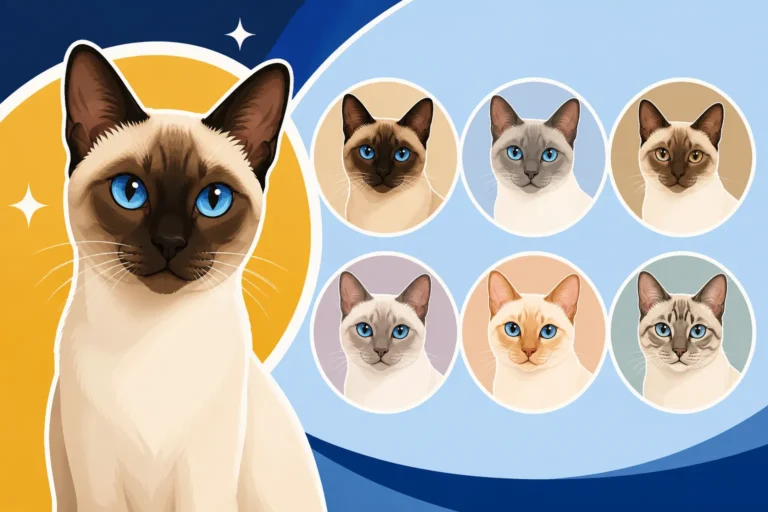
While eye color is consistently blue, the body point colors do vary and can sometimes influence price. The four original or "classic" point colors recognized by all major registries are Seal Point, Blue Point, Chocolate Point, and Lilac Point. Of these, Lilac Points often command a slightly higher price due to being less common and generally harder to breed for that specific delicate, frosty grey tone. Why a Lilac Point Siamese Cat Costs More Than a Seal elaborates on this. Other colors like Red Point (or Flame Point) and Lynx Point (or Tabby Point) are also popular but are often recognized as part of the Colorpoint Shorthair breed in some registries, or as accepted Siamese variations in others.
Show vs. Pet Quality
A breeder typically categorizes kittens into "show quality" or "pet quality." Show quality kittens possess traits that closely adhere to the breed standard and have the potential to do well in competitions. These kittens are priced highest. Pet quality kittens, while still healthy and purebred, might have minor flaws (like a less-than-perfect ear set, a slightly lighter blue eye, or a small conformational imperfection) that would prevent them from being competitive in shows. They make equally wonderful companions and are usually offered at a lower price. This distinction is one of the most significant determinants of cost.
Location and Demand
Geographic location can play a role, as breeders in areas with higher demand or fewer active breeders might charge more. Similarly, the overall demand for Siamese kittens at any given time can affect prices. What a Siamese cat costs can vary widely. Why Siamese Cat Prices Range So Widely explores these variables in more detail.
Dispelling Myths: What Doesn't Affect the Price Tag
Beyond eye color, there are other common myths about what might inflate or deflate a Siamese cat's price. Understanding these can help you approach a breeder with realistic expectations.
Tail Kinks and Crossed Eyes
As mentioned earlier, features like a kinked tail or crossed eyes, while charming to some, are considered genetic faults. Reputable breeders actively work to eliminate these traits from their lines because they are deviations from the breed standard, not desirable rarities. Therefore, a Siamese cat with a kinked tail or crossed eyes will not be more expensive; if anything, it might be sold at a lower "pet only" price, or a breeder might even choose to not breed from lines that consistently produce these faults. Whether Crossed Eyes Are Still Bred Out of Siamese Cats gives a historical perspective on this.
Coat Length or Texture Deviations
The Siamese cat is renowned for its short, sleek, close-lying coat. Any deviation from this, such as longer fur, would indicate a mix with another breed (like a Balinese, which is essentially a long-haired Siamese) or a genetic anomaly. A true purebred Siamese does not have long hair, and therefore, a "long-haired Siamese" is not a more expensive or rare version of the breed; it's a different breed or a mixed breed entirely.
Perceived Rarity of Point Color
While some point colors are less common, true rarity isn't always the sole driver of price. For instance, a Seal Point Siamese is the most traditional and common, but a well-bred Seal Point from champion lines can still be more expensive than a poorly bred Lilac Point. The overall quality and adherence to the breed standard across all characteristics (including body type, head shape, ear set, and temperament) will usually outweigh the perceived rarity of a point color.
When considering the overall cost of ownership, remember that feeding your cat high-quality food can contribute to their health and longevity, irrespective of their purchase price. Also, stocking up on essential supplies from retailers like Chewy helps manage ongoing expenses.
What to Expect for Eye Color in a Siamese Kitten
When you're looking at Siamese kittens, you'll notice that they are born entirely white or very pale. Their points develop over the first few weeks and months as they are exposed to cooler temperatures. Similarly, their eyes are not a deep blue at birth. Kittens are typically born with cloudy blue eyes, which gradually clear and deepen to their mature blue shade over the first few weeks. How Old a Siamese Cat Kitten Is When Points Show helps understand this development timeline.
A responsible breeder will monitor the kittens' development, including eye color. They will ensure that the kittens' eyes are the correct blue and almond shape. If a kitten’s eyes don't develop to the expected blue hue or shape, it would be noted as a pet-quality trait, affecting its classification and potentially its price, but always remaining within the blue spectrum for a purebred.
Ultimately, while the depth and clarity of a Siamese cat's blue eyes are a beautiful and cherished trait, they are a given for the breed. They don't represent a variable that will significantly alter the purchase price of a well-bred purebred Siamese kitten. The price is determined by the genetics of their lineage, the breeder's dedication to health and standards, and the overall quality of the individual cat.
Here’s a summary of factors:
| Factor Impacting Price | Description | Influence on Price |
|---|---|---|
| Pedigree | Lineage from champion or titled cats. | High |
| Breeder Reputation | Ethical breeder with health screening, guarantees, and socialization. | High |
| Head Type | Modern "wedge-head" (show standard) vs. traditional "applehead." | Moderate to High |
| Point Color | Rarity/demand for specific recognized point colors (e.g., Lilac Point often slightly higher). | Moderate |
| Show Quality | Kitten meets breed standard perfectly for exhibition. | Highest |
| Pet Quality | Healthy purebred kitten with minor flaws not suitable for show/breeding. | Moderate to Low |
| Location/Demand | Geographic market and current popularity of the breed. | Variable |
| Eye Color | All purebred Siamese have blue eyes; variations in blue intensity are expected, but presence of any other color makes it not Siamese. | None (for blue) |
| Crossed Eyes | Genetic fault, not a rare feature that increases value. | Decreases (pet only) |
| Kinked Tail | Genetic fault, not a rare feature that increases value. | Decreases (pet only) |
When searching for your next feline companion, focus on finding a reputable breeder who prioritizes health, temperament, and adherence to the overall breed standard, rather than being swayed by marketing claims about "rare" eye colors. A healthy, well-adjusted Siamese cat, regardless of the precise shade of its already beautiful blue eyes, will bring years of joy and companionship.
Disclaimer
This article is for general informational purposes only and does not constitute professional advice. Laws, prices and regulations vary by location and change over time. Consult a qualified professional for guidance on your specific situation.