Why a Siamese Cat’s Voice Is So Low Pitched
One of the most striking things you'll discover when you welcome a Siamese cat into your life is their voice. It's not just that they're vocal; it's often the unique, deep, almost guttural quality of their meows and yowls that can take new owners by surprise. If you've ever wondered why your elegant Siamese sounds more like a seasoned opera singer than a tiny domestic cat, you're in the right place. This guide will delve into the fascinating reasons behind a Siamese cat's low-pitched voice, exploring everything from their unique anatomy to their deeply ingrained communication style.
The Distinctive Anatomy Behind a Siamese Cat's Voice
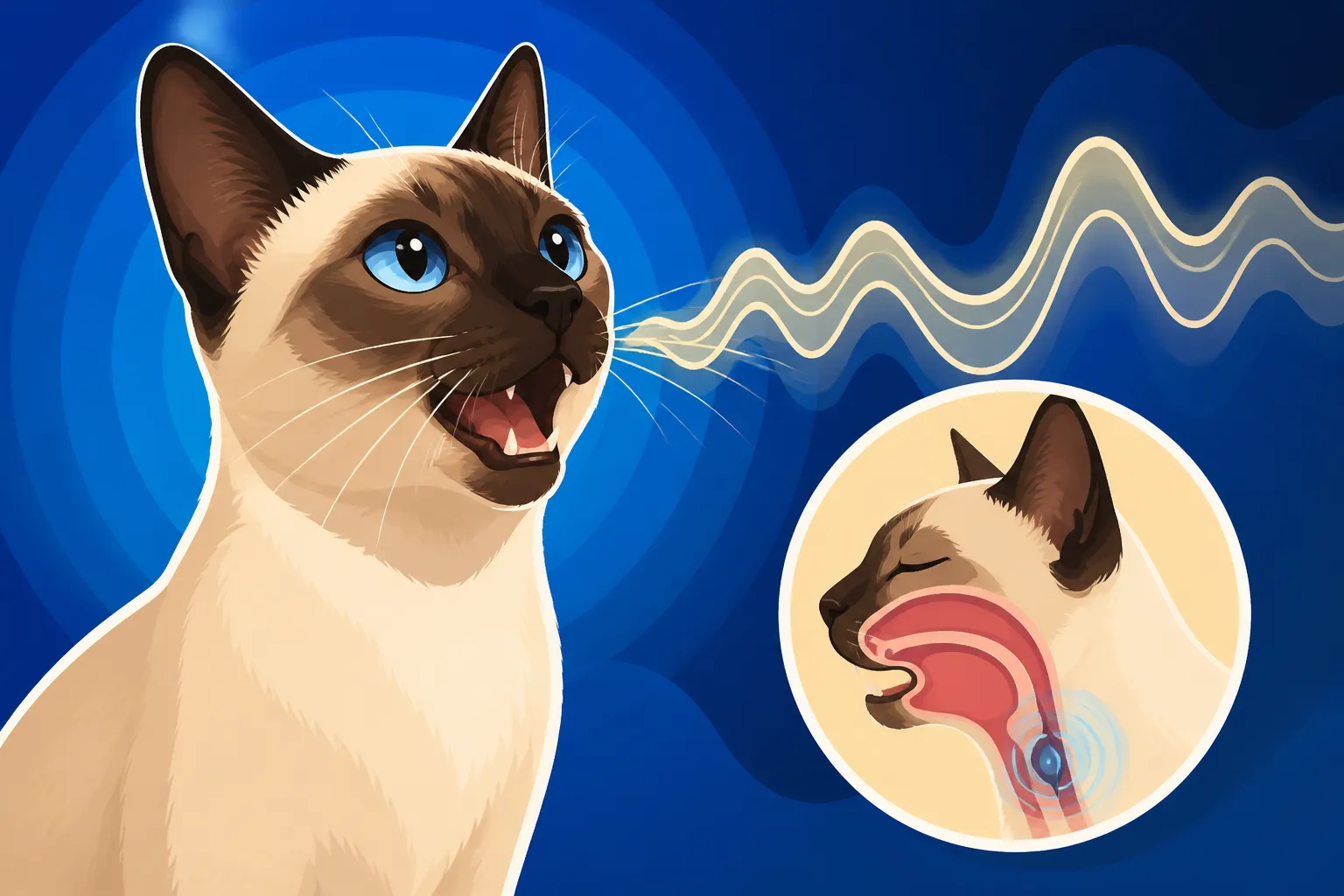
Let's start with the physical side of things, because a cat's voice, like a human's, is very much a product of their anatomy. When you think of a typical house cat's meow, you probably imagine a higher-pitched, perhaps a bit squeaky sound. Not so with many Siamese cats! Their vocal cords and larynx seem almost purpose-built for their dramatic pronouncements.
Siamese cats often possess a larger and more robust larynx compared to many other domestic cat breeds of similar size. Think of it like a musical instrument: a larger soundbox and longer strings generally produce a deeper tone. While we can't measure their vocal cords precisely without specialized veterinary examination, the overall structure of their throat and vocal apparatus appears to be conducive to lower frequencies. This isn't just a theory; many veterinarians and long-time Siamese enthusiasts observe this difference. It's part of what gives them that signature "Meezer Yowl" – a sound that's less a simple meow and more a compelling, resonating demand for attention or conversation.
This anatomical difference might also explain why they can sustain their vocalizations for so long and with such intensity. It's not just a quick "meow"; it can be a drawn-out, multi-tonal monologue that echoes through your home. Imagine a talented singer with a naturally deep voice; they have the physical apparatus to produce those notes with ease and power. Your Siamese is much the same. They are built to vocalize, and they certainly make the most of it! This unique vocal equipment contributes significantly to How Many Sounds a Siamese Cat Makes.
Genetic Predisposition and Breed History
Beyond their immediate physical characteristics, the low-pitched voice of the Siamese cat is deeply rooted in their genetics and the breed's long history. The Siamese originated in Siam (modern-day Thailand), where they were highly prized and often kept by royalty and in temples. For centuries, these cats were selected, either intentionally or naturally, for certain traits. Their vocalizations were, and still are, a significant part of their charm and identity.
It's believed that the genes responsible for their distinctive vocal cords and larynx structure have been passed down through generations. Unlike some breeds where a quiet demeanor might have been favored, the Siamese has always been known for its communicative nature. This means that a strong, unique voice was likely seen as a desirable trait, perhaps even a sign of their spirited personality, rather than something to be bred out. When you consider What the Siamese Cat's Temperament Is Really Like, it's easy to see how a bold, expressive voice perfectly complements their confident and engaging nature.
Think of it as a breed standard, even if not explicitly written down for vocal pitch. A Siamese without a robust voice just wouldn't be a Siamese. Breeders today continue to value and acknowledge this characteristic. While no breeder sets out to specifically produce a cat with a low-pitched meow, it's an inherent part of the breed's genetic makeup that continues to manifest itself. You might notice subtle variations even within the breed, but the general tendency for a deeper, more resonant voice remains a hallmark. Even if you encounter an Whether an Applehead Siamese Cat Is Quieter, the underlying tendency for a strong voice often remains.
The Conversational Nature of the Siamese Cat
Now, let's talk about the why behind all that vocalization. It's not just that they can make low-pitched sounds; it's that they choose to do so frequently and with purpose. Siamese cats are renowned for their highly social and communicative personalities. They truly believe they are part of the conversation, and they expect you to participate!
Their low-pitched meows, trills, and yowls are often a direct attempt to engage with you. They're not just making noise; they're communicating their needs, desires, and even their opinions. A deep, resonant yowl could mean, "My food bowl is half-empty, and this is an outrage!" Or it could be a delighted greeting when you return home, a rumbling conversational snippet from the couch, or a clear demand for cuddles. They learn quickly that their distinctive voice gets a reaction, and they are not shy about using it.
This constant communication is a cornerstone of the Siamese personality. They form incredibly strong bonds with their human companions and often treat them as fellow members of their "colony." In a cat colony, vocalization is key to maintaining social order and expressing intentions. Your Siamese extends this natural behavior to you. They see you as a giant, slightly less efficient cat who needs constant verbal updates and instructions. This is why The Siamese Cat Talks and Expects an Answer is not just a cute saying, but a fundamental truth about living with a Siamese.
| Vocalization Type | Typical Pitch | Common Meaning / Context |
|---|---|---|
| Yowl | Low, drawn-out, sometimes mournful | Seeking attention, distress, demanding food, expressing boredom, looking for a mate (if unneutered) |
| Meow | Variable, often deep and throaty | Greeting, request (door open, toy thrown), conversational response |
| Trill / Chirp | Mid-range, short, rolling sound | Friendly greeting, calling kittens, inviting play |
| Growl / Hiss | Low, guttural | Warning, fear, aggression |
| Purr | Deep rumble, vibrates body | Contentment, relaxation, sometimes self-soothing when stressed |
Understanding these different vocalizations can help you discern your Siamese's needs. For example, a persistent low yowl might indicate a problem, whereas a casual, lower-pitched meow could just be their way of saying hello. If you notice Whether a Sudden Change in a Siamese Cat's Voice Matters, it's always worth a check-up with your vet to rule out any underlying health issues.
Living with a Vocal Siamese (and Embracing the Symphony)
So, you have a Siamese cat with a glorious, low-pitched voice. What now? The most important thing is to embrace it! Trying to silence a Siamese is often a futile and frustrating endeavor for both you and your cat. Their vocalizations are a core part of who they are. Instead, focus on understanding why they are vocalizing and how you can respond appropriately.
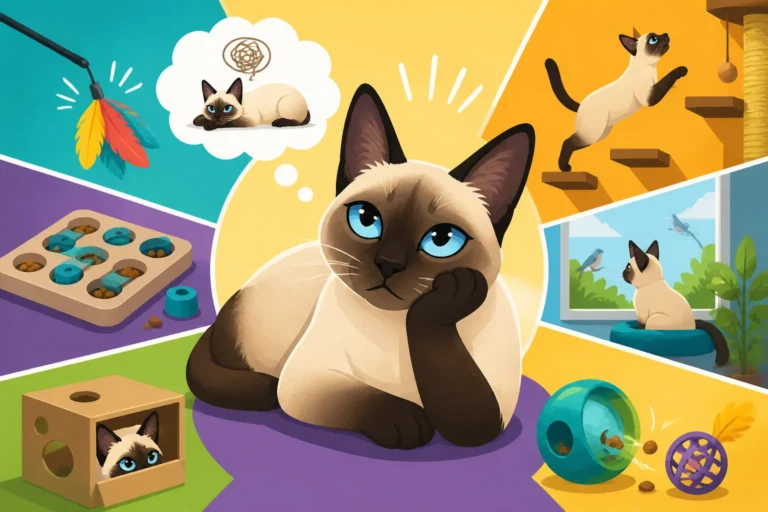
One common frustration for owners is the infamous nighttime yowl. If your Siamese starts with Why a Siamese Cat Yowls in the Middle of the Night, it's likely they're bored, lonely, or have an unmet need. Ensuring they get plenty of playtime and mental stimulation during the day can make a big difference. Interactive toys from places like Amazon can keep them engaged even when you're busy. Puzzle feeders, for example, encourage problem-solving and can tire them out mentally, leading to a more peaceful night.
If their low-pitched meows are a constant demand for food, consider a timed feeder. This teaches them that food appears at specific times, not just when they yowl loudest. For attention-seeking meows, make sure you're providing consistent, dedicated play and cuddle time. Five to ten minutes of focused interaction several times a day can often reduce their need to demand your attention vocally. You can find some fantastic wand toys on Amazon that will satisfy their hunting instincts and deepen your bond.
It’s also important to remember that their voice often matures with them. Just like a human teenager's voice might deepen, a Siamese cat's vocal range can evolve over time. How a Siamese Cat's Voice Deepens With Age is a common observation among long-time owners. What started as an already deep kitten meow might become even more resonant and profound in adulthood. This isn't a sign of anything negative; it's simply a natural progression.
Ultimately, living with a vocal Siamese means learning to appreciate their unique form of communication. They are not just pets; they are companions who want to share their lives with you, loudly and proudly. Their low-pitched voice is a testament to their vibrant personality, their rich history, and their deep connection to the humans they choose to grace with their presence. It's truly part of the magic of owning this incredible breed.
Disclaimer
This article is for general informational purposes only and does not constitute professional advice. Laws, prices and regulations vary by location and change over time. Consult a qualified professional for guidance on your specific situation.