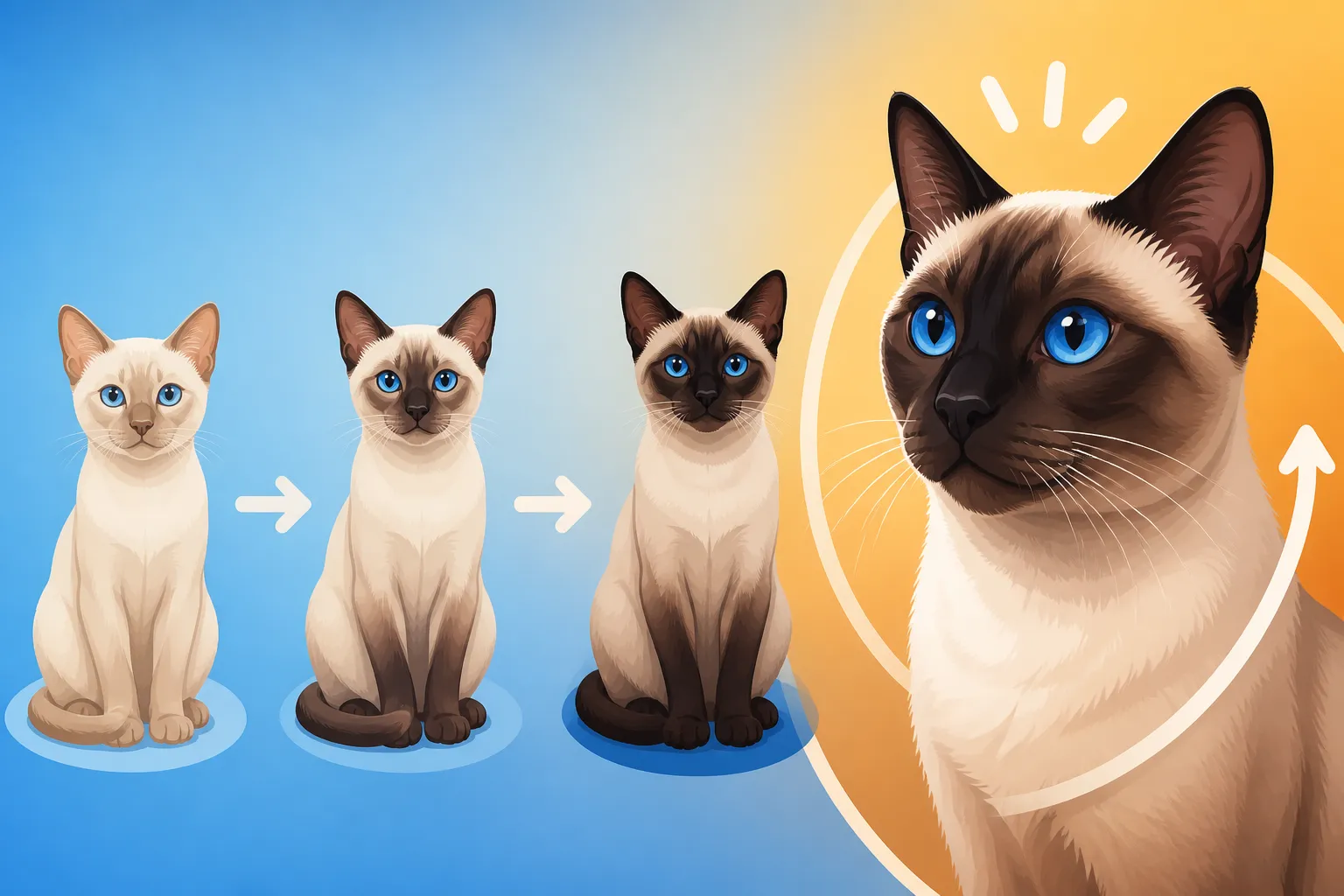
How Dark a Siamese Cat Gets With Age
It’s a truly fascinating thing to watch your Siamese cat change over time, and one of the most noticeable transformations many owners observe is the gradual darkening of their beloved feline's coat. You might get a perfectly pale little kitten, only to find them sporting a much deeper hue as the years go by. This isn't just your imagination; there's a real science behind why your Siamese cat's beautiful coat deepens with age, and this guide is here to walk you through every aspect of this unique phenomenon, helping you understand what to expect.
The Science Behind the Siamese Cat's Color Change
Before we dive into how much a Siamese cat darkens with age, it's crucial to understand why this happens at all. It's not magic, though it sometimes feels like it. It all comes down to a very specific genetic trait that gives Siamese cats their iconic appearance.
The Temperature-Sensitive Gene in Action
The hallmark coloration of a Siamese cat—those striking dark points on their ears, face, paws, and tail—is due to a genetic mutation that affects an enzyme called tyrosinase. This enzyme is responsible for producing melanin, the pigment that gives hair its color. The unique thing about the tyrosinase in Siamese cats is that it's temperature-sensitive. It only works effectively at cooler body temperatures.
Think of it like a delicate artist who can only paint when the studio is cool enough. In the warmer parts of the cat's body, like the torso and belly, the enzyme is essentially inactive, resulting in lighter fur. But in the cooler extremities—the "points"—the enzyme kicks into gear, producing pigment and creating those beautiful dark shades we all adore. This is the underlying mechanism for all point-colored cats, and it's what makes the Siamese so distinct. If you're curious about the specific genetic underpinnings, you can explore Which Gene Makes a Siamese Cat's Points.
This temperature sensitivity explains why a Siamese cat's points are so vividly colored. It's a natural thermometer at work, creating a living work of art right on your couch. This isn't just a quirk; it’s a beautiful biological ballet playing out in every single hair follicle on your cat's body. Understanding this foundational principle is key to grasping why their color shifts throughout their life.
How Kittens Are Born White
One of the most surprising things for new Siamese owners is often the sight of a newborn kitten. They’re usually born completely, or almost completely, white or cream-colored. This can be quite a shock if you’re expecting a miniature version of a Seal Point adult! But once you understand the temperature-sensitive gene, it makes perfect sense.
During their time in the womb, kittens are kept snug and warm inside their mother's body. The ambient temperature within the uterus is consistently high, which effectively deactivates the tyrosinase enzyme. Without the enzyme producing pigment, the kittens' fur develops without color. It's only after they are born and exposed to the cooler external environment that their bodies begin to produce melanin in the cooler extremities. This is why you'll start to see those tell-tale points slowly emerge over the first few days and weeks of their lives. It's truly a marvel to witness the color "bloom" as they grow. For more on this fascinating initial stage, check out Why a Siamese Cat Kitten Is Born White.
The process continues as they grow, with the points becoming more defined and darker as the kitten ages and its body temperature regulation matures. It’s a beautiful unfolding, a slow reveal of their true genetic potential. Every kitten is a blank canvas waiting for the world to paint its masterpiece.
Factors Influencing a Siamese Cat's Darkening Over Time
The temperature-sensitive gene is the core reason, but several factors contribute to the degree and speed of darkening throughout a Siamese cat's life. It’s not just a one-and-done process after kittenhood; it’s an ongoing evolution.
The Impact of Environmental Temperature
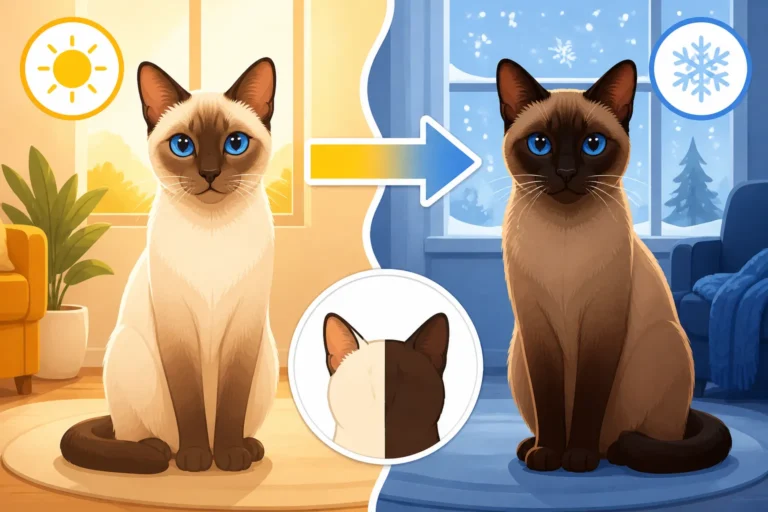
Since the tyrosinase enzyme is temperature-sensitive, it logically follows that the environment your Siamese cat lives in will have a significant impact on their coat color. A cat living in a consistently cool climate or a cooler home is likely to develop a darker body coat over time than a cat kept in a very warm environment. The constant exposure to lower temperatures allows the enzyme to be active more frequently and across more areas of the body, leading to more pigment production.
Imagine a Siamese cat living in a drafty old farmhouse in a northern state during winter versus one lounging in a climate-controlled apartment in a sunny, warm state. The farmhouse cat, even if kept indoors, will likely experience lower ambient temperatures, prompting a deeper overall coat color. This is why you might notice your Siamese gets Why a Siamese Cat Darkens Every Winter and then lightens a bit in the summer. Conversely, keeping your home warmer might help your Siamese cat maintain a paler body color for longer. Delve deeper into this at How Much a Siamese Cat Darkens in a Cold House and How Much a Siamese Cat Lightens in a Warm House.
It's a subtle but observable difference, and it's one of the reasons no two Siamese cats will darken in exactly the same way, even if they're genetically similar. Their personal thermostat, combined with their living conditions, dictates their unique color journey.
Age and Hormonal Changes
Beyond the immediate environmental temperature, age itself is a major player in how dark a Siamese cat becomes. As cats mature, their overall body temperature can subtly decrease, or their metabolic rate might slow, leading to a slight drop in surface skin temperature. This lower temperature, even a fraction of a degree, can be enough to activate the tyrosinase enzyme in areas that were previously too warm for pigment production.
This is a very gradual process, often taking years. You might not notice it day to day, but if you compare photos of your cat as a playful youngster to a dignified senior, the change can be quite striking. Their body, which might have been a creamy off-white as a young adult, could become a warm beige, tan, or even a light brown hue in later life. This natural progression is simply part of their genetic expression maturing. The Age a Siamese Cat Starts Darkening can give you more insight into this timeline.
Additionally, hormonal changes that occur with age, much like those in humans, can sometimes have subtle effects on coat quality and color, though temperature remains the primary driver. It's a natural aging process, just like how our hair might change texture or color as we get older.
Diet and Overall Health
While diet and overall health don't directly change the mechanism of temperature-sensitive pigmentation, they certainly play a role in the quality and appearance of the coat. A Siamese cat on a poor diet, lacking essential nutrients, might have a duller, coarser coat that could appear less vibrant, or conversely, a damaged coat might react differently to temperature shifts. However, it's generally accepted that diet will not fundamentally alter the underlying genetic expression of color.
A healthy cat with a shiny, well-maintained coat will showcase its colors, points, and body shading much more effectively than a cat struggling with nutritional deficiencies or illness. Think of it like a canvas: a healthy, well-prepped canvas allows the colors to truly pop. So, while you can't feed your cat a specific food to make them lighter or darker, providing a high-quality diet supports optimal coat health, allowing their natural coloration to shine through. This ensures the fur is healthy, lustrous, and reflects its true color potential. You always want to make sure your feline friend is getting the best nutrition possible, not just for their coat, but for their overall well-being.
Expected Color Evolution Through a Siamese Cat's Life Stages
Watching a Siamese cat’s color evolve is one of the joys of owning these magnificent creatures. From tiny, pale bundles to seasoned, deeply colored companions, their coats tell the story of their lives.
Kitten to Adolescent: The Unfolding of Points
As mentioned, Siamese kittens are born very light. Over the first few weeks, the points—ears, nose, paws, and tail—will begin to show their true color. This is the most dramatic period of color change, as the stark contrast emerges. A Seal Point kitten, for instance, will quickly develop dark brown points, while a Lilac Point's points will gradually reveal a soft, grayish-pink. By the time they are a few months old, their points are generally well-established, though they will continue to deepen.
During adolescence, roughly up to 1-2 years of age, not only will the points solidify in color, but the body itself might start to take on a subtle warmth. The creamy white that once covered their entire body might begin to show a slight tint of ivory or fawn, especially along the back and flanks. This is the initial stage of the body darkening, a hint of the deeper shades to come. It’s during this phase that you truly see their distinct Siamese pattern come into its own, solidifying the promise of their kittenhood.
This early period is a fantastic time for observation, noting how their unique genetic blueprint manifests. The vibrancy and clarity of their developing points are often a good indicator of the rich hues that will define their adult appearance.
Adult Years: Gradual Body Darkening
Once a Siamese cat reaches adulthood (around one to two years old), the rate of color change slows down, but it certainly doesn't stop. Instead, you'll observe a slow, steady, and very gradual darkening of their body fur. This isn't a dramatic shift overnight, but rather a subtle accumulation of pigment over months and years. The formerly cream-colored torso might become a soft fawn, a warm beige, or even a light tan, depending on their original point color and environmental factors.
This body darkening is often most noticeable along the spine and sides, areas that might be slightly cooler than the belly. It’s like a fine wine aging, developing more complexity and depth over time. Some owners even notice a beautiful "frosting" effect, where the body color takes on a slightly smoky or shadowed appearance. This is a normal and expected part of the Siamese aging process. You can learn more about this specific phenomenon in Why an Older Siamese Cat's Body Goes Brown.
The overall effect is that of a cat with a richer, more integrated color palette, where the contrast between points and body, while still present, becomes softer and more harmonious. This natural aging process adds character and depth to their already stunning appearance.
Senior Siamese: The Deepening Patina
The true extent of a Siamese cat's potential for darkening is often seen in their senior years, typically from around 8-10 years old onwards. By this age, many Siamese cats will have developed a significantly darker body coat, sometimes appearing quite close in shade to their points, particularly if they are a Seal Point or Blue Point living in a cooler environment.
For example, a Seal Point Siamese who started life with a pale cream body might have a rich caramel or even light brown body in their senior years. Lilac Points, known for their delicate, frosty gray-pink points, might see their bodies deepen to a soft mushroom or light taupe. This advanced darkening is a testament to years of the temperature-sensitive enzyme subtly at work. It's often accompanied by other signs of aging, such as a slightly coarser coat texture or reduced grooming, but the color change is a direct result of their long-term exposure to varying temperatures and the cumulative effect of pigment production.
This deep, rich patina of a senior Siamese is often admired by owners, as it tells a story of a life well-lived. It's a beautiful transformation that highlights the unique genetic artistry of the breed. It can sometimes make identifying their original point color a bit more challenging for the uninitiated, as the contrast has mellowed beautifully.
What to Expect: Point Colors and Body Shadings
Each Siamese cat is an individual, and while the general principles of darkening apply, the specific nuances depend heavily on their initial point color.
Common Point Colors and Their Progression
Let's look at how the main point colors typically progress:
- Seal Point: These are the darkest and most traditional. Born cream, their points quickly turn a deep, dark brown, almost black. Their body fur will tend to darken to a warm fawn or rich tan with age. They often show the most dramatic overall body darkening.
- Blue Point: With blue-gray points, these cats start with points that appear slate grey. Their body color, initially white, typically mellows to a cool bluish-white or light silver-grey. As they age, their body can deepen to a medium grey, often with a hint of smoky lilac.
- Chocolate Point: These cats have warm, milk chocolate-colored points. Their body starts as an ivory or off-white. With age, their body will warm up to a rich ivory, fawn, or even a pale caramel shade, maintaining a lovely contrast with their points.
- Lilac Point: The palest of the four traditional colors, Lilac Points have frosty, pinkish-gray points. Their bodies are usually pure white as kittens. As they age, their body might develop a very subtle, soft mushroom or light taupe shade, but they tend to remain the lightest overall.
It's a wonderful journey to observe, and regardless of their initial hue, every Siamese cat will experience some form of color development throughout its life.
Here's a quick reference table for general expectations:
| Point Color | Kitten Body Color | Young Adult Body Color (1-2 yrs) | Senior Adult Body Color (8+ yrs) |
|---|---|---|---|
| Seal Point | Creamy White | Fawn/Light Tan | Rich Tan/Light Brown |
| Blue Point | Pure White | Bluish-White/Light Silver-Gray | Medium Gray/Smoky Taupe |
| Chocolate Point | Ivory | Warm Ivory/Pale Fawn | Rich Ivory/Light Caramel |
| Lilac Point | Pure White | Off-White/Very Pale Mushroom | Soft Mushroom/Light Taupe |
Note: These are general observations; individual cats will vary based on genetics, environment, and lifestyle.
The "Ghost Striping" and Body Shading
Sometimes, as a Siamese cat's body darkens with age, owners might notice faint patterns appearing on their torso, almost like very light tabby stripes or patches. This phenomenon is often referred to as "ghost striping" or "ghost markings." It's not that your purebred Siamese is secretly a tabby; rather, it’s a genetic trait that can lie hidden beneath the surface of their solid-colored body.
All domestic cats carry genes for tabby patterns, and in many breeds, these patterns are masked by other genes that produce solid colors. However, in Siamese cats, as the body fur slowly accumulates pigment due to the temperature-sensitive gene, these underlying tabby patterns can sometimes become faintly visible, especially in certain lights or as the contrast between hair shafts lessens with age. It's more common in some lines than others and can add an extra layer of intrigue to their evolving appearance. It’s part of the beautiful complexity of their genetic makeup.
This body shading isn't just limited to ghost stripes. Often, the body will develop a lovely gradient, being paler on the belly and inner legs, and darker along the back and spine. This creates a natural contouring effect that enhances their sleek, athletic build. These subtle shadings and potential ghost markings are just another delightful aspect of owning a Siamese cat, adding to their ever-changing beauty.
Myths, Misconceptions, and Practical Considerations
With such a unique genetic trait, it's no surprise that there are a few myths and misconceptions floating around about Siamese cat color changes. Let's clear some of them up!
Darkening as a Sign of Illness or Diet
One common concern for attentive Siamese owners is whether a sudden or pronounced darkening of their cat's coat could be a sign of illness or an inadequate diet. Generally, this is not the case. While a severe illness causing a dramatic drop in body temperature (like prolonged hypothermia) could theoretically lead to more widespread pigment production, the gradual darkening we've been discussing is a completely normal, healthy process.
As mentioned, a poor diet can affect the quality of the coat—making it dull or greasy—but it won't fundamentally alter the genetic mechanism that dictates color. If your cat's coat is darkening but they are otherwise healthy, active, eating well, and showing no signs of discomfort, there's absolutely no need to worry. It's simply their unique genetics playing out over time. If you do have concerns about their overall health or any sudden, drastic changes, always consult your veterinarian. However, a slowly deepening coat is just your beautiful Siamese maturing. Keep an eye out for other, more tangible Signs a Siamese Cat Is Unwell rather than relying solely on coat color.
Shaved Patches Growing Back Dark
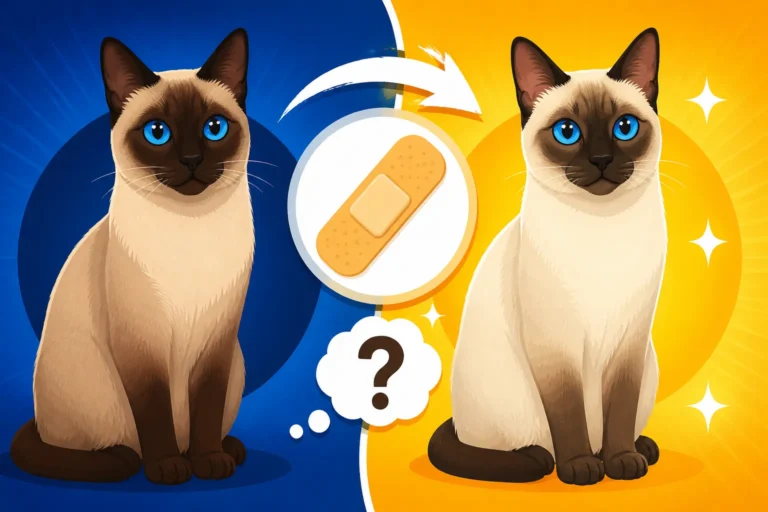
This is a classic scenario and a perfect illustration of the temperature-sensitive gene at work. If your Siamese cat ever needs surgery, a wound treated, or even just a patch of fur shaved for an IV, you'll likely notice something peculiar when that fur starts to grow back: it often grows back much darker than the surrounding body fur, sometimes even as dark as their points!
This happens because the act of shaving exposes the skin to cooler air. Also, in some cases, the healing process itself can temporarily lower the local skin temperature. This localized drop in temperature then allows the tyrosinase enzyme to become active, producing pigment in the new fur growth. It's a vivid, temporary demonstration of exactly how sensitive their coloration is to temperature. Don't worry, the darker patch usually fades over time as the fur grows out and the skin temperature stabilizes back to the normal body temperature for that area. But it can certainly be startling the first time you see it! You can find more detail on this topic in The Shaved Patch That Grows Back Dark on a Siamese Cat.
This phenomenon is a fun conversation starter and a constant reminder of the incredible biology behind your Siamese cat's captivating appearance. It truly showcases just how deeply their unique genetics influence their look throughout their lives. Looking for cat food or supplies that support healthy skin and coat? Chewy and Amazon are great places to start, offering a wide variety of options that cater to specific dietary needs and coat health.
Disclaimer
This article is for general informational purposes only and does not constitute professional advice. Laws, prices and regulations vary by location and change over time. Consult a qualified professional for guidance on your specific situation.