Why a Siamese Cat’s Nose and Paws Are Dark
It’s one of those charming quirks that make Siamese cats so unique – their stunning point coloration. You look at their beautiful blue eyes, their sleek bodies, and then you notice those distinctively dark ears, tail, and, yes, those adorable dark noses and paws. It's a common observation that often sparks curiosity: why are these specific areas so much darker than the rest of their body? This isn't just random; it’s a fascinating genetic marvel tied directly to temperature.
The Genetic Blueprint Behind Siamese Point Coloration
The Siamese cat's striking color pattern is not just a cosmetic feature; it's a living, breathing testament to a very specific genetic mutation. Understanding this genetic blueprint helps us appreciate why certain parts of your Siamese are blessed with such deep, rich color.
The Tyrosinase Enzyme and Temperature Sensitivity
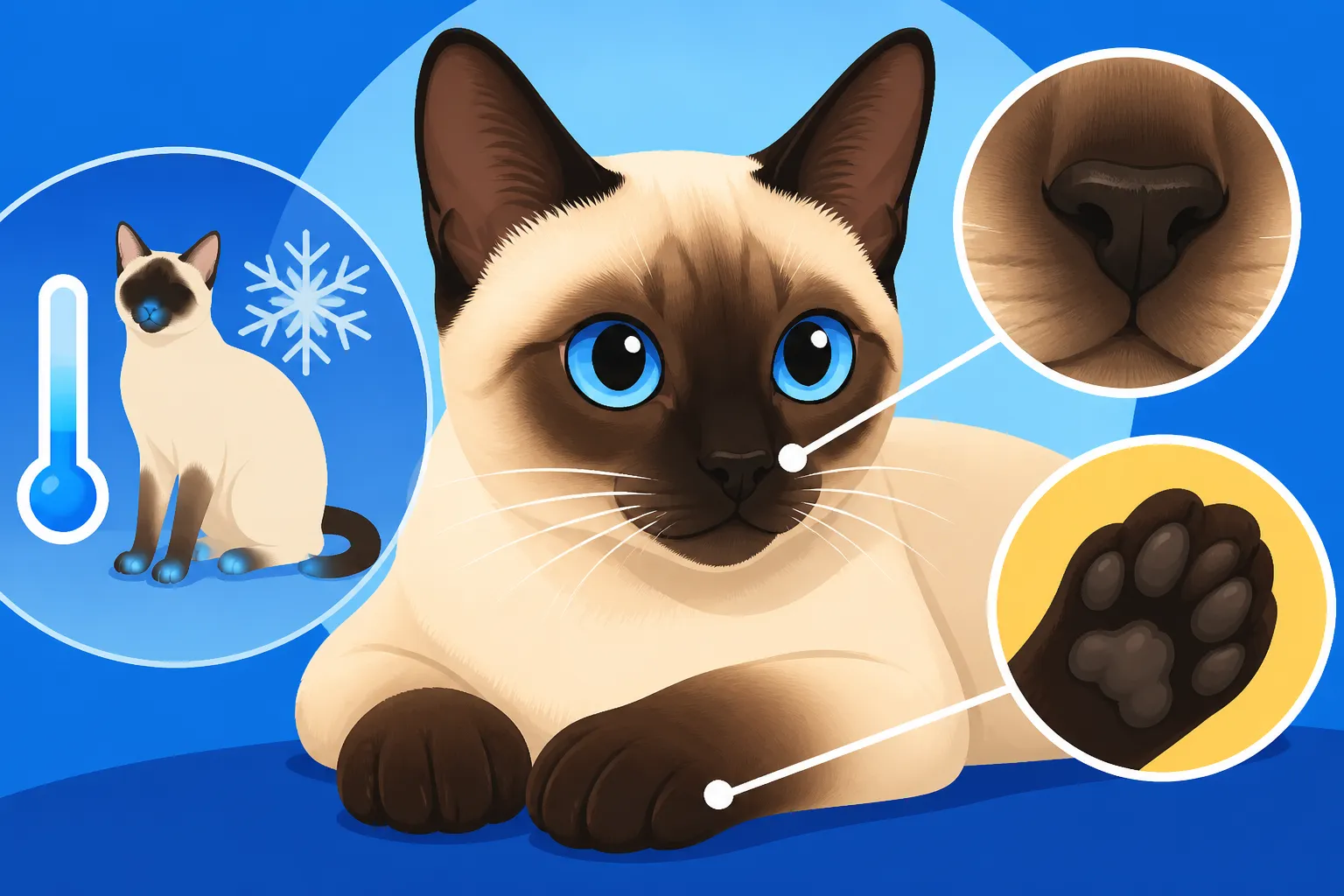
At the heart of a Siamese cat's unique coloring is a mutated gene that affects the tyrosinase enzyme. Tyrosinase is absolutely critical for producing melanin, which is the pigment responsible for color in skin and fur. In most cats, this enzyme works perfectly well throughout the entire body, leading to a consistent coat color. However, in Siamese cats, this tyrosinase enzyme is temperature-sensitive. Think of it like a tiny, biological thermometer: it only functions efficiently at cooler temperatures.
What does this mean in practical terms? It means that the parts of a Siamese cat's body that are cooler will produce more pigment, resulting in darker fur. Conversely, the warmer areas of their body will produce little to no pigment, leading to lighter fur. This isn't just a theory; it's a visible process. When a Siamese kitten is born, for instance, they are typically all white or a very pale cream. Why? Because inside the mother's womb, the temperature is consistently warm. The tyrosinase enzyme simply isn't active enough to produce pigment across their tiny bodies. It's only once they are born and exposed to the cooler ambient air that the magic of their point coloration begins to unfold. How Old a Siamese Cat Kitten Is When Points Show
How the Points Develop on a Siamese Cat's Body
As a Siamese kitten grows and its body parts are exposed to varying temperatures, the points gradually begin to emerge. The ears, tail, paws, and face are the furthest extremities from the cat's core body heat, and thus, they are naturally cooler. These are the first areas where you'll start to see those tell-tale dark points. Over the first few weeks and months of a kitten's life, these areas will progressively darken, becoming more defined and richer in hue.
It’s a gradual, dynamic process. Imagine watching a time-lapse video of a seal point kitten as it matures: you'd see the ears, then the tail, then the paws, and finally the mask on its face slowly but surely deepening in color. The core body, being kept warm by internal organs and circulation, remains a much lighter shade – anything from cream to fawn, depending on the specific point color. This distinct contrast is what makes the Siamese so striking and instantly recognizable. The coloration isn't static; it's a living canvas, constantly influenced by the world around them. Why a Siamese Cat's Pigment Only Works When Cool
Why Extremities Like Noses and Paws Are Always Darker
Now that we understand the basic mechanism of temperature-sensitive pigment, let's zoom in on why the nose and paws, in particular, often stand out as the darkest points on a Siamese cat.
Colder Body Parts Accumulate More Pigment
It really boils down to consistent coolness. The nose and paws are prime examples of extremities that are naturally and consistently cooler than the rest of the body. Think about your own hands and feet in cold weather – they're often the first parts to feel the chill. The same principle applies to your Siamese.
The nose, being an exposed area, is constantly interacting with the ambient air temperature, which is almost always cooler than the cat's internal body temperature. There's less insulating fur on the nose itself, allowing for faster heat dissipation. Similarly, the paws are in direct contact with various surfaces – floors, ground, furniture – which are typically cooler than the cat's core. These areas also have a relatively higher surface area to mass ratio compared to, say, the trunk of the body, which aids in cooling. Because the tyrosinase enzyme in these specific regions is consistently operating within its preferred cooler temperature range, it churns out pigment at a higher rate, leading to those deep, rich colors we adore.
Consider a Siamese cat curled up tightly for a nap. Their body is usually tucked in, keeping the torso warm, but their little nose might still be peeking out, and their paw pads might be pressed against a cooler surface. It’s these constant, subtle differences in temperature that dictate the intensity of the point color. This is why even a Siamese kept in a very warm home will still have dark points; their core body temperature and the natural cooling of extremities maintain the difference. How Much a Siamese Cat Darkens in a Cold House
The Role of Blood Flow and Surface Area
While temperature is the primary driver, blood flow and surface area play supporting roles in maintaining the temperature differential that leads to dark points. The body's core has a robust, constant flow of warm blood, distributing heat evenly. Extremities like the nose and paws, while supplied with blood, often have a slightly less intense and more distributed blood flow relative to their exposure to the environment. This means they are less efficiently warmed by the internal circulation compared to the heavily insulated core.
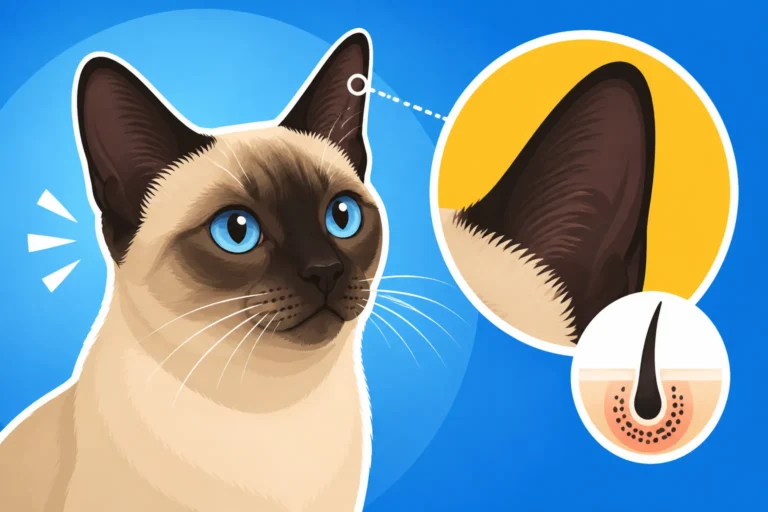
Furthermore, the structure of the paws, with their pads and digits, presents a larger surface area relative to their volume, allowing heat to escape more readily. The nose, too, with its moist, exposed surface, is designed for efficient heat exchange. These anatomical features contribute to these areas being consistently cooler. It's a remarkable example of genetics working in harmony with physiology. This isn't just about external temperature; it's about the interplay of internal heat, external environment, and how the body is structured to dissipate or retain warmth. It's the same reason you'll see Why a Siamese Cat's Ears Are Darker Than Its Back – they're another prominent extremity designed for efficient heat exchange.
Common Color Variations and Factors Affecting Point Intensity
The exact shade and intensity of a Siamese cat's points can vary quite a bit, even within the same point color. Several factors, from age to environment, play a role in how dark those lovely noses and paws become.
Age and Environmental Influences
One of the most noticeable factors affecting point intensity is age. As your Siamese cat gets older, you'll often observe a gradual darkening of their entire coat, not just the points. This is because, over time, the body's metabolism and temperature regulation can change subtly, and cumulative exposure to cooler environments can lead to more widespread pigment production. It's not uncommon for an older Siamese to have a body color that has deepened from a creamy white to a light brown or tan. Why an Older Siamese Cat's Body Goes Brown
Environmental factors also play a significant role. A Siamese cat that lives in a consistently cooler climate or a cooler home will often develop darker points and a darker body coat overall than one living in a warmer environment. For instance, if you live in a region with cold winters, you might notice your Siamese's points deepen considerably during those months, only to lighten slightly during a hot summer. This isn't just anecdotal; it's the direct effect of that temperature-sensitive enzyme at work. You might even find yourself looking for ways to keep your Siamese cozy, perhaps through a heated bed or a warm blanket from Chewy or Amazon, not just for comfort, but knowing it might slightly influence their coat color. Whether an Indoor Siamese Cat Stays Paler is a common question, and yes, an indoor, consistently warm environment can result in a somewhat paler overall coat.
Another interesting phenomenon is when a Siamese cat has a patch of fur shaved for a medical procedure, such as surgery or an IV line. The fur that grows back in that shaved area often comes in significantly darker than the surrounding coat. This happens because the skin in the shaved area is more exposed to cooler air, stimulating the pigment production. It’s a temporary but vivid demonstration of the temperature effect! Why a Shaved Siamese Cat Grows Back Dark
Different Point Colors and Their Nuances
While the principle of temperature-sensitive pigmentation applies to all Siamese cats, the resultant color can vary based on the specific genetic variation for point color they carry. The four main classic point colors recognized by many registries are:
- Seal Point: These cats have the darkest points, appearing a deep, rich brown-black, almost like a dark chocolate. Their nose leather and paw pads will be a matching dark brown to black.
- Blue Point: Here, the points are a softer, slate grey-blue. Their nose leather and paw pads will be a corresponding blue-grey.
- Chocolate Point: These points are a warm, milky chocolate brown, distinctively lighter than seal points. Their nose leather and paw pads are a cinnamon pink or chocolate brown.
- Lilac Point: The palest of the four, lilac points have frosty, pinkish-grey points. Their nose leather and paw pads are a lavender-pink.
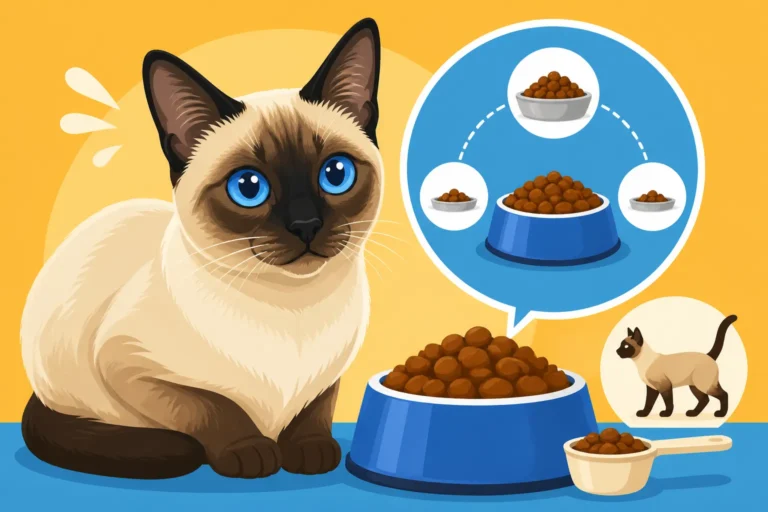
Regardless of whether your Siamese is a Seal, Blue, Chocolate, or Lilac Point, the nose and paw pads will consistently be the deepest expression of that specific hue. The enzyme is working optimally in these cool spots, producing the maximum amount of pigment for that cat’s genetic predisposition. Ensuring your Siamese has a balanced, high-quality diet can also contribute to overall coat health and vibrancy, indirectly supporting the expression of these beautiful colors.
Here's a quick comparison of point coloration based on body part temperature:
| Body Part | Typical Temperature Relative to Core | Pigment Production | Resulting Coloration (Example: Seal Point) |
|---|---|---|---|
| Nose & Paws | Coolest / Most Exposed | Highest | Deep Seal Brown / Black |
| Ears & Tail | Cooler / Exposed | High | Deep Seal Brown |
| Face Mask | Cooler / Moderate Exposure | High | Deep Seal Brown (blending towards body) |
| Legs | Moderate / Variable Exposure | Medium | Seal Brown (fading into body) |
| Body (Trunk) | Warmest / Insulated | Lowest | Cream / Fawn |
| Belly | Warmest / Heavily Insulated | Very Low | Off-white / Cream |
The beauty of a Siamese cat lies not just in their vocal personality or their sleek physique, but in this truly remarkable genetic trait that paints their extremities in such captivating, contrasting shades. It's a constant reminder of the intricate wonders of nature right there in your living room.
Disclaimer
This article is for general informational purposes only and does not constitute professional advice. Laws, prices and regulations vary by location and change over time. Consult a qualified professional for guidance on your specific situation.