Why a Siamese Cat’s Ears Are Darker Than Its Back
It's a common sight for anyone who shares their home with a beautiful Siamese cat: those striking dark points on their ears, paws, tail, and face, often contrasting quite noticeably with their paler bodies. You might find yourself wondering why this elegant breed has such a distinct pattern, especially why their ears seem so much darker than, say, their back or belly. This guide is here to unravel that fascinating genetic mystery and explain precisely why your Siamese's ears sport that deeper hue compared to the rest of their coat.
The Unique Genetic Code Behind Siamese Coloration
The distinctive color pattern of a Siamese cat isn't just a random aesthetic; it's the result of a truly unique genetic trait. We're talking about a form of temperature-sensitive albinism, a genetic quirk that dictates where and how much pigment your cat's fur will display. It's a marvel of nature that makes each Siamese so wonderfully individual, yet perfectly aligned with their breed standard.
The Temperature-Sensitive Gene in Action
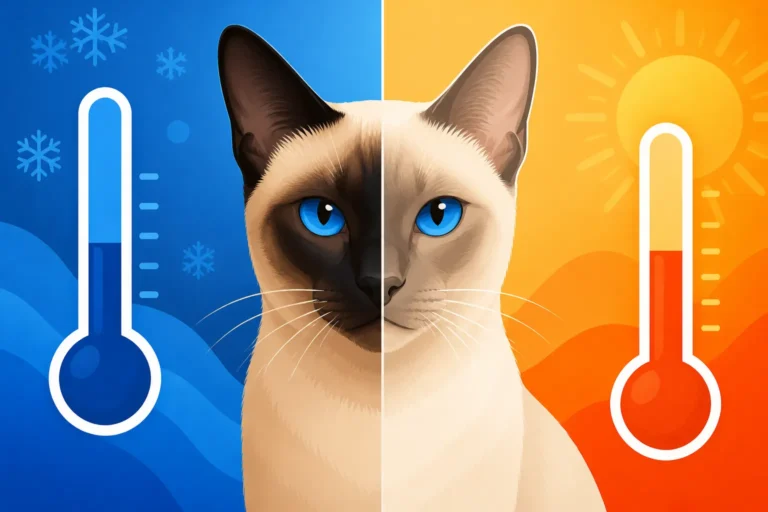
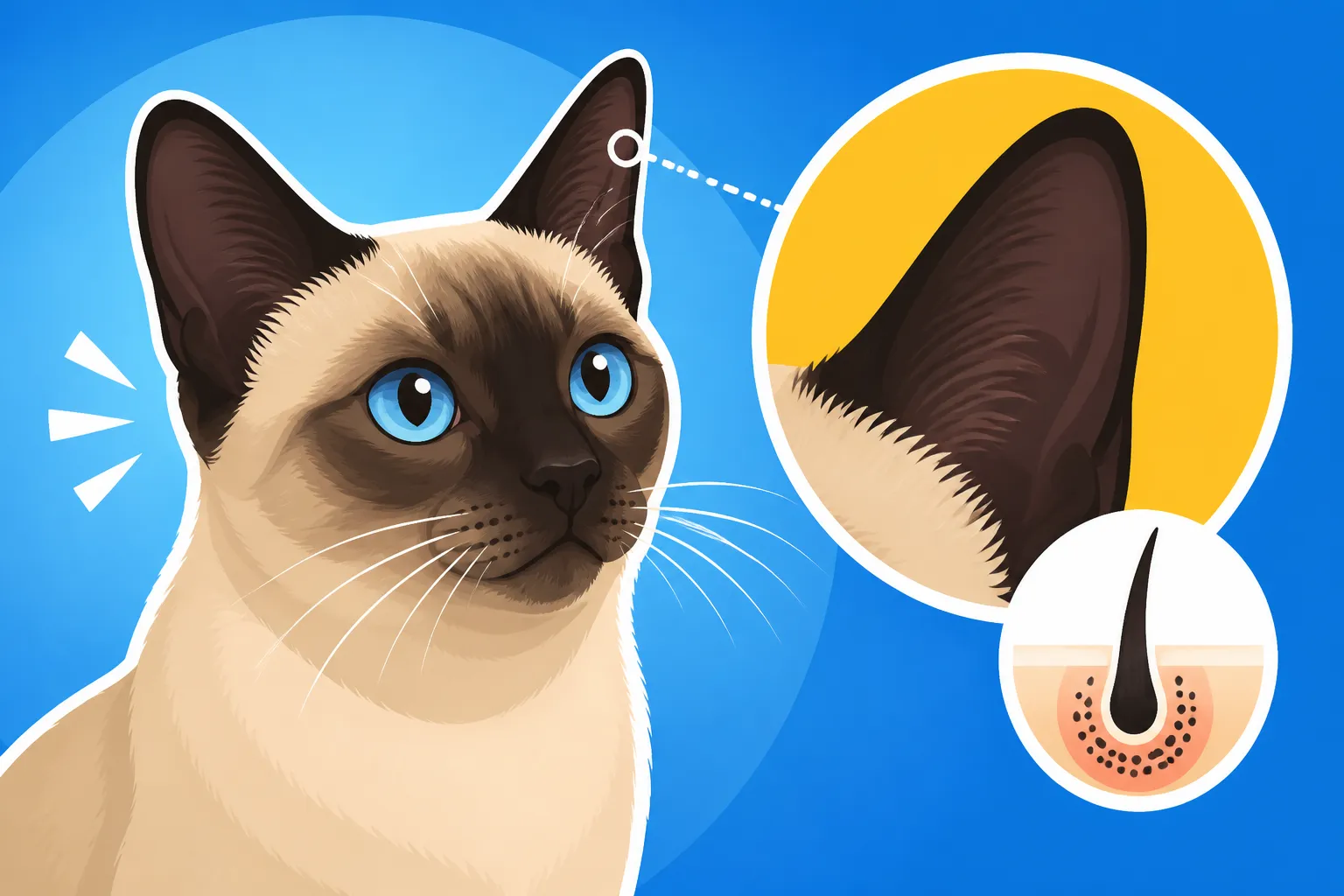
At the heart of a Siamese cat's coloring is a specific gene mutation that affects the production of melanin, the pigment responsible for fur color. This isn't just any gene; it produces an enzyme called tyrosinase. Now, in most animals, this enzyme works pretty consistently throughout the body, creating uniform color. But in Siamese cats, this tyrosinase enzyme is a bit of a diva; it's temperature-sensitive. Think of it like a finely tuned machine that only operates efficiently within a very specific temperature range. If it gets too warm, it essentially "switches off" or becomes much less active, and if it's cool enough, it kicks into high gear. This means that melanin, the dark pigment, can only be produced in the cooler parts of your Siamese's body. It's a beautiful scientific explanation for those captivating points. You can learn more about the specifics in Which Gene Makes a Siamese Cat's Points.
This unique genetic blueprint means that while your Siamese carries the genetic code for color, that color only physically manifests where the body temperature is low enough for the enzyme to do its job. Imagine an artist with a special paint that only appears on a cold canvas; the warmer areas remain blank. That's essentially what's happening on your Siamese. Their core body temperature is too high for the tyrosinase enzyme to be active, so those areas remain pale. It's a fascinating example of how intricate genetic mutations can lead to such striking and beloved physical traits.
Why a Siamese Cat's Pigment Only Works When Cool
Because of this temperature-dependent enzyme, a Siamese cat's body essentially acts like a living thermometer, displaying pigment in inverse proportion to its warmth. The parts of your cat's body that are naturally cooler, or exposed to the outside environment more directly, are where the enzyme can function and create pigment. These are the "points": the ears, face, paws, and tail. Conversely, the main trunk of their body, which is maintained at a higher, more consistent internal temperature, inhibits the enzyme's activity.
This is why a Siamese cat kitten is born entirely white or very pale; inside the mother's womb, the temperature is uniformly warm, preventing any pigment from forming. It's only after birth, when they are exposed to the cooler ambient air, that their points begin to develop and darken. This gradual darkening is a direct visual cue of the temperature effect taking hold, slowly painting in their signature mask, ears, paws, and tail over the first few weeks and months of their lives. It's a process that's truly magical to witness. Understanding How Temperature Controls a Siamese Cat's Color further clarifies this phenomenon.
Explaining the Color Discrepancy: Ears vs. Back
Now that we understand the basic science, let's zero in on why the ears, in particular, often appear darker than the main body, such as the back. It comes down to thermal dynamics and how heat dissipates from a cat's body. It's not just a matter of "cooler overall," but specific physiological differences in different body parts.
The Thermal Differences Across a Cat's Body
A cat's body isn't a single, uniform temperature zone. There are distinct thermal gradients. The core of their body, where vital organs reside, maintains a higher, more stable temperature. This includes their torso, belly, and upper legs. However, extremities are quite different. Ears, paws, tails, and even the nose and chin are areas where heat can escape more easily, and they are less insulated than the thickly muscled and fur-covered trunk. This natural variation in temperature is the key to understanding the Siamese coat pattern.
Think about how your own fingers and toes can feel colder than your torso, even when you're comfortable. Cats experience similar variations. These "cooler" areas provide the ideal environment for the temperature-sensitive tyrosinase enzyme to become active and produce melanin. It’s why you see that beautiful contrast: the darker points against the lighter body. The very structure and function of these body parts predispose them to being cooler. This is particularly true for their ears, which are relatively thin and vascular, acting almost like radiators.
Why a Siamese Cat's Ears Are Darker Than Its Back
The Siamese cat's ears are often among the darkest of their points, and there are good reasons for this. Firstly, they are appendages that stick out from the main body, directly exposed to the ambient air. Unlike the back, which is a broad, often well-insulated surface, the ears are thin and relatively hairless on the inside, allowing for efficient heat loss. This constant heat dissipation keeps them consistently cooler than the insulated core of the cat's body.
Secondly, the large surface area of the ears, combined with their intricate network of blood vessels, makes them efficient at regulating body temperature, much like an elephant's ears. This means they are inherently designed to shed heat, and consequently, they remain in the optimal temperature range for melanin production for a greater proportion of the time. The back, on the other hand, is closer to the core and typically well-covered in fur, maintaining a higher and more consistent temperature that suppresses pigment formation. This distinct difference in thermal regulation between the ears and the back directly leads to the striking color disparity you observe. It's truly why Why a Siamese Cat's Ears Are So Large is relevant beyond just aesthetics.
Factors Influencing a Siamese Cat's Point Coloration
While the genetic predisposition for temperature-sensitive pigment is constant, the actual manifestation of those points can vary. Several factors, both environmental and inherent to the cat, play a role in how dark or light a Siamese cat's points become, and even how much their body color changes over time. It's a dynamic process that continues throughout their life.
Environmental Temperature and Point Development
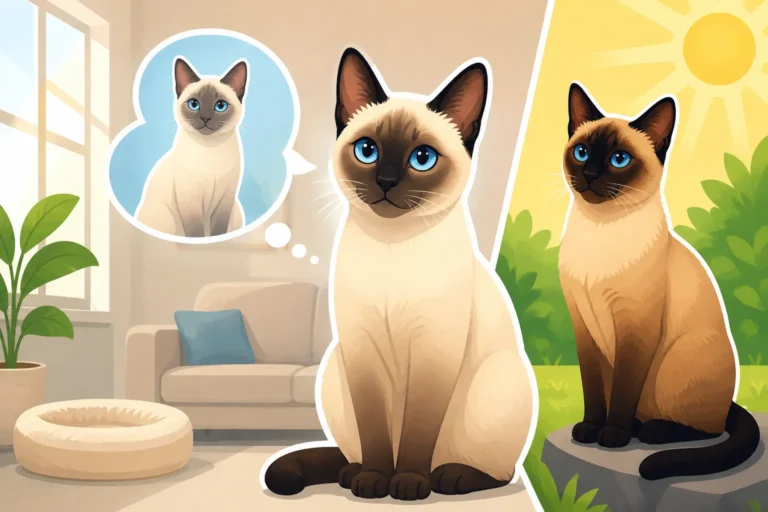
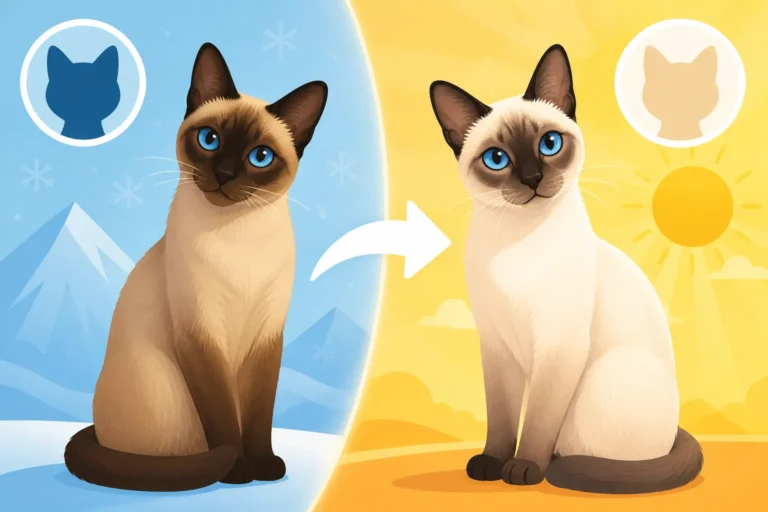
One of the most significant influences on a Siamese cat's point coloration is the environmental temperature they live in. If your Siamese spends most of its time in a cooler climate or a house kept at a lower temperature, you might notice their points becoming significantly darker, and sometimes, even their body fur takes on a slightly darker hue. The tyrosinase enzyme simply has more opportunities to be active when the overall temperature is lower. Conversely, a Siamese living in a very warm climate or a consistently warm indoor environment might develop lighter points, and their body might remain exceptionally pale.
This isn't just a theory; it's a visible phenomenon. Owners often observe their cats' coats shifting slightly with the seasons. A Siamese might have noticeably darker points in the winter months compared to the height of summer, even if they live indoors. It's a testament to how sensitive this genetic trait is to external conditions. So, if you've ever wondered How Much a Siamese Cat Darkens in a Cold House or How Much a Siamese Cat Lightens in a Warm House, the answer lies squarely in the ambient temperature of their environment.
Age and the Darkening Process
Another factor that profoundly influences a Siamese cat's coloration is age. It's a widely observed characteristic of the breed that their points tend to deepen and their body fur can gradually darken over their lifetime. A young kitten, as mentioned, starts out very pale, and their points fill in over weeks and months. But this isn't where the process stops. As they transition from adolescence to adulthood and then into their senior years, their overall coat typically becomes richer in color.
This age-related darkening is thought to be due to several factors. Over many years, the cooler ambient temperatures have a cumulative effect, allowing for more pigment production. Additionally, as cats age, their metabolic rate can sometimes slow slightly, and their overall body temperature might decrease marginally, creating more favorable conditions for the tyrosinase enzyme to work across a broader area of their body. It's why an older Siamese often looks distinctly more 'toasted' than a spry youngster, a process detailed further in Why an Older Siamese Cat's Body Goes Brown. This natural aging process is part of the charm of living with a Siamese, as their coat constantly evolves.
Injury, Shaving, and Temporary Darkening
One of the most striking demonstrations of the temperature-sensitive gene in action is what happens after an injury or if a Siamese cat needs a patch of fur shaved for a medical procedure, such as surgery or an ultrasound. When an area is shaved, the skin underneath is directly exposed to the cooler ambient air. This sudden drop in local temperature kick-starts the pigment-producing enzyme into overdrive.
As a result, the fur that grows back on that shaved patch will almost invariably be significantly darker than the surrounding body fur, often appearing as a dark 'scar' of pigment. This temporary darkening can last for many months until the new fur grows out and the underlying skin area returns to its normal, warmer insulated temperature. It's a clear, albeit sometimes surprising, visual proof of Why a Shaved Siamese Cat Grows Back Dark and highlights just how powerful the temperature influence is on their unique coat. Many owners have been surprised to find a dark patch after a vet visit, but it's completely normal and temporary.
Understanding and Appreciating Your Siamese's Unique Coat
Knowing the science behind your Siamese's coat pattern doesn't just satisfy curiosity; it helps you appreciate their unique beauty even more and understand subtle aspects of their care. This breed is a living, breathing testament to genetic wonder, and their coat is a central part of that.
The Beauty of the Siamese Point Pattern
The distinct point coloration is arguably one of the most defining and admired features of the Siamese cat. It's not a flaw, but a hallmark of the breed, celebrated in show rings and adored by countless pet owners around the world. The stark contrast between the pale body and the dark extremities creates an elegant, almost artistic appearance that sets them apart from most other cat breeds. This unique genetic expression adds to their mystique and makes each Seal Point, Blue Point, Chocolate Point, or Lilac Point Siamese a true masterpiece of nature.
The variations in shading, from the deep, rich Seal Points to the softer, rosy Lilac Points, all stem from this same temperature-sensitive gene interacting with other color genes. It's a beautiful, dynamic canvas that shifts subtly with age and environment, always retaining that iconic pointed pattern. Embracing these unique aspects is part of the joy of owning a Siamese, recognizing that their coloring is as much a part of their identity as their vocal nature and sleek physique.
Practical Implications for Care
While the color changes are largely cosmetic, understanding this temperature sensitivity does have a few practical implications for Siamese cat owners. Since their bodies are naturally less insulated in their core areas where pigment is suppressed, Siamese cats can sometimes feel the cold more acutely than cats with denser, uniformly pigmented coats. You might notice your Siamese gravitating towards sunny spots, curling up in warm blankets, or even trying to burrow under your duvet.
Providing cozy, warm resting places can enhance their comfort, especially in cooler homes. Consider offering a heated bed, which you can easily find on platforms like Amazon or Chewy, especially for older cats or those in colder climates. Ensure their environment is kept at a comfortable temperature to prevent them from becoming too chilly. While their diet doesn't directly alter their point color, a high-quality, nutritious diet contributes to overall health, which in turn supports a healthy, shiny coat. Keeping them warm isn't just about comfort; it's about respecting their unique physiology. For more on this, check out Keeping a Siamese Cat Warm and When a Siamese Cat Needs a Heated Bed.
Here's a quick overview of how temperature affects pigment distribution:
| Body Part | Relative Temperature | Pigment Production | Common Coloration |
|---|---|---|---|
| Ears, Paws | Cooler | High | Darker (Seal, Blue) |
| Tail, Face Mask | Cooler | High | Darker (Seal, Blue) |
| Legs | Moderately Cool | Medium | Medium Dark |
| Back, Sides | Warmer | Low | Pale to Tan/Fawn |
| Belly, Groin | Warmest | Very Low | Palest, Cream |
This table illustrates the gradient of pigment activity across your Siamese cat's body, helping to visualize why the ears are so distinctively dark compared to their back.
Disclaimer
This article is for general informational purposes only and does not constitute professional advice. Laws, prices and regulations vary by location and change over time. Consult a qualified professional for guidance on your specific situation.