A Siamese Cat’s Points Are Made by Temperature
If you've ever gazed at your beautiful Siamese cat and wondered about the striking contrast of their dark points against their lighter body, you're not alone. It's one of the most distinctive features of the breed, a true marvel of feline genetics and environmental interaction. What many people don't realize is that this iconic coloration isn't just about genes; it's a living thermometer, with your cat's body temperature literally painting their unique pattern. This guide will dive deep into the fascinating science behind how temperature dictates the stunning coat of your Siamese, revealing why your kitten was born pure white and why a simple vet visit can leave a dark patch of fur.
The Genetic Masterpiece: How a Siamese Cat Gets Its Points
The exquisite, high-contrast coloration of a Siamese cat isn't some random genetic quirk; it's a finely tuned genetic masterpiece, a ballet between inherited traits and the very temperature of your cat's body. It's a tale as old as the breed itself, and understanding it makes appreciating your Siamese all the more profound.
The Temperature-Sensitive Gene: A Siamese Secret
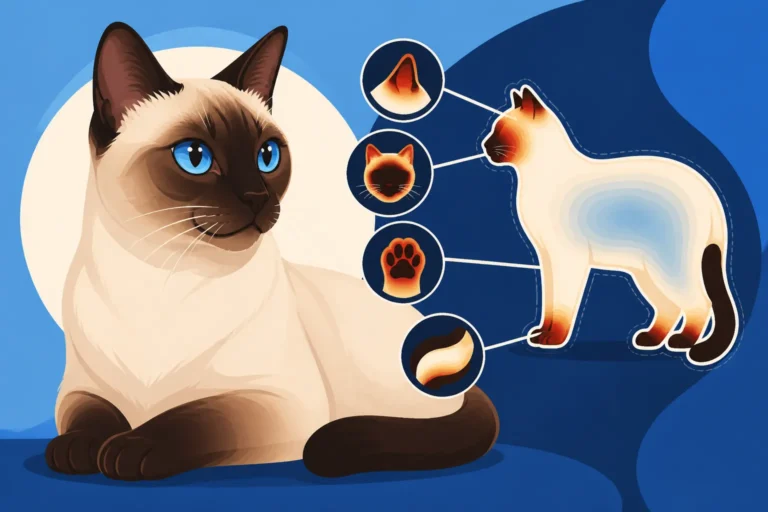
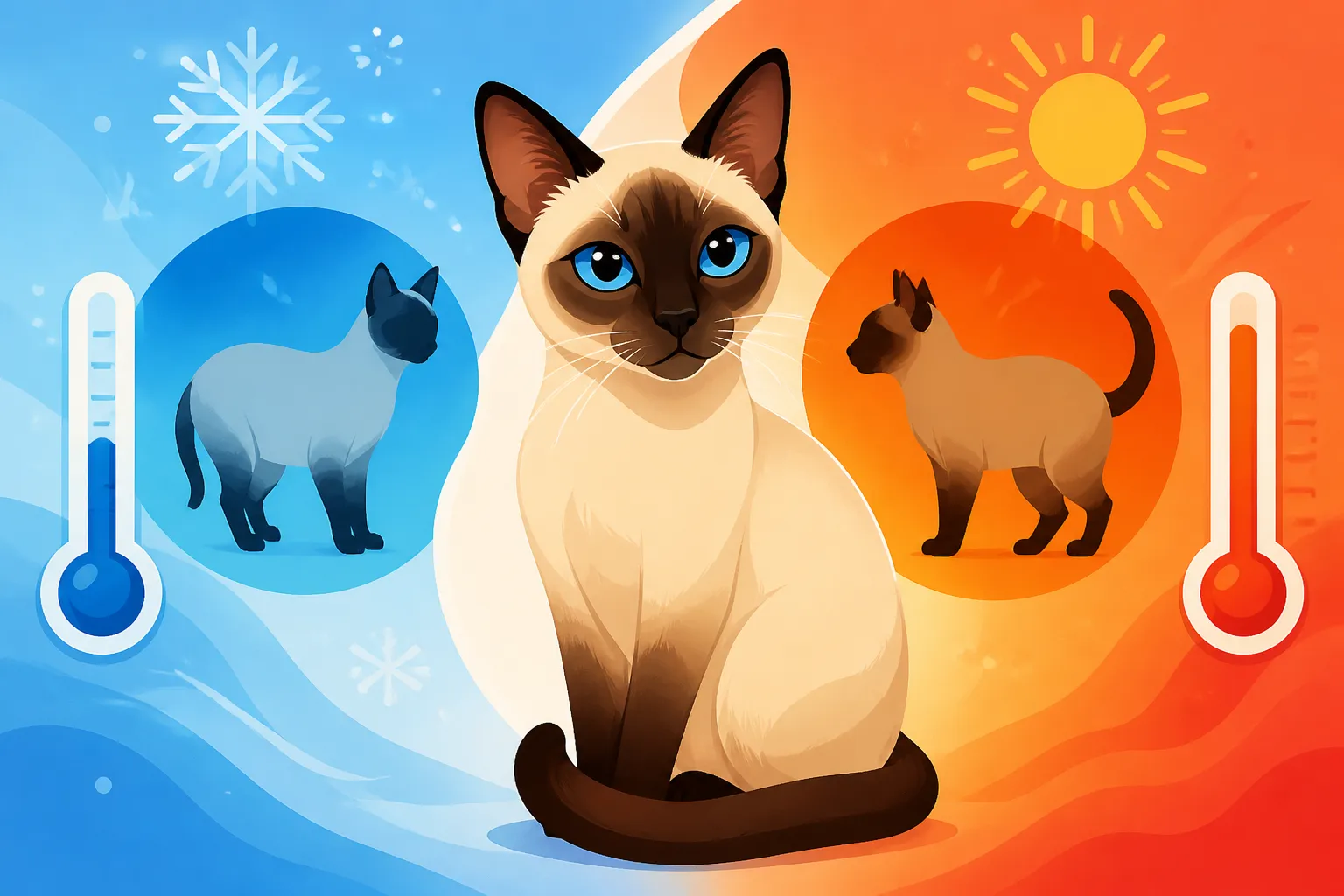
At the heart of the Siamese cat's unique coat pattern is a specific genetic mutation affecting the tyrosinase enzyme. This enzyme is crucial for melanin production, which is the pigment responsible for hair and skin color. In most cats, this enzyme works efficiently regardless of temperature, leading to a uniformly colored coat. But for Siamese cats, it's a different story. Their particular mutation means the tyrosinase enzyme is "temperature-sensitive." Think of it like a tiny, internal thermostat for color production. This enzyme only functions properly and produces pigment when the body temperature is cooler. When the temperature is warmer, it becomes inactive, and no pigment is produced. This is precisely Which Gene Makes a Siamese Cat's Points and why their coat develops the way it does.
This fascinating biological trick results in the classic Siamese pattern: dark pigment on the cooler extremities (the "points" – ears, face, paws, and tail) and lighter fur on the warmer core body. It's not that these areas have more pigment cells; it's that the pigment-producing cells in those cooler regions are able to do their job, while the cells in the warmer parts of the body are essentially "turned off" when it comes to color production. It's a perfect example of nature's ingenuity, creating a visually stunning effect through a simple, yet elegant, genetic mechanism. The gene itself isn't a "point-making" gene directly, but rather a "temperature-sensitive pigment" gene, and the points are the beautiful consequence.
Why Siamese Kittens Are Born Like Tiny Ghosts
One of the most surprising facts for new Siamese owners is that their adorable bundles of joy aren't born with those distinctive dark points. Instead, Why a Siamese Cat Kitten Is Born White. Imagine seeing a litter of tiny, uniformly cream-colored kittens, barely distinguishable from other breeds at first glance. It's a moment that often leaves people scratching their heads, wondering where the iconic Siamese coloration is hiding.
The reason for this ghostly debut lies entirely in the temperature-sensitive gene. While nestled safely in their mother's womb, kittens are kept at a consistently warm, even temperature – a cozy 100-102°F (around 38°C). This warmth effectively deactivates the tyrosinase enzyme across their entire body, meaning no melanin can be produced, even in the areas that will eventually become dark points. They emerge into the world as blank canvases, a testament to the powerful influence of temperature on their genetic expression. It's not until they are exposed to the ambient temperature of the outside world that their unique coloration truly begins to manifest.
The Art of Point Development: From Pale to Profound
Once those little white kittens enter the world, the magic truly begins. The transformation from a pale, unassuming newborn to a strikingly pointed Siamese is a gradual process, almost like watching a photograph develop right before your eyes. It’s one of the many joys of welcoming a Siamese kitten into your home.
Watching the Magic Happen: When Points First Appear
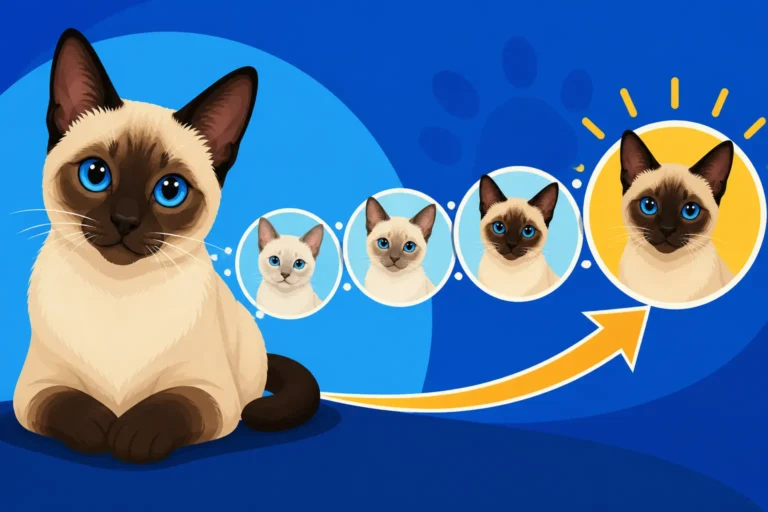
After birth, as the kittens are exposed to the cooler environmental temperatures, the tyrosinase enzyme in their extremities slowly starts to become active. The very first signs of color usually appear on the nose, ears, and paw pads. These are the parts of their tiny bodies that are furthest from their warm core and thus cool down the fastest. You might notice a faint, almost shadowy hint of color, like a whisper of what's to come. This usually happens within the first few days to a couple of weeks of life, a subtle but exciting change that signals the unique Siamese identity emerging.
Over the next several weeks, these initial shadowy hints will deepen and spread. The tail, often curling around their little bodies, will also begin to show its true color. It's a continuous, unfolding process, with the points gradually intensifying in shade as the kitten grows. By the time they are about 3-4 weeks old, the points are usually quite discernible, and by 8-12 weeks, you'll have a clear idea of their eventual point color, whether it's a deep seal, a cool blue, a warm chocolate, or a delicate lilac. Each kitten's development can be slightly different, a charming testament to their individuality, but the underlying mechanism of temperature and pigment remains the same. It's truly fascinating to observe this daily evolution.
The Lifelong Darkening: Age and the Siamese Coat
It’s not just in kittenhood that temperature plays a role; a Siamese cat's coat is a dynamic canvas that continues to change throughout their life. Many owners are surprised to find that their vibrant, youthful Siamese often becomes a much deeper, richer shade as they age. This isn't just an illusion; it's a real physiological phenomenon. How Much a Siamese Cat Darkens in a Cold House or simply over time. As a Siamese cat matures, their body temperature can subtly decrease, particularly in older age, or they might spend more time in cooler environments. This extended exposure to cooler temperatures means the temperature-sensitive tyrosinase enzyme has more opportunity to be active across more of their body.
The result is a gradual, overall darkening of their coat. What might have been a pale cream body as a young adult could become a warm fawn or even a light brown by the time they are seniors. Their points will also deepen significantly, becoming intensely saturated with color. This darkening is a natural part of their aging process and is completely normal. It’s part of The Fifteen to Twenty Years a Siamese Cat Gets and a beautiful progression to witness. While some owners might prefer the stark contrast of a younger Siamese, the rich, mature tones of an older cat hold their own unique charm, telling a story of a lifetime spent in various temperatures, subtly altering their living artwork.
Environmental Influences: Your Home's Role in Coat Color
It might sound wild, but the temperature of your actual living room can genuinely influence the depth and spread of your Siamese cat's points! It's not a myth; it's a direct consequence of that unique temperature-sensitive gene we've been talking about.
The Cozy Home vs. The Chilly Abode: How Temperature Affects Pigment
Think about your home's thermostat. If you're someone who loves to keep your house toasty warm, say around 72-75°F (22-24°C), you might notice that your Siamese cat tends to have a lighter body color overall, with a more pronounced contrast between their points and their core. The consistently warmer ambient temperature means that the tyrosinase enzyme on their main body remains largely inactive, preventing significant pigment production. This preserves that crisp, striking look many associate with the breed. It's not about making them not get points, but about maintaining that lighter body shade.
Conversely, if you prefer a cooler home, perhaps keeping your thermostat set lower, around 65-68°F (18-20°C), you might find your Siamese develops a deeper body shade over time. The cooler air allows the tyrosinase enzyme on their torso to become more active, even if slightly, leading to a more generalized darkening. It's why some Siamese cats appear a rich cream or even fawn across their backs, while others maintain a very pale, almost white body. It's all about sustained environmental temperature. Of course, you should always prioritize your cat's comfort and health over their aesthetics, ensuring they are warm enough, especially since Why a Siamese Cat Feels the Cold. But it's a fascinating observation for sure!
Winter Wonders and Summer Shades: Seasonal Color Changes
Just like the leaves on the trees, your Siamese cat's coat can undergo subtle seasonal transformations. It's not as dramatic as a complete change of wardrobe, but attentive owners will often spot these shifts, adding another layer of intrigue to their feline companion. During the colder winter months, when temperatures drop, both indoors and out, many Siamese cats will experience a natural darkening of their body fur. This is because their entire body is exposed to slightly cooler average temperatures, allowing more pigment to develop. You might notice their back, flanks, and even their belly take on a richer, more toasted hue.
Then, as spring arrives and the days warm up, the opposite often happens. With higher ambient temperatures, the pigment-producing enzyme becomes less active on their body, and their coat can gradually lighten again. The difference might be subtle, a shade or two lighter, but it's a clear demonstration of how their body responds to the environment. It's a cyclical process, a living barometer of the seasons, etched into their beautiful fur. So, if you notice your Siamese looking a bit darker come February and then a bit lighter by August, you're not imagining things – it's just their amazing genetics at work, creating these charming How Much a Siamese Cat Changes Color in Winter patterns.
The Shaved Patch Phenomenon: A Temporary Tattoo
One of the most striking and often puzzling demonstrations of the Siamese cat's temperature-sensitive gene occurs after a trip to the vet. Many owners are surprised, even alarmed, to find that a patch of fur shaved for surgery or an IV insertion grows back significantly darker than the surrounding coat.
The Unexpected Dark Spot: Why Shaved Areas Grow Back Darker
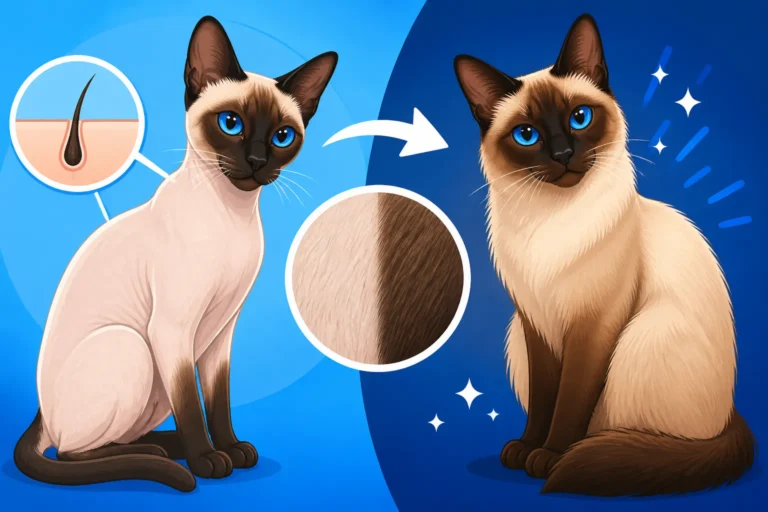
It's a common scenario: your beloved Siamese has a minor surgery, perhaps a dental procedure or a biopsy, and a small area of fur on their leg or abdomen is shaved. Weeks later, as the fur starts to grow back, you notice it's a distinct, deep black or brown, much darker than their normal body color. This isn't a mistake by the groomer or a sudden, alarming pigment change. It's the shaved patch growing back dark (Why a Shaved Siamese Cat Grows Back Dark), and it's a perfect example of their unique genetics in action. When an area of fur is shaved, it exposes the skin directly to the cooler ambient air. This sudden drop in local temperature around the shaved patch "activates" the dormant tyrosinase enzyme in that specific spot.
With the enzyme now able to produce melanin at full capacity in that cooler area, the new fur growing in is heavily pigmented. It's essentially mimicking the conditions of their cooler extremities, creating a temporary "point" on their body. This is why you often see dark patches where an IV was placed on a leg, or a surgical incision was made on their belly. The larger the shaved area and the cooler the environment, the more dramatic the contrast tends to be. It can be a bit startling at first, but it's a fascinating, harmless side effect of their incredible genetic makeup.
Fading Away: Does the Dark Patch Last Forever?
Thankfully, these dark shaved patches are not permanent. While they can look quite pronounced and might cause a moment of concern, they are merely temporary tattoos etched by temperature. As the new, darker fur grows out, it provides insulation, and the skin beneath gradually returns to its normal, warmer body temperature. Once the skin temperature rises, the temperature-sensitive tyrosinase enzyme in that area begins to deactivate again, just as it does on the rest of their core body.
The process of fading can take several weeks to a few months, depending on how quickly the fur grows, the size of the patch, and the ambient temperature of your home. Slowly but surely, the subsequent growth of fur will revert to the lighter, normal body color of your Siamese. It's a visual reminder of their extraordinary genetics, a tiny scientific experiment playing out on your pet. So, if your Siamese comes home from the vet with a dark patch, don't fret! Just appreciate this quirky, temporary display of their unique biology.
Understanding Point Colors: Beyond the Basic Black
While the underlying genetic principle of temperature-sensitive pigmentation is the same for all Siamese cats, the specific color of their points can vary beautifully. It's not just "dark," but a spectrum of rich, elegant shades, each with its own charm and history.
The Classic Four: Seal, Blue, Chocolate, and Lilac
When most people think of a Siamese, they often picture the deep, dark points of a Seal Point. This is arguably the most recognizable variety, with rich, dark brown, almost black, points contrasting sharply with a creamy body. The Seal Point is the original Siamese color, the one that set the standard for the breed's captivating appearance. A beautiful example of What a Seal Point Siamese Cat Is.
Then we have the sophisticated Blue Point. Here, the points are a softer, slate-gray blue, creating a more delicate contrast with an icy-white or bluish-toned body. It's a cool, elegant hue that many find incredibly appealing. What a Blue Point Siamese Cat Is perfectly captures this serene beauty. For those who prefer warmer tones, the Chocolate Point offers rich, milk-chocolate brown points against an ivory body. It's a softer version of the seal, equally stunning but with a gentler contrast. What a Chocolate Point Siamese Cat Is and its delicious tones are a favorite for many. Finally, the Lilac Point is the palest of the classic four, with delicate, frosty pinkish-gray points against a glacial white body. This ethereal color is often described as a "pinkish dove gray," and it's truly breathtaking. What a Lilac Point Siamese Cat Is highlights this exquisite and subtle coloration. Each of these point colors adheres to the same temperature-sensitive gene but expresses different underlying pigment variations.
| Point Color | Description | Body Color (Kitten) | Body Color (Adult) |
|---|---|---|---|
| Seal | Deep brown, almost black, points | Creamy white | Cream, fawn, or light brown |
| Blue | Soft slate-gray blue points | Icy white | Bluish-white or pale blue |
| Chocolate | Warm milk-chocolate brown points | Ivory white | Ivory or pale cream |
| Lilac | Frosty pinkish-gray (dove gray) points | Glacial white | Glacial white or off-white |
| Red/Flame | Warm orange to deep red points | Creamy white | Cream or apricot |
| Tortie | Patches of red/cream mixed with other points | Varies by base color | Varies by base color |
| Lynx | Tabby stripes on points (e.g., Seal Lynx) | Varies by base color | Varies by base color |
The "Other" Points: Flame, Tortie, and Lynx
Beyond the traditional four, the world of Siamese point colors expands even further, thanks to the introduction of other genetic traits into the Siamese lineage. These "other" points still demonstrate the temperature-sensitive effect but combine it with other color and pattern genes. For example, the Flame Point (also known as Red Point) features vibrant orange to deep red points against a creamy white or apricot-toned body. It's a stunning, fiery variation that brings a whole new energy to the Siamese look.
Then there are Tortie Points, which are a beautiful kaleidoscope of color. These cats have patches of red or cream intertwined with one of the traditional point colors (e.g., Seal Tortie Point, Blue Tortie Point). This pattern is almost exclusively seen in female cats, due to the genetics of red color expression, making them quite special. And finally, we have the Lynx Point, a truly striking variation where the points are not solid but are distinctly striped, like a tabby pattern. You might see a Seal Lynx Point with dark brown tabby stripes on its ears, face, paws, and tail, or a Blue Lynx Point with gray stripes. All of these variations, no matter how complex the pattern, still rely on that fundamental temperature-sensitive gene to manifest their colors only on the cooler extremities of the Siamese cat.
Practical Care and Coat Health: Maintaining That Unique Look
While the incredible genetics of your Siamese cat largely dictate their coat color and pattern, good basic care plays a vital role in maintaining the overall health and brilliance of their fur. It's not just about looking good; a healthy coat is often a sign of a healthy cat.
Grooming for a Healthy Coat: Simplicity is Key
Thankfully, grooming a Siamese cat is generally a breeze, a stark contrast to some of their long-haired feline cousins. Their short, fine, close-lying coat, which lacks a dense undercoat, means they aren't prone to matting or excessive shedding. In fact, How Much a Siamese Cat Sheds is usually quite minimal compared to other breeds. Most Siamese cats are meticulous self-groomers, keeping themselves looking pristine with their daily routines. However, a little help from you can go a long way in enhancing their natural sheen and strengthening your bond.
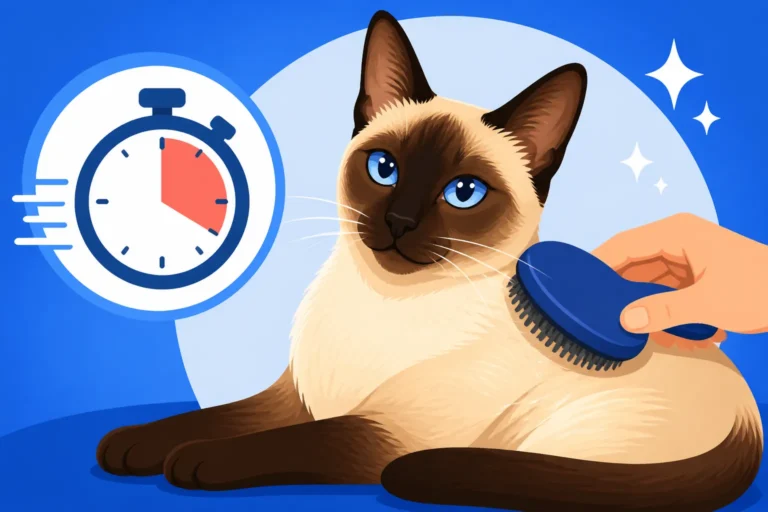
A quick brush-down once or twice a week is usually all it takes. You don't need fancy tools; a soft bristle brush, a rubber curry comb, or even a grooming glove will do the trick. This simple routine helps remove loose hairs, distributes natural skin oils, and provides a gentle massage that most Siamese cats adore. Beyond brushing, their large, open ears might occasionally need a gentle wipe with a damp cloth if you notice any buildup, but generally, their grooming needs are quite low-maintenance. This simplicity means you can focus more on playtime and conversation with your vocal companion! If you need a brush or grooming glove, many options are available through online retailers like Chewy or Amazon.
Diet and Overall Wellness for Coat Brilliance
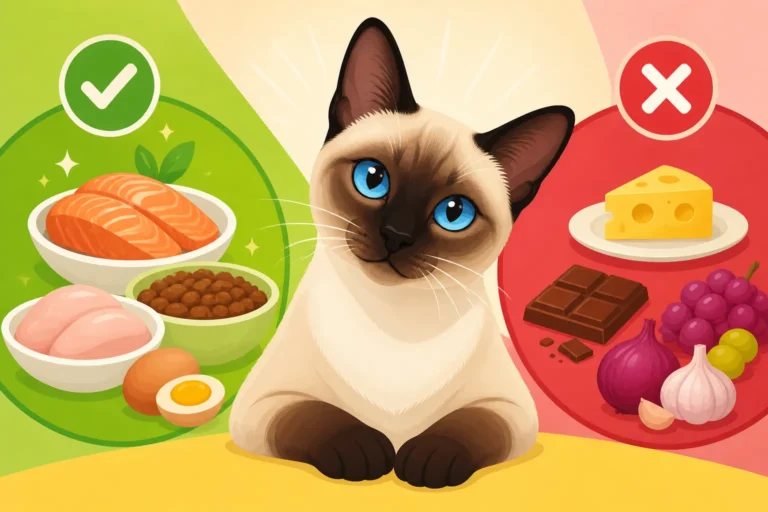
A truly beautiful coat starts from within. No matter how unique your Siamese cat's genetic coloring, a dull, dry, or unhealthy coat can often be a sign that something is amiss with their diet or general health. Providing high-quality nutrition is paramount for a gleaming, vibrant coat and overall wellness. Look for cat foods that list real meat (like chicken, turkey, or salmon) as the first ingredient and are rich in animal-based protein, which is essential for feline health. Many Siamese owners find that a balanced diet, often incorporating wet food, helps with hydration and provides necessary nutrients for skin and coat health.
Essential fatty acids, particularly Omega-3s and Omega-6s, play a crucial role in maintaining skin hydration and coat shine. These can often be found in quality cat foods or supplemented if advised by your vet. A well-hydrated cat also tends to have a healthier coat, so ensure fresh water is always available. A cat water fountain, easily found on Amazon, can encourage more drinking. While diet won't change the color of your Siamese's points (that's all genetics and temperature!), it will ensure that the colors they do express are as rich, clear, and glossy as possible. A healthy cat equals a happy cat, and a happy cat often has a stunning, well-maintained coat, ready to show off its temperature-painted masterpiece. Which Food Suits a Siamese Cat often varies, so consult your vet if you have concerns.
Disclaimer
This article is for general informational purposes only and does not constitute professional advice. Laws, prices and regulations vary by location and change over time. Consult a qualified professional for guidance on your specific situation.