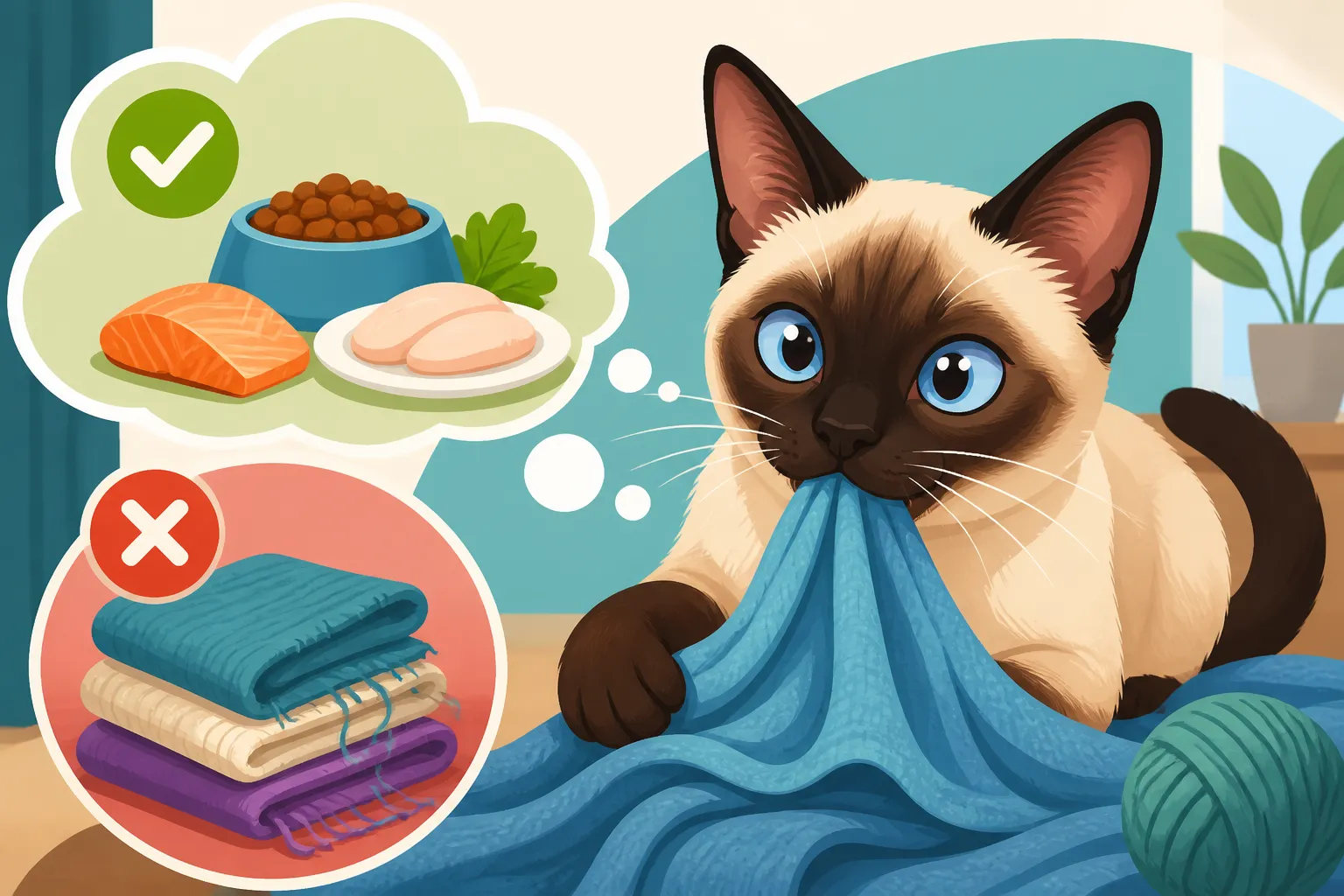
How to Feed a Siamese Cat That Eats Fabric
It's incredibly frustrating and worrying when your beloved Siamese cat develops a habit of eating fabric. You walk into the living room to find your favorite sweater with a new hole, or worse, you hear that tell-tale gagging sound that sends a shiver down your spine, knowing they might have swallowed something dangerous. This guide is here to help you understand why your Siamese might be drawn to munching on textiles and, more importantly, how adjusting their diet and environment can make a real difference in keeping them safe and healthy.
Understanding Siamese Cat Pica and Wool Sucking
When your Siamese cat starts chewing on things they shouldn't – especially fabrics – it’s a behavior often referred to as pica or, more specifically, wool sucking. It’s not just a quirky habit; it can be a sign of deeper issues and definitely poses risks to their health.
What is Pica and Wool Sucking?
Pica is a medical term for an animal eating non-food items. In cats, this can range from plastic and dirt to houseplants and, most commonly in Siamese and related breeds, fabric. Wool sucking is a specific type of pica where the cat gums, sucks, or chews on soft, often woolly, materials. Think blankets, sweaters, socks, carpet, or even your hair. It’s important to understand that this isn’t just your cat being naughty; it's an instinctive or compulsive behavior they might not be able to control without intervention.
For Siamese cats, this tendency can be particularly prevalent. There's a strong genetic component recognized within the breed and its close relatives, like the Oriental Shorthair. It’s almost as if the urge is hardwired into their DNA for some individuals. While other breeds can certainly develop pica, it’s such a well-known trait in Siamese cats that many owners expect to deal with it at some point. It often starts when they are kittens and can persist throughout their lives, sometimes even intensifying with age or stress. Owners often feel helpless, wondering why their otherwise perfectly normal cat is obsessed with their cashmere scarf.
Why Do Siamese Cats Eat Fabric?
The reasons behind wool sucking and pica in Siamese cats are complex and often multifaceted, making it a challenging issue for owners to tackle. It's rarely just one thing, which is why a holistic approach is usually best.
One of the most widely discussed theories points to genetics. Due to their specific breeding history, Siamese cats appear to have a higher genetic predisposition to this behavior. It’s thought that a particular gene or set of genes might make them more prone to developing obsessive-compulsive disorders, with pica being one manifestation. This means that even with perfect care, some Siamese cats might still show this behavior. Another common theory relates to early weaning. If a kitten is separated from its mother or weaned too early, they might not have had enough time to fulfill their natural sucking instinct, leading them to seek comfort in fabric later in life. This is why some breeders are very careful about ensuring kittens stay with their mothers for a full 12-16 weeks.
Beyond genetics and early life experiences, environmental factors play a huge role. Stress and anxiety are massive triggers for many cats, and Siamese are known for their sensitive natures. Changes in routine, a new pet, moving to a different home, or even just not getting enough attention can all cause a Siamese to turn to fabric as a coping mechanism. It's a self-soothing behavior, much like a child might suck their thumb. Boredom is another significant contributor. Enrichment for a Siamese Cat That Gets Bored in an Hour is not just a suggestion, it's a necessity. These intelligent, active cats need constant mental and physical stimulation. If they don't get it, they can channel that excess energy and intelligence into destructive behaviors, including pica. Imagine a super-smart child with nothing to do – they're going to find something to occupy themselves with, and for a Siamese, that might be your wool throw. Lastly, while less common, some medical conditions or nutritional deficiencies have been linked to pica, though these are usually ruled out first by a vet. For example, some anecdotal evidence suggests a lack of certain vitamins or minerals might contribute, but this isn't a universally accepted scientific fact.
The Dangers of Fabric Ingestion
Beyond the annoyance of damaged belongings, the actual ingestion of fabric poses serious health risks to your Siamese cat. This isn't just about a bit of frayed yarn; it can be life-threatening.
The primary danger is an intestinal blockage. Cats have barbed tongues, designed to strip meat from bones and groom their fur. These barbs make it very difficult for them to spit out anything fibrous or stringy once it's in their mouth. As a result, long strands of fabric, threads, or even larger pieces can easily be swallowed. Once ingested, these materials can get wadded up or form a linear foreign body in the gastrointestinal tract. A linear foreign body is particularly dangerous because it can saw through the intestines as the gut tries to pass it, leading to perforations, peritonitis, and a critically ill cat. Signs a Siamese Cat Has an Intestinal Blockage are urgent and require immediate veterinary attention. Imagine your cat trying to pass a long piece of string; as one end gets anchored, the rest of the string bunches up the intestines like an accordion, cutting through the delicate tissue.
In severe cases, if a blockage occurs, it almost always requires emergency surgery. This isn't a minor procedure; it's a major abdominal operation with significant risks and recovery time. And, of course, the financial cost can be substantial. What Blockage Surgery Involves for a Siamese Cat details just how serious this can be. Even if it doesn't lead to a full blockage, constantly chewing on fabrics can introduce bacteria and toxins into their system, or even cause choking if a piece gets lodged in their throat. Certain fabrics treated with dyes or chemicals could also be toxic if ingested over time. It’s a very real and present danger that no Siamese owner should take lightly.
Nutritional Strategies to Discourage Fabric Eating
Since hunger, specific dietary needs, or even just the sensation of eating can play a role in pica, tailoring your Siamese's diet is a crucial step in managing this behavior. It's about more than just filling their bowl; it's about providing the right fuel and satisfaction.
Ensuring a Nutritionally Complete Diet
The foundation of managing pica in your Siamese starts with making sure their diet is as balanced and complete as possible. While there's no magic bullet food that "cures" pica, ensuring optimal nutrition can help rule out any underlying deficiencies that might contribute to the behavior.
Siamese cats are known for their high metabolism and lean, athletic builds. They often burn through calories faster than other breeds, which means they need a diet rich in high-quality protein to maintain their muscle mass. Look for cat foods where real meat (chicken, turkey, fish, beef) is listed as the first ingredient, not vague “meat by-products” or excessive fillers. Protein provides essential amino acids vital for their health and helps them feel satisfied after meals. Beyond protein, a complete diet includes appropriate levels of healthy fats for energy and skin/coat health, as well as vitamins and minerals. Some cats with pica might be seeking out something missing from their diet, even if it's subtle. For instance, sometimes a cat eating dirt might be low on minerals. While fabric isn't a natural source of nutrients, an unsatisfied appetite or a feeling of being undernourished could drive them to seek out something to chew on. Ensure you're feeding a reputable brand that meets AAFCO (Association of American Feed Control Officials) standards for “complete and balanced” nutrition for your cat's life stage. Whole, human-grade ingredients could be more satisfying than highly processed kibble.
The Role of Wet Food vs. Dry Food
The choice between wet food, dry food, or a combination can have a surprising impact on a Siamese cat prone to pica. Many experts suggest leaning towards a diet heavy in wet food for cats, and this can be particularly beneficial for fabric eaters.
Wet food has a much higher moisture content, which is excellent for a cat's overall hydration, as cats naturally get most of their water from their prey in the wild. But beyond hydration, wet food can be more satiating than dry kibble. The volume of wet food is greater for the same caloric intake, making a cat feel fuller. This "fullness factor" can potentially reduce the urge to chew on non-food items out of perceived hunger or a lack of satiety. If your cat finishes a meal and still feels a gnawing emptiness, they might be more inclined to seek out a blanket to chew. Furthermore, the texture of wet food is often more appealing and provides a different sensory experience compared to crunching kibble, which might fulfill some oral fixation. Some cats also simply enjoy the act of eating wet food more, which can be a form of enrichment in itself. On the other hand, dry food can offer some dental benefits through mechanical abrasion, but if your cat is prone to pica, the risks of them gobbling dry food quickly and still feeling unsatisfied might outweigh the dental perks. A mixed diet, where wet food makes up the majority and dry kibble is offered in limited, structured amounts (perhaps in a puzzle feeder), could be a good compromise.
Fiber-Rich Diets and Satiety
Incorporating more fiber into your Siamese cat’s diet is a strategy often recommended for managing pica, especially if the behavior seems linked to hunger or a need for gastric fullness.
Fiber plays a crucial role in digestion and satiety. It adds bulk to food without adding many calories, helping your cat feel fuller for longer after a meal. This can be especially helpful if your Siamese seems constantly hungry or quickly unsatisfied by their regular meals, leading them to search for other things to chew on. High-fiber diets can also help regulate blood sugar levels, which might, in some cases, contribute to feelings of sustained energy rather than sudden drops that could trigger searching behaviors. When considering fiber, look for cat foods that include natural sources like pumpkin, psyllium husk, or certain vegetables. You can also add small amounts of these ingredients to their existing food. For example, a spoonful of pure canned pumpkin (not pie filling!) can be a great fiber boost. Some commercial foods are specifically formulated as "hairball control" or "weight management" diets, which tend to be higher in fiber. These could be options to discuss with your vet. Sites like Chewy offer a wide range of specialized cat foods, and you can often filter by ingredients or dietary needs to find options with higher fiber content. However, too much fiber can lead to digestive upset, so any significant dietary changes should always be discussed with your veterinarian to ensure they are appropriate for your individual cat's health needs.
Here's a quick comparison of food types and their fiber potential:
| Food Type | Pros for Pica Management | Cons for Pica Management | Fiber Potential |
|---|---|---|---|
| Wet Food | High moisture, highly satiating, diverse textures | Can be more expensive, some cats are finicky | Moderate to High |
| Dry Kibble | Convenient, some dental benefits (limited) | Less satiating, can be eaten quickly, lower moisture | Variable (can be high) |
| Raw/Fresh | Highly palatable, often nutrient-dense, natural textures | Requires careful handling, higher cost, potential for imbalance | Variable (additives) |
| High-Fiber Diet | Promotes fullness, aids digestion, may reduce hunger-driven pica | Can cause GI upset if too much, requires vet consultation | High |
Mealtime Routines and Environmental Enrichment
Beyond what your Siamese eats, how and when they eat, along with their overall environment, can significantly influence fabric-eating behaviors. Addressing these factors can create a more stable and stimulating world for your sensitive feline friend.
Structured Feeding Schedules
Siamese cats thrive on routine. A predictable environment can reduce anxiety, which, as we discussed, is a major trigger for pica. Implementing a structured feeding schedule is a simple yet powerful way to establish this routine.
Instead of free-feeding, where food is available all day, try offering meals at specific times throughout the day, perhaps two or three times. This creates a sense of expectation and predictability for your cat. They learn when food will appear, which can alleviate anxiety related to food scarcity, even if they're not truly starving. The act of receiving a meal at a set time can also be a calming ritual. For a Siamese, who often craves interaction, the mealtime itself, with you present, can be a bonding experience that fulfills some of their social needs. If you’re used to free-feeding and worry your cat will be ravenous, gradually transition them to a schedule, reducing the amount of free-fed food while introducing timed meals. A consistent schedule helps regulate their metabolism and energy levels, contributing to overall well-being. This can, in turn, reduce the likelihood of them seeking out fabric due to boredom, anxiety, or a perceived lack of resources.
Using Puzzle Feeders and Slow Feeders
Siamese cats are incredibly intelligent and need mental stimulation. Simply putting food in a bowl, especially dry kibble, does little to engage their active minds. This is where puzzle feeders and slow feeders become invaluable tools, transforming mealtime from a quick gobble into an enriching activity.
Puzzle feeders require your cat to "work" for their food by batting, nudging, or rolling a device to dispense kibble or treats. This mimics their natural hunting instincts, providing a mental challenge and making them think. The effort involved slows down their eating, preventing them from finishing their meal too quickly and then feeling unsatisfied or bored. The prolonged engagement can be deeply satisfying for an intelligent cat like a Siamese. Think of it as intellectual enrichment disguised as dinner. There are many types of puzzle feeders available, from simple treat balls to more complex mazes. You can find a great selection on platforms like Amazon or Chewy. Start with an easier one to build their confidence and gradually introduce more challenging options. Slow feeders, while not always as mentally stimulating as puzzles, are designed with ridges or obstacles to prevent fast eating. This is beneficial for digestion and can also help prolong the meal experience, making your cat feel fuller for longer. By making food acquisition a game, you're tapping into their natural instincts and giving them a positive outlet for their energy, which can redirect their attention away from fabric. What Toys a Siamese Cat Actually Uses will give you more ideas on engaging them.
Enrichment Beyond Food
While diet and mealtime routines are critical, addressing pica in a Siamese cat requires a comprehensive look at their entire environment. Food is only one piece of the puzzle; a truly enriched environment tackles boredom and stress on all fronts.
Siamese cats are known for their high energy levels and demand for attention. If they don't get enough interactive play or mental challenges, boredom can quickly set in, leading them to find their own "entertainment" – often by chewing on inappropriate items. Provide a variety of toys that mimic prey, like feather wands or crinkle balls. Schedule dedicated play sessions with you every day. Remember, they often prefer interactive play over solo toys. Vertical space is also incredibly important for cats. Cat trees, shelves, and window perches allow them to observe their territory from a high vantage point, which reduces stress and provides a sense of security. Consider a catio if possible, so they can safely experience the outdoors. Whether a Siamese Cat Lives Indoors Only is a key consideration here. Furthermore, companionship can be vital. Siamese cats are highly social and can suffer from separation anxiety if left alone for long periods. If your lifestyle means your Siamese is often by themselves, consider if Whether a Siamese Cat Needs a Companion Cat might be a good idea, as a feline friend can provide much-needed interaction and reduce loneliness, often mitigating stress-induced behaviors like pica. Consistent daily interaction, a stable routine, and plenty of opportunities to express natural cat behaviors are paramount for a happy, fabric-free Siamese.
Addressing Underlying Behavioral and Medical Causes
When a Siamese cat is eating fabric, it’s rarely just about the food or environment. Often, there are deeper behavioral or medical currents at play that need to be understood and addressed with professional guidance.
Consulting Your Veterinarian
The very first step when your Siamese cat starts exhibiting pica is to schedule a thorough check-up with your veterinarian. It’s absolutely crucial to rule out any underlying medical conditions before assuming it’s purely behavioral.
Your vet will likely perform a physical exam, possibly bloodwork, and other diagnostic tests to check for issues like dental problems (which might make chewing comforting), gastrointestinal disorders, nutrient deficiencies, or even certain metabolic diseases that could manifest as unusual appetites. For instance, some forms of anemia could theoretically cause a cat to seek out non-food items, although this is less common for fabric eating specifically. They will also discuss your cat's medical history, current diet, and any recent changes in their environment or behavior. Be honest and detailed about everything you've observed. If a medical cause is identified, treating it might resolve the pica entirely. Even if no medical cause is found, your vet can offer invaluable advice on dietary changes, supplements, or even prescribe medications if the pica is severe and believed to be an anxiety or obsessive-compulsive disorder. They might recommend specific veterinary diets that are higher in fiber or have a unique formulation designed to promote satiety. Don't try to self-diagnose or treat without their input; your cat's health is too important. How Often a Siamese Cat Needs a Wellness Exam and What a Siamese Cat's Yearly Bloodwork Should Cover are good guides for proactive health.
Managing Stress and Anxiety
Siamese cats are renowned for their sensitive and often anxious personalities. Because stress is a significant trigger for pica and wool sucking, effectively managing your cat's stress and anxiety levels is paramount to resolving the behavior.
Identify potential stressors in your cat's life. Has there been a recent change in your household? A new baby, a different work schedule, construction next door, or even furniture rearrangement can be incredibly unsettling for a Siamese. Their bond with their human family is often intense, and any perceived lack of attention can be a source of stress. Once identified, try to mitigate these stressors. Maintain a consistent daily routine for feeding, play, and cuddle times. Provide safe, quiet spaces where your cat can retreat if they feel overwhelmed, such as high perches or cozy beds. Pheromone diffusers, like Feliway, can be incredibly helpful in creating a calming atmosphere. These synthetic pheromones mimic the natural calming facial pheromones cats use to mark their territory as safe. They can be plugged into an outlet and diffuse continuously, creating a subtle, reassuring presence that many cats respond positively to. If anxiety is severe, your vet might suggest behavioral modification techniques in conjunction with medication to help your cat cope. Remember, a stressed cat is an unhappy cat, and their behaviors are often a cry for help.
Behavioral Modification Techniques
Once medical causes are ruled out and environmental enrichment is in place, behavioral modification techniques can be employed to directly address and redirect the fabric-eating habit. This requires patience, consistency, and a little creativity.
The goal isn't to punish your cat, which can actually increase anxiety, but to redirect their chewing onto appropriate objects and make fabric less appealing. One common strategy is to make tempting fabrics inaccessible or unpleasant. Consider putting away tempting wool blankets or sweaters when you're not supervising. For items you can't remove, like upholstery, you can try applying "no-chew" sprays. These sprays contain bitter agents that are safe for pets but taste awful, discouraging chewing. However, individual cats have different sensitivities, so what deters one might not bother another. Simultaneous with deterrence, you need to offer highly attractive and safe alternatives. Provide a variety of chew toys specifically designed for cats, such as silvervine sticks, catnip-filled toys, or rubber chew toys. When you see your cat approaching a fabric item, immediately redirect them to an appropriate toy with an enthusiastic voice and positive reinforcement. Praise them lavishly when they interact with the correct toy. Increase interactive play sessions, especially before times when they typically engage in pica, to burn off energy and satisfy their need for attention. How to Clicker Train a Siamese Cat can be an excellent tool for positive reinforcement, teaching them to respond to cues and rewarding desired behaviors. Consistency is key: everyone in the household needs to be on board with the same approach so your cat understands the rules.
Practical Tips for a Pica-Prone Household
Living with a Siamese cat prone to pica requires a proactive approach to managing their environment and offering safe alternatives. It's about adapting your home to ensure their safety and well-being.
Cat-Proofing Your Home
The most effective immediate solution for preventing fabric ingestion is simple: remove the temptation. Cat-proofing your home is essential when you have a fabric-eating Siamese.
Go through your home with a critical eye, identifying all fabrics that might be targets. This includes sweaters, blankets, socks, dish towels, bathmats, curtains, and even shoelaces. Store tempting items in drawers, closets, or lidded bins. If you have a favorite throw blanket, keep it in a designated "cat-free" zone or put it away immediately after use. Consider switching out certain fabric types; sometimes a particular texture, like wool or fleece, is more appealing than others. For larger items like upholstered furniture that can't be removed, consider covering them with less appealing materials, or using slipcovers that can be easily washed or replaced. If your cat targets specific areas, like a corner of the carpet, you might need to cover that spot with a plastic mat or a heavy, flat piece of wood. It sounds extreme, but preventing ingestion is paramount. Remember that these clever cats are persistent; they will find ways to get to what they want if it's left accessible. This isn't about being mean; it's about safeguarding their health. How to Cat Proof a Home for a Siamese Cat has more great tips for preventing unwanted chewing.
Offering Safe Chewing Alternatives
Successfully redirecting your Siamese from fabric-eating often hinges on providing appealing and safe alternatives that satisfy their chewing instincts. Don't just remove the bad; introduce the good!
Cats, especially Siamese, often have an innate need to chew and mouth things. This can be for comfort, play, or even to relieve stress. Instead of your prized cashmere, offer them a variety of cat-specific chew toys. Look for toys made from durable, non-toxic materials designed for chewing. Silvervine sticks, for example, are a natural wood product that many cats love to chew on and rub against, often providing a mild euphoric effect similar to catnip. You can also find durable rubber or silicone toys shaped like fish or other objects that are safe to gnaw on. Some cats enjoy toys with varied textures, providing a different sensory experience. Don't just offer one type; experiment to see what your particular Siamese prefers. Rotate their chew toys regularly to keep them interesting and prevent boredom. When you see them chewing on a safe toy, praise them and maybe even offer a healthy treat to reinforce that positive behavior. The goal is to make these safe alternatives far more attractive and accessible than any forbidden fabric. You can easily find these types of toys on sites like Amazon, making it convenient to stock up.
Monitoring and Intervention
Even with the best preventative measures, a Siamese cat with a strong pica habit might still find a way to indulge. Therefore, consistent monitoring and knowing when and how to intervene are crucial for their safety.
Always keep a watchful eye on your cat, especially during times when they are most likely to chew, such as when they are bored, stressed, or seeking attention. If you catch them in the act of chewing fabric, calmly but firmly interrupt the behavior. Avoid harsh punishment, as this can increase anxiety and worsen the problem. Instead, immediately redirect their attention to an appropriate chew toy or engage them in an interactive play session. The goal is to consistently teach them what is acceptable to chew on. Learn the Signs a Siamese Cat Has Swallowed Fabric so you can act quickly if you suspect they've ingested something dangerous. Symptoms like vomiting, lethargy, decreased appetite, constipation, or straining to defecate can all indicate an intestinal blockage and warrant an immediate trip to the emergency vet. Don't wait to see if it passes; an obstruction can rapidly become life-threatening. Having an emergency vet's number handy and a plan for quick transport is part of responsible ownership for a cat with pica.
Disclaimer
This article is for general informational purposes only and does not constitute professional advice. Laws, prices and regulations vary by location and change over time. Consult a qualified professional for guidance on your specific situation.