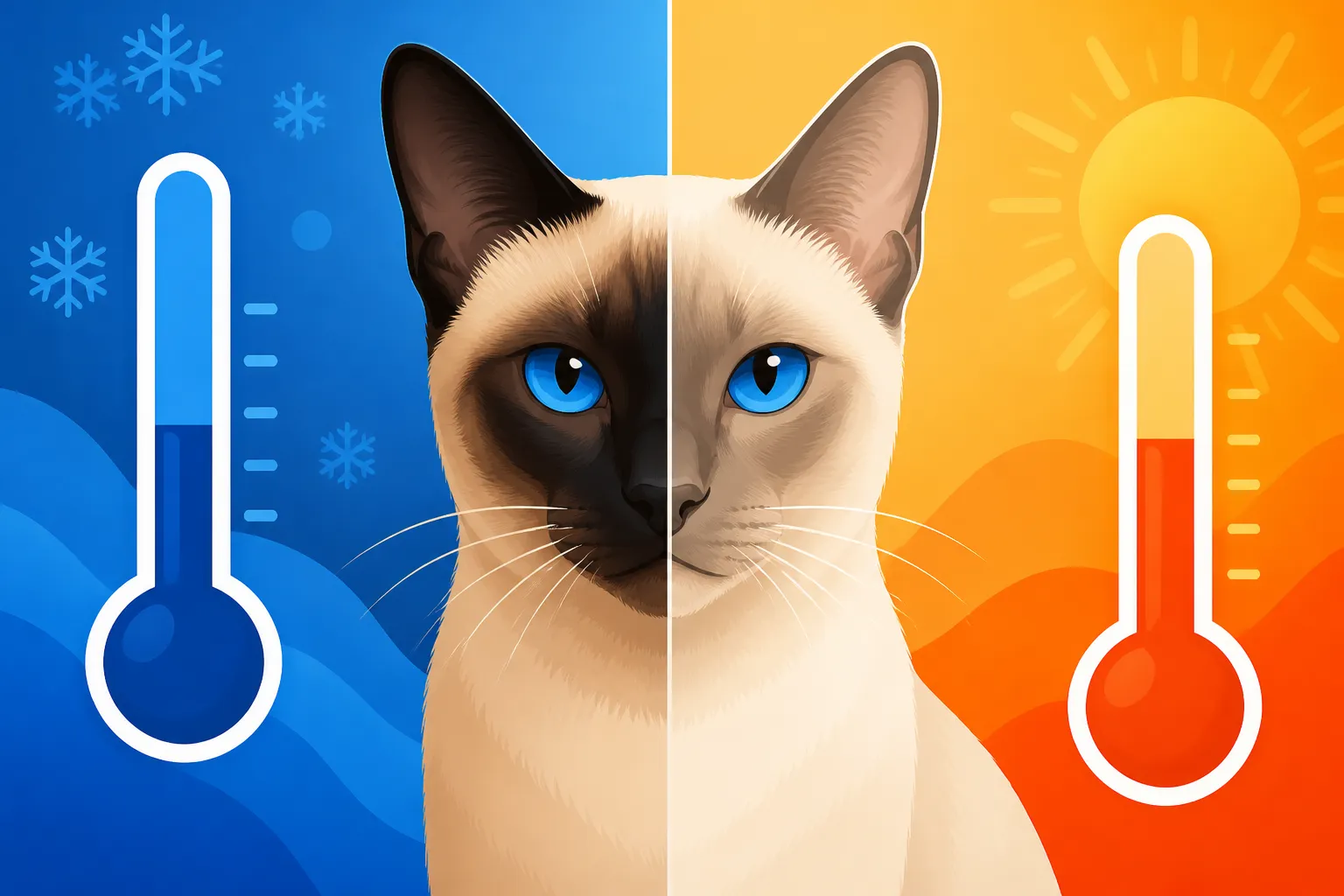
At What Temperature a Siamese Cat Stops Making Pigment
It's a common, almost mystical observation among Siamese cat owners: how can a cat's fur color literally change before your eyes? Many of us have seen it – a pale kitten darkens with age, a shaved patch grows back a startlingly deep shade, or your beloved Meezer seems to get toastier points every winter. This isn't magic, though it feels like it; it's a fascinating biological quirk tied directly to temperature, and understanding it is key to appreciating your Siamese cat's unique beauty. This guide will delve into the science of why your Siamese cat's points appear, what temperature plays in their vibrant coloration, and how this charming trait is expressed throughout their lives.
The Genetic Blueprint for Siamese Coloration
Before we dive into temperature, it’s vital to understand the genetic foundation of your Siamese cat’s stunning coat. The unique coloration isn't just a random happening; it's intricately coded in their DNA, specifically involving a gene responsible for pigment production. Without this genetic predisposition, no amount of temperature fluctuation would create those beautiful dark points.
The Temperature-Sensitive Tyrosinase Enzyme
The star of our color-changing show is an enzyme called tyrosinase. Now, don't let the scientific name intimidate you; think of tyrosinase as a tiny, diligent painter within your cat's body, responsible for creating the pigment melanin, which gives fur its color. In most animals, this painter works tirelessly, regardless of the ambient conditions. However, in Siamese cats, this tyrosinase enzyme is a bit particular. It's what we call "temperature-sensitive."
What this means is that while the gene is present to produce color, the enzyme itself only functions efficiently within a specific temperature range. When the temperature is just right – typically cooler – the enzyme is active, churning out melanin and depositing it into the fur. But when temperatures rise, this little painter gets sluggish, or even stops working altogether, leading to a lack of pigment. This is the fundamental secret behind Why a Siamese Cat Has Dark Points. It's a hereditary trait, a delightful peculiarity passed down through generations, ensuring each Siamese cat carries this remarkable color-changing ability.
Inherited Trait and Color Variations
This temperature-sensitive tyrosinase isn't just a random mutation; it's a hallmark of the Siamese breed and its close relatives. It’s what differentiates a Seal Point from a Chocolate Point, or a Lilac Point from a Blue Point – all variations of the same genetic blueprint, but expressed differently due to slight modifications in the enzyme's activity or other interacting genes. The strength and precise hue of the points are often determined by these subtle genetic differences. For instance, a "blue" point is essentially a diluted "seal" point, where the pigment is less concentrated.
This also explains why there isn't just one "stop" temperature for all Siamese cats; there's a spectrum. The underlying gene determines the potential for color, and the environment (temperature) dictates the expression of that color. Understanding Which Gene Makes a Siamese Cat's Points helps us appreciate this intricate dance between nature and nurture, or in this case, nature and thermal environment.
The Threshold: When Pigment Production Slows and Stops
So, at what exact temperature does this fascinating process come to a halt? While there isn't a single, universally agreed-upon pinpoint temperature, the general consensus among feline geneticists and breeders points to a crucial threshold. The tyrosinase enzyme in Siamese cats typically becomes significantly less active, or even completely inactive, when the skin temperature rises above approximately 100°F (38°C).
The "Sweet Spot" for Pigment
Let's break that down a bit. The cooler parts of your Siamese cat's body – typically the extremities like the ears, tail, paws, and face – are naturally a few degrees cooler than their core body temperature. It's in these "cooler zones" that the tyrosinase enzyme can perform its best work, actively producing melanin. This is why these areas develop the distinctive dark "points." Their core body temperature, however, hovers around 100-102.5°F (37.8-39.2°C). At these higher internal temperatures, the enzyme is largely inhibited, which is why the main body of a Siamese cat remains a lighter, creamier shade.
Think of it like a finely tuned machine: it runs efficiently only within a specific operating range. For the Siamese tyrosinase, that range is on the cooler side. Once the temperature of the skin goes above that ~100°F mark, the enzyme essentially takes a break, and the production of melanin significantly drops or stops altogether, resulting in lighter fur. This is a brilliant example of how nature adapts, creating a visually stunning effect simply by modulating an enzyme's activity based on external and internal heat. It's also why Why a Siamese Cat's Pigment Only Works When Cool is such a fundamental characteristic of the breed.
Comparing Pigment Activity by Body Part
This temperature dependence creates a distinct pattern across your Siamese cat's body. The areas that consistently stay cooler are the ones that darken the most.
| Body Part | Typical Skin Temperature | Tyrosinase Activity | Pigment Production | Resulting Color |
|---|---|---|---|---|
| Ears, Paws, Tail | Lower (cooler) | High | High | Dark Points |
| Face, Nose Pad | Lower (cooler) | High | High | Dark Points |
| Belly, Groin | Higher (closer to core) | Low/None | Low/None | Pale/Cream |
| Back, Sides | Medium/High | Medium/Low | Medium/Low | Light Body Color |
This table illustrates the natural gradient. A cat's nose and paws, being furthest from the core and often exposed, are prime real estate for pigment production. Conversely, the belly, nestled against the warmth of the body, remains stubbornly pale. This delicate balance of temperature and enzyme activity is a testament to the intricate genetic wonders of the Siamese cat.
Visible Manifestations of Temperature-Dependent Coloration
You don't need a thermometer to see this genetic quirk in action. The temperature sensitivity of the tyrosinase enzyme leads to several striking and often delightful changes in your Siamese cat's coat throughout their life. These aren't just cosmetic; they tell a story about your cat's environment and even their health.
The Newborn's Pale Start
One of the most charming examples of this temperature sensitivity is the appearance of Siamese kittens. If you've ever seen a litter of newborn Siamese, you know they are born almost entirely white or a very pale cream. It's a truly surprising sight, especially when you expect those dark points! This happens because while they were developing in their mother's warm womb, their body temperature was consistently high – too high for the tyrosinase enzyme to be active.
Once they are born into the cooler outside world, the temperature on their extremities drops, and the enzyme can finally start doing its job. Slowly but surely, over the first few weeks, those distinctive points begin to emerge. It's a gradual process, like a photograph developing, and it's a clear demonstration of how crucial ambient temperature is to their coloration from day one. This phenomenon explains Why a Siamese Cat Kitten Comes Out White.
Seasonal Darkening and Lightening
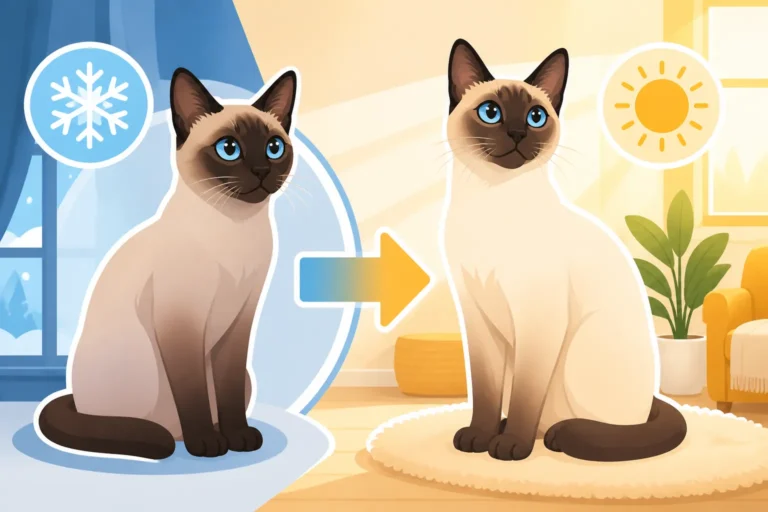
Many Siamese owners notice that their cats tend to be darker in winter and lighter in summer. This isn't just your imagination! It's another direct result of the temperature-sensitive enzyme. In the colder months, the overall ambient temperature is lower, which means more of your cat's body, even parts that usually stay light, can dip below that 100°F (38°C) threshold more often. This allows the tyrosinase to produce more pigment across a wider area, leading to a generally darker coat.
Conversely, in the warmer summer months, or if your cat lives in a consistently warm environment, their body temperature stays higher, inhibiting the enzyme and resulting in a paler body coat. While the points will always be darker, the contrast with the body color might be less stark. It's a natural, beautiful cycle that reminds us of their unique physiology. If you've ever wondered How Much a Siamese Cat Darkens in a Cold House, now you know it's a direct response to their environment.
The Post-Shave Surprise
Perhaps one of the most dramatic and surprising manifestations of this temperature-dependent coloration is what happens after a Siamese cat has a patch of fur shaved, perhaps for surgery or a medical procedure. When the fur is removed, that exposed skin can be significantly cooler than the surrounding, insulated fur. This drop in temperature jump-starts the tyrosinase enzyme in the shaved area.
When the fur eventually grows back, it often comes in a much darker shade than the surrounding body fur, creating a distinct "dark patch." This can be quite alarming for owners who aren't aware of this phenomenon, but it's completely normal. Over time, as the fur grows longer and provides more insulation, the skin temperature beneath it will rise, and the patch will likely lighten to match the surrounding fur again. This specific event is why The Shaved Patch That Grows Back Dark on a Siamese Cat is such a common observation and often sparks conversation among Siamese enthusiasts.
Caring for a Siamese with Temperature-Sensitive Coloration
Understanding your Siamese cat's unique temperature-dependent coloration isn't just for curiosity; it can actually inform aspects of their care, particularly concerning their comfort and overall well-being. While you don't need to turn your home into a refrigerator to get darker points (and please don't!), being mindful of their thermal comfort is important.
Providing Optimal Thermal Comfort
Because Siamese cats naturally have less undercoat and a finer coat than many other breeds, they can be more susceptible to feeling the cold. This isn't just about their color; it's about their comfort. They'll often seek out warm spots, whether it's snuggling under blankets with you, basking in a sunbeam, or curling up on a heated cat bed. Heated beds are a fantastic option, easily found on platforms like Amazon or Chewy, providing a consistent source of warmth and comfort, especially in cooler climates or for older cats who might feel the cold more acutely.
Conversely, in very hot weather, ensure your Siamese has plenty of cool, shady spots to relax and access to fresh water. While they'll naturally lighten up in the heat, preventing overheating is crucial for their health, not just their appearance. Thinking about Keeping a Siamese Cat Warm isn't just about their fur color, but their overall happiness.
The Impact of Illness or Stress on Coat Color
It's interesting to note that prolonged illness or stress, which can sometimes lead to a slight decrease in overall body temperature or changes in metabolism, can subtly influence a Siamese cat's coat color. For example, a cat that is chronically unwell might appear to darken slightly over its body, or a stressed cat might experience hormonal shifts that have a minor impact. This isn't a primary diagnostic tool, of course, but it's another fascinating layer to their temperature-sensitive physiology. Whether a Siamese Cat's Color Says Anything About Health is a subtle question, but it shows how intertwined their unique biology is.
Beyond temperature, a healthy coat is also a reflection of good nutrition. Providing a high-quality diet that supports skin and coat health, rich in essential fatty acids, can help maintain the natural luster and appearance of your Siamese's fur.
Environmental Factors and Lifestyle Choices
Your lifestyle choices and home environment can also play a subtle role in your Siamese cat's coat appearance. An indoor-only Siamese cat, living in a consistently temperature-controlled home, might maintain a slightly paler body color year-round compared to a Siamese who has more exposure to varying outdoor temperatures (though it's generally recommended that Siamese cats, like all domestic cats, be kept indoors for safety and health reasons).
Regular grooming, though minimal for a short-haired Siamese, helps to distribute natural oils and keep the coat healthy. While it won't change the underlying pigment process, a healthy coat always looks its best. Ultimately, while the temperature dictates the expression of their beautiful points, ensuring your Siamese is comfortable, well-fed, and loved is the most important care consideration.
Disclaimer
This article is for general informational purposes only and does not constitute professional advice. Laws, prices and regulations vary by location and change over time. Consult a qualified professional for guidance on your specific situation.