Which Scratching Post a Siamese Cat Uses
One of the most common frustrations for Siamese cat parents is dealing with unwanted scratching. You've brought home this gorgeous, energetic furball, hoping they'll love the beautiful new cat tree you picked out, only to find them enthusiastically shredding the arm of your favorite sofa instead. It's enough to make you tear your hair out! The truth is, finding the right scratching post for a Siamese cat isn't just about picking something pretty; it's about understanding their unique needs and instincts. This guide is here to help you navigate the world of scratching posts, ensuring your beloved Siamese has an appropriate outlet for their natural urges, saving your furniture, and keeping everyone happy.
Understanding Your Siamese Cat's Scratching Instincts
Before we dive into the best scratching posts, let's take a moment to truly understand why your Siamese cat scratches. It's not out of spite, despite what your tattered armchair might suggest! Scratching is a deeply ingrained, essential feline behavior, and for a breed as intelligent and active as the Siamese, it's even more critical for their physical and mental well-being.
Why Siamese Cats Scratch
Think of scratching as a multi-purpose activity for your Siamese. First and foremost, it's crucial for their claw health. As cats scratch, they shed the outer layer of their claws, revealing the sharp, new nail underneath. This process, often called "husk removal," keeps their claws in tip-top condition, ready for climbing, playing, and general mischief. Without proper scratching surfaces, their claws can become overgrown, ingrown, or simply dull and uncomfortable.
Beyond maintenance, scratching is a vital form of communication and territorial marking. Your Siamese has scent glands in their paws, and when they scratch, they're leaving behind their unique scent. It's like leaving a little "I was here!" note, claiming their space and feeling secure in their environment. This is especially true for Siamese cats, who are notoriously confident and love to assert their presence. They also have visible markers, leaving behind those tell-tale parallel lines, a visual signal to themselves and any other cat that this territory is theirs.
Finally, scratching is an incredible full-body stretch. Have you ever watched your Siamese extend their entire body, arching their back, digging their claws in, and really pulling? It’s a fantastic way to stretch out their muscles, ligaments, and tendons, much like we might stretch after waking up or before exercise. Given their lean, athletic build, these stretches are incredibly important for their physical comfort and agility. It's a fundamental part of their daily routine, a moment of pure, unadulterated cat bliss.
What Happens When Scratching Needs Aren't Met
When a Siamese cat doesn't have appropriate scratching outlets, problems inevitably arise, causing frustration for both cat and owner. The most obvious, and painful for us humans, is the destruction of furniture. Sofas, chairs, carpets, doorframes – anything with a texture they can sink their claws into becomes fair game. This isn't them being "naughty"; it's a desperate attempt to fulfill a primal need. They don't understand that your antique armchair is off-limits; they only know it feels right to scratch there.
Beyond the material damage, a Siamese cat whose scratching needs aren't met can become stressed or anxious. Siamese cats are highly intelligent and need plenty of stimulation and appropriate outlets for their energy. If they can't perform such a natural, satisfying behavior, they might exhibit other behavioral issues. This could manifest as excessive vocalization (and we know how vocal Siamese can be!), house soiling, or even Psychogenic Alopecia in a Siamese Cat where they over-groom to cope with stress.
Think about it from their perspective: they have an undeniable urge to scratch, to stretch, to mark their territory, and every surface they want to use is met with a "no!" or a spray bottle. This creates a deeply confusing and unsettling situation for them. It’s far more effective and humane to provide an irresistible alternative than to try and suppress a natural behavior. A happy Siamese is a scratching Siamese, on the right surface! If you're seeing a lot of unwanted scratching, it's a clear sign that you need to re-evaluate your cat's scratching provisions. This becomes even more important if your Siamese cat gets bored in an hour, as they will find their own entertainment, often at your furniture's expense.
Key Features of an Ideal Siamese Cat Scratching Post
So, what exactly makes a scratching post "ideal" for a Siamese cat? It's more than just a piece of carpet-wrapped wood. Siamese cats are particular, and their athletic build and discerning nature mean they need something robust, satisfying, and engaging.
Material Matters
The texture of a scratching surface is perhaps the most critical factor for your Siamese. They need something that provides resistance, allows for a good grip, and feels satisfying as their claws sink in and pull.
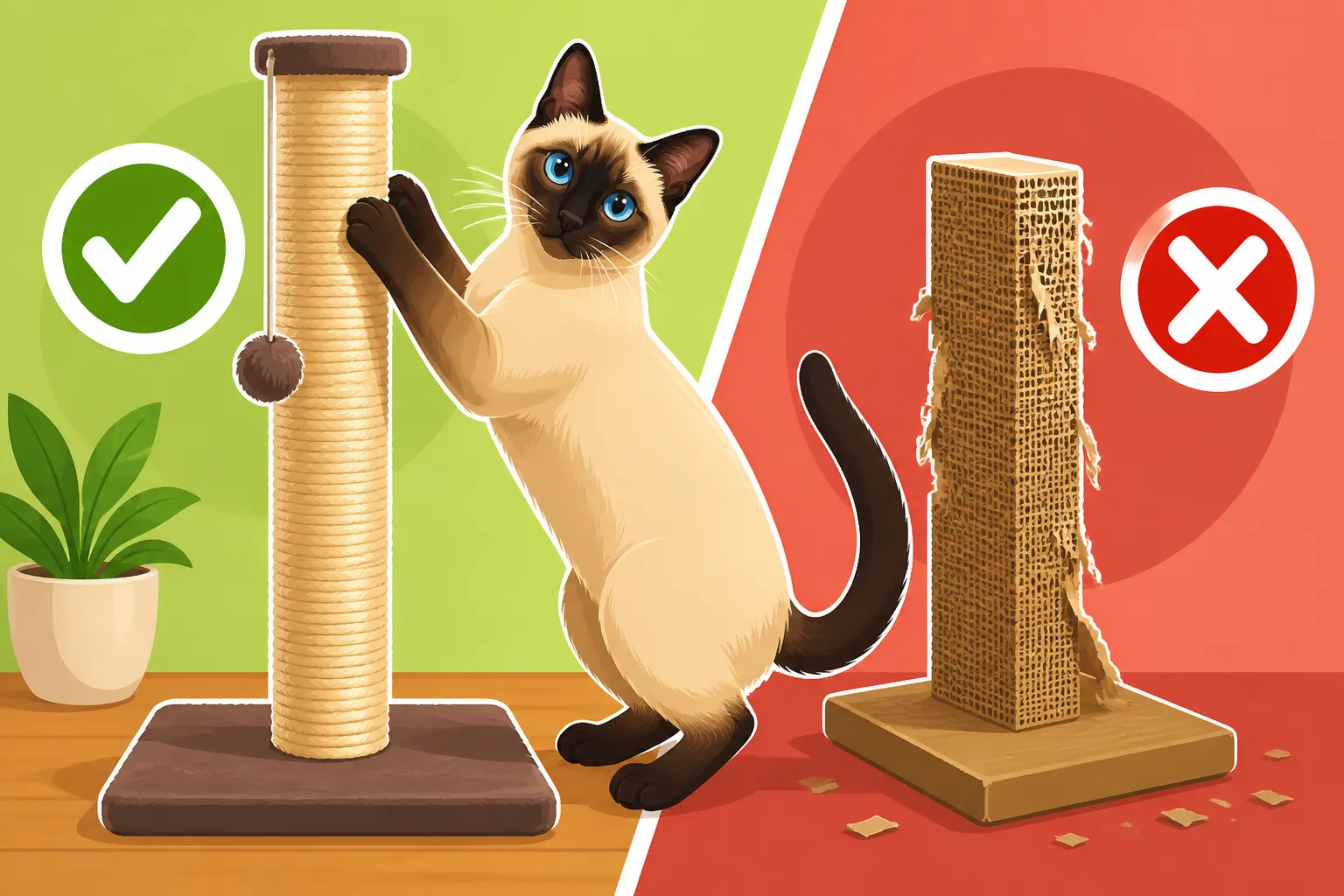
- Sisal Rope: This is often considered the gold standard for vertical scratching posts, and for good reason. Sisal rope is durable, fibrous, and provides excellent resistance. Cats love the feeling of shredding it, and it holds up well to repeated use. It mimics the texture of tree bark, which is what their wild ancestors would have used. You'll find many high-quality sisal rope posts available on platforms like Chewy or Amazon. Look for thick, tightly wound rope that won't unravel too quickly.
- Sisal Fabric: A flat sisal fabric offers similar benefits to sisal rope but in a different format. It's tough, doesn't shed as much as rope sometimes can, and many cats adore the texture. It's often used on cat trees or larger scratching surfaces. It offers a slightly different tactile experience, less "shreddy" but still very effective.
- Corrugated Cardboard: Ah, the humble cardboard scratcher! Don't underestimate its power. Many Siamese cats absolutely love cardboard scratchers. They're affordable, satisfyingly shreddable, and can be found in various shapes (flat, inclined, bowl-shaped). The downside is they wear out relatively quickly, turning into a confetti mess, but their low cost makes replacement easy. Brands like PetFusion offer popular options often available on Amazon.
- Carpet: While some cats might use carpeted posts, it's generally less ideal. The problem is that if your scratching post is carpeted, and your living room floor is also carpeted, you're essentially telling your cat that all carpet is a valid scratching surface. This can lead to confusion and furniture damage. Also, many cats don't find carpet as satisfying for claw maintenance as sisal or cardboard. If a post is carpeted, ensure it's a very different texture or color from your home carpet.
Why it matters for a Siamese: Siamese cats are often quite particular. If the material isn't right, they'll simply ignore it, no matter how expensive or fancy it looks. They need that deep, satisfying pull and shred. Providing a variety of materials can also cater to different moods and preferences.
Height and Stability are Non-Negotiable
Have you seen your Siamese stretch? They are long, lean, and can reach impressive heights when they truly extend their bodies. This is why a scratching post must be tall enough to allow them to stretch to their full length, both vertically and diagonally, without having to crouch. A post that's too short won't provide that satisfying full-body workout, and they'll likely seek out a doorframe or the side of your couch instead.
Equally important is stability. There's nothing worse for a cat than a wobbly scratching post. Imagine trying to get a good stretch or really dig your claws into something, only for it to tip over or slide away. It's frightening and will quickly discourage them from using it again. Siamese cats are incredibly athletic and can put a lot of force into their scratching. A cheap, lightweight post simply won't cut it. Look for posts with a wide, heavy base or those that can be secured to a wall. Solid construction means your Siamese will feel safe and confident using it, allowing them to truly enjoy their scratching sessions. This is especially important for multi-cat households or if your Siamese Cat Needs a Companion Cat as multiple cats might use it simultaneously.
Orientation: Vertical, Horizontal, or Inclined?
Cats have different scratching preferences, and it's worth observing your Siamese to see which they favor.
- Vertical Scratching: This is the most common and often preferred orientation, mimicking scratching a tree. It allows for that full-body stretch and is excellent for shedding claw husks. Most traditional scratching posts are vertical.
- Horizontal Scratching: Some cats prefer to scratch horizontally, often lying down or in a crouched position. This targets different muscles and provides a different kind of claw maintenance. Cardboard scratchers often come in horizontal designs.
- Inclined Scratching: These offer a compromise between vertical and horizontal, allowing for a diagonal stretch. Some cats love the varied angle.
Providing variety: The best approach is often to offer a mix of orientations. You might find your Siamese prefers a tall vertical sisal post for their morning stretch but enjoys a flat cardboard scratcher for a quick claw sharpen before a nap. Don't assume one type fits all; observe and adapt!
Types of Scratching Posts and Their Suitability for Siamese Cats
Now that we understand the core principles, let's explore the different types of scratching posts available and how they might fit into your Siamese cat's world.
Classic Vertical Posts
These are what most people picture when they think of a scratching post. They typically consist of a sturdy base, a vertical post wrapped in sisal rope or fabric, and sometimes a small platform at the top.
- Description: Simple, effective, and designed specifically for vertical scratching. They come in various heights, from smaller ones suitable for kittens to towering options for adult cats.
- Benefits for Siamese Cats: A tall, stable vertical post is perfect for the Siamese's love of a full-body stretch. The sisal material (rope or fabric) provides the satisfying texture they need for optimal claw health and territorial marking. Placing one near a door or window where they observe their "territory" can encourage use.
- Placement Tips: Place these posts in high-traffic areas where your Siamese spends a lot of time or where they currently try to scratch inappropriately. A common spot is right next to the sofa they're currently attacking! Also, consider placing one near their favorite sleeping spot for a good stretch upon waking. Brands like SmartCat Ultimate Scratching Post are often praised for their height and stability, and you can usually find them on Chewy.
Cat Trees and Condos with Scratching Surfaces
These are multi-level structures that combine scratching opportunities with climbing, perching, and hiding spots. They are often covered partially or entirely with sisal or a similar scratching material.
- Description: From small two-tier condos to elaborate floor-to-ceiling cat "castles," these offer a comprehensive enrichment solution. They usually incorporate multiple scratching posts, ramps, or panels.
- Benefits for Siamese Cats: Given how active and intelligent Siamese cats are, a good cat tree is a fantastic investment. It provides not only scratching surfaces but also vertical territory, which is incredibly important for cats, especially in multi-pet homes. They can climb, survey their domain, nap in a cozy hideaway, and scratch all in one place. It helps fulfill their need for Enrichment for a Siamese Cat That Gets Bored in an Hour. Look for models that have sisal-wrapped posts, not just carpet.
- Considerations: Size and stability are paramount here. A flimsy cat tree will quickly be ignored or even feared. Ensure the base is heavy and wide enough to support your Siamese's energetic climbing and scratching. If you have a particularly rambunctious Siamese, you might even consider wall-mounted options for extra stability. When looking on Amazon, make sure to read reviews about stability.
Horizontal Scratchers and Loungers
These are typically flat or inclined surfaces, often made of corrugated cardboard, though some can be sisal.
- Description: Ranging from simple flat pads to more elaborate inclined ramps or bowl-shaped loungers, these cater to cats who prefer to scratch horizontally or at an angle.
- Benefits for Siamese Cats: While many Siamese favor vertical scratching, some will absolutely adore a horizontal cardboard scratcher. They're great for a quick scratch, a comfortable napping spot, and offer a different tactile experience. Because they're shreddable, they provide immense satisfaction. They're also an excellent budget-friendly option to place in multiple areas of your home.
- Placement Tips: Put these on the floor in areas where your cat likes to lounge, such as near windows, next to their bed, or in the middle of a room where they often play. You can get multi-packs on Amazon to spread around the house. They are great for complementing a larger vertical post.
DIY and Less Conventional Options
Sometimes, the perfect scratching solution isn't store-bought.
- Description: This category includes everything from repurposing old furniture with sisal to using natural elements like logs.
- Benefits for Siamese Cats: A well-designed DIY scratcher can be tailored perfectly to your Siamese's preferences, often at a lower cost. A natural log, for instance, provides an incredibly satisfying and authentic scratching experience. For a cat that seems to enjoy Why a Siamese Cat Chews Wool and Swallows It, a very robust and solid scratching surface might be even more important to redirect that chewing energy.
- Considerations: If going the DIY route, ensure all materials are safe for cats (no toxic glues or splinters) and that the construction is exceptionally stable. Natural logs should be debarked if possible to avoid pests, and definitely cleaned. Always prioritize safety and stability above all else.
Encouraging Your Siamese Cat to Use the Scratching Post
So, you've bought the perfect, tall, sturdy, sisal-wrapped scratching post. Now what? Your Siamese cat won't automatically start using it just because it's there. You need to actively encourage them, and patience is definitely a virtue here. Remember, A Siamese Cat Will Not Be Ignored, and their preferences must be respected.
Strategic Placement is Key
Location, location, location! This is perhaps the most crucial aspect of getting your Siamese to use their new scratching post.
- Near Sleeping Areas: Cats often love to stretch and scratch right after waking up from a nap. Placing a post close to their favorite napping spots – whether it's their cat bed, a sunny window ledge, or even your bed – makes it convenient for them to fulfill this urge.
- By Entryways or High-Traffic Zones: Siamese cats are territorial. Placing a scratcher near an entrance to a room or in a hallway where they frequently pass allows them to mark their presence. It's like a welcome mat, but for claws!
- Where They Already Scratch (Unwantedly): This is the golden rule. If your Siamese is currently attacking your sofa arm, place the new scratching post right in front of it. Don't hide it away in a corner; make it the most obvious, accessible scratching option. Once they consistently use the post, you can slowly, incrementally move it away from the furniture.
Table: Scratching Post Placement Strategy
| Location Type | Why it Works for Siamese Cats | Example Placement |
|---|---|---|
| High-Traffic Area | Allows territorial marking and easy access for frequent use. | Living room center, hallway. |
| Near Sleep Area | Satisfies post-nap stretching and claw maintenance. | Next to cat bed, sunny window sill. |
| Next to Damaged Item | Redirects unwanted scratching to an appropriate surface. | Directly in front of the sofa arm. |
| By a Window | Great for observing outdoor "territory" and stress relief. | Underneath a window they frequent. |
| Vertical Space | Encourages climbing and full-body stretches on cat trees. | Corner with good vertical climbing space. |
Lures and Positive Reinforcement
Once the post is in the right spot, it's time to make it irresistible.
- Catnip: A sprinkle of fresh catnip on the post can work wonders for many cats, enticing them to explore and scratch. Not all Siamese cats respond to catnip, but for those who do, it's a powerful motivator. You can find catnip sprays and dried catnip on Chewy.
- Play and Toys: Engage your Siamese in play around the scratching post. Dangling a feather wand or laser pointer (be mindful not to frustrate them with a laser) near the top of a vertical post might encourage them to stand on their hind legs and stretch, naturally engaging their claws with the surface. This can also address boredom, which often leads to What a Bored Siamese Cat Destroys.
- Praise and Treats: Whenever you see your Siamese even touch the scratching post, offer immediate praise and a small, high-value treat. Positive reinforcement is far more effective than punishment. They'll quickly associate the post with good things.
- Demonstration (Gently!): You can gently take your cat's paws and mimic a scratching motion on the post, but only if your cat is comfortable with it. Never force them or they'll develop an aversion. The goal is to show them what to do and where.
Avoiding Punishment
It's tempting to yell or spray water when you catch your Siamese scratching the furniture. However, punishment is largely ineffective and can be detrimental to your relationship with your cat.
- Why Punishment Fails: Your Siamese won't connect your anger to their natural urge to scratch. They'll just learn to be afraid of you, or they'll simply scratch when you're not around. It doesn't solve the underlying need; it just teaches them to be stealthier or more stressed.
- Focus on Redirection: Instead of punishing unwanted scratching, immediately redirect them to their appropriate scratching post. Gently pick them up and place them on the post, or use a toy to lure them over.
- Protect Your Furniture: While you're training, make the unwanted scratching areas undesirable. You can cover them with double-sided sticky tape (cats hate the stickiness), aluminum foil, or blankets. This creates a barrier while you work on encouraging the post use. You don't want to find yourself constantly repairing What a Siamese Cat Costs in Damaged Clothing or buying new furniture because they prefer your couch.
By being consistent, patient, and understanding of your Siamese cat's needs, you can successfully guide them toward using appropriate scratching surfaces. It might take time, but the payoff of undamaged furniture and a happy, well-adjusted cat is absolutely worth it. After all, ensuring they have good scratching habits contributes to their overall How Healthy the Siamese Cat Actually Is.
Disclaimer
This article is for general informational purposes only and does not constitute professional advice. Laws, prices and regulations vary by location and change over time. Consult a qualified professional for guidance on your specific situation.