What the Thai Cat Is Next to a Siamese Cat
It's incredibly easy to get confused when you start looking into Siamese cats, especially with terms like "traditional," "old-style," "applehead," and "Thai" floating around. Many people assume a "Thai cat" is just another name for a Siamese, or perhaps a regional variant, but the truth is a bit more nuanced. This guide is here to untangle that knot, exploring the unique paths these two distinct breeds have taken, even though they share a common ancestor and a rich, captivating history from Southeast Asia.
The Historical Roots: Where Siamese and Thai Cats Diverge and Converge
To truly understand the Thai cat and its relationship to the modern Siamese, we need to take a trip back in time to their shared origins. It's a story of ancient feline companions, selective breeding, and a passionate desire to preserve a specific look.
Ancient Origins of the Siamese Type
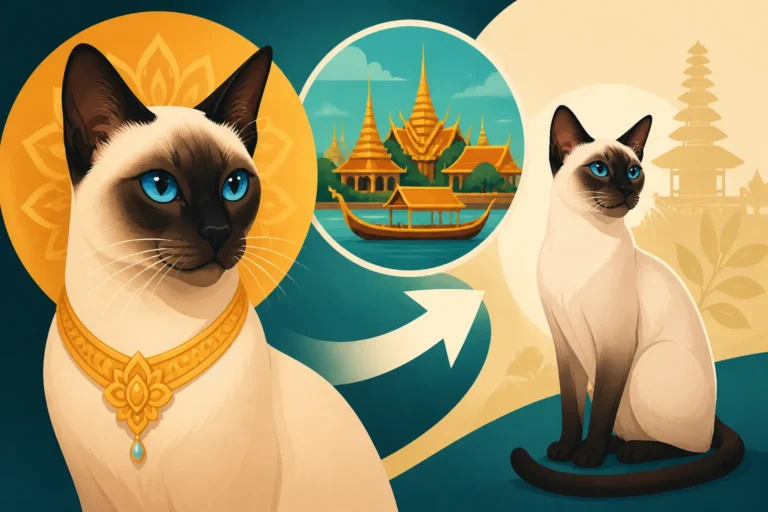
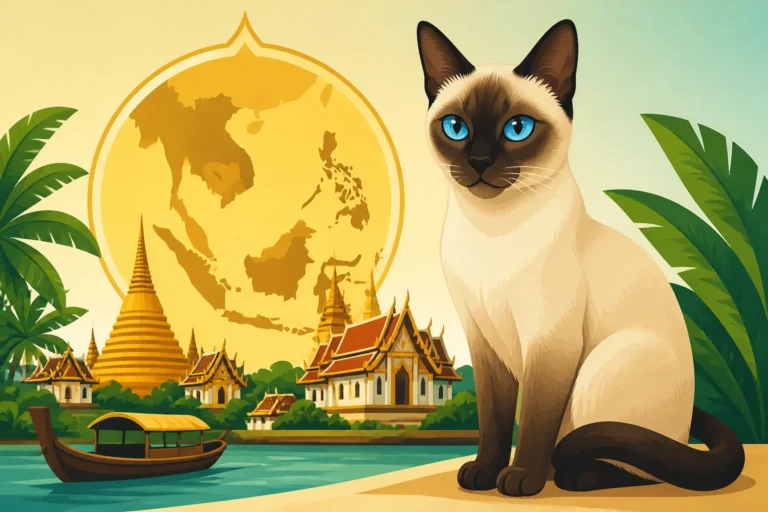
Long before the cats we know today as "Siamese" and "Thai" were formally recognized breeds, there were the indigenous cats of Siam, which is now modern-day Thailand. These cats, often referred to as Wichianmat, were cherished by royalty and commoners alike for centuries. They were known for their distinctive pointed coats, blue eyes, and engaging personalities. Historical texts like the What the Tamra Maew Manuscripts Show About the Siamese Cat describe these cats, providing a glimpse into their appearance and significance in ancient Thai culture. They weren't all slender and angular like the modern show Siamese; rather, they exhibited a range of body types, many with a more moderate, muscular build and a rounder head. This genetic diversity was the foundation from which both the modern Siamese and the Thai cat would eventually emerge.
When the first of these pointed cats made their way to Western countries in the late 19th century, they were simply called "Siamese cats" after their homeland. These early imports typically had a stockier, more rounded appearance than what many now associate with the breed. They were exotic, captivating, and quickly became beloved companions, capturing the hearts of cat fanciers with their striking looks and vocal nature. It's important to remember that at this point, there was no formal distinction; they were all considered variations of the Siamese cat from Siam.
The Evolution of the Western Siamese
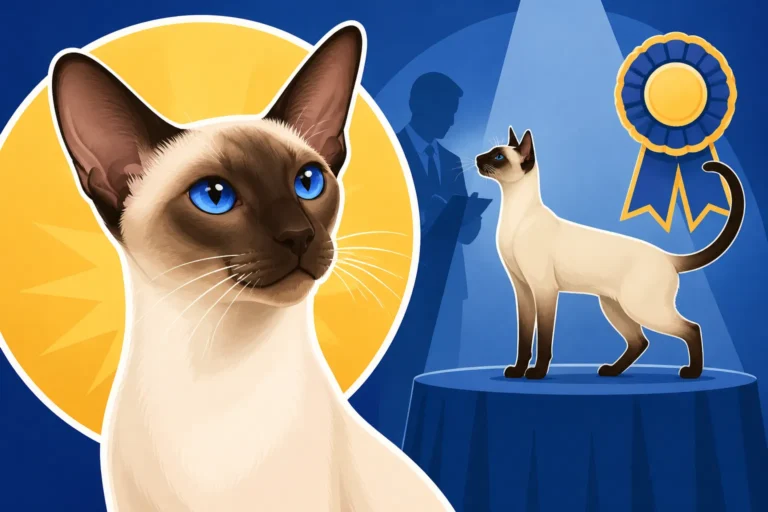
As these early Siamese cats gained popularity in the West, particularly in England and later America, cat breeders began to select for specific traits that they found desirable. Over decades, this selective breeding led to a gradual, then increasingly dramatic, change in the appearance of the Siamese cat. Breeders favored a more elongated, svelte body, an extremely wedge-shaped head, large "butterfly" ears, and piercing, almond-shaped eyes. This emphasis on refinement and extreme features created the "modern" or "show-style" Siamese we often see in cat shows today. The shift was so profound that by the mid-20th century, the appearance of the Siamese cat had become markedly different from its early ancestors.
This transformation wasn't without its detractors, however. Many long-time Siamese enthusiasts felt that the breed was being pushed too far, losing its original charm and even potentially impacting its health. They mourned the loss of the more robust, moderate build and apple-shaped heads that defined the early imports. This created a division within the Siamese community, between those who championed the new, elegant look and those who yearned for the return of the "old-style" Siamese. You can read more about this transformation in How the Siamese Cat's Head Changed Shape in Fifty Years.
The Rise of the Thai Cat Movement
It was precisely this sentiment—the desire to preserve the original, more moderate look of the Siamese cat as it existed in Thailand and as it was first imported to the West—that gave birth to the Thai cat movement. Enthusiasts believed that the true "Siamese" cat had been fundamentally altered by Western breeding practices. They sought to re-establish a breed standard that reflected the cats found in Thailand itself, as well as the initial imports that captivated the Western world. This meant favoring cats with a rounder, apple-shaped head, a sturdy, muscular body, and less extreme features overall.
The recognition of the Thai cat as a separate breed was a conscious effort to differentiate these cats from the modern Siamese. Breeders involved in the Thai cat movement often refer to their cats as "traditional Siamese," "old-style Siamese," or even "classic Siamese," highlighting their commitment to the ancestral type. They work diligently to ensure their breeding lines maintain these original characteristics, ensuring that a piece of feline history is not lost to changing show ring preferences. The journey to separate breed status wasn't straightforward, but it was driven by a deep respect for the cats' heritage and a desire to offer an alternative to the increasingly extreme modern Siamese. How the Thai Split From the Siamese Cat delves deeper into this fascinating split.
Physical Distinctions: A Side-by-Side Look
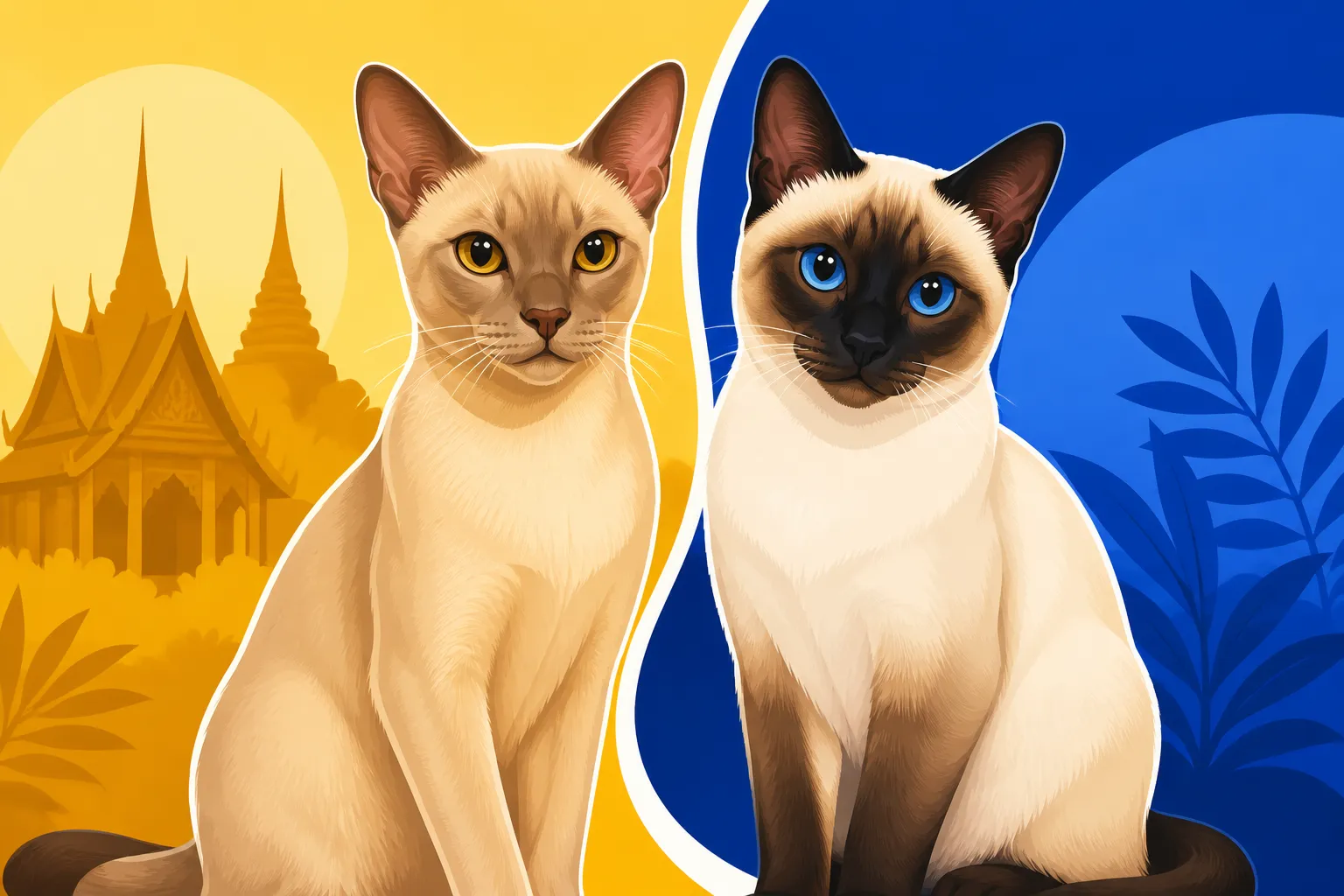
When you see a modern Siamese and a Thai cat side-by-side, the differences, though subtle to an untrained eye, become quite apparent once you know what to look for. These are not merely variations within a single breed; they represent distinct aesthetic preferences solidified over generations of breeding.
Head Shape and Facial Structure
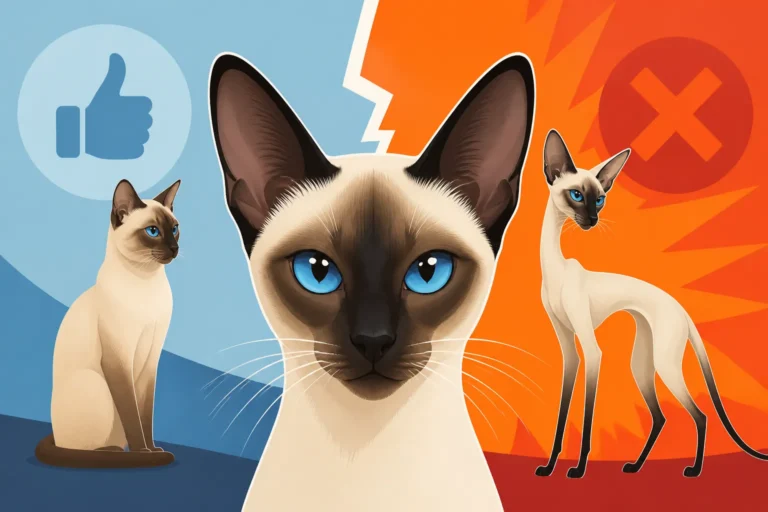
One of the most striking differences between a modern Siamese and a Thai cat lies in their head shape and facial structure. The modern Siamese is known for its distinctive "wedge" head. Imagine an inverted triangle: the head starts narrow at the jaw and widens in a straight line to the tips of the large, flaring ears. The profile is often flat or nearly straight from the top of the head to the nose, giving them a sleek, almost angular appearance. Their muzzle is fine, and their chin should align with the nose. This extreme wedge shape is a hallmark of the show-style Siamese.
In stark contrast, the Thai cat boasts a more rounded, or "applehead," appearance. Their head is moderately wedge-shaped, but with softer contours and a noticeable curve to the forehead. The muzzle is also more rounded and shorter than that of the modern Siamese. Their cheeks are fuller, contributing to a gentler, less angular look. When you look at a Thai cat, you'll see a face that is broad at the cheekbones and tapers to a medium-sized muzzle, giving a softer, more traditional feline expression. It's the difference between a finely chiseled sculpture and a charming, classic portrait. What an Applehead Siamese Cat Looks Like and What a Modern Wedge Siamese Cat Looks Like offer visual comparisons.
Body Type and Build
Beyond the head, the body types of these two breeds tell a clear story of divergent breeding goals. The modern Siamese is renowned for its long, slender, and elegant body, often described as "slinky" or "tubular." They have long, tapering legs, and a long, whip-like tail that gradually narrows to a fine point. Their musculature is lean and hard, and they carry very little body fat, giving them a notoriously athletic and graceful silhouette. When a modern Siamese walks, it moves with an almost dancer-like elegance.
The Thai cat, on the other hand, exhibits a more moderate and muscular body type. They are often described as having a "semi-foreign" body, meaning it's neither extremely cobby nor overly svelte. They have a well-muscled, firm body, with medium-length legs and paws that are more oval than the delicate, small paws of the modern Siamese. Their tail is medium to long, tapering only slightly. While still lithe and active, a Thai cat feels substantial and robust in your arms, reflecting its "old-style" heritage as a capable and resilient feline. This more moderate build is often associated with the original cats from Siam and is a key identifier for the breed.
Eye Shape and Color
Both modern Siamese and Thai cats share the iconic blue eyes, a trait intrinsic to their pointed coloration, which is a form of partial albinism. However, the shape of these eyes differs significantly. The modern Siamese typically has distinctive almond-shaped eyes that are set at a slant, giving them an oriental or "slanted" appearance. These eyes are often described as deep sapphire blue, conveying an intense and intelligent gaze. The slant of the eyes further emphasizes the wedge shape of their head.
The Thai cat, while also possessing brilliant blue eyes, typically has a more rounded eye shape, or at least a less extreme almond shape. Their eyes are still expressive and intelligent but tend to be set more horizontally, giving them a softer, more open facial expression. The blue color can range from a vivid sky blue to a deeper sapphire, but it's the less slanted, more circular shape that distinguishes them from their modern Siamese cousins. This difference in eye shape contributes greatly to the overall "look" of each breed, with the Thai maintaining a softer, more traditional appearance compared to the striking, almost avant-garde look of the modern Siamese.
Here's a quick comparison table:
| Feature | Modern Siamese (Wedge) | Thai Cat (Applehead/Traditional) |
|---|---|---|
| Head Shape | Extreme wedge, straight lines, flat profile | Rounded, apple-shaped, softer contours, curved forehead |
| Body Type | Long, slender, tubular, svelte, elegant, lean | Moderate, muscular, sturdy, semi-foreign |
| Ears | Very large, wide at base, set low, flaring | Moderately large, proportionate, set higher |
| Eye Shape | Almond-shaped, distinctly slanted | Rounded to slightly almond, set more horizontally |
| Legs/Paws | Long, slender legs; small, oval paws | Medium-length, sturdy legs; more rounded paws |
| Tail | Long, thin, whip-like, tapers to fine point | Medium to long, tapers slightly, proportionate |
Temperament and Personality: Similarities and Subtle Differences
While their physical appearances have diverged, the core personality traits of the Siamese cat type remain remarkably consistent across both the modern Siamese and the Thai cat. These are not quiet, aloof felines; they are vibrant, intelligent, and highly social companions.
The Inherent Siamese-Type Traits
Whether you're looking at a sleek, modern Siamese or a robust Thai cat, you're going to find a cat with a powerful personality. Both breeds are incredibly vocal, known for their wide range of sounds from chirps and trills to the infamous "Meezer yowl." They aren't just making noise for the sake of it; they're trying to communicate with you, tell you about their day, or simply demand your attention. If you don't like a chatty cat, neither of these breeds will be a good fit! Their communicative nature is one of their most defining and beloved characteristics. They truly talk and expect an answer, as highlighted in The Siamese Cat Talks and Expects an Answer.
Beyond their voices, both modern Siamese and Thai cats are intensely intelligent and highly curious. They thrive on interaction and mental stimulation. They're the kind of cats who will figure out how to open cupboards, play fetch, and even walk on a leash. They get bored easily, and a bored Siamese or Thai cat can become a mischievous one, finding ways to entertain themselves that might not always align with your home decor. This high intelligence means they're quite trainable, eager to learn tricks and engage in puzzle feeders, which you can easily find on Chewy. Their affectionate nature is also paramount; they crave human companionship, often following their owners from room to room, demanding lap time, and often preferring to sleep in bed with their people. They truly bond deeply with their families, sometimes even picking a favorite human.
Noteworthy Nuances in Thai Cat Behavior
While the overarching personality traits are shared, some owners of Thai cats report subtle differences, often attributing them to the less extreme breeding for physical traits. Some Thai cat enthusiasts suggest that their cats might be slightly less intensely vocal than some of the most extreme modern Siamese lines. While still definitely talkative, their vocalizations might be perceived as a bit less shrill or demanding, though this can vary wildly from individual cat to individual cat, regardless of breed type. It's more about a slight shift in emphasis rather than a complete departure from the breed's vocal heritage.
Thai cats are also often described as having a generally more laid-back or adaptable temperament compared to some modern Siamese. While both are incredibly playful and active, some modern Siamese can be perceived as more "high-strung" or prone to separation anxiety if left alone for extended periods. Thai cats, while still very much needing companionship and attention, might handle changes in routine or brief periods of solitude with slightly more grace, though again, this is a generalization. They still absolutely need human interaction and can easily develop What Separation Anxiety Looks Like in a Siamese Cat if neglected. Ultimately, both breeds are incredibly engaging and require an owner who is ready for a highly interactive and devoted feline companion.
Health and Lifespan: Breed-Specific Considerations
The physical divergence between the modern Siamese and the Thai cat has, in some cases, led to different health profiles, a concern that deeply motivates breeders of the Thai cat. The pursuit of extreme features in any breed can sometimes introduce or exacerbate health challenges.
Common Ailments in the Modern Siamese
The selective breeding for the exaggerated wedge head and extremely svelte body of the modern Siamese has, unfortunately, been associated with certain health concerns. While many modern Siamese are perfectly healthy, some lines can be prone to specific issues. One concern sometimes linked to the extreme head shape is certain dental problems, where the narrow jaw can lead to overcrowding of teeth. Owners might find themselves needing frequent dental check-ups and cleanings, potentially involving extractions down the line. You can find specialized dental care products for cats on Chewy, which can help support oral hygiene.
Another area of concern can be respiratory issues, though this is less directly linked to the physical conformation and more to overall genetic health. Some modern Siamese can be more prone to asthma, which can manifest as coughing or wheezing. Asthma in a Siamese Cat is a serious condition that requires veterinary attention and ongoing management. Furthermore, progressive retinal atrophy (PRA), which causes blindness, is a concern for all Siamese-type cats, and responsible breeders should screen for it. PRA and the Siamese Cat Eye Test That Does Not Settle It offers insight into the complexities of testing for this condition. While not all modern Siamese will face these issues, the genetic bottleneck created by extreme selection can increase the predisposition in certain lines.
General Health of the Thai Cat
A core principle behind the Thai cat movement was to breed for a more robust and healthy cat, aligning with the less extreme physical traits of their ancestors. By moving away from the extreme wedge head and slender body, breeders hope to mitigate some of the potential conformational health issues seen in some modern Siamese lines. Thai cats are generally considered to be a healthy and hardy breed with a good lifespan, often living well into their teens. Their more moderate body type is less prone to the skeletal and dental issues that can sometimes plague more extremely bred animals.
However, it's crucial to understand that "healthier" doesn't mean entirely immune to all conditions. Like all purebred cats, Thai cats can still be susceptible to certain genetic predispositions, albeit potentially fewer or different ones than the modern Siamese. Regular veterinary check-ups, a balanced diet, and a stimulating environment are still essential for keeping a Thai cat in top condition. They are known for their athleticism and strong immune systems, often experiencing fewer chronic health issues than some other breeds.
Genetic Predispositions Shared and Unique
Despite their physical differences, both modern Siamese and Thai cats share a common genetic heritage, which means some health concerns can be found in both breeds. Amyloidosis, a serious condition where abnormal proteins deposit in organs, particularly the liver and kidneys, is a significant concern for all Siamese-type cats. This is a condition that can affect even the most robust lines. Amyloidosis Is the Disease That Kills Young Siamese Cats details the devastating impact of this disease. Responsible breeders for both modern Siamese and Thai cats should be transparent about the health history of their lines, particularly concerning amyloidosis, as there is currently no DNA test for it.
Both breeds also share the gene for point coloration and blue eyes, which is linked to conditions like nystagmus (involuntary eye movement) and crossed eyes in some individuals, although these are often considered cosmetic rather than debilitating health problems. Why a Siamese Cat's Eyes Cross and Its Tail Kinks explains these interesting traits. While the goal of Thai cat breeders is to reduce the incidence of conformation-related problems, genetic conditions like amyloidosis remain a shared challenge that conscientious breeders in both camps strive to address through careful pedigree research and selection, though the tools available for screening are still limited.
Registration and Recognition: The Official Splits
The divergence in physical appearance and breeding philosophy between the modern Siamese and the Thai cat is reflected in how major cat registries recognize and categorize them. This is where the historical debate between "old-style" and "modern" really solidifies into distinct breed classifications.
Major Cat Registries and Their Standards
Globally, different cat registries have taken various approaches to the Siamese and Thai cat. Organizations like the Cat Fanciers' Association (CFA) primarily recognize and promote the modern, wedge-headed Siamese, with its extreme and refined features. Their breed standard describes the sleek, elegant, and angular cat that is dominant in most Western show rings. If you attend a CFA show, the Siamese you see will undoubtedly fit this modern aesthetic.
Other organizations, like The International Cat Association (TICA), are more inclusive and sometimes have separate categories or a broader interpretation for Siamese-type cats. TICA, for example, recognizes the Thai cat as a distinct breed, allowing it to compete on its own merits without being judged against the modern Siamese standard. This recognition by major registries is crucial, as it validates the efforts of breeders who are dedicated to preserving the traditional look. For an aspiring owner, understanding which standard a breeder adheres to will tell you a lot about the kind of cat they are producing, both in appearance and underlying philosophy. Many breeders offering Thai cats will be proudly registered with associations that acknowledge their specific breed standard.
The Ongoing Debate: "Old Style" vs. "Modern" Siamese
The existence of the Thai cat as a separate breed stems directly from the long-standing debate within the Siamese community about the "ideal" look. For decades, cat fanciers and breeders have discussed the merits of the highly refined, wedge-headed modern Siamese versus the more robust, traditional "old-style" Siamese (which the Thai cat now embodies). Proponents of the modern Siamese argue that their breeding efforts have created a cat of unparalleled elegance and sophistication, pushing the boundaries of feline beauty. They see the evolution of the breed as a testament to selective breeding and artistic vision.
Conversely, those who champion the Thai cat (or "old-style" Siamese) argue for a return to what they consider the original, healthier, and more authentic form of the Siamese cat. They believe that the extreme breeding of the modern Siamese has led to a loss of genetic diversity, potential health problems, and a departure from the historical appearance of the cats from Siam. The establishment of the Thai cat as a separate breed provides a formal platform for these "old-style" enthusiasts to continue their work and ensure that the genetic lineage and physical characteristics of the original Siamese cat type are preserved for future generations. It's a fascinating example of how cultural and aesthetic preferences can shape the trajectory of a living breed. You can learn more about this historical context in Whether the Traditional Siamese Cat Still Exists.
So, while both the modern Siamese and the Thai cat share a common ancestor from ancient Siam, their journeys have diverged significantly. The modern Siamese, with its extreme wedge head and svelte body, is the product of generations of Western selective breeding for a specific show aesthetic. The Thai cat, on the other hand, represents a conscious effort to preserve and celebrate the more moderate, robust, and apple-headed appearance of the original cats of Thailand. Both are incredibly intelligent, vocal, and affectionate companions, but they offer distinct physical packages. When considering bringing one of these amazing felines into your home, understanding these differences is key to finding the perfect match for your lifestyle and preferences. You can find all the supplies for either breed, from high-quality food to interactive toys, on Chewy.
Disclaimer
This article is for general informational purposes only and does not constitute professional advice. Laws, prices and regulations vary by location and change over time. Consult a qualified professional for guidance on your specific situation.