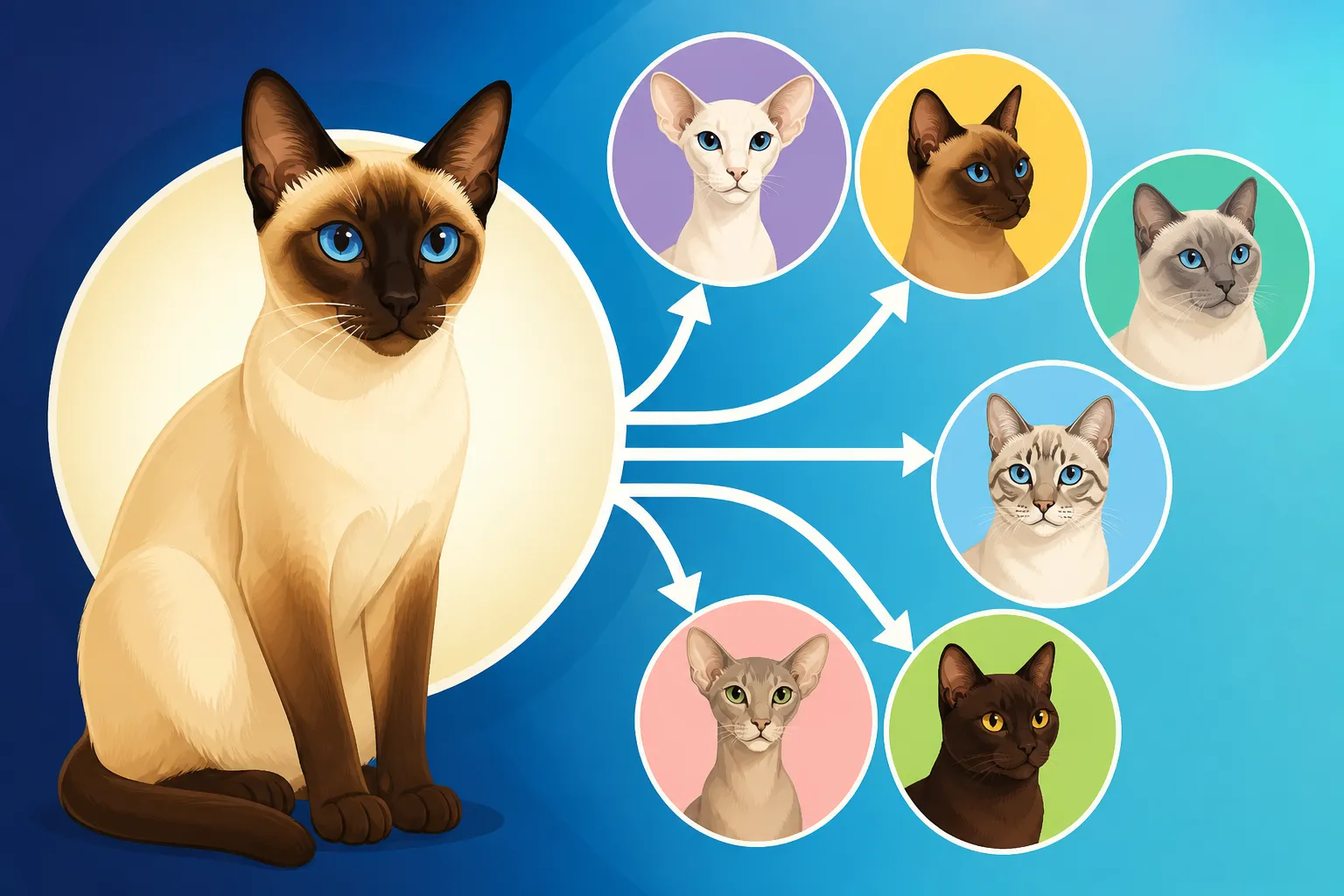
Which Breeds Came Out of the Siamese Cat
It’s easy to look at a sleek, vocal Siamese cat and think of them as a singular, iconic breed, distinct from all others. But what many people don't realize is that this stunning feline has actually lent its unique genetics and captivating personality to the creation of numerous other beloved cat breeds. If you've ever wondered why certain cats share that unmistakable Siamese charm or physique, you're about to discover just how far the Siamese cat's influence truly stretches across the feline family tree.
The Siamese Cat's Genetic Gift: A Foundation for New Breeds
The Siamese cat, with its striking color points and lean physique, is more than just a beautiful breed; it's a foundational pillar in the world of cat breeding. Its distinctive traits weren't just admired; they were actively sought after by breeders looking to develop new breeds with specific characteristics. Think of the Siamese as a master artist, lending its unique palette and brushstrokes to inspire countless new masterpieces. This legacy is one of the most fascinating aspects of owning one of these incredible felines, and it truly speaks to their enduring appeal and genetic strength.
The Recessive Colorpoint Gene: Why It Matters So Much
The most obvious and perhaps defining characteristic of the Siamese cat is its stunning colorpoint pattern: a pale body contrasted with darker "points" on the ears, face, paws, and tail. This isn't just a pretty coat; it's the result of a fascinating genetic quirk—a form of temperature-sensitive albinism. The gene responsible for this coloration only allows pigment to develop in cooler parts of the cat's body. That's why A Siamese Cat's Points Are Made by Temperature and why a Siamese kitten is born pure white, developing its points as it's exposed to the cooler outside world.
When early breeders discovered this unique gene, they saw incredible potential. It wasn't just about the original four recognized Siamese colors—Seal, Blue, Chocolate, and Lilac Point—though these are certainly exquisite in their own right. Which Colors a Siamese Cat Comes In The recessive nature of this gene meant that it could be carried silently through generations, only to appear when two carriers were bred together. This opened up a world of possibilities for creating new breeds that either retained this point coloration in different forms or utilized the Siamese's physical traits while exploring entirely new color palettes. It's a genetic blueprint that has shaped much of modern cat breeding.
Temperament and Type: More Than Just a Pretty Face
Beyond the captivating color points, the Siamese cat brought a whole package of desirable traits to the table. Their physical "type" is unmistakable: a long, slender, muscular body, finely boned legs, a wedge-shaped head, large expressive ears, and those piercing blue, almond-shaped eyes. These features contribute to an elegant, almost ethereal appearance that many breeders wished to replicate or modify in new breeds. It's truly a distinctive look that sets them apart.
But it wasn't just aesthetics. The Siamese cat's personality is legendary. They are known for being incredibly vocal, intelligent, demanding, and deeply affectionate with their chosen people. The Siamese Cat Talks and Expects an Answer This isn't a cat content to be a mere ornament; they are active participants in household life, often following their humans from room to room, engaging in "conversations," and even learning tricks. What a Siamese Cat's Temperament Is Really Like For breeders, this combination of striking looks and an engaging, interactive temperament was gold. They wanted to create cats that shared this dynamic personality, even if their appearance was altered, leading to a focus on preserving these behavioral traits while experimenting with new colors, patterns, and coat lengths.
Introducing Longhaired Beauty: The Balinese and Javanese
One of the most natural extensions of the Siamese's genetic influence was the development of longhaired versions. It might seem like a drastic change, but the longhair gene is often recessive, meaning it can pop up unexpectedly in litters of shorthaired cats if both parents carry the gene. When this happened in Siamese lines, instead of being seen as an anomaly, some astute breeders recognized the opportunity to create something new and equally beautiful.
The Accidental Longhairs: Balinese
The Balinese breed is a perfect example of how a "mutation" can become a beloved new breed. Despite their exotic name, Balinese cats don't actually hail from Bali. They emerged in the United States in the mid-20th century, surprisingly, from purebred Siamese litters. These kittens would occasionally appear with a longer, silken coat, a deviation from the traditional short, sleek fur of their Siamese parents. Initially, these longhaired kittens were simply referred to as "longhaired Siamese."
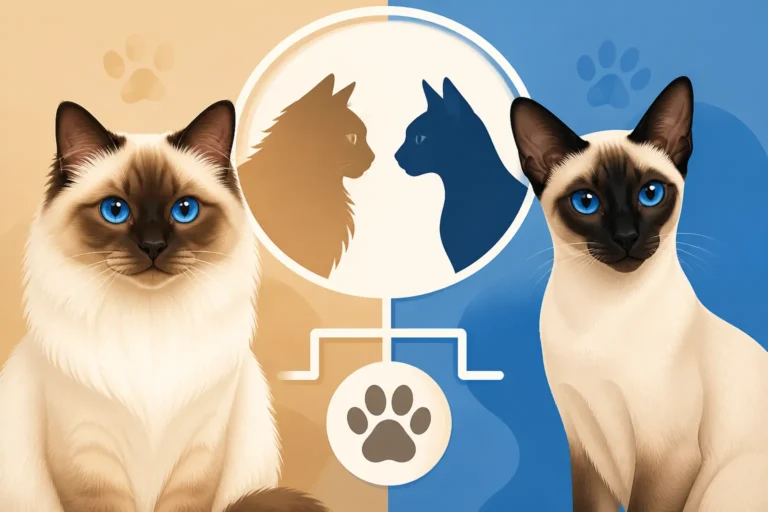
However, a dedicated group of breeders, captivated by their elegance and flowing tails, decided to develop them into a distinct breed. They worked to selectively breed these longhaired cats, ensuring they retained the core Siamese body type, striking blue eyes, and inquisitive, vocal personality, but with that added touch of glamour. How the Balinese Came From the Siamese Cat The result is a cat that looks like a Siamese dressed for a gala event – equally intelligent and interactive, but with a luxurious, plumed tail and soft, medium-long fur that requires surprisingly little grooming, unlike some other longhaired breeds.
Expanding the Color Palette: Javanese
The Javanese breed is closely related to the Balinese and represents a further diversification of the longhaired Siamese type. While the Balinese initially stuck to the original four Siamese point colors (Seal, Blue, Chocolate, and Lilac), breeders sought to introduce even more vibrant and diverse color points into the longhaired lineage.
The Javanese essentially began as a Balinese cat but in "non-traditional" Siamese point colors. These colors, like Red Point, Cream Point, and various Lynx (or Tabby) Points, were achieved by outcrossing the Balinese to Colorpoint Shorthairs, who had already incorporated these colors into a Siamese-type cat. The Javanese then retained the elegant longhaired coat and the characteristically Siamese temperament. So, if you're picturing a Balinese but with a fiery red tail and ears, or distinctive tabby stripes on its points, you're imagining a Javanese. They share the same refined body, intelligent eyes, and communicative nature as their Balinese and Siamese ancestors, simply with a broader array of captivating point colors, offering more choices for those looking for a longhaired, vocal companion.
Expanding the Spectrum: Oriental Shorthairs and Colorpoints
While some breeders were busy making longhaired versions of the Siamese, others were fascinated by the idea of keeping the sleek, short coat and the distinctive Siamese body and personality, but ditching the point coloration. They wanted to see the Siamese in a whole new wardrobe of colors and patterns, moving beyond the temperature-sensitive gene that limited its appearance.
The Oriental Shorthair: A Siamese in a Rainbow of Colors
The Oriental Shorthair is perhaps one of the most direct and successful descendants of the Siamese cat, yet visually, they can appear quite different. The goal of the breeding program that created the Oriental Shorthair was simple: take the elegant, athletic body, the striking head shape, the large ears, and the famously communicative personality of the Siamese, and dress it in every imaginable color and pattern other than the point coloration.
This was achieved by outcrossing Siamese cats to various domestic shorthairs and other breeds, then carefully breeding back to Siamese to refine the "type" while selecting for solid colors, tabbies, bi-colors, and smokes. The result is a cat that, beneath its colorful coat, is undeniably Siamese in structure and spirit. How the Oriental Shorthair Came From the Siamese Cat They have the same vocalizations, the same intense intelligence, and the same desire to be an integral part of their human family. The primary difference is their eye color, which is typically green, rather than the piercing blue of the traditional Siamese. If you've ever admired a Siamese's personality but wished for a solid black, chocolate, or even a spotted tabby cat with that same lean physique and endless chatter, an Oriental Shorthair might be your ideal companion. You can find all sorts of interactive toys for these clever cats on sites like Chewy to keep their minds engaged.
The Colorpoint Shorthair: Bridging the Gap
The Colorpoint Shorthair exists in a fascinating space between the traditional Siamese and the Oriental Shorthair, and its recognition varies among different cat registries. For some, the Colorpoint Shorthair is considered a separate breed, while for others, it's simply a color division within the Siamese breed itself. This breed was developed with the specific aim of introducing new point colors to the short-haired Siamese type, going beyond the original four.
This meant bringing in genes for colors like Red Point, Cream Point, Lynx (tabby) Point, and Tortie Point. This was achieved by outcrossing Siamese cats to domestic shorthairs (that carried these colors) and then selectively breeding back to Siamese to maintain the desired body type and personality. So, a Colorpoint Shorthair looks exactly like a traditional Siamese in every aspect – body, head, blue eyes, and personality – but it sports a wider array of point colors. They are still just as vocal and demanding of attention as their ancestors. What a Colorpoint Shorthair Is Next to a Siamese Cat This breed effectively bridges the gap, allowing lovers of the classic Siamese "look" to enjoy it in an expanded palette of hues without venturing into the solid colors or green eyes of the Oriental Shorthair.
Unique Patterns and Combinations: Tonkinese, Himalayan, and Snowshoe
The Siamese cat's genetic versatility didn't stop at just coat length or expanding point colors. Its traits were also combined with other breeds to create entirely new looks and temperaments, offering unique blends that captivated breeders and cat enthusiasts alike. These breeds showcase the art of combining different genetic characteristics to achieve specific, delightful outcomes.
The Tonkinese: A Gentle Blend of Traits
The Tonkinese is a truly special breed, born from the deliberate cross between a Siamese and a Burmese cat. Breeders set out to create a cat that embodied the best traits of both its distinguished parents. The result is a feline often described as having an "intermediate" look and temperament, landing squarely between the sleek, angular Siamese and the more rounded, sturdy Burmese.
Visually, the Tonkinese exhibits a distinct "mink" pattern, which is a blend of the Siamese point pattern and the Burmese solid pattern. This means their points are clearly darker than their body, but the contrast isn't as stark as in a Siamese; it's a softer, more gradual shading. Their eyes are typically a captivating aqua, a striking blend of the Burmese's gold and the Siamese's blue. Why a Siamese Cat Has Blue Eyes at All In terms of personality, the Tonkinese are known for being incredibly friendly, playful, and affectionate, often combining the Siamese's vocal nature (though usually less intensely so) with the Burmese's lap-loving devotion. How the Tonkinese Came From the Siamese Cat They are highly intelligent and interactive, making them wonderful family pets, full of curiosity and charm.
The Himalayan: A Persian in Siamese Clothing
The Himalayan cat is a stunning example of combining two vastly different, yet equally beloved, breeds: the Persian and the Siamese. The idea was to create a long-haired cat with the luxurious coat and sturdy body type of a Persian, but with the distinctive colorpoint pattern and brilliant blue eyes of the Siamese. This was a significant undertaking, as the body types and head shapes of the two foundation breeds are quite opposite.
The breeding program, primarily conducted in the United States and the UK starting in the 1930s and 40s, involved carefully crossing Persians with Siamese cats, and then breeding the offspring back to Persians to solidify the Persian body type while retaining the colorpoint genetics. The challenge was to achieve the heavy boning, rounded head, and flat face of the Persian, all while ensuring the points and blue eyes were consistently expressed. How the Himalayan Used the Siamese Cat The result is a truly magnificent cat: a longhaired, heavily built feline with the striking Siamese color pattern and piercing blue eyes, often with a sweet, docile temperament. It's a testament to the versatility of the Siamese gene and the dedication of breeders that such a unique combination was successfully created.
The Snowshoe: A Modern Classic with White Paws
The Snowshoe is a more recently developed breed, emerging in the 1960s, that beautifully combines the elegance of the Siamese with the charm of the American Shorthair. The vision was to create a pointed cat with distinctive white "boots" or paws, a feature that reminded the original breeder, Dorothy Hinds-Daugherty, of snowshoes, hence the name.
This breed came about by crossing Siamese cats with American Shorthairs (specifically bi-color ones) and other domestic shorthairs carrying the white spotting gene. The breeding process focused on selecting kittens that inherited the Siamese's lean, muscular body, bright blue eyes, and vocal, intelligent personality, but also sported the desirable white markings on their paws, chest, and face. How the Snowshoe Came From the Siamese Cat Snowshoes often have a unique pattern of white that can extend up their legs, sometimes forming an inverted "V" blaze on their face. Their temperament is a lovely blend: they are intelligent, active, and communicative like the Siamese, but often a bit softer-voiced and more laid-back, owing to their American Shorthair ancestry. They are known for being very affectionate and devoted companions. Finding them durable, interactive toys can be a fun activity, and Chewy offers a great selection for active breeds like the Snowshoe.
Beyond the Obvious: Other Influenced Breeds
The impact of the Siamese cat extends even further than the clearly pointed or Siamese-bodied breeds. Sometimes, the Siamese's genetic contribution is more subtle, serving as a foundational element in the early stages of a breed's development, even if the final result doesn't immediately scream "Siamese." These breeds demonstrate the deep and often surprising ways the Siamese has shaped the feline world.
The Ocicat: Spots on a Siamese Base
When you first look at an Ocicat, you might think of a wild leopard or an exotic jungle cat due to its striking spotted coat. It's truly a marvel to behold. However, you'd probably never guess that this domestic cat's wild appearance owes a part of its origin to the elegant Siamese. The Ocicat was actually created quite by accident in 1964, during a breeding experiment aimed at developing an Abyssinian-pointed Siamese.
The original breeding involved a Siamese and an Abyssinian. The first generation of kittens didn't show the desired spots, but when one of these first-generation kittens was bred back to a Siamese, a spotted kitten, Tonga, was born. This "ocelot-like" kitten was the unexpected foundation of the Ocicat breed. Later, American Shorthairs were also introduced to the lineage to bring in silver colors and contribute to the breed's size and boning. So, while the Ocicat eventually developed a distinct appearance and personality (often described as dog-like in its devotion and trainability), the Siamese's presence in its early genetic make-up was crucial for its development. It's a fascinating example of how a breed can contribute a genetic "spark" to something entirely new.
The Havana Brown: A Solid Sibling
The Havana Brown is another breed whose Siamese ancestry might not be immediately apparent, as it lacks the distinctive point coloration and piercing blue eyes. Instead, the Havana Brown is characterized by its rich, solid, warm brown coat and expressive green eyes. Yet, the Siamese played a crucial role in its creation, particularly in the early stages of its development in England in the 1950s.
Breeders were aiming to create a self-brown (solid brown) cat that still possessed the elegant body type and charming personality of the Siamese. This was achieved by crossing Siamese cats with domestic black cats and Russian Blues. The goal was to select for the solid brown color while maintaining a refined, slender build rather than a cobby one. How the Havana Brown Came From the Siamese Cat The breed's unique head shape, often described as a "corn-cob" or "lightbulb" shape, and its slightly squarish muzzle also set it apart. While the Havana Brown has its own distinct identity, anyone familiar with Siamese traits will recognize a certain intelligence and interactive nature in their personality, a nod to their ancestral roots. They are curious and people-oriented, often seeking interaction and affection.
A Legacy of Feline Diversity: Breeds Descended from the Siamese
The Siamese cat's genetic footprint is truly remarkable, having contributed to a vast array of breeds, each with its own unique charm and characteristics. From accidental longhairs to deliberately created color variations and stunning spotted cats, the Siamese has left an indelible mark on the feline world. It's a testament to the breed's strong genes and the vision of countless breeders.
This table highlights some of the prominent breeds that owe a part of their existence and distinctive traits to the original Siamese cat:
| Descendant Breed | Key Siamese Influence | Distinctive Traits Added/Modified | Coat Length | Typical Eye Color |
|---|---|---|---|---|
| Balinese | Siamese body type, temperament, point coloration | Medium-long, silky coat; plumed tail | Long | Blue |
| Javanese | Balinese (longhaired Siamese type), temperament | Non-traditional point colors (Red, Cream, Lynx, Tortie Points) | Long | Blue |
| Oriental Shorthair | Siamese body type, temperament | Wide range of solid, tabby, smoke, bicolor colors; non-pointed coat | Short | Green |
| Colorpoint Shorthair | Siamese body type, temperament, point coloration | Expanded point colors (Red, Cream, Lynx, Tortie Points) | Short | Blue |
| Tonkinese | Siamese (and Burmese) body type, temperament | "Mink" pattern (intermediate point contrast); aqua eyes | Short | Aqua |
| Himalayan | Siamese point coloration, blue eyes | Persian body type (cobby, longhair), flat face, docile temperament | Long | Blue |
| Snowshoe | Siamese body type, temperament, point coloration | White "boots" and facial markings; often less vocal | Short | Blue |
| Ocicat | Contributed to early foundation, body type | Spotted (ocelot-like) coat pattern; sturdy build, dog-like personality | Short | Green or Gold |
| Havana Brown | Contributed to early foundation, body type, temperament | Solid, rich brown coat; distinctive head shape; green eyes | Short | Green |
Each of these breeds carries a piece of the Siamese legacy, whether it's the elegant silhouette, the talkative nature, or the unmistakable colorpoint gene.
The Enduring Legacy of the Siamese Cat
It's truly remarkable how one breed, originating from the ancient kingdom of Siam, has had such a profound and lasting impact on the world of domestic cats. The Siamese cat isn't just a beautiful animal in its own right; it's a genetic powerhouse, a muse for breeders, and a cornerstone from which an entire tapestry of new breeds has been woven. From the luxurious longhaired Balinese to the rainbow of colors found in the Oriental Shorthair, and the unique blends seen in the Tonkinese and Snowshoe, the Siamese's influence is undeniable.
This rich history highlights the importance of understanding the genetic heritage of our feline companions. When you look at an Oriental Shorthair with its green eyes and solid coat, or a spotted Ocicat, it might be hard to see the Siamese staring back. But knowing their lineage deepens our appreciation for the incredible diversity and beauty within the cat world, much of which we owe to that original, captivating cat from Siam. The Siamese cat has truly cemented its place not just as a beloved pet, but as a silent architect of many of the breeds we adore today.
Disclaimer
This article is for general informational purposes only and does not constitute professional advice. Laws, prices and regulations vary by location and change over time. Consult a qualified professional for guidance on your specific situation.