Which Registry Accepts the Applehead Siamese Cat
An applehead Siamese can look very different from the long, wedge-headed cats shown in many breed photos, which makes registry paperwork confusing. The key distinction is that “applehead” is generally a descriptive type, not a separate breed name accepted by major registries. This guide explains how CFA, TICA, and other organizations treat these cats—and what to check before trusting a registration claim.
What “applehead Siamese” means to a cat registry
Applehead describes a look, not a formal registry category
“Applehead Siamese” is commonly used for Siamese cats with a rounder head, a broader muzzle, and a sturdier-looking body than the extreme wedge-shaped show type. It is a familiar term among owners and breeders, but it is not generally a separate breed name in the rules of major registries. A registry is more likely to record a cat as Siamese, Thai, or another recognized breed, depending on the cat’s documented ancestry and the organization’s rules.
That difference matters when a seller says a kitten is “registered as an applehead.” Ask what the registration certificate actually says, which organization issued it, and whether the kitten’s parents are registered there. The informal label might describe the kitten’s appearance accurately, but it does not automatically establish a registry-recognized breed or pedigree.
If you are trying to identify the type from appearance, What an Applehead Siamese Cat Looks Like and What a Modern Wedge Siamese Cat Looks Like explain the contrasting shapes. Those descriptions can help you understand what a breeder means, but appearance alone cannot verify registration or ancestry.
Registration and show eligibility are different questions
A cat may have a pedigree recorded by a registry without matching the ideal appearance for a show class. Conversely, a cat may look very much like a Siamese but have no verifiable pedigree documents. Registration is primarily about ancestry and paperwork; show judging is about how closely the cat fits the relevant breed standard, as well as the show’s rules.
This is why a round-headed cat should not automatically be called “unregistrable,” and a sleek, wedge-headed cat should not automatically be called a registered Siamese. The paperwork, parentage, and registry policy matter. For a broader explanation of the naming and eligibility questions, see Whether an Applehead Siamese Cat Is Registrable and Whether a Traditional Siamese Cat Is the Same Breed.
Which registries may accept an applehead-type cat
CFA may register a pedigreed Siamese, but not an “applehead” variety
The Cat Fanciers’ Association, or CFA, recognizes the Siamese as a breed. It does not generally treat “applehead Siamese” as a separate registered variety alongside the Siamese. A cat from rounder-headed lines may still have Siamese registration if its pedigree and the breeder’s documentation meet the applicable requirements. Whether it is competitive in a show is a separate matter: judges assess the cat against the organization’s Siamese standard.
So if someone says, “CFA registers appleheads,” the more precise question is whether CFA will register this cat as a Siamese based on its pedigree. Ask to see the actual registration certificate or the breeder’s registration details rather than relying on a sales description. If a kitten is being sold as pet-only, the breeder should also explain whether the kitten’s paperwork is limited, transferred, or not being provided.
TICA recognizes the Thai as a distinct breed
The International Cat Association, or TICA, recognizes the Thai as a separate breed. The Thai is associated with the more moderate, traditional appearance many people mean when they say “applehead Siamese.” However, “Thai” and “applehead Siamese” are not automatically interchangeable on registry documents. TICA’s breed designation and registration pathways have their own requirements, and a cat’s appearance alone does not establish eligibility.
If a breeder says a kitten is TICA-registered as a Thai, ask which breed name appears on the certificate and how the parents are registered. If the breeder calls it an applehead Siamese but the paperwork names the cat as Thai, that may be a meaningful distinction rather than a contradiction. The history of the split is explored in How the Applehead Siamese Cat Became the Wedge and Why Show Breeders Changed the Siamese Cat’s Head.
Other registries use their own breed standards and paperwork
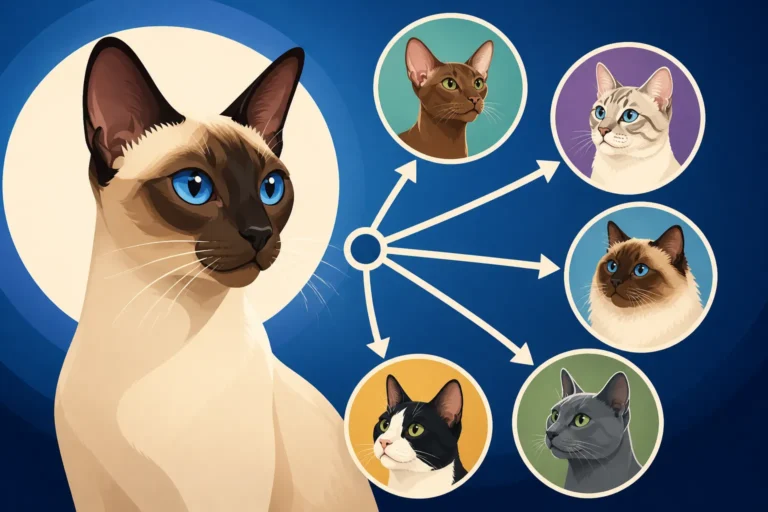
Registry practices can differ by country and organization. Some organizations recognize Siamese under a standard that emphasizes a more refined, elongated outline; others may have a distinct Thai category or specific rules for cats from traditional lines. A familiar type name used by breeders or local clubs may not appear as a formal breed name in the registry’s records.
Before making travel plans for a show or paying a deposit on a kitten, check the registry’s own rules for breed recognition, pedigree requirements, and transfers. If a breeder names an organization, contact that organization directly and ask how it records the cat’s breed. Avoid assuming that registration in one association means automatic acceptance by another.
| Registry or setting | How an applehead-type cat may be described | What to verify |
|---|---|---|
| CFA | Potentially Siamese if pedigree requirements are met; “applehead” is not generally a separate breed category | The certificate’s breed name, parent registration, and transfer paperwork |
| TICA | May be eligible as Thai if it meets the registry’s rules; not simply registered under “applehead Siamese” by appearance | Whether the cat and its lineage qualify for Thai registration |
| Other registries | Terms and breed categories vary | The organization’s current breed list, pedigree rules, and show standard |
| Breeder or informal club | May use “applehead” or “traditional Siamese” descriptively | Whether it is an official pedigree registry or a group using its own terminology |
How to check a breeder’s registration claim
Ask for the exact name on the certificate
A clear breeder should be able to tell you which registry issued the documents and what breed designation appears on them. Ask to see the kitten’s registration certificate, litter registration information, or other relevant paperwork, and ask how ownership transfer works. The precise documents vary, so the goal is not to demand one particular form; it is to understand what exists and what will be provided to you.
Look closely at the distinction between “the parents are registered” and “this kitten is registered.” Those statements are not the same. A breeder may have registered parents but sell a kitten without individual registration papers, or may provide papers only after certain conditions are met. Get the arrangement in writing before paying a deposit.
You can also compare the seller’s claims with the breed descriptions in What a Siamese Cat Looks Like by the Standard. A cat may be a much-loved pet with a Siamese-like appearance and still have no registry-confirmed pedigree. That does not make the cat less deserving of a good home; it simply means its background should be described honestly.
Separate pedigree evidence from appearance and color
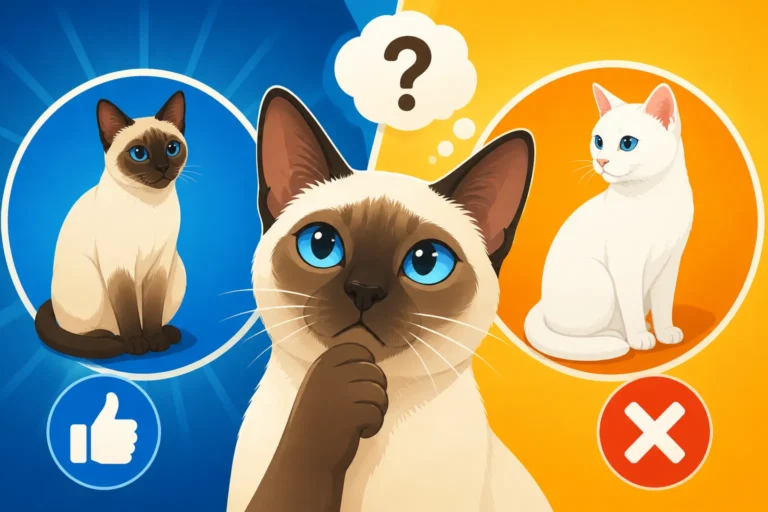
A blue-eyed, pointed coat is not proof of Siamese registration. Point coloration occurs in more than one breed and in mixed-breed cats, and a DNA breed estimate is not a substitute for a pedigree certificate. For the same reason, a round head does not prove that a cat comes from a particular “traditional” line.
Ask about the names and registration status of the parents, the breeder’s registered cattery, and whether the litter was recorded with the organization they mention. If the breeder makes claims about color categories, remember that registries may differ in which colors they accept under the Siamese name. Which Colors a Siamese Cat Comes In offers useful context, while Whether a DNA Test Confirms a Siamese Cat explains why a DNA test should not be treated as a pedigree document.
Watch for vague or inflated wording
Be cautious when a seller uses phrases such as “internationally registered,” “pure applehead,” or “papers available” without naming the organization or explaining what the papers show. Ask direct, calm questions: Which registry? What breed appears on the certificate? Are the kitten’s parents recorded there? Will the paperwork transfer to the new owner? A reputable seller should not need to turn these basic questions into an argument.
A low price or a rounder face does not, by itself, tell you whether a cat is registered. Nor does a polished certificate establish that every claim in an advertisement is accurate. Confirm the document with the named registry when something seems unclear. If the breeder cannot provide the promised documents, consider whether you are comfortable adopting the kitten as a cat with an unverified pedigree rather than paying a premium for a registered one.
Choosing the right cat when the label matters to you
Decide whether you want a pedigree, a particular look, or both
People often use “applehead Siamese” because they want a cat with a particular appearance: a rounded head, a less extreme profile, or a body shape they associate with older Siamese lines. Others care most about documented ancestry, show eligibility, or a particular registry. These are related interests, but they are not identical.
Before contacting breeders, write down what matters most. If you mainly want a companion with a traditional-looking face, you may be happy with a cat whose look fits that description even if its pedigree is unavailable. If you want a registered cat, start with the registry and its recognized breed names, then find a breeder who can show the relevant paperwork. What Separates a Pet From a Show Siamese Cat helps explain why a pet-quality cat can still be a registered purebred.
Once you bring a cat home, keep registration documents separate from routine care records. Store certificates, adoption papers, vaccination records, and veterinary notes together so you can find them when needed. When ordering food or litter through a retailer such as Chewy, save receipts or order confirmations with your household records if they help you track what your cat is eating and using. Chewy purchases do not establish pedigree, of course; they are simply part of keeping everyday care organized.
Make the breeder answer the question in writing
A short written record can prevent confusion later. Ask the breeder to state the cat’s registered breed, the registry name, whether individual papers will be supplied, and any conditions attached to transfer. If the answer is that the cat is “applehead” but not registered, that may be perfectly straightforward—as long as you understand it before the sale.
For example, imagine two kittens with similar round faces. One comes with pedigree documents naming it Siamese through a recognized registry. The other is described as an applehead Siamese, but the breeder has no registration record for the litter. Both may be affectionate, healthy companions; only the first has the documented pedigree claim. The distinction is about evidence and registry status, not a judgment of the cat’s worth.
If you are preparing for a new cat, plan for the practical basics as well as the paperwork. A reliable food supply, litter, carrier, and scratching surfaces matter from day one; whether you buy those items locally or through Chewy, choose what suits the cat and your household. Keep the breeder’s documents, veterinary records, and routine purchase notes in separate sections so a product receipt is never mistaken for a pedigree record.
In practical terms, major registries generally do not accept “applehead Siamese” as a separate formal breed category. A cat with that appearance may be registered as Siamese or, where the rules and lineage allow, as Thai. The certificate and the registry’s own requirements—not the nickname or head shape—settle what the cat is officially recorded as.
Disclaimer
This article is for general informational purposes only and does not constitute professional advice. Laws, prices and regulations vary by location and change over time. Consult a qualified professional for guidance on your specific situation.