What a Siamese Cat’s Ears Should Look Like
A Siamese cat’s ears are usually one of its most striking features: large, upright, broad at the base, and tapering to a clear point. But ear size and shape vary between individual cats, and appearance alone cannot confirm a pedigree. This guide explains what the breed’s ears should look like, how to tell normal variation from a possible health problem, and when an ear change deserves a veterinarian’s attention.
The typical shape of a Siamese cat’s ears
Large, wide-set ears with pointed tips
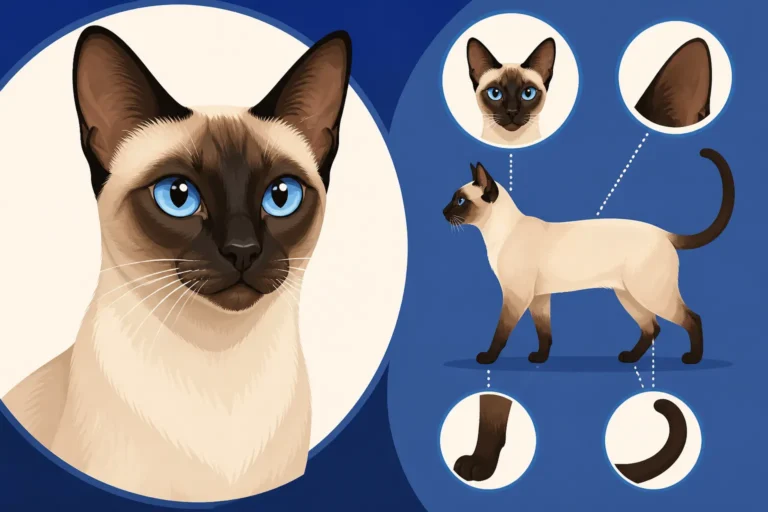
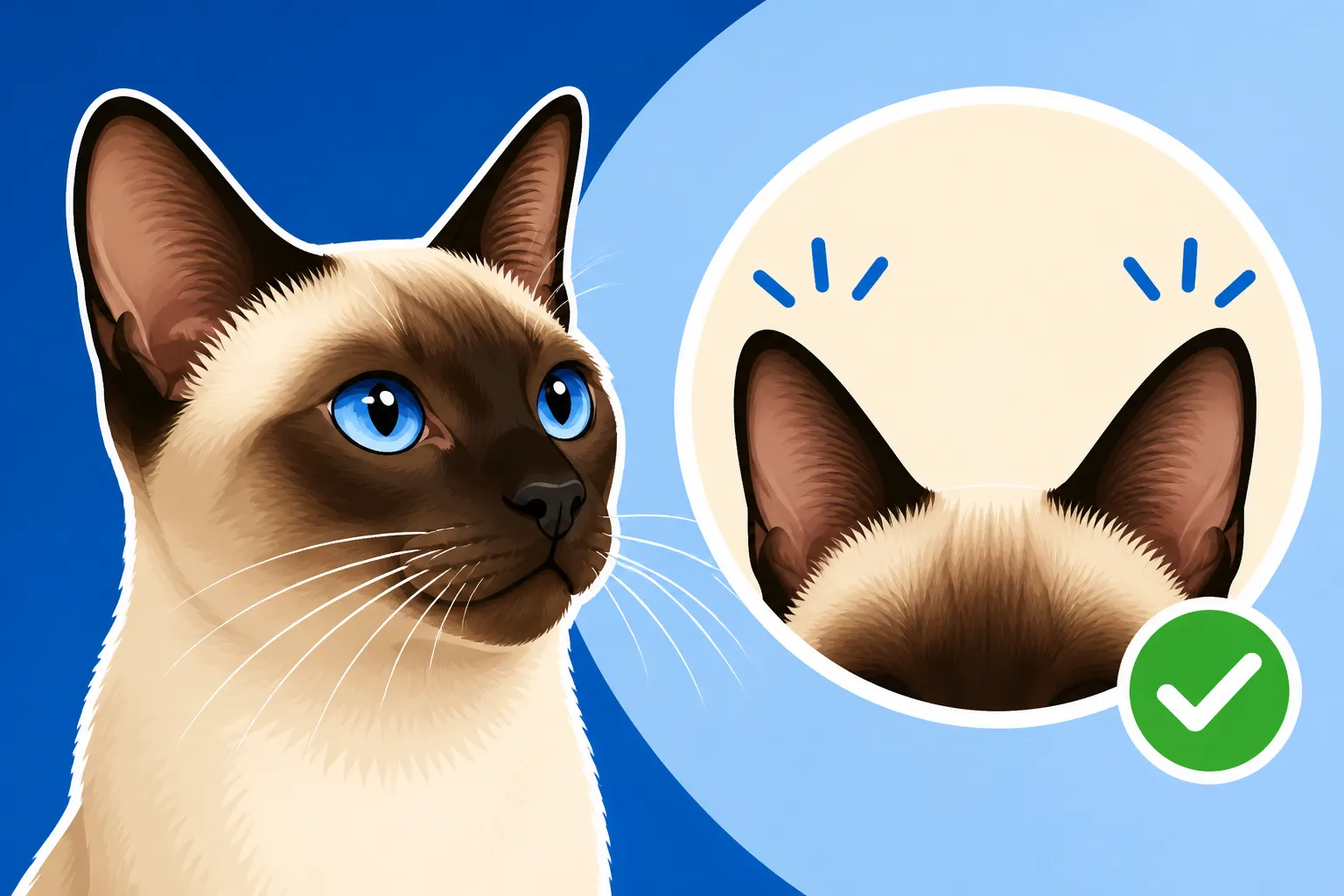
The classic Siamese ear is noticeably large in proportion to the head. It is broad where it joins the skull, stands upright, and narrows toward a pointed tip. The ears are generally set wide apart, helping create the breed’s alert, angular expression. If you have ever looked at a Siamese and thought its ears seem almost too big for its face, that impression is part of the breed’s familiar look.
Even so, there is no single ear measurement that every Siamese cat must meet. A young kitten’s head and ears can look disproportionate as it grows, and individual cats may have softer or rounder tips, slightly different spacing, or ears that appear larger because the head is narrow. The overall head-and-ear balance matters more than a small difference in shape. For a closer look at the breed feature, see Why a Siamese Cat's Ears Are So Large.
How the ears fit the head
In the modern Siamese, the head is long and wedge-shaped, with the wedge running from the nose toward the outer edges of the ears. The ears help continue that outline rather than sitting as small, separate triangles on top of a rounded head. This is why ear shape is best judged alongside the whole head, not in a close-up photograph alone.
Breed standards describe an ideal for shows; they are not a checklist for deciding whether a beloved pet is a “real” Siamese. Siamese cats outside the show ring can have more rounded heads or less dramatic ear placement and still be wonderful companions. The breed’s appearance has changed over time, too, as breeders selected for different head shapes. How the Siamese Cat's Head Changed Shape in Fifty Years provides useful context for why photos of Siamese cats can look quite different from one another.
What a breed standard can and cannot tell you
A breed standard is a description used to guide judging, not a health test or a way to verify ancestry by sight. A cat with the classic large ears may be a Siamese, a Siamese mix, or another cat with a similar look. Likewise, a Siamese with less exaggerated ears is not automatically a mix. If you are comparing a cat with show descriptions, What the Siamese Cat Standard Asks For explains how individual features fit into the breed’s overall outline.
| Feature | Common Siamese appearance | What can vary |
|---|---|---|
| Size | Large relative to the head | Apparent size changes with age and head shape |
| Base | Broad where the ear joins the skull | The base may look less dramatic on a rounder head |
| Tip | Tapered and pointed | Tips may be softer or less sharply defined |
| Placement | Upright and set fairly wide apart | Spacing and angle differ among individuals |
| Inner surface | Usually pale pink, with a small amount of wax possible | Skin tone and visible wax can vary |
| Outer coat | Often darker on the ears in pointed cats | Shade depends on the cat’s point color and coat pattern |
Color, coat, and individual variation
Why Siamese ears may be darker
Siamese cats have a temperature-sensitive color pattern. Their extremities, including the ears, face, paws, and tail, are generally cooler than the central body, so those areas tend to develop darker pigment. The exact shade depends on the cat’s point color: seal points usually have very dark brown points, while blue, chocolate, and lilac points have different tones.
That means dark ear fur is usually a normal part of the coat pattern, not a sign that the ear is dirty or bruised. It can also change as a cat matures or with changes in temperature. If the color shift is sudden, appears as a wound or scab rather than fur pigment, or comes with swelling or discomfort, treat it as a possible health issue rather than a coat-color change. The explanation of Why a Siamese Cat Has Dark Points can help distinguish normal point coloring from a new skin change.
How age and head shape affect the look
A Siamese kitten’s ears can seem especially prominent before the rest of its head and body have finished developing. As the cat matures, its face may look more balanced, even though the ears themselves have not changed much. In older cats, changes in weight, muscle, or coat condition can also alter how prominent the ears appear.
Head shape plays a part as well. A narrow wedge makes the ears appear to extend the head’s outline, while a rounder head may make the same-sized ears look shorter or less wide-set. Breed terminology can be confusing, particularly when people use “traditional,” “old-style,” or “modern” to describe different looks. If you are trying to distinguish related types, How a Siamese Cat Differs From an Oriental Shorthair is a helpful companion read.
When appearance is not enough to identify a Siamese
Large ears are a recognizable feature, but they do not prove a cat’s breed. Mixed-breed cats can have upright, pointed ears, and many breeds share similar ear shapes. Coat color, blue eyes, and a slender body may add to a Siamese-like impression, but none of those traits alone establishes pedigree either. For a fuller explanation, read How to Tell a Siamese Cat From a Mixed Breed.
If you are considering adoption, a cat’s temperament and care needs matter more than whether its ears match an idealized illustration. A shelter or rescue may have limited family history, and that does not make the cat any less deserving of a home. Focus on the individual cat’s health, behavior, and compatibility with your household rather than trying to diagnose its ancestry from its ears.
Healthy ears and signs that need attention
What the inside of a healthy ear usually looks like
The visible inner ear is typically pale pink, though natural skin tone can vary. A small amount of light-colored wax can be normal. The ear should not have a strong unpleasant smell, heavy discharge, obvious swelling, or a painful response when touched gently around the base. A cat that is comfortable will generally carry its ears naturally rather than persistently flattening or shaking them.
Look at both ears in good light, but do not force the ear open or poke inside. A quick visual check during a calm cuddle is often enough to notice a change. Some cats dislike having their ears handled, so keep the check brief and stop if your cat becomes distressed. The goal is to notice what is normal for your own cat, not to clean the ears on a schedule without a reason.
Warning signs to watch for
Contact a veterinarian if you notice persistent head shaking, repeated scratching, redness, swelling, an unpleasant odor, discharge, crusting, or a sudden change in how your cat holds its ears. Dark, crumbly debris can be associated with ear mites, but other problems can look similar, so it is better not to guess at the cause or use a treatment intended for another pet.
Pain, a head tilt, loss of balance, or sudden hearing or behavior changes also deserve prompt attention. A swollen ear flap can develop after repeated scratching or head shaking and may need veterinary care. If your cat seems unwell overall, the signs in Signs a Siamese Cat Is Unwell can help you think through what else to report when you call the clinic.
Ear care without causing irritation
For routine care, most owners do not need to reach into a cat’s ear canal. Avoid cotton swabs, fingers, peroxide, alcohol, essential oils, and household remedies: they can irritate delicate tissue or push debris farther inside. If your veterinarian recommends an ear cleaner, follow the product directions they provide and ask them to demonstrate how to use it safely.
If you need supplies after receiving veterinary guidance, choose a cat-specific product that matches that advice. Chewy may list ear-care products, but the product listing is not a substitute for a diagnosis or a veterinarian’s recommendation. A soft cotton pad can be useful for wiping only the visible outer ear when your vet has said that is appropriate; if you are unsure what to buy, Chewy’s product information can help you check whether an item is intended for cats. For recurring wax or irritation, do not simply keep ordering cleaners from Chewy—ask the clinic to check for an underlying cause. More on routine care is covered in How Often a Siamese Cat's Ears Need Cleaning and Why a Siamese Cat's Ears Get Waxy.
When to call a veterinarian
Changes that can wait for a routine appointment
A slight difference in ear angle or size between the two sides may simply be your cat’s natural anatomy, especially if it has always looked that way and your cat is comfortable. Likewise, a little visible wax without odor, scratching, or redness is not automatically an emergency. If you are uncertain, take a clear photo in good light and mention the change at your cat’s next appointment—or call the clinic for advice if it is new.
It can help to note when you first noticed the change, whether one or both ears are affected, and whether your cat has been scratching or shaking its head. Those details are more useful than trying several products at home and then attempting to remember what was used.
Signs that should be checked promptly
Arrange veterinary care promptly for worsening pain, marked swelling, bleeding, discharge, a strong odor, or persistent head shaking. Seek urgent advice if ear symptoms occur alongside a head tilt, trouble walking, unusual eye movements, or sudden disorientation. These signs can point to a problem beyond simple wax or surface irritation and need a proper examination.
Do not wait for a routine appointment if your cat seems very distressed or is repeatedly injuring the ear by scratching. Until you speak with the clinic, avoid putting anything into the ear canal or applying leftover medication. A veterinarian can examine the ear and decide whether testing or treatment is needed.
What the veterinarian may check
A clinic visit may include looking at the outer ear and examining the ear canal with an instrument. Depending on what they see, the veterinarian may take a sample of debris to check for mites, yeast, or bacteria. The treatment depends on the cause, which is why using a random cleaner or medication can delay the right care.
Bring a list of any products you have used and describe when symptoms began. If your cat has a history of recurring ear problems, mention that too. Regular, gentle observation at home helps you catch changes early, while a veterinary exam is what determines whether those changes are harmless variation or a problem that needs treatment.
Disclaimer
This article is for general informational purposes only and does not constitute professional advice. Laws, prices and regulations vary by location and change over time. Consult a qualified professional for guidance on your specific situation.