Whether an Air Purifier Helps a Siamese Cat’s Asthma
There's nothing quite as heartbreaking as watching your beloved Siamese cat struggle for breath, their chest heaving with an asthma attack. It’s a terrifying experience for both you and your feline friend, and it leaves you desperate for any solution that might offer relief. Many cat parents find themselves wondering if something as simple as an air purifier could make a real difference, especially when you know that environmental irritants often play a big role in triggering these episodes. This guide will delve deep into how air purifiers can be a valuable tool in managing your Siamese cat's asthma, what to look for, and how to create the cleanest air possible for them.
Understanding Siamese Cat Asthma and Environmental Triggers
Feline asthma is a chronic inflammatory condition of the small airways in the lungs, very similar to asthma in humans. For our sensitive Siamese companions, it can be a particularly common and distressing ailment. Knowing what you're up against and what sets it off is the first step in providing comfort and care.
The Reality of Feline Asthma
Imagine trying to breathe through a straw – that's what an asthma attack can feel like for your cat. When a Siamese cat has asthma, their airways become inflamed and constricted, making it incredibly difficult for air to pass through. This inflammation is usually a reaction to inhaled allergens or irritants, causing the muscles around the bronchi to tighten and mucus to build up. The signs can range from a mild, persistent cough to severe respiratory distress, complete with wheezing and gasping for air. It's often mistaken for a hairball at first, but if you notice your cat crouching with their neck extended and a dry, hacking cough, or even blue-tinged gums in severe cases, it's crucial to seek veterinary attention immediately. These episodes can be frighteningly sudden and can severely impact your cat's quality of life. You might find it helpful to read more about the common Asthma Symptoms in a Siamese Cat to better identify what to look for.
Common Environmental Irritants
The world around us, full of various particles and chemicals, can be a minefield for an asthmatic Siamese. These irritants are often airborne, silently triggering inflammation in sensitive airways. Dust, for example, is a huge culprit – not just the visible dust bunnies, but microscopic dust mites and their waste products. Pollen, tracking in from outdoors, can also be a significant allergen, especially during seasonal changes. Mold spores, dander from other pets, and even certain food particles can become airborne and inhaled. Beyond natural allergens, household products are a major source of trouble. Think about the strong scents from air fresheners, cleaning sprays, perfumes, or even scented candles – these can release volatile organic compounds (VOCs) that are highly irritating to delicate feline lungs. Smoke, whether from cigarettes, fireplaces, or even cooking, is another potent trigger. Understanding What Triggers a Siamese Cat's Asthma is paramount to creating a safer environment for them.
How Air Purifiers Work and Their Benefits for Asthmatic Cats
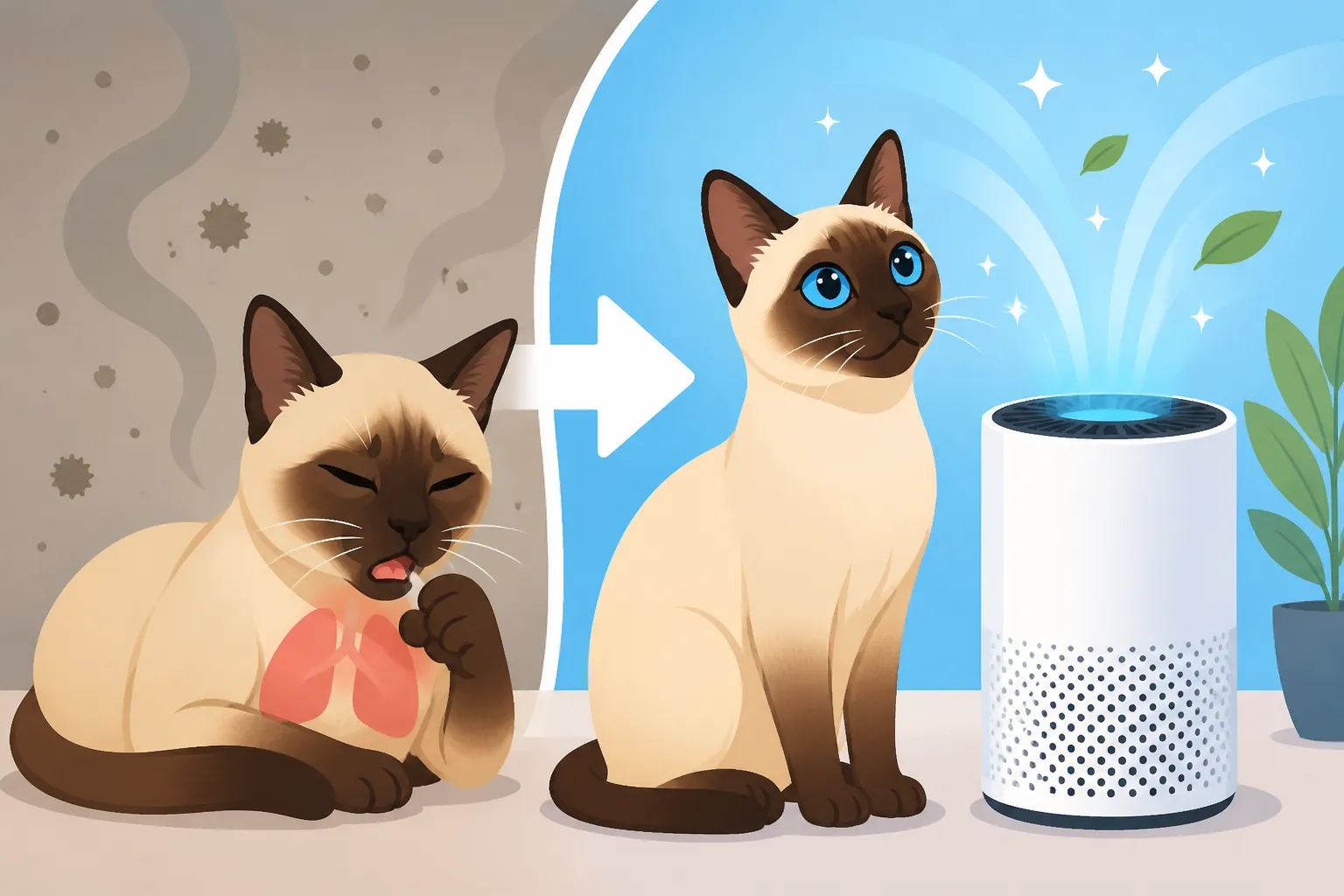
When you're trying to reduce these pervasive environmental triggers, an air purifier steps in as a vital piece of the puzzle. It's not a magic bullet, but it can significantly clean up the air your Siamese cat breathes.
The Technology Behind Air Purification
Air purifiers aren't all created equal, but their core function is to remove contaminants from the air. The most common and effective type for pet owners uses a High-Efficiency Particulate Air (HEPA) filter. These filters are designed to capture 99.97% of airborne particles 0.3 microns in size or larger – that means dust, pollen, pet dander, mold spores, and even some bacteria and viruses. Think of it as a super-fine mesh that physically traps these tiny particles as air is drawn through it. Many purifiers also include an activated carbon filter, which is fantastic for adsorbing odors and gases, like those pesky VOCs from cleaning products or litter box smells. Some models may also use ionizers or UV-C light, but it’s important to research these carefully. Ionizers can sometimes produce ozone, which is an irritant in itself, and UV-C lights are primarily for killing germs, not filtering particles. For an asthmatic cat, a true HEPA filter is the non-negotiable component.
Direct Benefits for Siamese Cats with Asthma
Introducing an effective air purifier into your home can translate directly into tangible improvements for your asthmatic Siamese. By constantly circulating and cleaning the air, these devices reduce the overall load of allergens and irritants floating around. Fewer irritants mean less inflammation in your cat's airways, which can lead to a decrease in the frequency and severity of asthma attacks. Imagine your cat spending less time coughing, wheezing, or struggling to breathe – that’s the goal. Improved air quality helps their respiratory system function more smoothly, potentially reducing their reliance on medication over time (though never stop or change medication without veterinary guidance). It contributes to a generally more comfortable and healthier breathing environment for them, making your home a sanctuary rather than a source of distress. While an air purifier helps manage symptoms, it's still crucial to consult your vet about medical treatments like those outlined in How a Siamese Cat's Asthma Is Treated or Which Steroid a Siamese Cat With Asthma Takes.
Choosing the Right Air Purifier for Your Siamese Cat's Health
Navigating the world of air purifiers can feel a bit overwhelming, but focusing on what truly benefits your asthmatic Siamese cat will simplify the process. Not all units are created equal, and some features are far more important than others for respiratory health.
Key Features to Look For
When you’re staring at a wall of air purifiers, here’s what should be on your checklist:
- True HEPA Filter: This is non-negotiable. Look for "True HEPA" explicitly, not "HEPA-type" or "HEPA-like," which are less effective. A true HEPA filter captures those microscopic particles that wreak havoc on sensitive feline lungs, like dander, pollen, and dust mites.
- Activated Carbon Filter: Essential for tackling odors and volatile organic compounds (VOCs) from things like cleaning supplies, cooking fumes, or even off-gassing from new furniture. Siamese cats have incredibly sensitive respiratory systems, and eliminating chemical irritants is just as important as removing particulate matter.
- CADR (Clean Air Delivery Rate) Rating: This tells you how quickly the purifier cleans the air in a room. Look for separate ratings for smoke, dust, and pollen. The higher the CADR, the faster it cleans. Match the CADR to the size of your room; typically, you want a purifier that can clean the air in the room at least 4-5 times an hour. Many manufacturers will list a recommended room size in square feet, which makes matching easier.
- Coverage Area: Don't just pick any size. You need a unit powerful enough for the room where your Siamese cat spends the most time. If your cat mostly sleeps in your bedroom, that’s where you’ll need it. If they roam the living room all day, you'll need one for that larger space. Running a small purifier in a large room will yield minimal benefits.
- Noise Level: Cats, and especially vocal Siamese cats, are sensitive to noise. A loud air purifier can be a source of stress, negating some of the health benefits. Look for models with a low decibel (dB) rating, particularly on their lower settings. Many reputable brands, like Coway or Levoit, offer quiet options that won't disrupt your cat's (or your) peace.
- Filter Replacement Indicator and Cost: Filters need regular changing to remain effective. Check how often the filters need replacing (typically every 6-12 months for HEPA, more often for carbon) and the cost of replacement filters. Factor this into your budget, just as you would plan for other routine pet expenses. Thinking proactively about these costs, much like budgeting for ongoing veterinary care or even Budgeting for a Siamese Cat's Asthma Inhaler, can help you manage your financial responsibilities as a pet parent. Some pet insurance providers, like Healthy Paws, even help with the costs of conditions like asthma, though the purifier itself wouldn't be covered directly.
- Avoid Ozone Generators/Ionizers (unless certified ozone-free): While some units boast ionization, many produce ozone as a byproduct. Ozone is a respiratory irritant and can actually worsen asthma symptoms in both cats and humans. Stick to mechanical filtration (HEPA and carbon) for the safest option.
Placement and Maintenance Tips
Getting the right air purifier is only half the battle; how you use and maintain it is just as crucial for consistent air quality.
- Strategic Placement: Place your air purifier in the room where your Siamese cat spends the most time. For many cats, this is often the living room during the day and a bedroom at night. Don't tuck it away in a corner or behind furniture, as this obstructs airflow. Ideally, it should be in an open area, away from walls, with space for air to circulate freely around it. If you have a large open-concept home, you might need multiple units or a single, more powerful unit centrally located.
- Consistent Operation: For maximum benefit, your air purifier should run as much as possible, ideally 24/7. Air quality fluctuates constantly, and you want to continuously filter out new irritants as they enter your home or become airborne. Many models have an "auto" mode that adjusts fan speed based on detected air quality, which can save energy and reduce noise when the air is already clean.
- Regular Filter Changes: This cannot be stressed enough. HEPA and activated carbon filters become saturated with pollutants over time, losing their effectiveness. Ignoring the filter change indicator or trying to stretch out filter life will render your expensive air purifier useless. Refer to your unit's manual for recommended replacement schedules – usually every 6-12 months for HEPA filters and 3-6 months for carbon pre-filters, depending on air quality and usage. Timely replacement ensures your investment continues to provide clean air.
- Keep it Clean: Beyond filters, periodically wipe down the exterior of the unit, especially the air intake grilles, to prevent dust buildup on the surface. Ensure the area around the purifier is free from obstructions.
By thoughtfully selecting and diligently maintaining your air purifier, you’re providing a powerful tool to combat the airborne triggers that make your Siamese cat’s life with asthma so challenging. This proactive approach can make a world of difference.
Beyond Air Purifiers: A Holistic Approach to Managing Feline Asthma
While an air purifier is a fantastic tool, it's just one part of a comprehensive strategy to manage your Siamese cat's asthma. A holistic approach involves minimizing irritants throughout their environment and working closely with your veterinarian for medical management.
Other Environmental Controls
Creating an asthma-friendly home goes far beyond simply plugging in an air purifier. Every aspect of your cat’s immediate environment should be scrutinized to reduce potential triggers.
- Low-Dust Litter: This is a big one. Many conventional litters create a cloud of fine dust every time your cat digs or you scoop the box. This dust is directly inhaled and can be a significant irritant. Switch to low-dust, unscented litter options like World's Best Cat Litter, Dr. Elsey's Precious Cat, or paper-based pellets. You might be surprised at the difference this alone can make. You can find more specific advice on Which Litter Suits an Asthmatic Siamese Cat.
- Regular Cleaning and Vacuuming: Dust and pet dander accumulate everywhere. Vacuuming regularly, ideally with a vacuum cleaner equipped with a HEPA filter, can trap these particles instead of recirculating them. Wipe down surfaces with a damp cloth to capture dust rather than just pushing it around. Don't forget curtains, rugs, and upholstery – these are all dust magnets.
- Avoid Strong Scents and Sprays: This includes air fresheners, scented candles, plug-ins, essential oil diffusers, perfumes, and even aerosol cleaning products. These products release VOCs that are incredibly irritating to feline respiratory systems. Opt for unscented, natural cleaning products and open windows for ventilation instead of masking odors.
- Control Humidity: Extremely dry air can irritate airways, while excessively high humidity can encourage mold growth. Aim for a moderate humidity level, typically between 40-60%. A hygrometer can help you monitor this, and humidifiers or dehumidifiers can adjust as needed. Just be sure to keep humidifiers meticulously clean to prevent bacteria or mold from being aerosolized.
- Reduce Carpet and Upholstery: Carpets and heavy upholstered furniture trap allergens more effectively than hard surfaces. If possible, consider replacing carpets with hard flooring (wood, tile, or laminate) and choosing washable covers for furniture. If that's not feasible, regular, deep cleaning is even more critical.
- Consider Allergen-Reducing Bedding: For your cat’s beds and your own, use allergen-proof covers and wash bedding frequently in hot water to kill dust mites.
- No Smoking Indoors: This should go without saying, but any kind of smoke (cigarettes, cigars, vapes, fireplaces) is a potent irritant for asthmatic cats. If you must smoke, do so strictly outdoors and away from open windows.
Veterinary Care and Medical Management
No amount of environmental control can replace professional veterinary care. If your Siamese cat has been diagnosed with asthma, or if you suspect they might have it, a vet visit is the absolute first step.
- Accurate Diagnosis: A veterinarian will perform a thorough examination, which may include chest X-rays to look for characteristic changes in the lungs (like a "doughnut" pattern in the bronchi) or a What a Siamese Cat's Chest X Ray Costs. They might also recommend blood tests to rule out other conditions. This initial workup is crucial for confirming asthma and assessing its severity. You might wonder What a Siamese Cat's Asthma Workup Costs but it is an essential investment in their health.
- Medication Protocols: Depending on the severity, your vet will likely prescribe medications. The cornerstone of feline asthma treatment is usually corticosteroids, which reduce inflammation in the airways. These can be given orally, via injection, or most effectively, through an inhaler and a specialized feline spacer. Using an inhaler (like a Flovent inhaler with an AeroKat or AeroDawg spacer) delivers the medication directly to the lungs, minimizing systemic side effects. Knowing What a Feline Spacer for a Siamese Cat Costs can help you prepare. Bronchodilators might also be prescribed to open up constricted airways during an acute attack.
- Emergency Plan: Discuss with your vet what to do if your cat has a severe asthma attack. They can provide specific instructions and possibly emergency medications. Understanding What an Asthma Emergency Costs a Siamese Cat Owner can also help you prepare financially.
- Regular Follow-ups: Asthma is a chronic condition that requires ongoing management. Regular vet check-ups are essential to monitor your cat's response to treatment, adjust medication dosages as needed, and catch any potential complications early.
- Pet Insurance Considerations: It's worth considering pet insurance, especially with a breed prone to chronic conditions like asthma. Companies like Healthy Paws often cover chronic conditions as long as they aren't pre-existing, which can significantly ease the financial burden of ongoing medications, vet visits, and emergency care. It's always a good idea to check if Whether Insurance Covers a Siamese Cat's Asthma before signing up. The costs of long-term medication, like What a Year of Fluticasone Costs a Siamese Cat Owner, can add up.
- Long-term Outlook: While asthma can't be cured, it can be very well managed. With diligent care and a proactive approach, many asthmatic Siamese cats can lead full, happy lives. Don't let the diagnosis scare you into thinking your cat's lifespan will be drastically cut short; for most, it won't. In fact, you can learn more about Whether a Siamese Cat's Asthma Shortens Its Life.
By combining vigilant environmental control with consistent veterinary care, you can provide your cherished Siamese cat with the best possible quality of life, allowing them to breathe easier and enjoy their days with fewer interruptions from those scary asthma attacks.
Air Purifier Comparison for Feline Asthma
To help you decide which type of air purifier might be best for your asthmatic Siamese cat, here's a quick comparison of popular technologies:
| Feature/Type | HEPA Filtered Purifier | Activated Carbon Purifier | Ionizer/Ozone Generator (Avoid) | UV-C Light Purifier |
|---|---|---|---|---|
| Primary Function | Captures particulate matter (dust, dander, pollen) | Absorbs odors, gases, VOCs | Electrostatically charges particles (can produce ozone) | Kills bacteria, viruses, mold (not a filter) |
| Effectiveness for Asthma | Excellent – Essential for removing triggers | Very Good – Addresses chemical irritants | Poor/Harmful – Ozone can irritate airways, exacerbating asthma | Limited – Does not remove physical triggers; not a primary solution |
| Key Benefit | Physical removal of allergens and irritants | Eliminates smells and chemical pollutants | Cleans air but with a significant health risk for asthmatics | Disinfects air, useful for germ control, but not asthma triggers |
| Considerations | Requires regular filter replacement; can be noisy on high settings | Requires regular filter replacement; less effective on particulates alone | Strongly advise against for asthmatic cats | Often combined with HEPA; UV lamp replacement needed; does not filter particles |
| Recommended Combo | HEPA + Activated Carbon | Usually paired with HEPA for comprehensive purification | N/A | Can be beneficial as a secondary feature with HEPA+Carbon |
Disclaimer
The information provided in this article is for general informational purposes only and does not constitute veterinary advice. Always consult with a qualified veterinarian for any health concerns or before making any decisions about your pet's medical care, diet, or treatment.