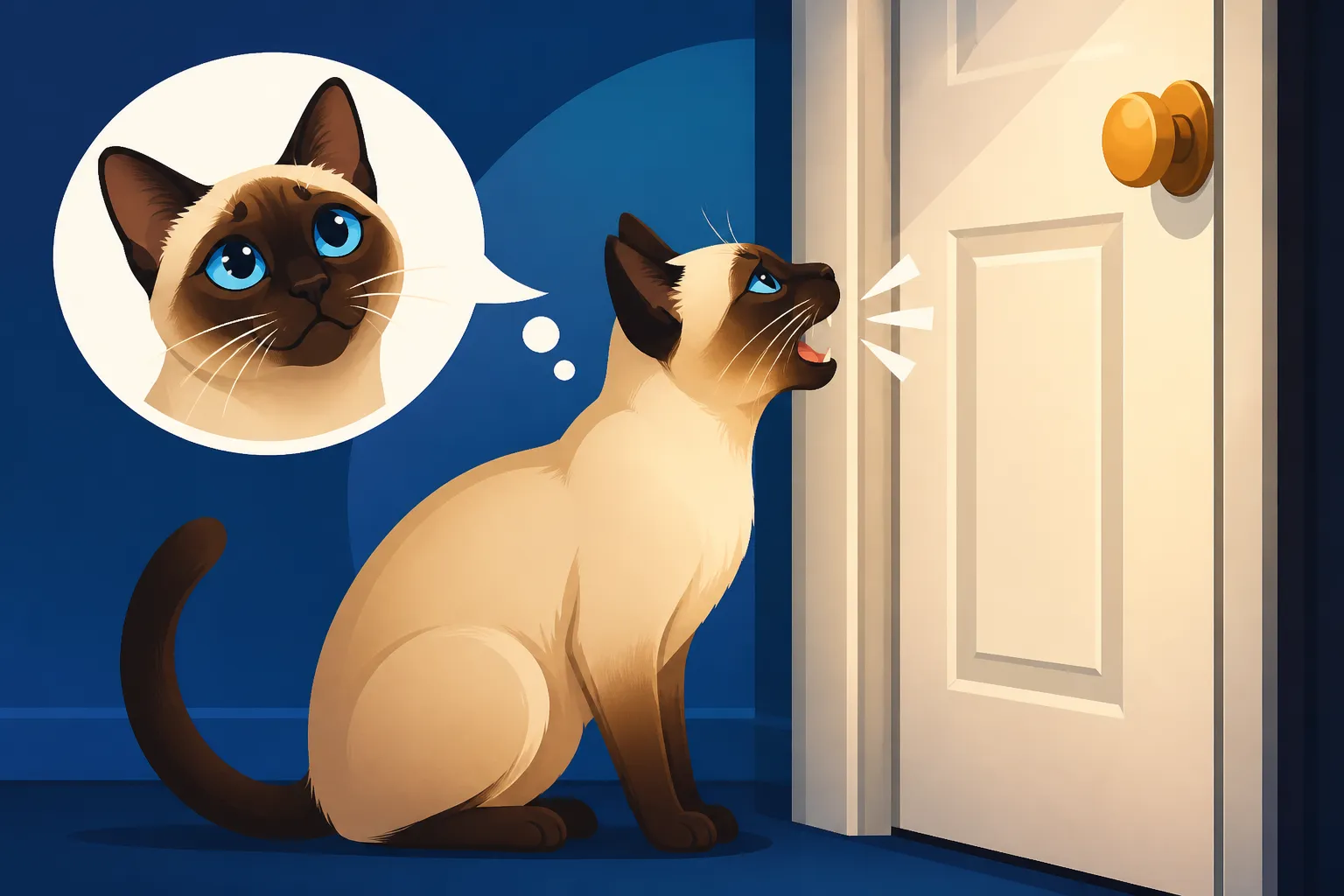
Why a Siamese Cat Meows at a Closed Door
Oh, the closed door dilemma with a Siamese! If you've ever found yourself wondering why your beautifully vocal Siamese cat suddenly transforms into a persistent, door-scratching, ear-splitting meowing machine the moment a door in your home clicks shut, you are absolutely not alone. This isn't just a quirky habit; it's a deeply ingrained behavioral trait that can test the patience of even the most devoted Siamese owner. This guide is here to shed light on exactly why your Siamese views every closed door as a personal affront and what you can realistically do about it.
The Siamese Cat's Innate Need for Connection and Control
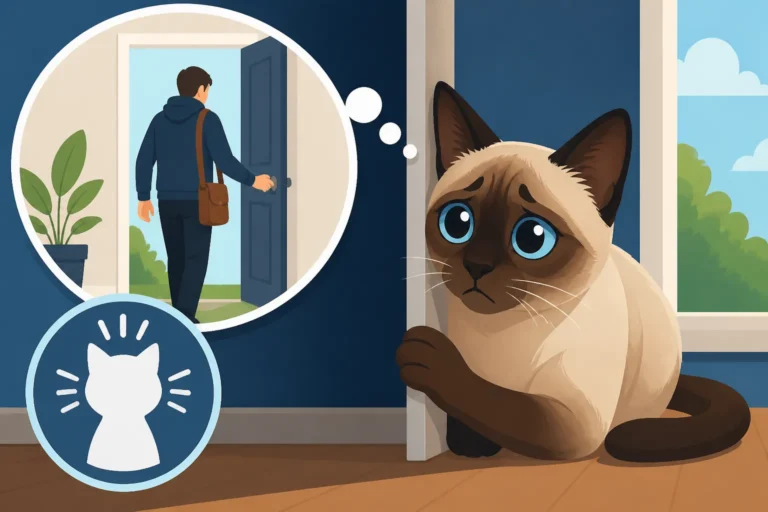
Siamese cats are often described as dogs in a cat's body, and nowhere is this more apparent than in their desire to be involved in absolutely everything you do. They don't just live in your house; they perceive your entire home as their shared territory, and by extension, their domain. A closed door isn't just a physical barrier; it's an invisible wall that separates them from their human, from their perceived territory, and from the unfolding drama of daily life. For a Siamese, this is unacceptable on many levels.
Why Their Vocalization is Different
If you own a Siamese, you already know they aren't exactly shy about expressing themselves. Their voices are legendary, often described as a "Meezer yowl" – a deep, resonant, and often incredibly loud vocalization that can sound almost human-like in its insistence. This isn't your average "mew"; it's a full-bodied declaration. Unlike some other breeds that might give a quiet sniff at a closed door or a soft, questioning meow, a Siamese will unleash the full force of their vocal cords. It's their way of demanding answers, access, and attention, and it's something many first-time Siamese owners find themselves wholly unprepared for. This strong vocal trait ties directly into their need for connection; they believe if they just yell loud enough, you simply must respond. This is also why many owners find themselves talking back to their Siamese, engaging in a full-blown conversation, because they are so expressive. If you're curious about the sheer volume, you might find our post on How Loud a Siamese Cat Is particularly relatable.
The Territory of a Siamese Cat
For a Siamese, the concept of "personal space" is largely a human construct that doesn't apply to them. Their territory isn't just the rooms they have access to; it's the entire home. Every closet, every cupboard, every single room is part of their perceived domain, and they feel an inherent right to investigate, patrol, and share every inch of it with you. When you close a door, you're not just closing off a room; you're creating a mysterious, inaccessible void within their territory. This infringement on their perceived rights is a major source of their frustration. They need to know what's happening on the other side, who's there, and why they aren't part of it. It's a fundamental challenge to their sense of control and belonging within their own home.
Common Reasons for the Closed-Door Chorus
Let's delve deeper into the specific triggers that turn your calm, loving Siamese into a vocal protestor outside a closed door. It's rarely out of malice; it's almost always rooted in their unique personality and needs.
Seeking Companionship and Attention
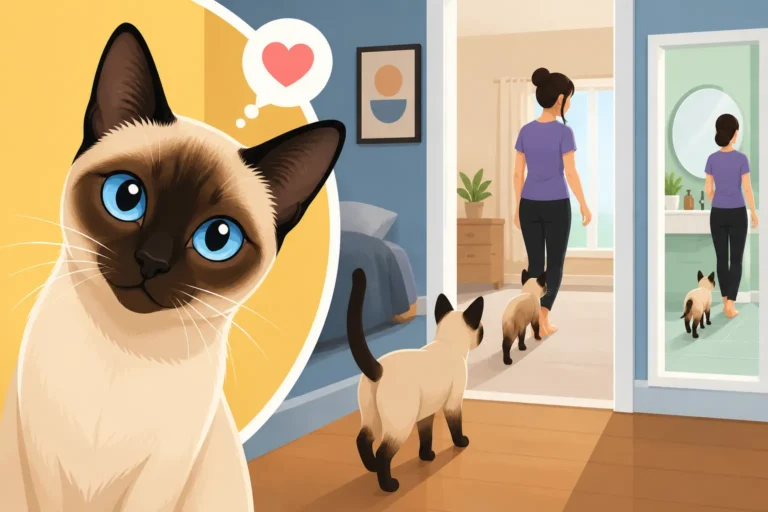
Siamese cats are profoundly social creatures. They thrive on interaction and consider themselves an integral part of your family unit. For them, being separated by a closed door is akin to being excluded from the most important social gathering of the day. They want to be where you are, always. Whether you're in the bathroom, the bedroom, or even the laundry room, they believe their presence is not only welcome but essential. A closed door communicates isolation, and that's something a Siamese cat truly struggles with. Their meowing isn't just a complaint; it's an urgent call for you to rejoin them, or better yet, allow them to rejoin you. It's their way of saying, "Hey! I'm out here! Don't you know I'm supposed to be in there with you?" This intense need for interaction is why many Siamese cats struggle when left alone for long periods; you can read more about this in How Long a Siamese Cat Can Be Left Alone and Signs a Siamese Cat Is Lonely.
Curiosity and the Unknown
Beyond companionship, Siamese cats are highly intelligent and incredibly curious. A closed door presents an irresistible mystery. What's behind it? Is there a new scent? A forgotten toy? Perhaps a dust bunny they haven't yet vanquished? Their minds race with possibilities, and their instinct dictates that they must investigate. The unknown is not a source of fear for them, but a challenge to be overcome. They'll scratch, they'll sniff, and most certainly, they'll meow, hoping their persistence will unlock the secrets of the forbidden room. This insatiable curiosity is a hallmark of the breed, and a closed door is merely another puzzle for their clever minds to solve, even if the only "solution" is for you to open it.
Routine and Expectation
Cats, especially Siamese, are creatures of habit. They thrive on predictable routines. If you usually leave your bedroom door open, and one day you close it, your Siamese will notice. And they will protest. They might associate certain doors with specific activities: the bathroom door might mean you're about to engage in a fascinating grooming ritual (from their perspective, of course), or the kitchen door might signal impending meal prep. When these routines are disrupted by a closed door, it creates confusion and frustration, leading to that insistent meowing. They're trying to communicate, "This isn't how it usually goes! What's wrong?" They have a mental map of your daily patterns, and a closed door that isn't usually closed is a glitch in their matrix that needs immediate correction.
Sensory Deprivation and Auditory Fascination
While a closed door blocks their sight, it often amplifies sounds from within. A Siamese cat's hearing is incredibly keen, and they're highly attuned to the subtle noises of your home. They can hear you moving, talking, or even just breathing on the other side of that door, and this only intensifies their desire to be part of the action. The inability to see what they hear is a form of sensory deprivation that drives their vocal protests. They know you're there, they can hear what you're doing, but they can't visually confirm it or participate. This disconnect between sound and sight can be incredibly frustrating for a highly interactive and inquisitive breed like the Siamese. They are literally hearing you but can't understand why they can't see you.
Strategies to Manage the Meowing at Closed Doors
So, what can a loving, yet increasingly frazzled, Siamese owner do? It's all about management, training, and understanding. While you might not eliminate the behavior entirely, you can certainly reduce its frequency and intensity.
Gradual Desensitization and Training
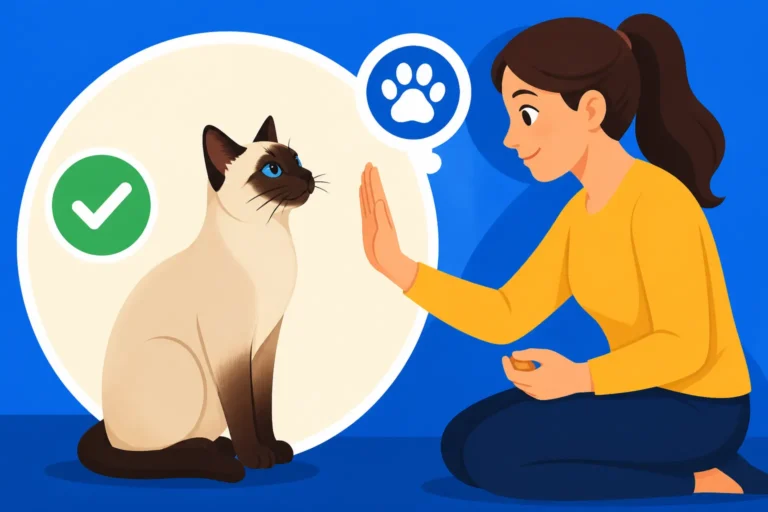
One of the most effective strategies is gradual desensitization. Start by closing doors for very short periods, perhaps just a minute or two, and then reopening them before your cat starts to meow loudly. Gradually increase the duration. The key is to reward silence, not vocalization. If your cat is quiet while the door is closed, even for a brief moment, praise them and offer a treat when you open the door. Conversely, never open the door when they are actively meowing or scratching. Wait for a lull, even a second of quiet, before you open it. This teaches them that meowing doesn't get the door open. It requires consistency, which can be tough when you're desperate for peace and quiet! You might find some helpful insights in Whether Ignoring a Siamese Cat's Meowing Works and How to Teach a Siamese Cat a Quiet Cue. For distracting treats, you can find a huge variety of enticing options on Amazon that might keep their attention away from the door for those crucial quiet moments.
Providing Alternative Enrichment
A bored Siamese is a mischievous and vocal Siamese. If your cat is constantly demanding attention at closed doors, it might be a sign they need more mental and physical stimulation. Ensure they have plenty of toys, scratching posts, and opportunities for play throughout the day. Puzzle feeders are excellent for keeping their clever minds engaged, especially when you need to close a door for a while. Many innovative designs are available on Amazon that can turn mealtime into a stimulating challenge. Vertical space is also crucial; cat trees, shelves, or window perches give them elevated vantage points, which can help satisfy their curiosity and surveillance instincts without needing access to every room. Consider adding a bird feeder outside a window that your Siamese has access to, offering them a live-action show to watch. Providing plenty of Enrichment for a Siamese Cat That Gets Bored in an Hour is a proactive step in managing their door-related demands.
Strategic Door Management
It's important to differentiate between doors that must remain closed (like a bathroom door for privacy or a utility room for safety) and those that can be open. For rooms that don't absolutely require full closure but you want to delineate space, consider using a pet gate or baby gate. This allows them to see into the room, fulfilling some of their curiosity, while still providing a physical barrier. There are many stylish and effective pet gates available on Amazon that can blend into your home decor. For doors that must be closed, try to make the "other side" less appealing, or the accessible side more appealing, before you close it. For instance, engage in a vigorous play session or offer a special treat right before you close the door, so they're otherwise occupied.
Here's a quick comparison of strategies:
| Strategy | Description | Pros | Cons |
|---|---|---|---|
| Gradual Desensitization | Close doors for increasing short periods, only rewarding silence with treats/praise when you open the door. Never open when meowing. | Teaches the cat that quiet behavior is rewarded; can reduce meowing over time. | Requires extreme consistency and patience; can be frustrating to implement when desperate for quiet. |
| Enrichment | Provide ample toys, puzzle feeders, cat trees, and interactive play sessions to keep the cat stimulated. | Addresses boredom, a common underlying cause; improves overall well-being. | Requires effort and investment in toys/playtime; may not fully stop door meowing if core need for companionship isn't met. |
| Strategic Door Use | Identify essential closed doors vs. optional ones. Use pet gates for semi-closure. Distract cats before closing doors. | Offers a middle ground for privacy; can reduce intensity of door demands; enhances safety for certain rooms. | May not be feasible for all doors; gates can be tripped over; still requires some management from the owner. |
| Addressing Underlying Issues | Consult a vet if meowing is new or excessive. Consider professional advice for separation anxiety. | Identifies and treats medical causes; provides tailored behavior modification plans for anxiety. | Can be costly; requires professional diagnosis; behavior changes can take time to implement. |
Addressing Underlying Issues
Sometimes, excessive meowing at closed doors, or any increase in vocalization, isn't just a quirky Siamese trait; it can be a sign of an underlying medical issue or significant stress. If your Siamese suddenly starts meowing more intensely or frequently at closed doors, especially if it's accompanied by other behavioral changes, a vet visit is always a good idea. They can rule out pain, discomfort, or age-related conditions that might be making your cat more needy or disoriented. Our article on When a Siamese Cat's Meowing Means Pain offers valuable insights, as does Signs a Siamese Cat Is Unwell.
Furthermore, if the meowing is accompanied by destructive behavior, inappropriate urination, or excessive grooming when you're not home, it could point to separation anxiety. Siamese cats are particularly prone to this due to their strong bond with their humans. In such cases, a vet or a qualified feline behaviorist can offer tailored strategies, which might include environmental changes, behavioral modification techniques, or in some instances, medication. Understanding What Separation Anxiety Looks Like in a Siamese Cat is crucial for addressing this deeper issue.
The Unavoidable Truth: Some Meowing is Just… Siamese
After all the strategies and efforts, there's a fundamental truth about living with a Siamese cat: they are inherently vocal. It's part of their charm, their personality, and their lineage. While you can manage and reduce the intensity of their closed-door protests, completely silencing a Siamese is often an impossible, and perhaps even undesirable, goal.
Accepting Their Nature
Part of being a Siamese owner is embracing their unique communication style. Their meows, yowls, chirps, and trills are how they interact with their world and with you. While a prolonged, frustrated yowl at 3 AM can be grating, many Siamese owners eventually learn to appreciate the "conversation." It's a testament to their strong personality and their desire to be seen and heard. Our post Why a Siamese Cat Meows So Much delves into this aspect of their personality. Just remember that it is not personal; it's simply how they are wired.
When to Embrace the Conversation
Sometimes, the best approach is to acknowledge their vocalization without necessarily giving in to their demands. A simple, calm "I hear you, sweetie" from the other side of the door, without opening it immediately, can sometimes reassure them that you're there and you're listening, even if you're not granting immediate access. You'll also learn the nuances of their vocalizations – the difference between a "I'm bored" meow, a "feed me now" yowl, and a genuine "I'm concerned" cry. The older they get, the more their voice may change and deepen, which you can learn more about in How a Siamese Cat's Voice Deepens With Age. Ultimately, living with a Siamese means engaging with their vocal world, and sometimes, that means having a bit of a chat through a closed door. They want to be part of your life, and their meows are simply their way of reminding you of that fact, over and over again.
Disclaimer
This article is for general informational purposes only and does not constitute professional advice. Laws, prices and regulations vary by location and change over time. Consult a qualified professional for guidance on your specific situation.