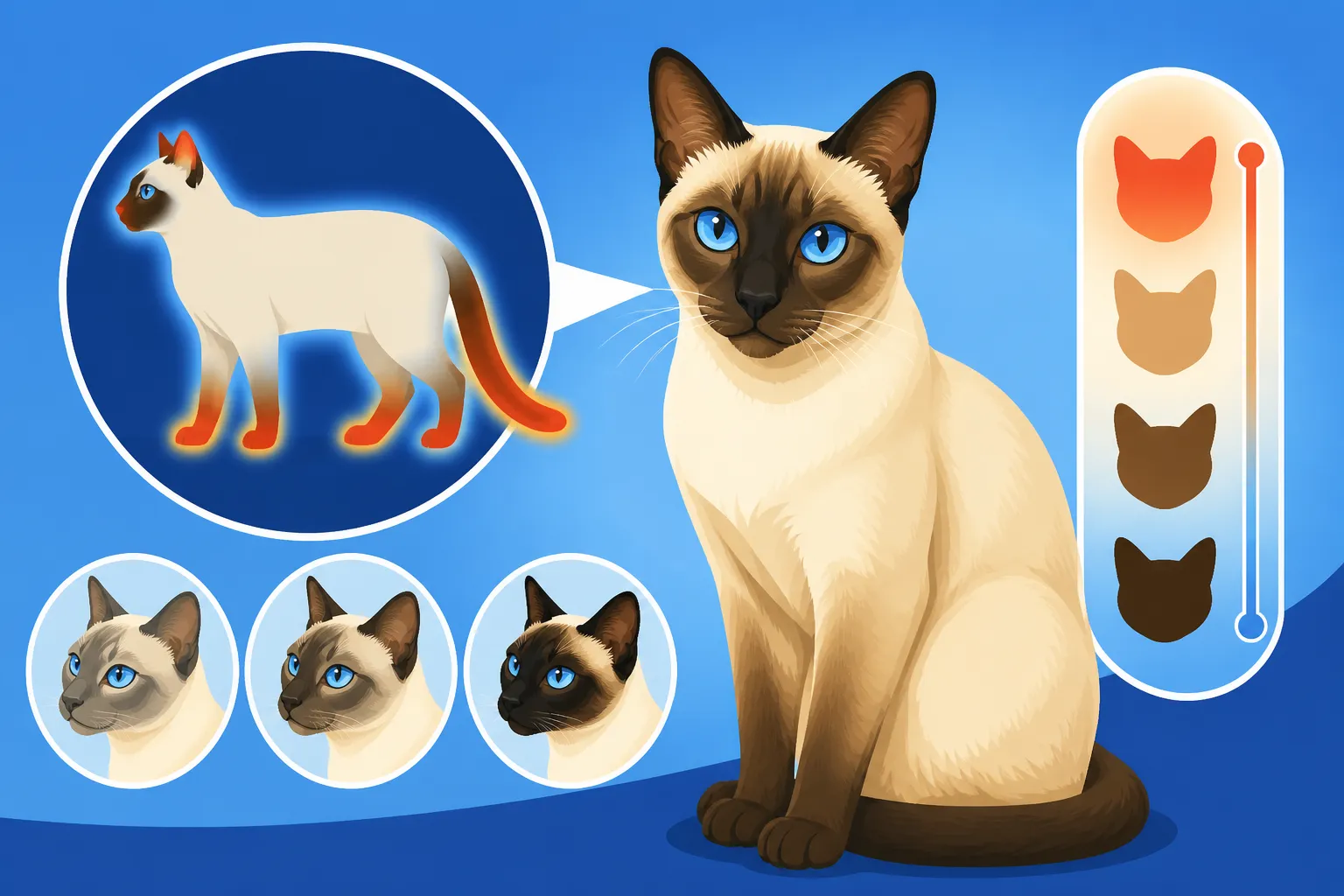
What Point Coloration in a Siamese Cat Is
One of the most captivating things about Siamese cats is their striking color pattern, yet many new owners are surprised to learn that these beautiful felines aren't actually born with their distinctive dark points. This can lead to a lot of questions and even a little worry as kittens grow. If you've ever wondered how your Siamese cat developed those gorgeous dark ears, paws, and tail, or why their body might change shade over time, you're in the right place. This guide will dive deep into the fascinating genetics and environmental factors that create the iconic point coloration in Siamese cats, helping you understand this unique aspect of your beloved companion.
The Genetic Marvel Behind Siamese Point Coloration
The unique "point" coloration of the Siamese cat is truly a genetic marvel, setting them apart from almost every other feline breed. It's not just a random coat pattern; it's a direct result of a specific genetic mutation that interacts with temperature. Understanding this scientific ballet helps us appreciate just how special these cats are.
The Temperature-Sensitive Gene and Tyrosinase Mutation
At the heart of the Siamese cat's distinctive look is a gene responsible for producing an enzyme called tyrosinase. This enzyme is crucial for melanin production, which is what gives fur its color. In Siamese cats, there's a specific mutation in this gene, making the tyrosinase enzyme temperature-sensitive. This means it only functions effectively in cooler temperatures. Think of it like a tiny, furry thermometer dictating where the color goes!
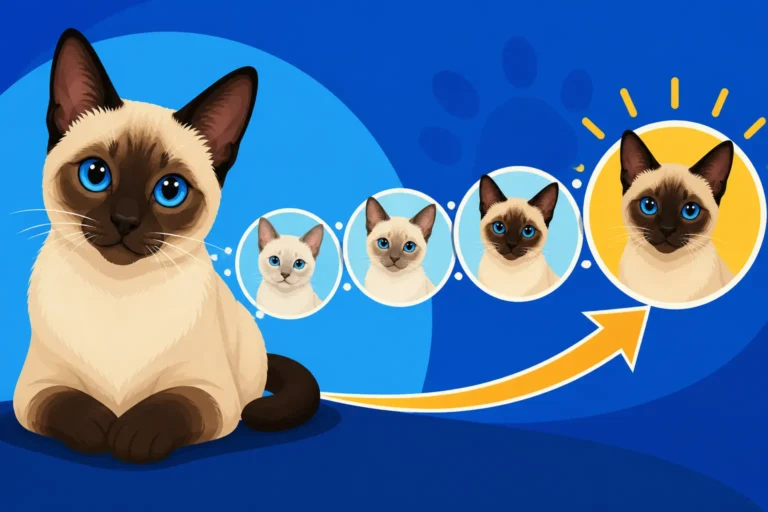
When a Siamese kitten is developing in its mother's warm womb, the enzyme is largely inactive across its entire body because the internal temperature is consistently warm. This is Why a Siamese Cat Kitten Is Born White. There's no cooler environment for the tyrosinase to "turn on" and start producing pigment. Once they're born and exposed to the outside world, their body temperature in different areas starts to vary, and that's when the magic begins. The cooler extremities, like the ears, nose, paws, and tail, become the perfect spots for the tyrosinase to activate, leading to the development of the darker points we all know and love. It’s a beautifully intricate biological process that results in their stunning appearance. You might want to learn more about Which Gene Makes a Siamese Cat's Points.
How Temperature Controls Pigment Production
The concept of temperature controlling color might sound a bit like science fiction, but for the Siamese cat, it's their everyday reality. Essentially, the enzyme needed for pigment production literally "shuts off" or becomes much less efficient when temperatures rise above a certain threshold. Conversely, it kicks into high gear in cooler areas. This is why their core body, which remains consistently warmer, stays a lighter cream or ivory shade, while their extremities, which are naturally cooler, develop that deep, rich point color.
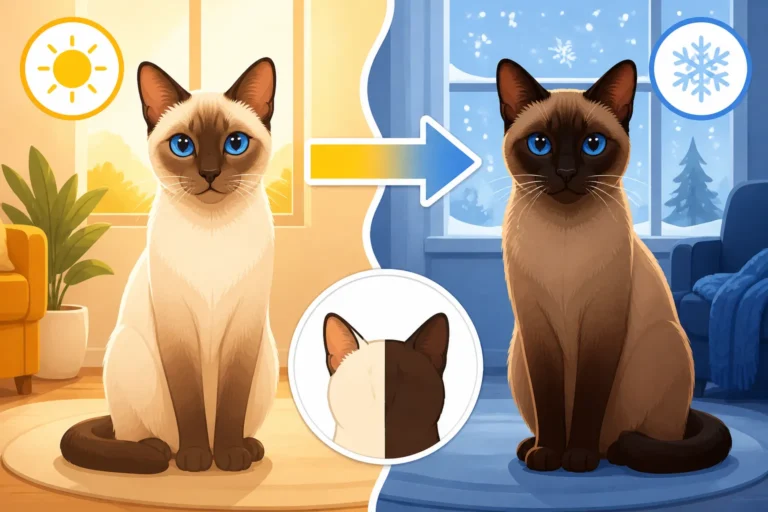
Imagine your Siamese cat snuggling up on a cool tile floor on a hot day. The parts of their body touching that cooler surface might encourage a slightly darker shade, though it’s a subtle effect over time. Conversely, if they spend a lot of time in a very warm environment, their points might not develop as dark as they would otherwise. This direct correlation between ambient temperature and melanin production is precisely How Temperature Controls a Siamese Cat's Color. It's a constant, dynamic process that continues throughout their lives, making their coat a living canvas of their environment and genetics.
The Evolution of Color: From Kitten to Adult
The journey of a Siamese cat's coat color from a tiny, pale kitten to a fully pointed adult is one of the most remarkable transformations in the feline world. It's a visual diary of their growth and interaction with their environment.
When the Points Start to Show
That moment when a Siamese kitten's points first begin to emerge is truly special. As we discussed, they're born white or a very pale cream. Within the first week or two, you'll start to notice a faint blush of color on their ears, nose, and tail. It's usually a very subtle shading, almost like a shadow, rather than a distinct dark point. This initial tint becomes more pronounced over the following weeks and months as the kitten grows and spends more time outside the consistent warmth of the litter pile and mom's belly. By the time they are 3-4 weeks old, the points are usually clearly visible, and by 8-12 weeks, their full point pattern is typically well-established, though still developing. This early development phase is fascinating to watch, marking the start of their iconic appearance. To delve deeper, check out The Age a Siamese Cat Kitten Gets Its Points.
Factors Influencing Point Color Intensity
Several factors play into how dark and rich a Siamese cat's point coloration ultimately becomes. Genetics certainly lay the groundwork, determining if they will be a Seal Point, Blue Point, Chocolate Point, or Lilac Point. However, environmental factors also have a significant role.
- Ambient Temperature: This is perhaps the most influential factor. Cats living in cooler climates or in homes that are kept cooler tend to develop darker, more intense points over their lifetime. Conversely, a Siamese cat living in a consistently warm climate or a very warm house might have paler points and a slightly darker body color than their genetic predisposition might suggest. Think about it – their little enzymatic color factories are working overtime in the cold!
- Age: As a Siamese cat ages, their body temperature can fluctuate slightly, and the enzyme responsible for pigment production continues its work. This often means that older Siamese cats tend to darken overall, with their body fur taking on more of the point color. This isn't always uniform; some areas might darken more than others, creating a richer, more nuanced palette. It's interesting to observe How Dark a Siamese Cat Gets With Age.
- Health and Nutrition: A healthy cat with a good diet will generally have a more vibrant coat, regardless of breed. While nutrition won't change a Seal Point into a Blue Point, optimal health supports robust hair growth and pigment production, ensuring the color that is produced is rich and lustrous. Brands like Chewy offer a wide range of high-quality cat foods that support overall coat health.
- Shaving or Injury: Here's a fun fact that perfectly illustrates the temperature-sensitive gene: if a Siamese cat ever has a patch of fur shaved (say, for surgery), the fur that grows back in that spot will often be darker. This is because the shaved area is temporarily cooler, tricking the tyrosinase enzyme into producing more pigment. As the fur grows out and insulating effect returns, the color might lighten again, but it's a vivid demonstration of The Shaved Patch That Grows Back Dark on a Siamese Cat.
This intricate interplay of genetics and environment means that no two Siamese cats will ever have exactly the same coloration, even those from the same litter. Each one is a unique work of art!
The Spectrum of Siamese Point Colors
While the mechanism behind point coloration is the same for all Siamese cats, the specific colors of their points can vary, creating a beautiful spectrum of possibilities. These different point colors are determined by other genes that affect the type and density of melanin produced.
The Traditional Four Point Colors
Historically, the Siamese breed was recognized in four primary point colors, which remain the foundation of the breed today:
- Seal Point: This is often considered the original or most classic Siamese color. Seal Points have deep, dark brown points that are almost black, providing a striking contrast against their cream to fawn-colored bodies. Their nose leather and paw pads are also a very dark brown. What a Seal Point Siamese Cat Is offers more detail on this classic look.
- Blue Point: Blue Points feature points that are a deep, slate-gray or blue, often described as a cold, icy tone. Their bodies are typically an off-white or bluish-white, creating a softer, more delicate contrast than the Seal Point. Their nose leather and paw pads are slate gray. These cats often appear quite ethereal with their cool coloring.
- Chocolate Point: For those who prefer a warmer brown, the Chocolate Point is a delightful choice. Their points are a rich, warm milk-chocolate brown, much lighter than the Seal Point's darker shade. Their bodies are usually ivory, and their nose leather and paw pads are a warm cinnamon-pink or chocolate.
- Lilac Point: The Lilac Point is the palest and most delicate of the traditional four. Their points are a soft, frosty gray with a pinkish undertone, often described as a "dove gray" or "pinkish-gray." Their bodies are an almost pure white, offering a very subtle contrast. Their nose leather and paw pads are lavender-pink. Many find What a Lilac Point Siamese Cat Is to be an exquisite, rare beauty.
These four colors are what truly define the traditional Siamese and are recognized by most major cat registries.
Beyond the Classics: Other Recognized Point Variations
Over time, through selective breeding and outcrossing, other point patterns and colors have emerged and gained recognition, often under different breed names (like Colorpoint Shorthair) or as accepted variations within the Siamese itself by certain registries.
- Red Point (or Flame Point): These cats have orange or reddish-cream points, which are quite distinct from the browns and grays. Their bodies are typically cream to white.
- Cream Point: A diluted version of the Red Point, featuring soft, pale cream points.
- Lynx Point (or Tabby Point): This is a fascinating variation where the points display distinct tabby stripes. You'll see rings on the tail, stripes on the legs, and an "M" shape on the forehead within the point coloration. This pattern can come in Seal Lynx, Blue Lynx, Chocolate Lynx, and Lilac Lynx.
- Tortie Point: These points are a mix of two colors, typically red or cream mottled with one of the traditional point colors (e.g., Seal Tortie Point, Blue Tortie Point). This pattern is almost exclusively seen in female cats due to the genetics of red color expression.
It's important to note that the acceptance of these "non-traditional" point colors as purebred Siamese can vary greatly between different cat associations and regions. Some registries created entirely new breeds, such as the Colorpoint Shorthair, to encompass these additional colors while maintaining the Siamese body type. Regardless of classification, these cats are all stunning examples of how the temperature-sensitive gene creates such a diverse and beautiful range of coat patterns. If you're looking for specialized products for any Siamese cat, whether a classic Seal Point or a rarer Lynx Point, online retailers like Amazon offer a huge selection of cat beds, food dishes, and grooming tools to keep them comfortable and happy.
Caring for Your Siamese and Their Unique Coat
Understanding your Siamese cat's point coloration isn't just about appreciation; it also informs some aspects of their care. Their short, fine coats and temperature-sensitive genetics mean they have some unique considerations.
Maintaining Coat Health and Color
While you can't fundamentally change your cat's genetic point color, you can certainly help maintain their coat's health and vibrancy, and even influence the intensity of their points to some degree.
- Consistent Indoor Temperature: If you prefer your Siamese to maintain a lighter body color and distinct points, keeping your home at a consistent, comfortable temperature is key. Avoid extreme cold, which can cause their body to darken overall, sometimes referred to as "smudging" of their points. Conversely, consistently hot environments might lead to slightly paler points. A balanced, comfortable indoor climate is usually best. Remember that How Much a Siamese Cat Darkens in a Cold House can be quite noticeable over time. You might even find your Siamese curling up in Why a Siamese Cat Should Not Sleep on Cold Tile.
- Nutrition: A high-quality diet rich in essential fatty acids (like Omega-3 and Omega-6) is vital for a healthy, shiny coat. These nutrients contribute to skin health and hair follicle integrity, ensuring that the fur that does grow is strong and lustrous. Many premium cat foods available on platforms like Chewy offer formulations specifically designed for skin and coat health. While it won't change a Blue Point to a Seal Point, good nutrition ensures the color they do have is as vibrant as possible.
- Grooming: Siamese cats have very short, fine coats that don't require extensive grooming, but regular, light brushing is still beneficial. It helps remove loose hairs, distributes natural oils, and provides a gentle massage that stimulates circulation. A simple rubber curry brush or a grooming mitt works wonderfully and takes just a few minutes a week. This also gives you a chance to bond with your cat and check their skin and coat for any issues.
Protecting Sensitive Areas
The areas that develop the darkest points are often the most exposed parts of your Siamese cat's body: their ears, nose, and paw pads. While generally resilient, these areas can be a bit more sensitive to extreme conditions.
- Ear Care: Siamese cats often have large, prominent ears, which are typically very dark. While their ears don't usually require much attention, it's a good practice to periodically check them for cleanliness. A quick, gentle wipe with a soft, damp cloth can remove any dust or wax buildup. If you notice excessive wax, redness, or your cat shaking their head, it's time for a vet visit, as this could indicate an ear infection. How Often a Siamese Cat's Ears Need Cleaning is usually quite minimal.
- Paw Pad Health: The paw pads are also darkly pigmented points. These are tough but can be susceptible to damage from rough surfaces or extreme temperatures (very hot pavement, icy ground). For indoor cats, this is rarely an issue, but if your Siamese ventures into a secure catio or outdoors, be mindful of what they're walking on. Regular nail trims are also important for overall paw health, as overgrown nails can impact their gait.
- Sun Exposure: While not directly affecting their point color (beyond potentially making the body fur slightly warmer and thus lighter over very long exposure), prolonged sun exposure is generally not good for any cat's skin, especially those with lighter body fur. Ensure your Siamese has plenty of shaded spots if they enjoy sunbathing.
By understanding the unique biology behind their stunning point coloration, you can provide the best possible care for your Siamese, ensuring they remain healthy, vibrant, and incredibly beautiful throughout their The Fifteen to Twenty Years a Siamese Cat Gets.
Disclaimer
This article is for general informational purposes only and does not constitute professional advice. Laws, prices and regulations vary by location and change over time. Consult a qualified professional for guidance on your specific situation.