Why a Siamese Cat Sleeps Under the Duvet
It’s a sight many Siamese cat owners know all too well: you settle into bed, pull up the covers, and suddenly, there’s a lump under the duvet that isn't you. Or perhaps you walk into the living room to find an empty cat bed, only to discover your sleek, vocal companion is burrowed deep within the sofa cushions or your carefully made bed. This guide will delve into the fascinating reasons why Siamese cats have such a strong affinity for sleeping under the covers, exploring their unique physical traits and deep-seated instincts, and offering practical ways to keep your feline friend both safe and perfectly content.
The Siamese Cat's Innate Need for Warmth
If you've ever felt a Siamese cat's fur, you know it's different from many other breeds. Their sleek, short coats are part of their charm, but they also contribute significantly to their desire for warmth. Understanding their unique physiology helps us understand why they gravitate toward the coziest spots in the house – often, right under your covers.
A Coat That Craves Cozy
Unlike many other cat breeds that boast a thick undercoat, Siamese cats have a single layer of very fine, short fur. This is a genetic trait that makes them feel incredibly soft to the touch, almost like velvet, but it also means they lack the natural insulation that a double coat provides. Think of it like a human wearing a light t-shirt in winter versus a heavy wool sweater. While that t-shirt might look stylish, it won't keep you warm when the temperature drops. The same applies to your Siamese.
Because their fur isn't designed for extreme cold, they are much more sensitive to drafts and cooler room temperatures than a Maine Coon or a Persian might be. This lack of insulation means their body heat dissipates more quickly. So, when your Siamese snuggles under the duvet, they're not just being cute; they're actively seeking to regulate their body temperature and maintain that purr-fectly warm state they crave. It's a natural, instinctive behavior born from their physical makeup. If you want to learn more about their unique fur, you might find What a Siamese Cat's Coat Feels Like interesting.
How a Siamese Cat's Body Temperature Works
A cat's normal body temperature is generally a bit higher than a human's, typically ranging from 100.4 to 102.5 degrees Fahrenheit (38 to 39.2 degrees Celsius). To maintain this, they are incredibly efficient at seeking out external heat sources. For a Siamese, with their less insulating coat, this drive is even more pronounced. They're like little heat-seeking missiles, always on the lookout for a warm spot.
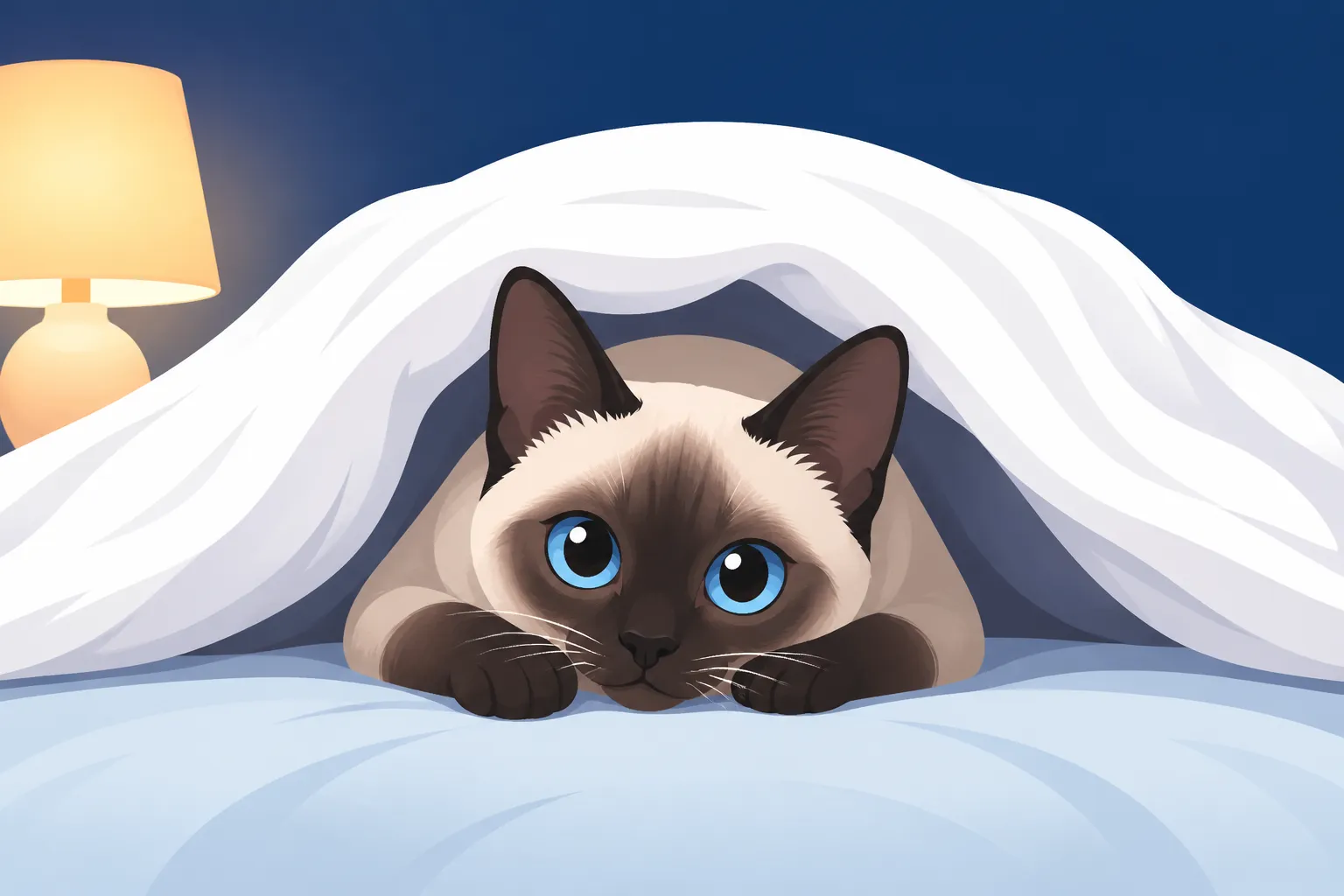
When your home gets chilly, even just a few degrees below what they prefer, a Siamese cat will quickly feel the difference. You might notice them gravitating towards sunbeams, sitting on a radiator, or yes, burrowing under blankets. The duvet acts like a personal, insulated cave, trapping their body heat and creating a wonderfully snug microclimate. This isn't just about comfort; it's about their physiological need to conserve energy and keep their internal thermostat happy.
Environmental Factors That Drive Them Under
The temperature of your home plays a huge role in your Siamese cat's quest for cover. Even if you feel comfortable in a sweater, your Siamese might be feeling a bit nippy. Homes with drafts, large windows, or simply those kept at a cooler setting for human comfort can prompt your Siamese to find their own solutions for warmth.
Consider the ambient temperature, especially at night or during colder seasons. How Warm a Room a Siamese Cat Needs is a common question, and generally, they prefer temperatures on the warmer side, perhaps a few degrees higher than what most people set their thermostats to. They'll also seek out warmth if they're not feeling 100% well, as warmth can provide a sense of comfort when they're under the weather. Observing their preference for the duvet can sometimes be a subtle cue to adjust the thermostat or provide more designated warm spots for them.
Seeking Security and Comfort in a Snuggly Den
Beyond just warmth, the act of burrowing under covers speaks to a cat's instinctual need for security and comfort. For a Siamese, with their often sensitive and intelligent nature, a cozy, enclosed space can provide immense peace of mind.
The Allure of a Safe Enclosure
Cats, at their core, are both predator and prey. This dual nature means they inherently seek out places where they feel safe and hidden. A duvet or a pile of blankets creates a natural den – a small, dark, enclosed space where they can feel protected from potential threats, real or imagined. In a busy household, this might be a child, a dog, or even just the general hubbub of daily life.
The feeling of being surrounded and slightly compressed by blankets can be incredibly soothing for a cat. It mimics the feeling of being nestled in a secure hiding spot in the wild, or perhaps even being cradled by their mother as a kitten. This sense of security reduces stress and allows them to truly relax into a deep, restorative sleep. For a breed that can sometimes be prone to anxiety, having such a reliable safe haven is invaluable.
Mimicking a Mother's Embrace
When kittens are very young, they huddle together with their mother and siblings, creating a warm, safe pile. This close physical contact is essential for their development, providing not only warmth but also profound psychological comfort. The feeling of being completely enveloped by soft, warm material, like a duvet, can powerfully evoke these early, positive experiences.
For your Siamese, burrowing under the covers can be a regression to this primal, comforting state. It’s a place where they feel completely secure, loved, and protected, much like they did with their mother. This deep-seated need for comfort and security often manifests in behaviors like kneading, purring, and seeking out enclosed spaces. It’s a reminder that even our sophisticated feline companions carry ancient instincts.
Sensory Comforts of Soft Bedding
Let's be honest, who doesn't love the feel of soft, clean bedding? For a Siamese, with their sensitive whiskers and finely tuned sense of touch, the texture of a duvet cover, a plush blanket, or even a fleece throw can be incredibly appealing. The soft fabric provides a gentle pressure that can be very calming, almost like a weighted blanket for humans.
Moreover, your bedding carries your scent. Cats are highly scent-oriented creatures, and the familiar, reassuring smell of their favorite human acts as an additional layer of comfort and security. It's a testament to the strong bond you share that they choose to immerse themselves in your personal space, surrounded by your familiar aroma. Providing them with their own soft, clean blankets on their beds, perhaps even with an old t-shirt of yours, can offer similar sensory comfort, though nothing quite compares to the "real thing" under your covers.
The Social Siamese: Closeness and Connection
Siamese cats are renowned for their outgoing personalities and their deep, almost dog-like attachment to their human companions. Their desire to sleep under the duvet is often an extension of this powerful bond, a clear sign they want to be as close to you as possible.
Bonding Through Proximity
If you own a Siamese, you know they aren't shy about expressing their affection. They're often called "Velcro cats" for a reason – they want to be where you are, doing what you're doing, and preferably touching you in some way. Sleeping under the duvet is the ultimate expression of this desire for closeness. It's not just about being in the same room; it's about sharing your most intimate space, feeling your warmth, and hearing your heartbeat.
This behavior strengthens the bond between you and your cat, creating a shared sense of security and companionship. They feel safe with you, and by allowing them into your sleeping space, you reinforce that trust and connection. For a breed that thrives on interaction, sharing a bed is often the pinnacle of their emotional connection with their person. A Siamese Cat Will Not Be Ignored, and this certainly extends to bedtime!
Attention-Seeking and Shared Routines
Siamese cats are incredibly intelligent and observant. They quickly learn routines and understand how to get your attention. If snuggling under the covers has resulted in positive attention, extra pets, or a soothing voice, they'll certainly repeat the behavior. It becomes part of their routine, a comforting ritual for both of you.
They might even develop a specific bedtime routine, waiting for you to get into bed before they make their move, or patiently standing on the bed, looking at the duvet until you lift it for them. This isn't just about demanding attention; it's about participating in the household's rhythm and feeling like an integral part of the family. If they feel bored or under-stimulated during the day, this closeness at night can become even more important for them.
Managing Separation Anxiety and Loneliness
Because Siamese cats form such strong bonds, they can sometimes be prone to separation anxiety. Being left alone for long periods can be distressing for them, and the nights can feel particularly lonely. Sleeping under the duvet, close to you, can alleviate these feelings. It's a way for them to feel your continuous presence, even when you're both asleep.
If you suspect your Siamese might be experiencing separation anxiety, their duvet-diving could be a symptom. Other signs might include excessive vocalization, destructive behavior when you're away, or inappropriate urination. While sharing your bed can help them feel more secure, it's also worth looking into overall strategies to manage anxiety. Providing plenty of enrichment during the day, such as puzzle toys or interactive play, can help. Consider if How Long a Siamese Cat Can Be Left Alone might be a factor, or whether Signs a Siamese Cat Has Separation Anxiety align with your cat's behavior. In some cases, a companion animal might even be beneficial, as discussed in Whether a Siamese Cat Is Happier in a Pair.
Practical Tips for a Duvet-Loving Siamese
While having your Siamese cat snuggle under the covers can be utterly charming, it's essential to ensure their safety and offer them options for comfort. We want our Meezers to be happy, healthy, and cozy, whether they're with us or in their own designated warm spot.
Creating Alternative Warm Spots
You might adore sharing your bed, but perhaps there are times when you'd prefer your Siamese to have their own cozy retreat. The good news is that you can create appealing alternatives that cater to their love for warmth and security.
- Heated Beds: These are a game-changer for warmth-loving cats. Look for electric heated beds designed specifically for pets, available on sites like Chewy or Amazon. Many are low-wattage and thermostatically controlled to stay at a safe, comfortable temperature. Place it in a quiet corner, perhaps even under a small blanket, to create that den-like feel.
- Insulated Beds: Even non-electric beds can be incredibly warm if they're well-insulated or designed with high sides. A self-warming pet bed, which uses a thermal layer to reflect the cat's own body heat, can be very effective.
- Warm Blankets: Provide several soft, fleece, or faux-fur blankets in various locations around the house. Drape them over cat trees, in cardboard boxes, or inside pet carriers to make inviting hideaways. They love to burrow, so a pile of blankets is often more appealing than a flat one.
- Window Perches: If you have a sunny window, a soft perch can be an excellent warm spot during the day. The natural sunlight provides delightful warmth.
By offering a variety of appealing, warm, and secure spots, you increase the chances your Siamese will choose one of these instead of always heading for your duvet, especially during the day. This doesn't mean they'll abandon you at night, but it gives them more options for comfort throughout their day.
Ensuring Safety Under the Covers
While it's adorable to have your Siamese burrowing under the duvet, safety should always be your top priority. Accidents can happen, and a cat, especially a kitten, could inadvertently get too warm or even trapped.
Here are some safety considerations:
- Ventilation: Ensure there's always an easy escape route. Don't let your cat get completely encased in blankets where air circulation is severely restricted. A duvet that is pulled tight all around them could pose a risk.
- Awareness: Always be aware of where your cat is before you get into bed or shift your body position dramatically. Many owners have accidentally rolled over on their tiny, hidden companions. A quick pat-down of the bed or a gentle call to your cat can prevent an unfortunate incident.
- Temperature Regulation: While they seek warmth, overheating is a risk. If your Siamese seems excessively panting or restless under the covers, gently encourage them out. Young kittens or very old, frail cats might have more difficulty regulating their temperature.
- No Heavy Blankets: Avoid very heavy blankets, like thick weighted blankets, that could make it difficult for a smaller cat to move or breathe freely if they get too tangled.
- Monitoring Kittens: For tiny kittens, extra vigilance is needed. They are less experienced at navigating bedding and can be more susceptible to overheating or getting trapped. It might be safer to encourage very young kittens to sleep in a warm, secure bed right next to yours rather than directly under the covers.
A simple table can help compare options for keeping your Siamese cozy:
| Comfort Option | Pros | Cons | Best Use Case |
|---|---|---|---|
| Under the Duvet | Ultimate warmth, security, bonding, proximity | Potential safety risks, shared space | Nighttime sleep with vigilant owner |
| Heated Pet Bed | Consistent warmth, safe, independent | Electricity cost, requires outlet | Dedicated napping spots, overnight sleep |
| Self-Warming Bed | No electricity, portable, easy to clean | Less intense warmth than electric | Mildly cool rooms, travel, daytime naps |
| Pile of Blankets | Customizable, soft, burrow-friendly | Can get messy, warmth depends on material | Supplementary comfort, creating multiple dens |
| Cat Cave/Igloo Bed | Enclosed security, dark, soft | Can be bulky, may not be warm enough alone | For cats who love hiding, can add a blanket inside |
When to Consult Your Vet About Behavior
Most of the time, a Siamese cat sleeping under the duvet is a normal, healthy, and endearing behavior. However, there are rare occasions when it could signal something more.
If you notice any sudden, drastic changes in your cat's hiding behavior, such as:
- Suddenly hiding much more than usual, even in situations where they used to be social.
- Hiding and also exhibiting other signs of illness like lethargy, loss of appetite, changes in litter box habits, or excessive vocalization (beyond their normal Meezer chatter!). Signs a Siamese Cat Is Unwell can be subtle, so pay close attention.
- Becoming unusually aggressive or fearful when you try to interact with them while they are hiding.
- Increased hiding coinciding with new stressors in the home (new pet, new person, house move).
These could be indicators of pain, illness, or significant stress or anxiety. While warmth and security are natural drives, an extreme shift in behavior warrants a check-up with your veterinarian. They can help rule out any underlying medical conditions and provide guidance on behavioral management strategies if needed. For instance, if your cat is always cold despite a warm house, it could indicate an issue with their metabolism or general health, so it's always worth mentioning to your vet during a routine wellness exam.
Ultimately, a Siamese cat seeking out the warmth and security of your duvet is a beautiful reflection of their unique personality and their deep love for you. By understanding these drives, you can ensure they are not only happy and cozy but also safe in their quest for the ultimate snuggle spot.
Disclaimer
This article is for general informational purposes only and does not constitute professional advice. Laws, prices and regulations vary by location and change over time. Consult a qualified professional for guidance on your specific situation.