The Breeds a Siamese Cat Founded
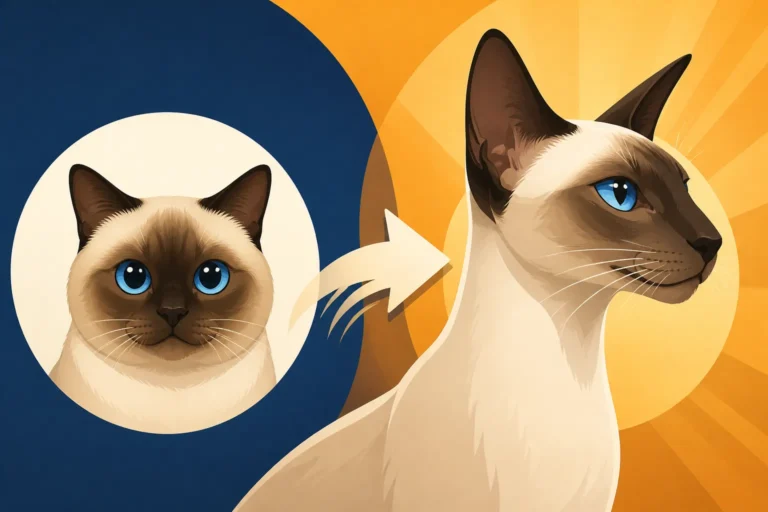
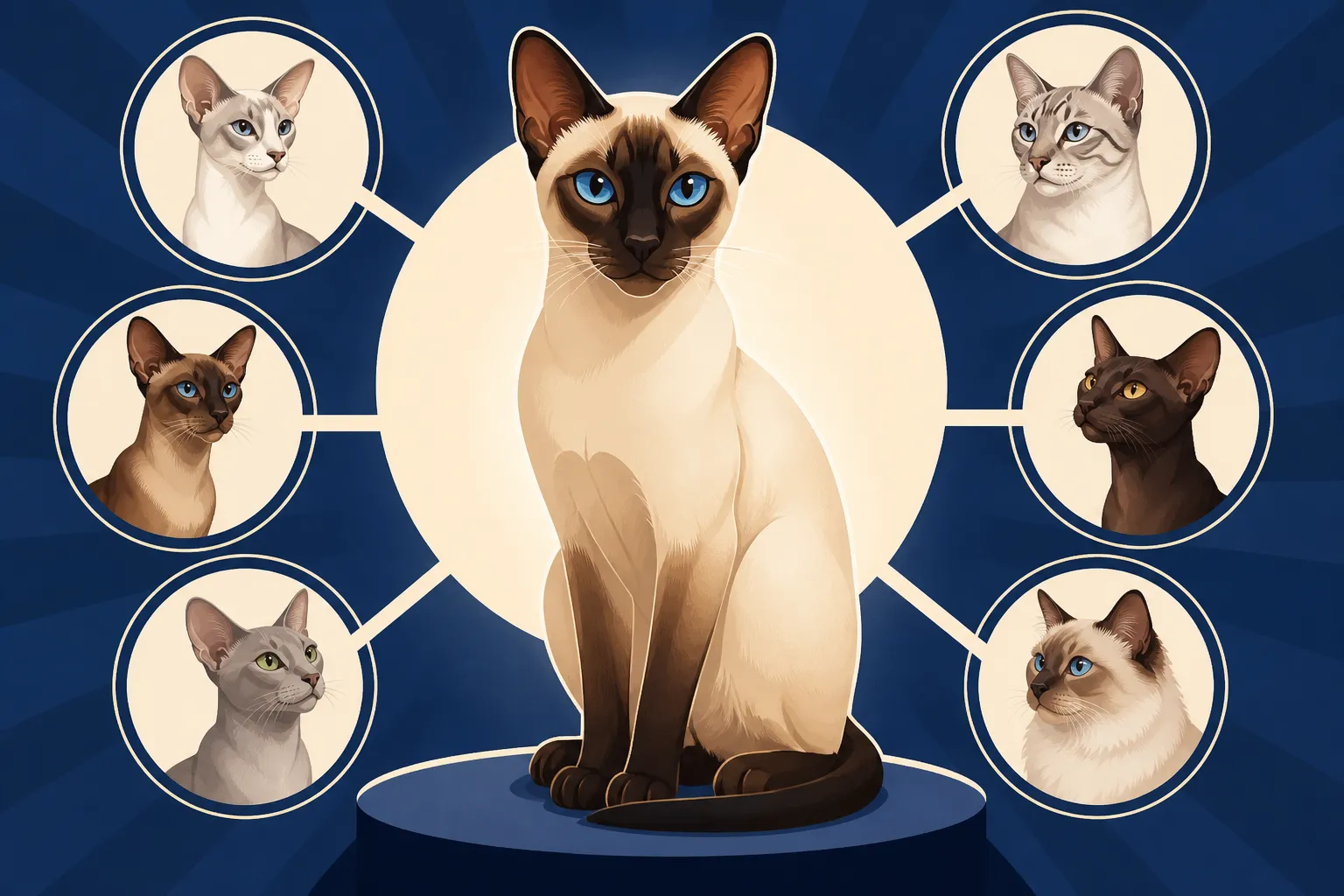
Have you ever looked at a cat breed that just feels a little bit Siamese, even if it's not a purebred Siamese? Maybe it has those striking blue eyes, that lean, elegant body, or that incredibly vocal personality. It’s not your imagination. The truth is, the Siamese cat isn't just a beautiful breed in its own right; it's a foundational stone in the world of cat breeding, responsible for helping to create a surprising number of other beloved breeds we know and adore today. This guide will explore the fascinating genetic legacy of the Siamese cat and uncover the diverse feline breeds that proudly carry its genetic signature.
The Genetic Powerhouse: Why the Siamese Cat is a Foundation Breed
The Siamese cat, with its distinctive color points, piercing blue eyes, and sleek, athletic build, isn't just a pretty face. It's a genetic marvel, a living blueprint that breeders have leveraged for over a century to create an array of new and exciting feline companions. Its unique genetic makeup has made it an indispensable ingredient in the development of many modern breeds, proving that sometimes, you've got to go back to the classics to innovate.
The Unique Siamese Genetic Traits
What makes the Siamese such a powerful genetic foundation? It really boils down to a few key, dominant traits that are highly desirable and relatively easy to pass on. The most obvious, of course, is the striking colorpoint pattern. This isn't just about aesthetics; it's a fascinating genetic expression where color only develops in cooler parts of the cat's body, resulting in those dark ears, paws, tail, and mask against a lighter body. Why a Siamese Cat Has Dark Points delves deeper into this scientific wonder. This specific gene acts like a signature, and breeders recognized its potential early on.
Beyond their iconic coloration, Siamese cats possess a host of other traits that breeders sought to incorporate into new lines. Their distinctive wedge-shaped head, large ears, and elegant, tubular body contribute to an overall aesthetic of refinement and grace. But it's not just about looks; the Siamese temperament plays a huge role too. They are incredibly intelligent, highly vocal, and deeply affectionate, often described as "dog-like" in their devotion to their human companions. Imagine trying to create a new breed and wanting to imbue it with not just stunning visuals but also an engaging, interactive personality. The Siamese offered all of this in spades.
Think about it from a breeder's perspective: you have a cat with a well-defined set of physical characteristics and a personality that makes it stand out. If you want to introduce these traits into another genetic line, or simply create variations on a theme, the Siamese is a powerful tool. Its genetic "package" is strong and predictable, making it a reliable starting point for controlled breeding programs designed to produce specific outcomes. This consistent genetic contribution is why it became such a cornerstone breed in the history of cat fancy.
Early Breeders' Vision: Expanding on the Siamese Blueprint
The early 20th century saw a burgeoning interest in cat breeding, moving beyond simply admiring natural varieties to actively developing new ones. Breeders weren't content with just the four traditional Siamese point colors (seal, chocolate, blue, and lilac); they saw potential for a wider spectrum of colors and patterns, while still retaining the undeniable elegance and charm of the Siamese. Their vision was to take that beautiful Siamese "type" – that lean, muscular body, the fine bone structure, the expressive eyes – and wrap it in different coats.
This desire for diversification wasn't driven by dissatisfaction with the Siamese itself, but rather by an appreciation for its core qualities. Imagine a skilled artist who loves a particular canvas but wants to experiment with new paints and techniques. The Siamese was that perfect canvas. Breeders wanted cats with the same active, intelligent disposition and sleek lines but perhaps with solid colors, different eye colors, or even longer fur. It was about expanding the aesthetic possibilities without losing the essence of what made the Siamese so captivating.
These pioneering breeders embarked on meticulous programs, often involving outcrossing the Siamese to various domestic cats or other purebreds, and then carefully backcrossing to Siamese lines to solidify the desired traits. This wasn't a quick process; it involved generations of selective breeding, careful record-keeping, and a deep understanding of genetics. Their success is evident in the sheer number and variety of breeds that trace their lineage directly back to the humble, yet genetically potent, Siamese cat.
From Siamese to Oriental Shorthair: Expanding the Color Palette
One of the most direct and impactful results of leveraging the Siamese genetic blueprint was the creation of the Oriental Shorthair. This breed exists because enthusiasts adored the Siamese's physical type and personality but yearned for a broader spectrum of colors and patterns than the classic point coloration allowed.
The Desire for Solid Colors and Patterns
For many years, the beauty of the Siamese was intrinsically linked to its colorpoint pattern. However, some breeders and enthusiasts began to imagine what a Siamese would look like if it were dressed in a solid coat of ebony, a shimmering lavender, or even a bold tabby pattern, but without the points. The "restriction" of the colorpoint gene, while beautiful, limited the variety. They wanted a cat that moved with the same grace, spoke with the same vibrant voice, and possessed the same engaging intellect, but offered a whole new visual experience.
This wasn't a rejection of the Siamese; rather, it was a logical extension of its appeal. Think of it like a fashion designer who loves a particular silhouette but wants to offer it in every fabric and color imaginable. The frustration wasn't with the existing Siamese, but with the lack of options for that type of cat. People fell in love with the sleekness, the vocal nature, and the sheer charisma of the Siamese, and they wanted to experience those qualities in a wider array of coat patterns and solid colors that truly popped from head to tail.
The vision was clear: create a cat that was undeniably Siamese in every way except its color. This ambition set the stage for one of the most successful and widespread derivations from the Siamese line, opening up a world of possibilities for feline aesthetics while maintaining the core characteristics that made the Siamese so beloved.
The Breeding Program and its Results
The journey to create the Oriental Shorthair began with intentional crossbreeding. Typically, Siamese cats were bred with various domestic shorthairs and sometimes other purebreds like Russian Blues or Abyssinians, specifically chosen for their solid colors or interesting patterns. The goal was not just to introduce a new color gene, but crucially, to eliminate the colorpoint restriction. After the initial cross, the resulting kittens were often bred back to Siamese cats. This process, known as backcrossing, was vital to re-establish and strengthen the quintessential "Siamese type" – the long, elegant body, the whip tail, the distinctive head shape, and those large, expressive ears.
Imagine the painstaking work involved: carefully selecting individuals, observing traits across generations, and always keeping the ideal Siamese body and head type in mind. The breeders were looking for the best of both worlds: the vibrant personality and graceful physique of the Siamese, combined with the solid colors, tabbies, bi-colors, and smokes that were now possible. This diligent work meant that even though the Oriental Shorthair doesn't have the color points, its genetic heritage is undeniably Siamese, influencing everything from its bone structure to its vocalizations.
The result is a stunning array of cats, often affectionately called "plain-wrapped" or "self-colored" Siamese. You can find Oriental Shorthairs in literally hundreds of color and pattern combinations, from jet black to pristine white, vibrant red, striking tabbies, and subtle silvers. Yet, beneath that diverse coat, every Oriental Shorthair echoes its Siamese ancestors, sharing that same alert, intelligent expression and engaging, sometimes demanding, personality. It’s a testament to the power of selective breeding and the enduring appeal of the Siamese genetic blueprint.
How the Oriental Shorthair Came From the Siamese Cat
The Oriental Shorthair's story is one of direct lineage and deliberate refinement. How the Oriental Shorthair Came From the Siamese Cat provides a full narrative, but in essence, the breed was developed in the 1950s and 60s in both the UK and the US, specifically to produce cats of Siamese conformation but in non-pointed colors. Breeders started by crossing Siamese with other short-haired breeds, such as the British Shorthair, American Shorthair, and Russian Blue, primarily to introduce genes for solid colors and patterns.
These initial crosses produced kittens that carried the non-point restriction gene but often lacked the refined "type" of the Siamese. The next critical step was to meticulously breed these cats back to purebred Siamese cats over several generations. This was the process that solidified the classic Siamese body, head, and ear type, ensuring that the new color variations were presented on the familiar, elegant frame. It was a careful balance of introducing new genes while preserving the beloved form.
Today, the Oriental Shorthair is recognized as a distinct breed by all major cat registries, boasting an incredibly diverse coat palette. Despite this diversity, anyone familiar with the Siamese can immediately recognize its kin in the Oriental Shorthair's sleek lines, intelligent gaze, and often, its remarkably vocal nature. The shared temperament, energy level, and even the "meezer yowl" can be found in many Orientals, directly linking them to their Siamese foundation.
The Long-Haired Siamese: Birthing the Balinese
Imagine the elegant lines and striking points of a Siamese cat, but then add a luxurious, semi-long coat that flows gracefully. That's the Balinese, a breed that emerged from the Siamese line not through crossbreeding, but through a charming genetic surprise.
The Unexpected Long-Haired Kittens
In the mid-20th century, some Siamese breeders began noticing something unusual in their litters: occasionally, a kitten would be born with a longer, silkier coat than its short-haired siblings. These weren't fluffy, Persian-like coats, but rather a fine, flowing single coat without a dense undercoat, giving them a wonderfully elegant appearance. Initially, these "long-haired Siamese" were often viewed as anomalies or even genetic defects within the purebred Siamese breeding programs and were usually placed in pet homes without much fanfare.
However, a few visionary breeders saw these long-haired kittens not as mistakes, but as the beginning of something new and beautiful. They recognized that these cats possessed all the classic Siamese characteristics—the blue almond-shaped eyes, the distinct point coloration, the vocal nature, and the lithe body—but with the added allure of a semi-long coat. This unexpected genetic mutation, a recessive gene for long hair that had been lurking in some Siamese lines, presented an exciting opportunity for breed development.
Instead of dismissing them, these breeders began to selectively breed these long-haired individuals, aiming to establish a consistent type that retained all the grace and charm of the Siamese while embracing its new flowing attire. It was a testament to looking beyond the conventional and seeing potential where others saw divergence.
Developing the Balinese Breed Standard
Once the potential of these long-haired Siamese was recognized, the hard work of developing a distinct breed standard began. The goal was clear: to create a breed that was essentially a Siamese in every aspect except coat length. This meant ensuring that the Balinese retained the characteristic wedge-shaped head, the large, flaring ears, the lithe, muscular body, and the brilliant blue eyes that are hallmarks of the Siamese. The key differentiator would be that luxurious, single coat, which should lie close to the body and flow gracefully, particularly noticeable on the tail, where it forms a beautiful plume.
Breeders were meticulous in their selection, focusing on individuals that exhibited the most desirable Siamese features combined with the appropriate coat length and texture. It was a delicate balance to achieve, as they wanted a coat that was long enough to be distinct but not so dense or fluffy that it obscured the elegant lines of the body. The plumy tail, a signature feature, became a critical part of the standard, enhancing the overall impression of grace and refinement. Think of the intense focus required to consistently produce these traits across generations.
The efforts paid off, and the Balinese eventually gained recognition from major cat registries. This beautiful breed stands as a testament to how a natural genetic variation within an existing breed, when carefully nurtured and developed, can lead to the creation of an entirely new and equally captivating feline companion. It truly is the long-haired version of the classic Siamese, offering a different texture to an already beloved form.
How the Balinese Came From the Siamese Cat
The Balinese is one of the most direct derivatives of the Siamese, essentially being a long-haired version of its ancestor. How the Balinese Came From the Siamese Cat provides a detailed history. The breed originated in the United States in the mid-20th century, notably through breeders like Helen Smith of MerryMews Cattery and Sylvia Holland of Holland's Farm, who began breeding the unexpected long-haired kittens born to their purebred Siamese.
The long hair trait in these kittens was due to a naturally occurring, recessive gene. This meant that two short-haired Siamese parents could produce long-haired offspring if both carried the gene. Once these kittens appeared, breeders made the conscious decision to develop them into a new breed rather than discarding them. They continued to breed these long-haired cats, often back to short-haired Siamese carriers, to ensure that the exquisite Siamese body type, head shape, and point coloration were maintained.
The Balinese shares not only the physical traits of the Siamese but also many aspects of its personality. They are known for being equally vocal, intelligent, and affectionate, often forming strong bonds with their human families. The main distinction is the silky, medium-long coat, which often features a distinctive plume on the tail. It’s a wonderful example of how a subtle genetic variation can lead to the establishment of a cherished new breed, retaining the essence of its heritage while offering a fresh aesthetic.
The Siamese and American Shorthair Mix: Creating the Havana Brown
When you look at a Havana Brown, you might not immediately think "Siamese." It's a striking, solid brown cat with beautiful green eyes. However, its sophisticated charm and distinctive traits trace a clear lineage back to our vocal, pointed friends, showcasing another facet of the Siamese's versatility in breed development.
Seeking a New Brown Beauty
In the mid-20th century, a group of dedicated British breeders set out to create a truly unique cat: a solid, self-brown cat with green eyes, not a chocolate point Siamese. They envisioned a cat that was distinct, elegant, and had a rich, warm brown coat that was consistent from nose to tail, without any point restriction. This desire stemmed from a fascination with various brown-colored cats that had popped up in litters of Siamese, and an ambition to refine this color into a stable, recognizable breed.
The challenge was to achieve this specific coloration while avoiding the typical colorpoint pattern of the Siamese or the less refined appearance of a domestic short-hair. They wanted a cat that had a certain degree of elegance and refinement in its structure, but with a color that would make it stand apart. This wasn't about simply breeding for a brown cat; it was about creating a brown cat with a specific heritage and a defined aesthetic, one that would resonate with the growing sophistication of the cat fancy.
This quest for a specific "new brown" led them to carefully consider which existing breeds could contribute the necessary genetic building blocks. It required a thoughtful approach to genetics, understanding how to introduce certain traits while suppressing others, all in pursuit of their vision for a truly self-brown feline beauty.
The Role of the Siamese in the Havana Brown's Creation
The creation of the Havana Brown was a sophisticated genetic puzzle, and the Siamese cat provided crucial pieces. While the exact initial crosses are debated and varied, common ancestral breeds included Siamese, domestic shorthairs (often those with black or chocolate coloration), and sometimes even Russian Blues. The Siamese was instrumental in contributing not only its fine bone structure and elegant body type but also specific genes related to chocolate coloration.
One theory suggests that the earliest Havana Browns were essentially "self-brown" Siamese—that is, Siamese cats that carried the non-agouti gene and two copies of the chocolate gene, but somehow also lacked the colorpoint restriction, or were bred in a way to "remove" the points. By crossing Siamese with domestic cats carrying genes for solid colors, breeders could isolate and refine the desired rich brown hue. The backcrossing to Siamese lines in later generations helped to ensure that the Havana Brown retained a graceful, muscular build and an intelligent, engaging personality, echoing its Siamese roots.
While the Havana Brown doesn't have the pointed pattern, its lean physique, often large ears, and intelligent, sometimes inquisitive, green eyes subtly hint at its Siamese ancestry. These are not robust, cobby cats; they carry themselves with a certain elegance that many attribute to their Siamese foundation. The Siamese cat, therefore, played a critical role in shaping not just the color, but also the overall "type" and temperament of this unique and charming brown cat.
How the Havana Brown Came From the Siamese Cat
The Havana Brown's story begins in England in the 1950s, where breeders were keen to develop a self-brown cat. How the Havana Brown Came From the Siamese Cat details this fascinating journey. The earliest known Havana Brown was a kitten named Elmtower Bronze Idol, born in 1952, resulting from a cross between a Siamese and a domestic black cat. Subsequent breeding programs often involved Siamese cats, black domestic shorthairs, and sometimes Russian Blues.
The genetic contribution of the Siamese was multifaceted. Firstly, it provided the foundation for the elegant, medium-sized body type that the breeders desired, a contrast to the more cobby body of some other brown breeds. Secondly, and perhaps most importantly, the Siamese carried the recessive gene for chocolate coloration. By carefully breeding Siamese cats with cats carrying the non-agouti gene (which makes a solid color rather than tabby stripes), breeders were able to create a cat that was uniformly brown.
The Havana Brown's unique green eyes are another trait that distinguishes it, and while not directly from the blue eyes of a Siamese, the precise genetic combination achieved through these crosses allowed for this specific eye color to emerge consistently. Despite its solid brown coat, the Havana Brown often exhibits the same keen intelligence and affectionate, playful nature as its Siamese forebears, making it a wonderful example of how the Siamese genotype could be re-expressed in a completely new phenotype.
Adding a Splash of White: The Genesis of the Snowshoe
If you've ever thought about a Siamese cat but wished it had adorable white "socks" and maybe a charming white blaze on its face, then you're picturing a Snowshoe. This delightful breed is another direct descendant of the Siamese, created by adding distinct white markings through careful crossbreeding.
The Accidental Discovery
The Snowshoe breed owes its existence to a delightful accident and the keen eye of a single breeder. In the 1960s, a Siamese breeder named Dorothy Hinds-Daugherty in Philadelphia, Pennsylvania, discovered three kittens in one of her Siamese litters that were quite unusual. They weren't just pointed; they had striking white "mitts" on their paws and some white markings on their faces. This unexpected splash of white was a deviation from the traditional Siamese standard, but Dorothy saw immense potential in their unique appearance.
These kittens were a charming blend of the familiar Siamese elegance with an added touch of whimsy. They looked like little cats that had dipped their paws in snow, inspiring the name "Snowshoe." Instead of viewing these markings as undesirable, Dorothy recognized that these kittens possessed a distinctive beauty that could be developed into a separate, recognized breed. It was this initial accidental discovery, combined with a breeder's vision, that set the foundation for the Snowshoe.
This moment highlights how new breeds often begin: a genetic quirk appears, and a visionary breeder decides to pursue it, dedicating years to stabilizing and refining the trait. Without Dorothy Hinds-Daugherty's foresight, these charming white-footed Siamese variations might have remained simply an interesting footnote in Siamese breeding history.
Blending Siamese Elegance with Bicolor Charm
To consistently produce the desired white markings while retaining the Siamese "type," Dorothy Hinds-Daugherty began a careful breeding program. She crossed her unusually marked Siamese cats with bi-color American Shorthairs. The American Shorthair was chosen specifically because it reliably carried the gene for white spotting, and it also contributed a slightly more robust body structure and a gentler voice compared to some of the more extreme modern Siamese lines.
The breeding process involved several generations of selective pairing. The goal was to achieve a specific look: a pointed cat (from the Siamese) with distinct white "mitts" on all four paws, white on the chest and belly, and often an inverted "V" blaze of white on the face, all set against a body type that was a harmonious blend of the sleek Siamese and the more substantial American Shorthair. It was a challenging task to balance these traits, ensuring the white markings were symmetrical and aesthetically pleasing, while the core Siamese elegance was not lost.
The result is a cat that truly captures the best of both worlds: the striking colorpoint pattern and intelligent personality of the Siamese, combined with the charming white markings and often a slightly rounder head and more moderate body, inherited from the American Shorthair. The Snowshoe is an active, intelligent, and affectionate breed, often described as having a personality that blends the playful curiosity of the Siamese with the laid-back nature of the American Shorthair. It's a wonderful example of how strategic crossbreeding can create a new breed that celebrates its heritage while carving out its own unique identity. You might even find specialized foods for this active breed on Chewy.
How the Snowshoe Came From the Siamese Cat
The Snowshoe is a relatively modern breed, developed in the United States, and its direct ancestry from the Siamese is undeniable. How the Snowshoe Came From the Siamese Cat provides a deeper dive into its origins. The breed was established in the 1960s by Dorothy Hinds-Daugherty, who bred her Siamese cats with bi-color American Shorthairs. The purpose of this cross was to introduce the gene for white spotting, which is responsible for the breed's distinctive white "boots" and facial markings.
The Siamese contributed the essential colorpoint gene, giving the Snowshoe its familiar masked face, dark ears, and pointed extremities. More than that, the Siamese provided the foundational body type—lean, graceful, and athletic—as well as the intelligent, vocal, and engaging personality that is characteristic of the Snowshoe. The American Shorthair, on the other hand, brought in the white spotting gene and a slightly more rounded head and moderate body build, which helped to soften some of the more extreme features of the modern Siamese.
Through careful selective breeding over subsequent generations, Hinds-Daugherty and other breeders refined the look, aiming for cats with the classic Siamese point pattern, white feet (the "snowshoes"), and often a white inverted 'V' blaze on the face. The breed officially gained championship status in the 1990s. Today, the Snowshoe stands as a beautiful testament to the Siamese's genetic influence, offering a cat that is both familiar in its pointed pattern and unique with its charming white embellishments.
The Golden Cross: Introducing the Tonkinese
For those who love the Siamese but found its voice a bit too booming or its physique a little too extreme, and simultaneously admired the Burmese but desired a more striking color contrast, the Tonkinese emerged as the perfect compromise. This breed is a truly harmonious blend, created by intentionally crossing the Siamese with the Burmese.
A Hybrid Vigor: The Siamese-Burmese Connection
The idea behind the Tonkinese was quite brilliant: why not take the best qualities of two already popular and well-established breeds – the Siamese and the Burmese – and combine them? Breeders in North America in the 1960s were particularly drawn to this concept. They envisioned a cat that would have the sleeker, more angular features of the Siamese but with the slightly more moderate build and softer voice of the Burmese. It was an ambitious project to create a hybrid that truly excelled in both temperament and appearance, offering a "middle ground" for cat enthusiasts.
This deliberate cross wasn't about correcting flaws in either parent breed, but about creating something new and enhanced. The Siamese brought its elegant lines, striking color contrast, and high intelligence, while the Burmese contributed its sweet, affectionate nature, robust, muscular body, and unique "sable" (dark brown) coloration that isn't quite a point and isn't quite a solid. The goal was a cat with a "hybrid vigor," combining the most appealing attributes of both, resulting in a distinct, balanced breed that was greater than the sum of its parts.
This strategic blending was aimed at producing a cat with a wonderfully balanced personality: playful and intelligent like the Siamese, yet calm and cuddly like the Burmese. It was about offering a cat that was engaging and interactive, but perhaps a little less demanding than a purebred Siamese, providing an excellent companion for a wider range of families.
The Unique Mink Coloration
One of the most defining characteristics of the Tonkinese, and a direct result of its Siamese-Burmese parentage, is its unique "mink" coloration. This color pattern is genetically distinct from both the pointed pattern of the Siamese and the solid pattern of the Burmese, existing as an intermediate expression of the colorpoint gene. In mink Tonkinese, the points are visibly darker than the body, but the contrast isn't as stark as in a Siamese, and the body color is richer and darker than a Siamese, but not quite solid like a Burmese.
Genetically, a mink Tonkinese carries one copy of the Siamese colorpoint gene (Cs) and one copy of the Burmese "sepia" gene (cb). This heterozygous combination results in the mink pattern, which offers a beautiful, softer contrast. Along with this unique coat color, the mink Tonkinese typically boasts stunning aqua eyes – a captivating blend of the Siamese's blue and the Burmese's gold/green. These aqua eyes are a hallmark of the breed and truly make them stand out.
The beauty of the mink pattern is its subtlety and richness. It’s neither fully expressed like a Siamese point nor fully suppressed like a Burmese solid. Instead, it offers a harmonious gradient of color that darkens gradually towards the extremities, making the Tonkinese a visually distinctive breed. It truly highlights how combining different genetic expressions can lead to entirely new and beautiful phenotypes.
How the Tonkinese Came From the Siamese Cat
The Tonkinese is a fantastic example of a hybrid breed that intentionally combines the best of two worlds. How the Tonkinese Came From the Siamese Cat details how this breed originated in the 1960s in North America, as a direct cross between the Siamese and the Burmese. The aim was to create a cat with an intermediate appearance and temperament between its two parent breeds.
From the Siamese, the Tonkinese inherited its elegant, athletic build, its intelligent and engaging personality, and the genetic predisposition for color restriction, albeit in a modified form. The Burmese contributed its muscular, cobby body, its sweet and affectionate nature, and its sepia coloration gene. When these two breeds were crossed, the resulting "mink" pattern emerged, characterized by points that are darker than the body, but with less contrast than a Siamese, and a richer, warmer body color.
The Tonkinese typically has mesmerizing aqua eyes, a direct result of the specific genetic combination from its parent breeds. Their temperament is often described as a perfect blend: playful and curious like a Siamese, but also remarkably cuddly and devoted like a Burmese. They are known for their social nature and desire for human interaction, often following their owners around the house. The Tonkinese stands as a living testament to the powerful and diverse genetic contributions of the Siamese cat to modern breed development, proving its value far beyond its original form.
Beyond the Basics: Other Breeds with Siamese Ancestry
The influence of the Siamese cat extends far beyond the most obvious derivatives. Its genes are woven into the tapestry of many other breeds, sometimes in subtle ways, sometimes as a surprising element in their initial creation. It's a testament to the sheer genetic power and versatility of this ancient breed.
The Ocicat: Wild Looks with Siamese Genes
When you first see an Ocicat, you might think it's a wild cat, or at least a domestic cat bred to look wild, with its distinctive spotted coat. Yet, tucked away in its lineage is a surprising amount of Siamese influence! The Ocicat's origins are fascinating because it was initially an accidental cross. In 1964, a breeder named Virginia Daly in Michigan was attempting to breed an Abyssinian-pointed Siamese, essentially trying to get a Siamese with tabby points. She crossed a Siamese with an Abyssinian, and then bred the resulting offspring back to a Siamese.
In one of these litters, a kitten appeared with gold spots on an ivory background, resembling a wild Ocelot. This unexpected outcome led to the development of the Ocicat. The Siamese contributed significantly to the Ocicat's elegant body structure, athletic build, and undoubtedly, its intelligence and sometimes vocal nature. While the Abyssinian brought the "agouti" gene (which creates the ticked pattern, and when combined with other genes, spots) and the domestic shorthair was later added to increase genetic diversity and size, the Siamese was the crucial starting point.
So, while the Ocicat might appear to be a world away from a sleek Siamese, its graceful movement, keen intellect, and even its vocalizations can often be traced back to its Siamese ancestors. It's a wonderful example of how powerful recessive genes can be when uncovered through careful (or accidental) breeding. You might even find Ocicat-specific toys and scratchers at Chewy that cater to their active, Siamese-derived play drive.
Ragdolls and Birmans: More Subtle Siamese Connections
While not direct "foundation" breeds in the same way the Oriental Shorthair or Balinese are, the Siamese cat's genetic influence can be found, or at least debated, in the ancestry of several other popular breeds, including the beautiful Ragdoll and the sacred Birman. These connections are often less direct, sometimes involving early, undocumented crosses or the contribution of the colorpoint gene through various intermediary breeds.
Take the Ragdoll, for instance. Known for its docile temperament and striking blue eyes, it’s a large, semi-longhaired cat with distinct color points. While the exact origins are shrouded in some mystery, involving a white cat named Josephine, it's widely believed that early breeding involved Siamese and Persian cats, among others. The Siamese would have contributed the essential colorpoint gene and those intense blue eyes. Whether a Ragdoll Carries Siamese Cat Genes explores this relationship further, highlighting how the Siamese's genetic legacy can ripple through multiple generations and across different breeds, even if its role isn't always at the forefront.
Similarly, the Birman, with its striking color points and white "gloves" or "mitts," is often thought to have some Siamese in its distant past, although this is harder to prove definitively. The story of the Birman's arrival in the West and its subsequent development often involves undocumented crosses in the early 20th century, and it’s plausible that Siamese cats were used at some point to establish or enhance the point coloration. Whether a Birman Is Related to the Siamese Cat delves into the historical whispers and genetic possibilities, reminding us that the Siamese's unique characteristics were so desirable that they found their way into many developing breeds, sometimes through less formal channels than documented breeding programs. These cases underscore the pervasive genetic footprint of the Siamese across the feline world.
How the Himalayan Used the Siamese Cat
The Himalayan is a breed that truly exemplifies the strategic use of Siamese genetics to create a new aesthetic. It’s essentially a long-haired Persian cat with the colorpoint pattern of a Siamese. Breeders wanted to combine the luxurious, dense long coat and cobby body of the Persian with the striking points and intense blue eyes of the Siamese. This wasn't an accidental occurrence but a very deliberate and long-term breeding project. How the Himalayan Used the Siamese Cat provides an in-depth look at this particular cross.
The creation of the Himalayan began in the 1930s, with breeders in both the United States and the United Kingdom pursuing the goal of a colorpoint longhair. The process involved crossing Persians with Siamese cats. The initial offspring would be short-haired and carry the genes for both long hair and colorpoint. These F1 generation cats would then be bred back to Persians. Through many generations of selective breeding, breeders were able to consolidate the long hair trait, the cobby body, and the characteristic facial structure of the Persian, while simultaneously retaining the Siamese's colorpoint gene and blue eyes.
The result is a cat that looks distinctly Persian in its body and coat, but whose coloration and eye color are undeniably Siamese. The Siamese, therefore, was not merely a distant ancestor but a critical genetic donor, providing the unique colorpoint pattern that gives the Himalayan its distinctive appeal. It showcases the Siamese's power as a genetic tool, allowing breeders to "paint" its specific coloration onto a completely different physical canvas.
Preserving the Legacy: The Continued Influence of the Siamese Cat
Even as new breeds emerge and cat fancy continues to evolve, the Siamese cat's legacy remains vibrant and undeniable. It's not just about the breeds it directly founded; it's about the enduring appeal of its core traits and its lasting impact on how we perceive and appreciate feline beauty and companionship.
The Enduring Appeal of Siamese Traits
What is it about the Siamese cat that makes its traits so desirable, so influential, and so often sought after in other breeds? It's a combination of physical elegance and an incredibly engaging personality. The sleek, muscular body, the fine bone structure, the large, expressive ears, and those piercing blue eyes create an aesthetic that many consider the epitome of feline grace. This "Siamese type" is often the foundation upon which other breeds are built or refined.
Beyond their looks, Siamese cats are renowned for their highly interactive and intelligent temperament. They are not content to be mere decorative pets; they demand attention, engage in conversations, and often form incredibly strong bonds with their human companions. What a Siamese Cat's Temperament Is Really Like highlights their captivating personalities. This dog-like devotion, their problem-solving abilities, and their playful antics are traits that breeders often aspire to introduce into other feline lines, recognizing that a truly great companion animal needs more than just good looks. Whether it's the vocal chatter or the intense gaze, these characteristics make the Siamese a truly memorable cat, and it's these qualities that continue to resonate and be valued in the broader cat community.
Many cat lovers, even those who might not choose a purebred Siamese, often find themselves drawn to breeds that exhibit some of these characteristics, whether consciously or unconsciously. The alertness, the intelligence, and the affectionate nature have become benchmarks for many seeking a truly interactive pet, proving that the Siamese offers a template for what many consider to be the ideal feline companion.
Genetic Contributions to Modern Cat Breeding
The Siamese cat's most profound and lasting contribution to modern cat breeding lies in its specific genetic makeup. Primarily, the gene responsible for the colorpoint pattern (the "Himalayan" gene, or Cs allele) is a powerful and desirable trait that the Siamese readily donates. This gene, which results in pigment expression only in cooler body areas, has been systematically incorporated into countless other breeds to create stunning pointed variations, such as the Himalayan (as discussed), the Ragdoll, and many others that feature the classic Siamese coloration on different body types.
But it's not just the colorpoint gene. The Siamese's fine-boned, athletic body structure, its unique head shape, and even the genetic factors influencing its vocalizations have been invaluable. Breeders often use Siamese lines, or breeds derived from them, to introduce these elegant physical traits and intelligent temperaments into new breeding programs. This means that even breeds that aren't direct Siamese descendants might still have a touch of Siamese ancestry somewhere in their genetic tapestry, subtly influencing their appearance or personality.
The Siamese continues to be a living library of valuable genetic traits. Its well-documented history and stable characteristics make it a predictable and powerful tool for genetic manipulation, allowing breeders to explore new combinations and create cats that embody specific aesthetic and temperamental ideals. The ongoing development of new breeds and varieties often looks back to the foundational strength of cats like the Siamese to achieve their goals, cementing its place as an irreplaceable cornerstone of the cat fancy.
What the Siamese Cat Standard Asks For
Understanding What the Siamese Cat Standard Asks For provides critical insight into why this breed has been so foundational. The breed standard, meticulously defined by cat registries, outlines the ideal physical characteristics of a purebred Siamese. This includes not just the color points, but also the specific wedge-shaped head, the large, wide-set ears, the almond-shaped blue eyes, the long, tubular body, the fine bone structure, and the whip-like tail. These are the very traits that breeders have sought to either replicate, modify, or blend into new breeds.
When breeders set out to create a new breed that is "Siamese in type," they are referring to these very specific standards. They want the elegance, the angularity, and the lean athleticism that the Siamese embodies. For example, the Oriental Shorthair literally takes the Siamese standard and applies non-pointed colors to it. The Balinese takes the same standard and adds length to the coat. The Snowshoe incorporates the standard while adding white markings and a slightly more moderate body.
The Siamese standard, therefore, serves as a blueprint, a clear definition of aesthetic excellence that has been widely admired and used as a starting point for innovation. It's a testament to the enduring vision of the early Siamese breeders that their ideal of feline beauty has not only stood the test of time but has also served as a launchpad for an entire constellation of other beloved cat breeds.
Breeds Founded by the Siamese Cat: A Quick Overview
| Breed Name | Primary Siamese Contribution | Other Key Breeds Involved | Distinguishing Features |
|---|---|---|---|
| Oriental Shorthair | Body type, temperament, head shape | Domestic Shorthair, Russian Blue | Siamese body in solid colors, tabbies, patterns; green eyes. |
| Balinese | All Siamese traits | None (spontaneous mutation) | Siamese body, points, temperament, but with a semi-long coat. |
| Havana Brown | Chocolate gene, elegant body type | Domestic Shorthair, Russian Blue | Solid rich brown coat; green eyes; elegant, refined appearance. |
| Snowshoe | Colorpoint gene, body type, temperament | American Shorthair | Siamese points with white "mitts" and facial markings; blue eyes. |
| Tonkinese | Colorpoint gene, body type, intelligence | Burmese | "Mink" coloration (intermediate points); aqua eyes; balanced temperament. |
| Ocicat | Elegant body, intelligence | Abyssinian, American Shorthair | Spotted coat (looks wild); athletic build; often vocal. |
| Himalayan | Colorpoint gene, blue eyes | Persian | Persian body and long coat with Siamese points and blue eyes. |
Disclaimer
This article is for general informational purposes only and does not constitute professional advice. Laws, prices and regulations vary by location and change over time. Consult a qualified professional for guidance on your specific situation.