Why a Siamese Cat’s Eye Color Is Always Blue
A Siamese cat’s blue eyes are not a coat-color coincidence: the same genetic change that creates the breed’s dark points also limits pigment in the iris. That explains why blue is the expected eye color, but it doesn’t mean every shade looks identical—or that every blue-eyed cat is a Siamese. Here’s how the color works, what can vary, and when an eye change deserves attention.
Why Siamese cats have blue eyes
The colorpoint gene affects pigment
Siamese cats carry a temperature-sensitive variant of a gene involved in making melanin, the pigment that gives color to fur and eyes. The gene’s effect is stronger in warmer parts of the body, where pigment production is limited, and weaker in cooler areas. That is why the ears, face, paws, and tail develop darker points while much of the body remains pale. For a closer look at that coat pattern, see Why a Siamese Cat Has Dark Points.
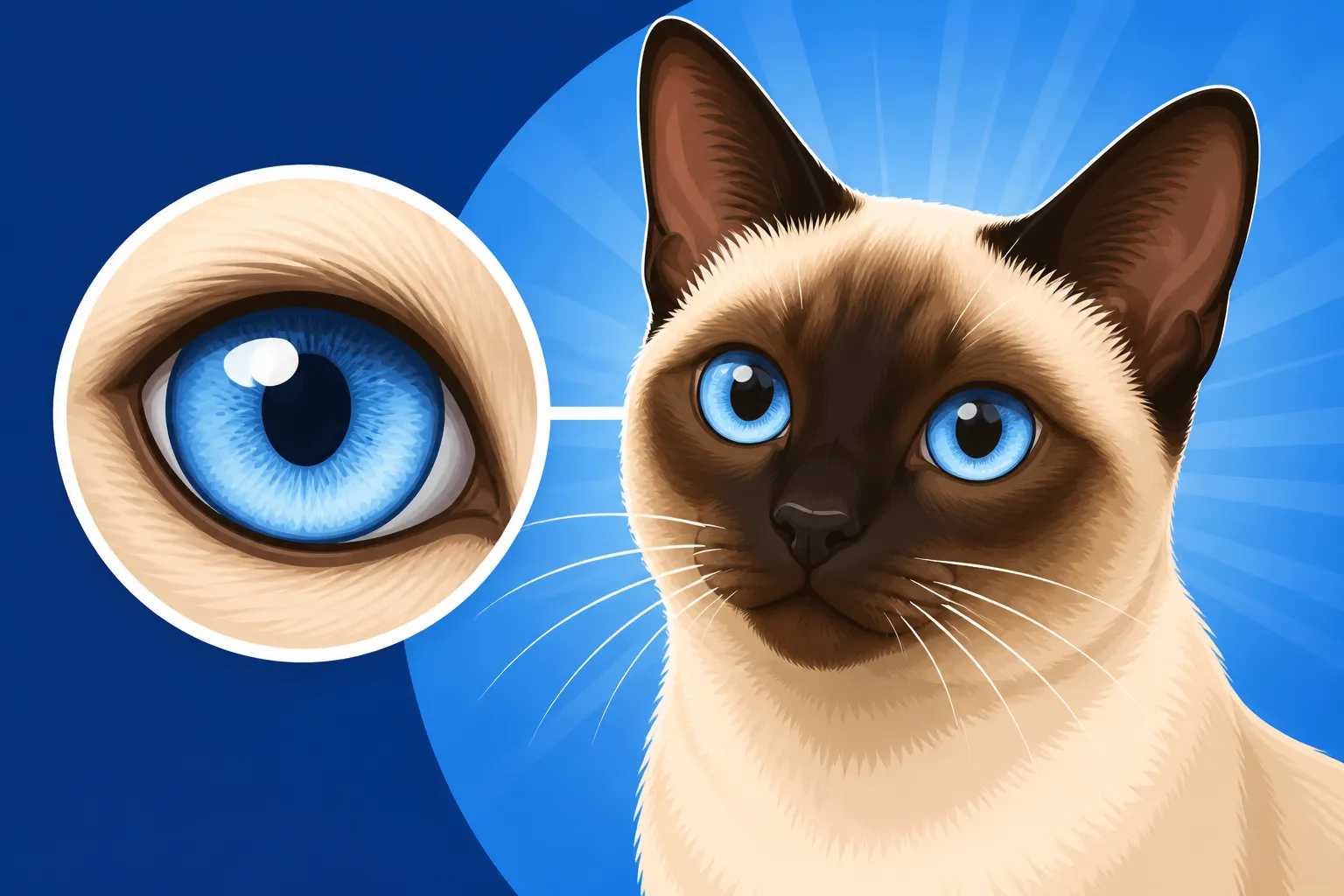
The iris—the colored part of the eye—also has very little melanin. Blue eyes are not blue because the iris contains blue pigment. Instead, light scatters through the iris in a way that makes it appear blue. It’s a similar basic optical effect to the way the sky can look blue, though the structures involved are different.
This pigmentation pattern is part of the breed’s defining appearance, not a sign that something is wrong. It also explains why a Siamese cat’s eyes look different from the amber, green, or copper eyes common in many other cats. For the breed’s overall appearance, including eye color, What a Siamese Cat Looks Like by the Standard offers related context.
Blue is expected, but the shade can vary
“Blue” covers a range of appearances. One Siamese cat may have pale, icy-blue eyes, while another’s eyes look like deep sapphire. Lighting, the angle you’re viewing from, and the cat’s individual coloring can all affect how vivid the eyes seem. A quick phone photo under warm indoor lighting, for example, may make the same eyes look less blue than they do in daylight.
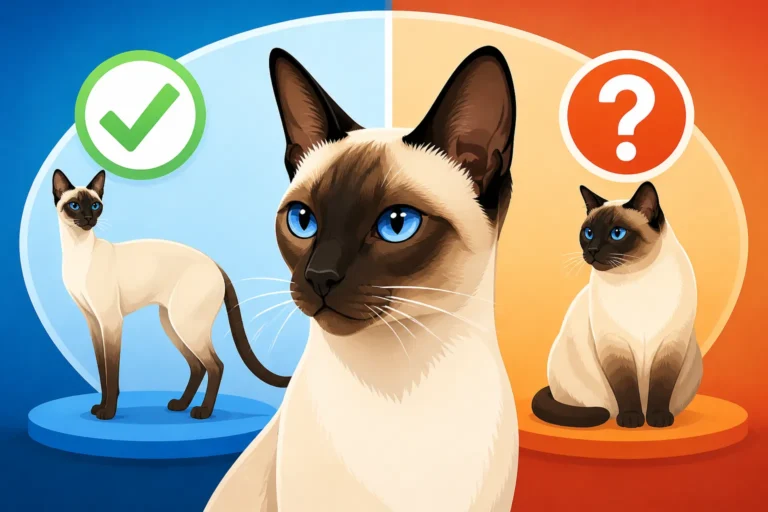
The shade alone usually does not tell you whether a Siamese cat is healthy, purebred, or a particular type. Breed standards describe the expected look of a show Siamese, but individual cats can vary in how their features appear. If you’re trying to identify a cat by appearance, eye color is only one clue; How to Tell a Siamese Cat From a Mixed Breed explains why appearance alone can’t always settle the question.
The important distinction is between normal variation and a noticeable change. Slight differences in brightness between rooms are ordinary. A pupil that suddenly looks cloudy, a new patch of color in the iris, or one eye that changes noticeably compared with the other is a different matter and should be discussed with a veterinarian.
How Siamese eye color develops
Kittens’ eyes change as they grow
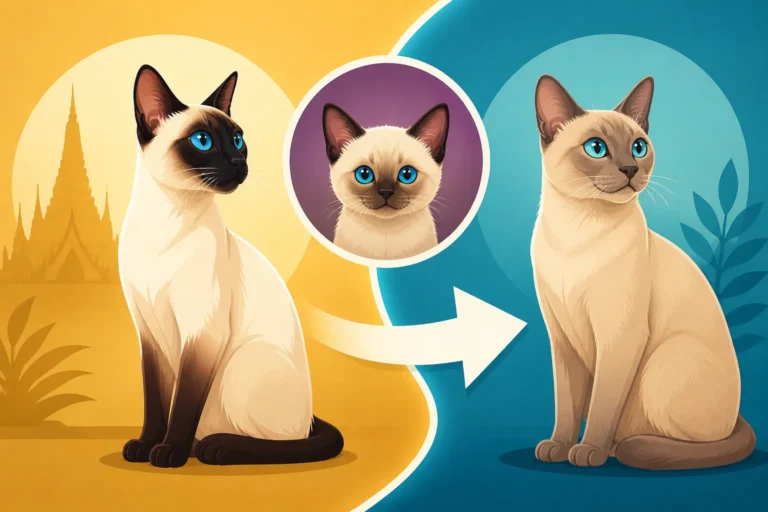
Many kittens start life with blue-looking eyes because pigment in the iris is still developing. As they mature, many cats’ eyes shift toward their adult color. Siamese kittens are different: their characteristic blue eyes persist because of the breed’s pigment genetics. Their coat pattern also develops with age, so a kitten may become more visibly pointed as its cooler body areas gain color. The coat and eye changes are related to pigment biology, but they are not the same process. For the coat side of the story, see Why a Siamese Cat Kitten Is Born White.
It can be confusing to compare a Siamese kitten’s eyes with its darkening coat. You might notice the points becoming more defined over the first weeks and months while the eyes remain blue. That difference is expected. The temperature-sensitive effect helps explain where the fur gains pigment, while the low pigment in the iris is what makes the eyes blue.
A kitten’s eyes can also look different in photos as it grows, simply because the face changes, the lighting changes, or the camera catches reflections differently. If both eyes look clear and comfortable and the kitten is behaving normally, a photo that seems less vivid is not, by itself, proof of a problem.
Eye color and coat color don’t tell the whole story
A Siamese cat’s coat may darken with age or in cooler conditions, but that doesn’t mean its eyes should turn brown or green. A darker body coat and blue eyes can happily coexist. It’s easy to assume that all color changes follow the same rule, but fur and iris pigmentation are affected differently.
Some owners also wonder whether a Siamese cat’s eye color fades as the cat gets older. A gradual change in how bright the blue appears in different lighting can be hard to judge, especially across years of photos. A clear shift in one eye, or a new cloudy or hazy appearance, is more important than a subtle difference in a snapshot. See Whether a Siamese Cat's Eye Color Fades With Age for a focused discussion of age-related changes.
A useful habit is to notice what is normal for your cat. When you’re cuddling or grooming, take a quick look at both eyes: are they clear, similarly open, and free of unusual discharge? You don’t need to inspect them obsessively. A familiar baseline simply makes it easier to spot a real change.
| What you notice | What it may mean | What to do |
|---|---|---|
| Pale or deep blue eyes that look clear | Normal variation in blue shade | No special action is needed |
| Eyes look different in a photo or under new lighting | Reflection, angle, or lighting can change their appearance | Compare in ordinary daylight before drawing conclusions |
| One eye suddenly looks cloudy or has a new color change | Could reflect an eye problem that needs assessment | Contact a veterinarian promptly |
| Squinting, redness, discharge, or pawing at the face | Possible irritation, injury, or illness | Arrange veterinary advice; seek urgent care if severe |
| Bumping into objects or trouble navigating | Could have several causes, including impaired vision | Ask a veterinarian for an examination |
When blue eyes need a closer look
Blue eyes do not mean poor vision
Blue eyes on their own do not mean a Siamese cat is blind or destined to lose sight. Eye color is about pigment and how light is perceived; vision depends on the structures that focus light and carry visual information to the brain. Those are related to the eye, but blue coloring does not automatically indicate that those structures are unhealthy.
It’s still worth taking vision changes seriously. A cat that hesitates on stairs, misjudges a jump it used to make easily, or struggles to find a familiar toy may need an eye and general health check. Cats often adapt quietly, so a change in behavior can be more noticeable than an obvious change in the eyes themselves. What PRA Does to a Siamese Cat's Sight explains one inherited eye condition associated with the breed, while PRA and the Siamese Cat Eye Test That Does Not Settle It explores why testing and assessment can require care.
A Siamese cat may also have crossed eyes, a trait associated with the breed’s history and appearance. Crossed eyes are not the same as blue eye color, and a cat’s familiar eye alignment should be distinguished from a sudden new change. If the eyes begin moving unusually, the cat tilts its head, or it seems disoriented, contact a veterinarian rather than assuming it is simply a breed feature. You can read more at Why a Siamese Cat's Eyes Cross.
Watch for changes, not just color
Blue eyes can make redness, discharge, or cloudiness easier to notice, but a normal-looking color cannot rule out an eye problem. Look for signs such as repeated squinting, holding one eye shut, rubbing the face, unusual watering, thick discharge, or sensitivity to light. A sudden change in vision or eye appearance deserves prompt veterinary advice, especially if the cat seems uncomfortable.
Don’t try to treat a red or watery eye with human eye drops, leftover pet medication, or a product intended to remove tear stains. The right response depends on the cause, and products that seem gentle may not be suitable for a particular problem. If you shop at Chewy for routine pet supplies, treat any eye-care product as something to confirm with your veterinarian first—not as a substitute for an examination.
For a cat that resists handling, keep checks brief and calm. Choose a quiet moment, let the cat stay in a comfortable position, and stop if it becomes distressed. A soft, clean cloth dampened with water can be used to gently wipe away ordinary crust near the eye, using a fresh area of cloth for each side. Don’t press on the eyeball or try to remove anything stuck to the eye. If you’re considering wipes or other grooming supplies from Chewy, check the label carefully and ask your veterinarian whether the product is appropriate for use near your cat’s eyes.
If an examination is needed, make the trip less stressful by leaving the carrier out at home and letting your cat explore it before appointment day. A carrier purchased through Chewy or another pet retailer should be secure, appropriately sized, and familiar by the time you need it. If you’re unsure what to bring or how urgently your cat should be seen, call the clinic and describe the symptoms instead of trying to judge from color alone.
What Siamese blue eyes can and cannot tell you
Eye color is a breed clue, not a diagnosis
Blue eyes fit the Siamese appearance, but they don’t prove a cat’s pedigree. Many cats have blue eyes for other genetic reasons, and mixed-breed cats can inherit features that resemble those of a recognized breed. Likewise, eye shade alone does not identify a health condition, a kitten’s future coat shade, or how well the cat can see.
If you’re choosing a kitten, ask about its health history and the parents’ health rather than relying on appearance. A breeder should be willing to discuss veterinary care, family history, and screening relevant to the lines they breed. For broader questions, What a Siamese Cat Breeder Should Have Screened is a useful companion topic.
For an adopted cat, you may not know its full background, and that’s okay. A veterinarian can establish a baseline through an examination and talk through any concerns you have about vision or eye appearance. Bring photos if you’ve noticed a change over time; they can help show whether the difference is new or simply a lighting effect.
A simple routine keeps you informed
You don’t need to turn eye checking into a daily ritual. Once in a while, notice whether both eyes look clear and comfortable during ordinary interaction. If your cat is relaxed, check for obvious redness, squinting, or discharge, and pay attention to changes in confidence when moving around familiar rooms.
Keep notes if a change develops: when you first saw it, whether it affects one eye or both, and whether your cat is rubbing its face or behaving differently. A short description is often more useful to a clinic than “the eyes look strange.” If symptoms are sudden or severe, call promptly rather than waiting to collect more observations.
For most Siamese cats, blue eyes are simply one of the breed’s striking, expected features. Their exact shade can vary, and changes in coat color do not mean the eyes should change too. The practical rule is straightforward: enjoy the blue, but pay attention to sudden changes in appearance, comfort, or vision.
Disclaimer
This article is for general informational purposes only and does not constitute professional advice. Laws, prices and regulations vary by location and change over time. Consult a qualified professional for guidance on your specific situation.