Whether a Lynx Point Is a Siamese Cat or a Colorpoint Shorthair
A lynx point describes a coat pattern, not a breed by itself, which is why the same cat may be called a lynx point Siamese in one conversation and a Colorpoint Shorthair in another. The right label depends on the cat’s pedigree and the registry’s rules—not just its stripes, blue eyes, or Siamese-like shape.
What lynx point means
It is a color pattern, not proof of breed
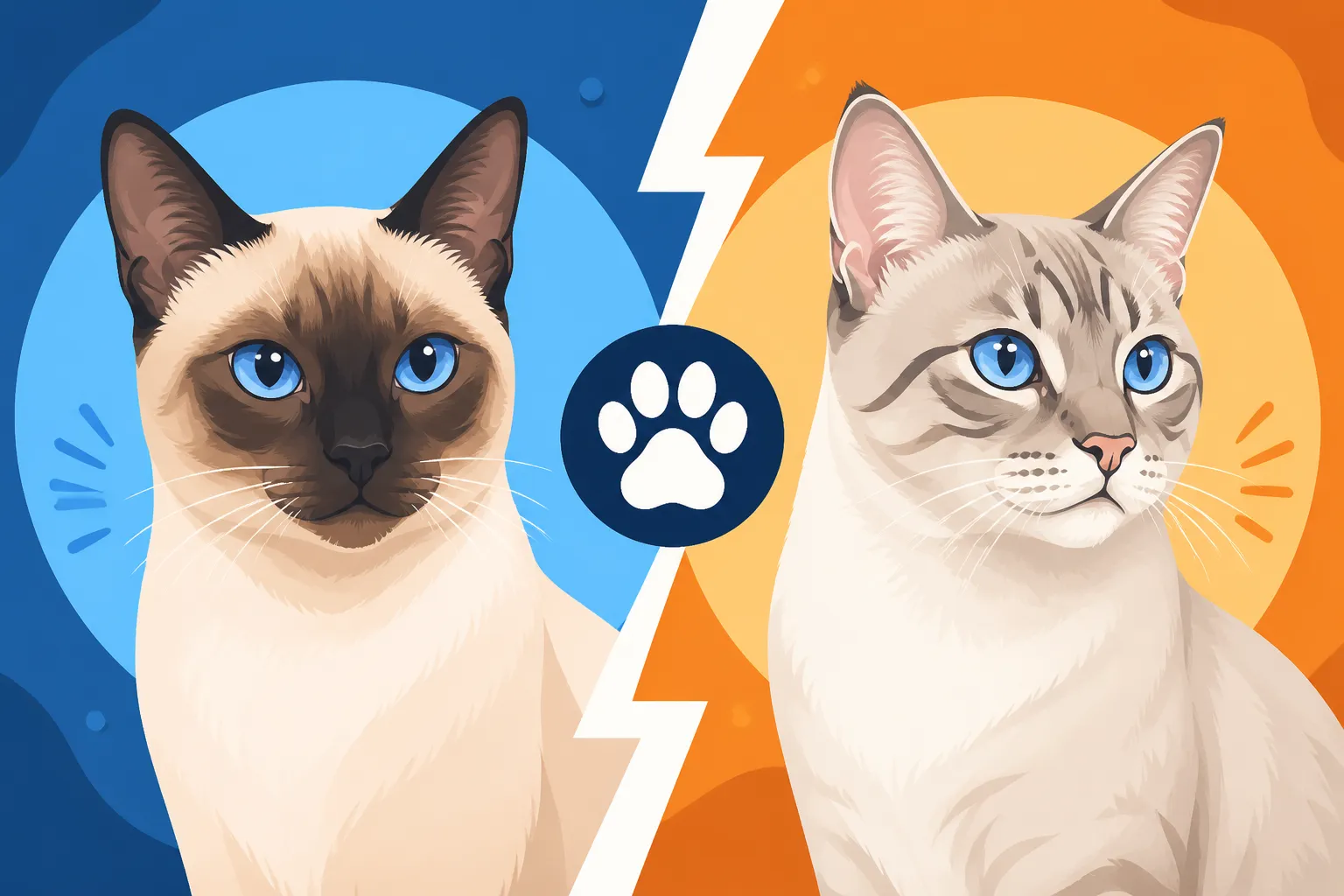
A lynx point cat has the familiar pointed coloring associated with Siamese-type cats, with tabby striping visible in the darker areas. You may see narrow stripes on the face, legs, and tail, often with a distinct “M” marking above the eyes. The body is usually lighter, while the ears, mask, paws, and tail show more color.
The word “lynx” refers to those tabby markings. It does not mean the cat is part lynx, and it does not establish that the cat is a purebred Siamese. Similar pointed tabby patterns can appear in several breeds and in mixed-breed cats. The label can describe what a cat looks like without answering what breed it is.
That distinction is easy to miss when looking at online photos or adoption listings. A shelter might call a striped, blue-eyed cat a “lynx point Siamese” because that description helps people picture its appearance. It may be a useful everyday description, but it is not the same as verified pedigree information. For a closer look at the markings themselves, see What a Lynx Point Siamese Cat Is.
A pointed pattern can occur in more than one breed
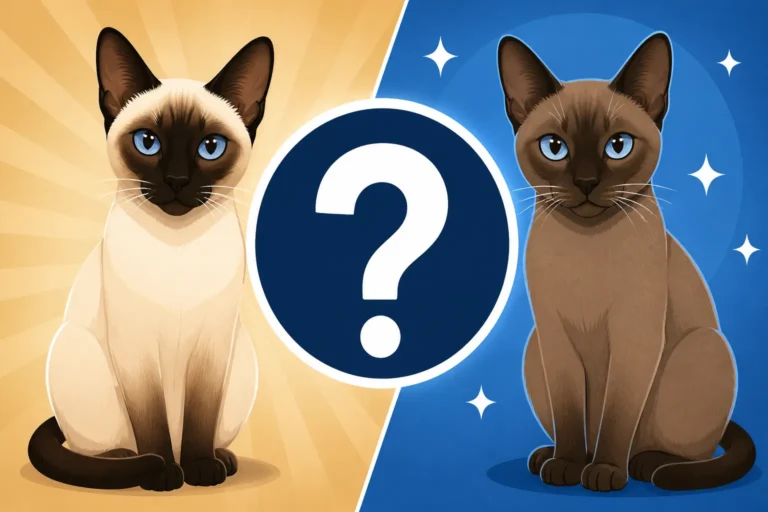
Colorpoint Shorthairs and Siamese cats share a recognizable, sleek appearance, and their coats can both feature color concentrated on the cooler parts of the body. That resemblance makes visual identification tricky. Even experienced cat owners may find it hard to tell which breed a cat belongs to from a photograph alone.
The pattern also isn’t exclusive to either breed. A cat with no documented purebred ancestry can still have pointed coloring and tabby stripes. So a lynx point appearance does not automatically make a cat a Siamese, a Colorpoint Shorthair, or a Siamese mix.
If you are trying to identify a cat you already live with, it can help to separate two questions: “What does this cat look like?” and “What breed is this cat documented as?” The first can be answered from its coat and features. The second usually depends on reliable ancestry records and the requirements of the relevant registry.
How Siamese and Colorpoint Shorthair labels differ
Registry rules affect the name
Breed names are shaped by the rules of cat registries, and those rules do not always match the casual language people use. In the Cat Fanciers’ Association, or CFA, the Siamese breed standard recognizes four traditional point colors: seal, blue, chocolate, and lilac. The Colorpoint Shorthair is a separate CFA breed associated with additional point colors and patterns, including lynx points. You can read more in Which Four Point Colors the CFA Accepts in a Siamese Cat and Which Point Colors Other Registries Accept in a Siamese Cat.
Other registries may use different standards or include a wider range of colors and patterns under their Siamese breed rules. That means a lynx point cat may qualify as a Siamese in one registry and be registered as a Colorpoint Shorthair in another. It’s not necessarily a disagreement about what the cat looks like; it can be a difference in how each organization defines the breed.
This is why broad claims such as “lynx points are never Siamese” or “every lynx point is a Siamese” can be misleading. The answer depends on which registry is being discussed and how the cat is recorded. When someone uses the label, it’s reasonable to ask whether they mean the cat’s appearance, its family background, or its registered breed.
The Colorpoint Shorthair is a distinct registered breed in some systems
The Colorpoint Shorthair was developed from Siamese-type cats to include a broader range of point colors and patterns than the four colors accepted for the Siamese in the CFA standard. The two breeds can look very similar, but their names are not interchangeable in every registry. In the CFA system, for example, a cat with lynx point markings may be classified as a Colorpoint Shorthair rather than a Siamese.
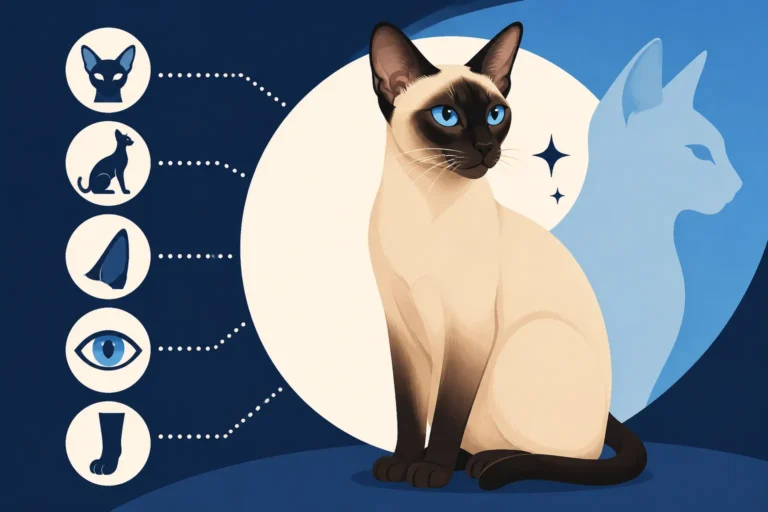
That does not mean a Colorpoint Shorthair is simply a “lesser” Siamese or a cat without Siamese features. The breeds share a close relationship, and both can have the slender body, short coat, large ears, and wedge-shaped head many people associate with modern Siamese-type cats. The registry label reflects breed standards and ancestry, not a ranking of quality or personality.
If you want to compare the categories in more detail, What a Colorpoint Shorthair Is Next to a Siamese Cat explains the distinction. It is also useful to understand the wider history of Siamese-type breeds, including How the Thai Split From the Siamese Cat.
| What you are checking | What it can tell you | What it cannot prove by itself |
|---|---|---|
| Lynx point markings | The cat has a pointed tabby pattern | That the cat is a purebred Siamese |
| Blue eyes and a Siamese-like build | The cat resembles a Siamese-type cat | Its registered breed or ancestry |
| A shelter or online listing | How someone has described the cat | Whether the description is pedigree-verified |
| Registration papers | The breed recorded under a particular registry | That every registry uses the same breed rules |
| Family history from a breeder | Documented ancestry, if records are reliable | How another registry would classify the cat |
How to find out what a particular cat is
Start with pedigree and registration records
If the cat came from a breeder and breed identity matters to you, ask which registry the cat is registered with and request the relevant paperwork. Check the exact breed recorded on the documents rather than relying on a verbal description or a kitten advertisement. Also ask what color and pattern the breeder has recorded, since coat descriptions may be more specific than the everyday term “lynx point.”
A listing on a retailer or pet-information site—including Chewy—can be helpful for learning general terms, but it cannot confirm an individual cat’s pedigree. Treat product pages, breed summaries, and adoption descriptions as starting points, not proof of registration. If a breeder’s wording seems confusing, ask them to explain whether “lynx point Siamese” refers to the cat’s appearance or its formal registered breed.
For a purebred kitten, the breeder should be able to explain how the litter’s registration works and why the kittens are being sold under a particular breed name. If documentation is absent, unclear, or inconsistent, don’t assume that the cat is a registered purebred simply because it has the expected coat pattern. How to Tell a Siamese Cat From a Mixed Breed offers more context on why looks alone can be inconclusive.
If the cat is adopted, use a practical description
For an adopted cat with unknown ancestry, it is perfectly reasonable to describe its appearance as “lynx point” or “Siamese-type.” Those terms can help explain the cat’s coloring and general look without claiming a pedigree you cannot verify. A shelter’s label may be based on appearance, and that is often all the history available.
This is especially useful when talking to a veterinarian, pet sitter, or potential adopter. The cat’s actual health, behavior, and care needs matter more than settling a registry question that may never be answerable. If you are buying food, litter, or other supplies through Chewy or another retailer, choose based on your cat’s age, health, and preferences—not on whether a listing calls it a Siamese or a Colorpoint Shorthair.
You may also see DNA tests advertised as a way to identify breeds. These tests can provide ancestry estimates, but they do not replace formal pedigree records or guarantee that a registry would accept a cat as a particular breed. For more on that distinction, read Whether a DNA Test Confirms a Siamese Cat.
Common misunderstandings about lynx point cats
“Lynx point Siamese” can be a casual description
People often use “lynx point Siamese” as shorthand for a cat with Siamese-style points and tabby markings. In everyday conversation, the phrase can communicate the cat’s appearance quickly. It does not always mean that the speaker is making a formal claim about CFA registration or documented purebred ancestry.
That casual usage can cause confusion when a buyer expects a particular registry classification. A breeder might use “lynx point Siamese” because customers recognize the phrase, while the cat’s official paperwork lists Colorpoint Shorthair. Before placing a deposit or choosing a kitten, ask for the registered breed in writing and confirm which registry’s rules apply.
The same care is helpful when reading rescue listings. A shelter may use breed terms as visual shorthand, not as a verified statement of lineage. If you are adopting, you can still ask what the staff knows about the cat’s history, but be prepared for the answer to be “unknown.”
The label does not predict personality or care needs
A cat’s lynx point pattern does not determine its temperament. Siamese and Colorpoint Shorthair cats are often described as social and vocal, but individual personalities vary, and a cat’s early experiences, health, and home environment matter. A striped point pattern cannot tell you whether a particular cat will be chatty, cuddly, energetic, or reserved.
Likewise, the breed name alone is not a complete guide to health or care. Focus on the individual cat’s veterinary history, body condition, activity, and behavior. If you bring home a lynx point cat, provide the same thoughtful care you would for any cat: regular veterinary attention, a suitable diet, clean litter, play, and a safe place to rest.
When you see a lynx point cat described as Siamese, the most accurate response is not necessarily to correct the label. It is to clarify what the person means. If they are describing the coat, the phrase may be perfectly understandable. If they are making a claim about registered breed, pedigree documents and registry standards are the useful evidence.
Disclaimer
This article is for general informational purposes only and does not constitute professional advice. Laws, prices and regulations vary by location and change over time. Consult a qualified professional for guidance on your specific situation.