How Many Sounds a Siamese Cat Makes
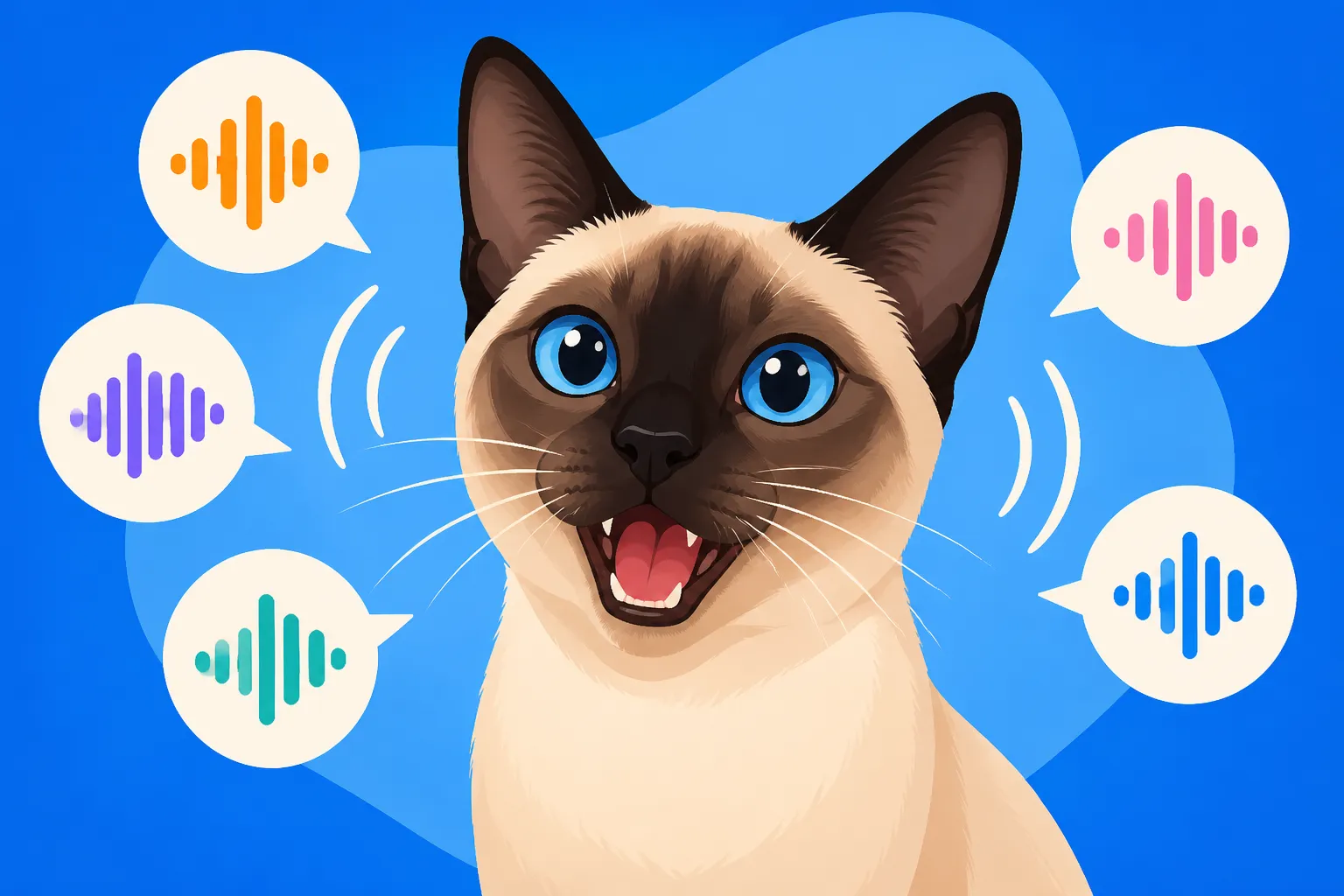
Living with a Siamese cat often feels less like owning a pet and more like sharing an apartment with a extremely opinionated, talkative roommate. If you find yourself overwhelmed by the sheer range of noises echoing through your hallway—from raspy, human-like cries to delicate squeaks—you are not alone. This guide breaks down the full vocal repertoire of the breed, helping you decode every noise and respond effectively.
The Vocal Spectrum: Core Sounds in the Siamese Vocabulary
The Signature Meezer Yowl and Howls
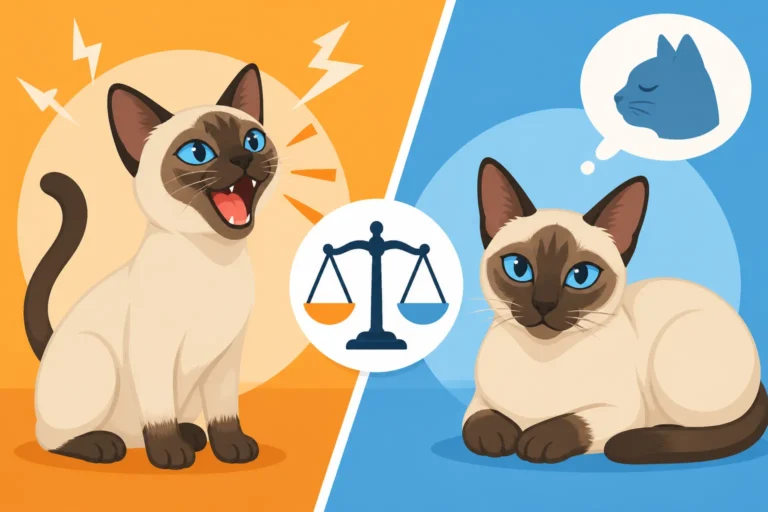
The classic “Meezer yowl” is perhaps the most famous—and striking—sound in the entire feline world. Unlike the short, high-pitched meows of standard domestic cats, this noise is deep, guttural, and drawn out. It often carries a raspy, gravelly tone that sounds shockingly like a human baby in distress. Siamese cats utilize this full-throated cry when they want to broadcast a message across long distances or demand immediate, undivided attention from their human companions.
When you hear this sound, it is easy to assume something is drastically wrong, but for a Siamese, it is often just their default volume for expressing strong emotions. To better understand the mechanics behind this distinctive call, exploring What the Siamese Cat’s Meezer Yowl Sounds Like helps unpack the acoustic structure that makes it carry through closed doors and solid walls. Owners quickly learn that this sound is used for everything from announcing that a hallway is empty to demanding breakfast at dawn.
If ignored, a Siamese will often increase the pitch and duration of the yowl, turning a simple statement into a prolonged monologue. Recognizing this sound early allows you to address the underlying trigger—whether it is boredom, frustration, or a desire for companionship—before it becomes a fixed habits.
Conversational Meows and Short Demand Calls
Beyond the famous yowl, the Siamese possesses an extensive library of daily “talking” noises. These are shorter, moderate-volume sounds used during direct face-to-face interactions with you. A single “mrronk” as you walk into the kitchen might translate to a casual greeting, while a sharp, rising “me-OW?” at the foot of the bed is a clear question asking if it is time to wake up. These short demand calls are designed to prompt an immediate reaction.
What sets this breed apart is their persistent conversational nature. If you speak back to your cat, they will almost always reply with a matching tone. This back-and-forth dialogue is a hallmark of the breed’s personality. If you have ever wondered Why a Siamese Cat Answers When You Talk, it stems from their deep social motivation to connect with their human pack. They view vocal interaction as a shared activity rather than a simple transaction.
Understanding these daily demand calls requires paying close attention to context. A short, clipped meow near a closed closet door means they want access to the high shelf inside, while a series of chirpy meows near their favorite wand toy is an invitation to play.
Soft Chirps, Trills, and Greeting Murmurs
Not every noise out of a Siamese is loud or demanding. In fact, when they are relaxed and feeling affectionate, their voice shifts to an entirely different register. Chirps and trills are rolled, musical sounds produced with the mouth closed or barely open. These noises originate from the maternal instincts of female cats calling their kittens, but in a home environment, they serve as warm, friendly greetings between trusted family members.
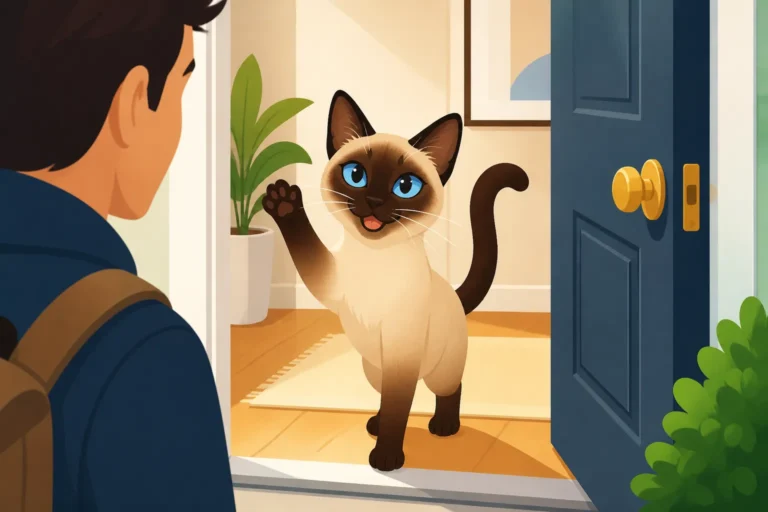
A trill often sounds like a soft “prrr-out” or a rolling “brrp.” You will likely hear this sound when your cat jumps onto the couch next to you, when you walk through the front door after work, or when they nudge your hand for head scratches. It signals approachability, joy, and peaceful engagement. Investigating What a Siamese Cat’s Trill Means reveals how these subtle sounds reinforce the social bond between cat and owner without the urgency of a yowl.
In addition to trills, Siamese cats frequently use soft murmurs—low-frequency squeaks or hums—when settling down to sleep or curling up in a lap. These quiet acoustic nuances demonstrate that despite their reputation for being loud, Siamese cats are equally capable of delicate emotional expression.
| Sound Type | Acoustic Profile | Primary Context / Meaning | Recommended Owner Response |
|---|---|---|---|
| Meezer Yowl | Deep, raspy, drawn-out baby cry | High distress, boredom, territorial | Check environment, offer activity |
| Conversational Meow | Short, mid-pitch, direct tone | Daily communication, asking items | Reply verbally, fulfill simple need |
| Trill / Chirp | Rolling, musical, closed-mouth hum | Friendly greeting, joy, affection | Offer affection, gentle interaction |
| Deep Engine Purr | Continuous low-frequency rumble | Extreme relaxation or self-sooth | Provide calm petting, quiet space |
| Hiss / Low Growl | Harsh exhalation or low rumble | Warning, fear, boundary setting | Give space, remove stressor |
| Night Yowl | Echoing, persistent midnight cry | Isolation, disorientation, search | Stick to routine, provide warmth |
Decoding Emotional Sounds: From Contentment to Distress
The Deep Engine Purr and Comfort Vibrations
The purr of a Siamese is often surprisingly powerful for a cat with such a lean, slender frame. It is a continuous acoustic resonance generated by the rapid contraction of the laryngeal muscles during both inhalation and exhalation. While all domestic cats purr, a Siamese often combines their purr with soft, rhythmic vocal vocalizations, creating a unique “purr-talk” when they are especially pleased.
You will encounter this comfort vibration when your cat is burrowed under a warm blanket, sitting in a sunbeam, or enjoying a slow grooming session. However, it is essential to remember that purring is not exclusively a sign of happiness. Cats also purr to self-soothe when they are stressed, in physical pain, or recovering from illness. The low frequencies of a purr are believed to promote bone and tissue healing while reducing anxiety.
To distinguish a happy purr from a self-soothing purr, look at the cat’s overall body language. A content cat will have relaxed eyes, loose whiskers, and a soft belly, whereas a stressed cat purring in pain will typically hold their body tightly, keep their ears flattened, and remain crouched in a hidden spot.
Low Growls, Hisses, and Defensive Warnings
While Siamese cats are renowned for their social nature, they possess a clear, unambiguous set of sounds for setting boundaries. Low growls and sharp hisses are the primary defensive tools in their vocal repertoire. A growl is a low, continuous rumble that indicates rising frustration or fear, while a hiss is an involuntary, sharp exhalation of air meant to startle a perceived threat.
A Siamese will rarely hiss or growl without a clear trigger. Common scenarios include the arrival of an unfamiliar dog, a sudden trip to the veterinary clinic, or an overzealous touch on a sensitive area of their body. These noises are not signs of malice; they are clear, polite communication designed to prevent a physical confrontation.
When your Siamese growls or hisses, the best course of action is to give them immediate physical space. Forcing interaction when a cat is using their defensive repertoire can lead to swatting or biting. Step back, lower your posture, reduce ambient noise, and let the cat regain their sense of safety at their own pace.
The Pain Cry and Sudden Voice Changes
One of the most critical skills for any owner is recognizing when a vocalization signals physical suffering. A pain cry in a Siamese is usually distinctly different from their typical demand yowls. It may take the form of an unusually high-pitched, sharp shriek, or conversely, a muffled, continuous groaning sound that persists regardless of environmental changes.
A sudden, drastic shift in your cat’s vocal habits should always be treated as a potential red flag. If a normally quiet cat suddenly begins screaming at the litter box, or if an extremely vocal cat becomes completely silent and withdrawn, immediate attention is required. Understanding When a Siamese Cat’s Meowing Means Pain is vital for catching hidden medical issues early, such as urinary blockages, severe joint pain, or internal distress.
In senior cats, sudden changes in voice pitch or frequency can also point to metabolic conditions like hyperthyroidism or systemic hypertension. Never ignore a voice that sounds strained, raspy in a new way, or delivered while the cat is hiding or standing in a rigid pose.
The Unique Nighttime Repertoire and Environmental Triggers
Middle of the Night Yowling and Echo Seeking
Many owners struggle with their cat’s inclination to perform nocturnal solos. Around two or three in the morning, a Siamese may wander down an empty hallway or stand in a tiled bathroom—where acoustics are strongest—and unleash a series of echoing yowls. This behavior can test the patience of even the most dedicated owner, disrupting sleep and frustrating household members.
This nighttime noise is often rooted in the breed’s natural crepuscular instincts, meaning they are most active during dawn and dusk. When the house goes quiet and human family members close their bedroom doors, the Siamese can feel isolated. Understanding Why a Siamese Cat Meows So Much during these late hours often comes down to boredom, a lack of physical stimulation during the day, or simple attention-seeking behavior.
Additionally, Siamese cats quickly learn that an empty hallway acts as an amplifier for their voice. They intentionally seek out areas with hard surfaces to maximize the reach of their call. Tackling this issue usually requires establishing a rigorous evening play routine and placing sound-dampening rugs in reverberant spaces.
The Empty Bowl Scream and Closed Door Protest
Few things trigger a Siamese’s vocal cords quite like perceived deprivation. The “empty bowl scream” is an intense, demanding performance that occurs when the cat can see even a sliver of the bottom of their food dish. This is not necessarily driven by starvation, but rather by the frustration of a broken routine or the desire for fresh food.
Similarly, closed doors represent an unacceptable barrier to a breed that insists on monitoring every inch of their territory. A closed bathroom or bedroom door will often result in a persistent, rhythmic scratch-and-yowl combination. The cat will press their mouth against the gap beneath the door to direct their voice inside, ensuring you hear every syllable of their protest.
To manage these specific triggers, consistency is essential. Yielding to a protest yowl by opening the door or filling the food bowl immediately teaches the cat that screaming produces results. Using automated feeders—which can be ordered through sites like Amazon to deliver measured meals on a strict schedule—can help detach food delivery from your personal presence, drastically reducing feeding-related noise.
Prey Chatter, Squeaks, and Window Tweeting
When a Siamese sits on a windowsill watching birds, squirrels, or insects outside, they produce a fascinating sound known as chattering or “tweeting.” This sound consists of rapid, clicking jaw movements accompanied by short, high-pitched squeaks. It almost mimics the sound of a small rodent or bird, leading to theories about its evolutionary purpose.
Behavioral scientists suggest that prey chatter is a physical manifestation of predatory excitement paired with mild frustration. The cat spots prey through the glass but realizes they cannot physically reach it. The rapid jaw vibration mimics the instinctive killing bite that felines use in the wild to dispatch small prey quickly.
Listening to your cat chatter at a bird feeder is one of the most delightful aspects of living with the breed. It shows that their sensory systems are fully engaged. Providing a sturdy window perch and hanging a bird feeder right outside can offer hours of visual and vocal enrichment for an indoor cat.
Physical and Genetic Factors Behind the Siamese Voice
Anatomical Differences and Pitch Variations
The distinct sound of the Siamese voice is not just a behavioral quirk; it is rooted in their unique physical build. Siamese cats possess a delicate, long laryngeal structure and thin vocal cords compared to cobby, broad-chested breeds like the British Shorthair or Persian. This elongated anatomy shapes the resonance of their voice, giving it that characteristic raspy, low-frequency edge.
Furthermore, the breed’s slender body frame acts as a horn, allowing sound to project with surprising strength. The air volume forced through their narrow larynx creates a pitch profile that closely mirrors the frequencies of human vocal sounds. This anatomical alignment is precisely why their cries hit human ears with such urgency, making them almost impossible to tune out.
Individual pitch varies widely across the breed. Some individuals possess a high-pitched, nasal squeak, while others command a resonant, chesty baritone. These acoustic variations are largely determined by genetics, chest volume, and the overall size of the cat’s upper airway.
How Age Changes the Acoustic Profile
A Siamese cat’s voice does not remain static throughout their life; it evolves as they pass through different life stages. Kittens start with high-pitched, urgent squeaks designed to alert their mother when they are cold or hungry. As they mature into young adults, their voice deepens significantly, settling into the familiar vocal patterns of the adult breed.
As the cat enters their senior years, the voice often undergoes another distinct transformation. Aging vocal cords lose some of their flexibility, causing the voice to sound huskier, more gravelly, or noticeably cracked. Senior cats may also vocalize more frequently due to cognitive changes or sensory decline, such as loss of hearing or sight.
If you share your home with an older cat, you might notice that Why an Old Siamese Cat Yowls More becomes a central topic of concern. Disorientation in the middle of the night can cause a senior cat to call out for reassurance. Ensuring their environment remains familiar, well-lit with nightlights, and free of unnecessary hazards can help quiet these nighttime anxiety calls.
Head Structure and Voice Resonance across Types
The structural evolution of the breed over the past century has also influenced their vocal tones. Today, there is a clear distinction between traditional “applehead” cats and modern “wedge-head” lines. The shape of the skull directly impacts the nasal passages and sinus cavities, which serve as the primary resonance chambers for vocal sounds.
Wedge-head Siamese cats, with their extremely long, triangular muzzles and large, flared ears, often produce a more piercing, nasal sound. Their elongated nasal passages amplify high-frequency harmonics, resulting in a voice that easily cuts through household noise.
In contrast, traditional applehead cats, possessing a rounder skull and shorter muzzle, tend to have a slightly softer, rounder tone. While still far talkier than the average cat, their yowls often lack the intense, piercing edge found in some extreme show lines.
Managing and Responding to Your Siamese Cat’s Vocalizations
Understanding Response Loops and Conversation Mechanics
Because Siamese cats are highly intelligent and deeply social, every interaction you have with them shapes their future vocal habits. If your cat meows and you immediately respond by talking back, petting them, or offering a treat, you reinforce a response loop. The cat quickly learns that vocalizing is the most effective remote control for managing human behavior.
This feedback loop is not inherently bad; in fact, many owners cherish the conversational bond they share with their cat. However, it can inadvertently create problems if you reinforce unwanted vocalizations. For example, if your cat yowls at four in the morning and you get out of bed to scold them, the cat views that negative attention as a complete victory—they succeeded in bringing you to their side.
To manage conversational mechanics effectively, decide which noises are acceptable and which need to be gently extinguished. Reward quiet, calm approaches with attention and affection, while ignoring demanding, ear-splitting yowls aimed at manipulating your daily schedule.
Distinguishing Attention Seeking from Genuine Need
The biggest challenge for a Siamese owner is sifting through the noise to determine what the cat actually needs. Is that prolonged yowl in the hallway a plea for help, or is it simply an attempt to drag you away from your laptop? Learning to read subtle context clues will save you time and peace of mind.
A genuine need is typically tied to a specific location or physical state. A cat standing by an empty water fountain, hovering near a dirty litter box, or holding a limping paw is communicating an actual problem that requires your intervention. These vocalizations are often paired with focused eye contact and restless pacing between you and the issue.
On the other hand, pure attention-seeking noise is often erratic and mobile. The cat may wander from room to room, vocalizing at the ceiling, or flop onto the floor right in front of you while making dramatic “look at me” cries. If their physical needs are met, these calls are best answered with structured play rather than passive feeding or coddling.
Using Interactive Tools and Enrichment to Reduce Excessive Noise
A quiet Siamese is almost always a tired, mentally satisfied Siamese. Because this breed possesses immense mental energy, excess noise is frequently nothing more than a symptom of profound boredom. To quiet a excessively talkative cat, you must provide sufficient mental and physical outlets throughout the day.
Investing in dynamic enrichment tools can dramatically lower the volume in your home. Setting up high-quality scratching posts, cat trees, and window perches gives your cat a sense of territory and purpose. Exploring Enrichment for a Siamese Cat That Gets Bored in an Hour will give you actionable strategies for keeping their sharp mind engaged so they do not resort to vocalizing for entertainment.
Puzzle feeders, interactive wand toys, and automated laser toys—easily sourced on platforms like Amazon—are exceptional for burning off excess energy before bedtime. A thorough fifteen-minute play session right before dinner helps simulate the natural hunt-eat-sleep cycle, ensuring both you and your talkative companion enjoy a quiet, restful night.
Summary of Siamese Cat Sounds
Understanding the diverse sounds of a Siamese cat comes down to recognizing that vocalization is their primary language. They do not meow to hear their own voice; they communicate to build bonds, express immediate needs, set personal boundaries, and process their environment. By paying attention to pitch, context, and physical posture, you can easily decode what your talkative companion is trying to tell you—building a quieter, happier, and far more harmonious home for both of you.
Disclaimer
This article is for general informational purposes only and does not constitute professional advice. Laws, prices and regulations vary by location and change over time. Consult a qualified professional for guidance on your specific situation.