How to Teach a Siamese Cat a Quiet Cue
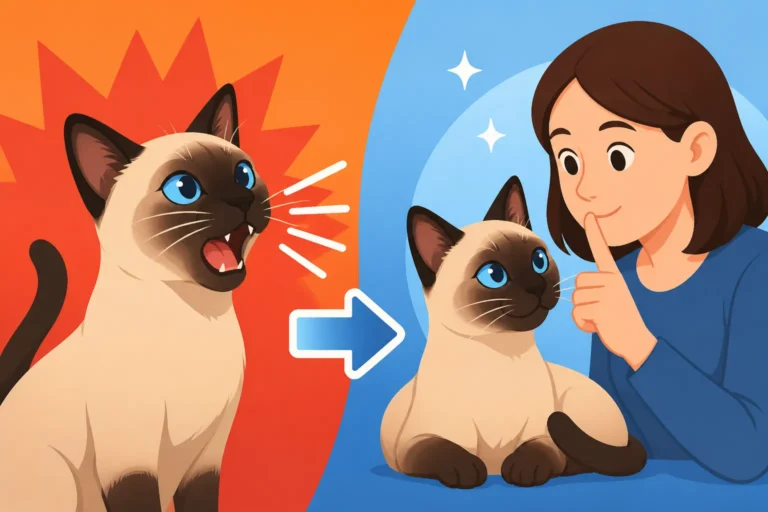
If you live with a Siamese cat, you already know their voice is legendary – and often, incredibly loud. While their signature "meezer" yowl is undeniably a part of their charming, captivating personality, there are definitely times when that vocal enthusiasm can become a real challenge. Whether you're trying to concentrate during a remote work meeting, catch some much-needed sleep, or simply enjoy a quiet evening, a persistent vocal protest can test the patience of even the most devoted Siamese parent. This guide is dedicated to helping you teach your vocal companion a "quiet" cue, fostering better communication and bringing a little more peace into your shared home.
Understanding the Siamese Cat's Unmistakable Vocalizations
Let's be real: Siamese cats are not known for their subtle whispers. They are renowned for being one of the most vocal cat breeds, a trait that's deeply ingrained in their personality and history. If you've ever felt like your Siamese is trying to carry on a full conversation with you, you're not wrong – they absolutely are!
Why Siamese Cats Are So Vocal
The intense vocal nature of a Siamese isn't just a quirk; it's a fundamental part of who they are. They communicate everything through their varied range of sounds. From a low rumble to a piercing yowl, each vocalization is a message. They might be telling you they're hungry, demanding attention, expressing boredom, or simply greeting you with an enthusiastic monologue about their day. This constant verbal exchange is why many Siamese owners feel their cats are almost dog-like in their interactive behavior. It's truly a two-way street for them, and they expect you to participate!
It’s easy to feel overwhelmed by the sheer volume and persistence. You might even find yourself wondering, "Is this normal?" The answer, for a Siamese, is often a resounding yes. Their vocal cords are designed for projection, and they’re not afraid to use them. For an in-depth look at their unique sound, check out What a Siamese Cat's Yowl Means.
Distinguishing Normal Chatter from Excessive Meowing
While a vocal Siamese is normal, there's a difference between their regular chatty nature and excessive, potentially problematic meowing. Normal vocalizations are usually in response to specific stimuli – you walking in the door, mealtime, or wanting to play. Excessive meowing, however, can feel relentless and sometimes seems to have no clear cause.
If your Siamese suddenly becomes more vocal than usual, or if their meowing is accompanied by other behavioral changes like restlessness, changes in appetite, or hiding, it’s always wise to rule out an underlying health issue first. Cats are masters at hiding pain or discomfort, and an increase in vocalization can sometimes be their only way of telling you something is wrong. For more on this, you might find When a Siamese Cat's Meowing Means Pain and Signs a Siamese Cat Is Unwell helpful. Once you've had a clean bill of health from the vet, you can confidently approach training from a behavioral standpoint.
Essential Prerequisites Before Training Your Siamese
Before you even begin to think about teaching a "quiet" cue, it’s crucial to lay a solid foundation. This isn't just about suppressing a behavior; it's about understanding your cat's needs and ensuring their environment supports calmness.
Rule Out Medical Issues First
As mentioned, a sudden change in vocalization could signal a health problem. Cats don't typically increase their meowing for no reason. Conditions like hyperthyroidism, kidney disease, dental pain, or even simple discomfort can lead to a cat vocalizing more. An older Siamese might also become more vocal due to cognitive dysfunction or declining senses.
Before assuming it's purely a behavioral issue, schedule a visit to your veterinarian. Explain the change in vocalization, how long it's been happening, and any other symptoms you've noticed. Your vet can perform a thorough examination and recommend appropriate tests to rule out any medical causes. Getting this step out of the way provides peace of mind and ensures you're not trying to train away a symptom of a deeper problem.
Meeting Basic Needs and Providing Ample Enrichment
A bored, hungry, or otherwise unmet Siamese is a vocal Siamese. They will tell you, loudly, exactly what they need. Therefore, before embarking on "quiet" training, ensure all their basic needs are being met consistently and abundantly.
- Food and Water: Are they getting enough food on a regular schedule? Is fresh water always available, perhaps in a fountain to entice them to drink more?
- Litter Box Hygiene: Cats are incredibly particular about their litter boxes. If it's not clean enough, or if they don't have enough boxes (the general rule is one per cat plus one extra), they'll certainly let you know their displeasure, sometimes through vocalization.
- Physical and Mental Stimulation: This is huge for a Siamese. They are highly intelligent and active cats. A bored Siamese is a destructive, attention-seeking, and very vocal Siamese. Ensure they have plenty of opportunities for play, hunting simulation, and mental puzzles. Consider rotating toys to keep things fresh. Look for interactive toys or puzzle feeders on platforms like Amazon that can challenge their clever minds. Investing in quality playtime can drastically reduce unwanted vocalizations. For more ideas, check out Enrichment for a Siamese Cat That Gets Bored in an Hour.
Consistency, Patience, and the Right Tools
Training a cat, especially a Siamese, requires a deep well of patience. They aren't dogs, and they won't automatically respond to commands in the same way. Consistency is paramount. Everyone in the household must be on the same page regarding the training methods and the "quiet" cue. Inconsistency will only confuse your cat and undermine your efforts.
Essential Tools:
- High-Value Treats: These are non-negotiable. Find something your Siamese absolutely loves – tiny pieces of cooked chicken, salmon, or commercial freeze-dried treats often work wonders. These treats should be reserved only for training sessions to maintain their high value. You can find a wide variety of these on Amazon.
- Clicker (Optional but Recommended): A clicker acts as a precise marker for desired behavior. It tells your cat exactly what they did right the moment they do it. While not strictly necessary, it can significantly speed up the learning process by clearly communicating the moment of success. If you're new to clicker training, there are many affordable options available on Amazon.
- A Calm Environment: Try to practice in a quiet space without too many distractions, especially in the beginning.
Step-by-Step: Teaching Your Siamese Cat a "Quiet" Cue
Now that we've covered the groundwork, let's dive into the actual training process. Remember, this is about positive reinforcement and patience.
Step 1: Identify the Vocalization Trigger
The first step is to figure out when your Siamese is most vocal. Is it when you're preparing their food? When you first wake up? When you sit down to work? When you're on the phone? Knowing the trigger will allow you to set up controlled training sessions.
Let's use the common scenario of a Siamese meowing loudly for food, or the "pre-dinner yowl." This is often a predictable and powerful motivator for them.
Step 2: Catching Quiet – Rewarding Silence After Vocalization
This is the most crucial part. You're not going to reward the meowing; you're going to reward the absence of meowing.
- Provoke the Vocalization (Gently): If your cat usually yowls when you walk towards their food bowl, go to the food bowl. If they yowl when you pick up your phone, pick up your phone. The goal is to get them to start their typical vocalization.
- Wait for a Brief Pause: Here’s the trick: wait for even a split second of silence after they've started vocalizing. The moment their mouth closes and no sound comes out, immediately click (if using one) and give them a high-value treat.
- Repeat, Repeat, Repeat: Do this many, many times in short, frequent sessions. They will start to learn, "Ah, when I stop making noise, good things happen!"
Initially, you're looking for any break in the vocalization, no matter how short. Don't demand long silences at first; that will be too frustrating for both of you.
Step 3: Introducing the Verbal "Quiet" Cue
Once your Siamese consistently offers a brief moment of silence and looks for a treat after vocalizing, you can introduce the verbal cue.
- Cue Before Silence: As your cat starts to vocalize (e.g., the pre-dinner yowl), wait for that impending moment of silence you've been rewarding. Just before they fall silent, say your chosen cue word clearly and calmly – "Quiet."
- Click and Reward: The instant they become silent, click (if applicable) and give the treat.
- Consistency: Use the same word, in the same tone, every single time. Short, frequent practice sessions are more effective than long, drawn-out ones. You're building an association: "Quiet" means "stop making noise, and a treat is coming."
Step 4: Gradually Extending the Duration of Silence
As your cat begins to understand the "Quiet" cue, you can start asking for longer periods of silence before the reward.
- Increase Time Incrementally: After giving the "Quiet" cue, wait for two seconds of silence before clicking and treating. Once they master that, move to three seconds, then four, and so on.
- Don't Rush It: If your cat starts vocalizing again before the desired silence duration, don't reward them. Reset, and try again, perhaps going back to a slightly shorter duration that you know they can achieve successfully.
- Positive Reinforcement: Always keep it positive! If they struggle, it means you're asking for too much too soon. Break it down into smaller steps.
Step 5: Practicing in Different Scenarios and Generalization
Once your Siamese understands the "Quiet" cue in a controlled setting, it's time to generalize the behavior to different situations and environments.
- Vary the Triggers: Practice when they're meowing for attention, when the doorbell rings, or during other typical vocal moments.
- Vary the Location: Practice in different rooms of your house.
- Introduce Distractions (Gradually): Start with minor distractions, like a soft background noise, and slowly increase the level of distraction as your cat becomes more proficient.
- Fade the Clicker and Treats: As your cat masters the cue, you can begin to phase out the clicker and reduce the frequency of treats. Start by treating every other time, then every third time, and so on. Eventually, the reward can simply be verbal praise, a favorite toy, or a gentle pet. The key is that the reward is still something they value.
Here's a quick reference table for training progression:
| Stage | Goal | Action | Reward |
|---|---|---|---|
| 1. Identify Trigger | Understand when the vocalization happens | Observe and note specific situations | N/A |
| 2. Catching Quiet | Reward any silence after vocalization starts | Wait for a momentary pause in meows, immediately mark (click) and treat | High-value treat + click |
| 3. Introduce Cue | Associate "Quiet" with impending silence | Say "Quiet" just before the cat offers silence, then mark and treat | High-value treat + click |
| 4. Extend Duration | Increase the length of silence required | Gradually extend the time between cue and mark/treat (e.g., 2 seconds, 3 seconds, etc.) | High-value treat + click (less frequent as they improve) |
| 5. Generalization | Apply "Quiet" cue in various situations and with distractions | Practice in different rooms, with different triggers, gradually reduce treat frequency, use praise | Praise, petting, playtime, occasional treat. |
Remember, consistency is key. If you sometimes give in to the meowing, you'll undo all your hard work.
Common Pitfalls and Advanced Tips for a Quiet Home
Training a Siamese to be quiet isn't always a smooth road. There will be bumps, plateaus, and moments of frustration. Knowing what to watch out for can help you stay on track.
The Danger of Accidental Reinforcement
This is, hands down, the biggest obstacle for many Siamese owners. It's so easy to accidentally reinforce the very behavior you're trying to stop. Your cat yowls, and you, wanting peace, give them a treat, pick them up, or even just look at them and say "stop." To your Siamese, this is attention, and attention is a reward! Even negative attention ("NO!") can be perceived as better than no attention at all.
To avoid accidental reinforcement:
- Ignore the Vocalization (When Safe): If your cat is meowing for attention, turn away, avoid eye contact, and don't speak to them. The moment they quiet down, then you can give them attention or a treat (if appropriate for a training session). This teaches them that quiet behavior gets rewards, while loud behavior gets ignored.
- Be Mindful of Your Reactions: We often react instinctively. Try to consciously pause before responding to a meow. Ask yourself: "Am I about to reward the vocalization, or the silence?" Whether Ignoring a Siamese Cat's Meowing Works delves into this strategy.
Patience, Consistency, and the Long Game
Teaching a quiet cue is not a quick fix. It takes time, dedication, and unwavering consistency. Some Siamese cats will pick it up faster than others, but all will require repeated practice. Don't get discouraged if you have setbacks. Every cat has off days, and every owner makes mistakes. Just calmly redirect and continue with your training plan. Remember, your Siamese is incredibly clever and learns by observation, so they're always watching how you react. How a Siamese Cat Learns From Watching You highlights this intelligence.
Think of it as a marathon, not a sprint. Celebrate small victories, like a slightly longer pause, or a quieter meow before they go silent. These small successes build momentum.
Addressing Underlying Boredom or Anxiety
Sometimes, excessive vocalization stems from deeper behavioral issues like boredom or separation anxiety. If your Siamese is constantly bored, they'll create their own "fun," which often involves loud vocalizations to get your attention.
- Increase Playtime: Dedicate at least two to three interactive play sessions a day. Use wand toys that mimic prey. Get them running, jumping, and pouncing.
- Puzzle Feeders: These are fantastic for mental stimulation. Instead of just putting food in a bowl, make your cat work for it. You can find many different kinds of puzzle feeders on Amazon that cater to various difficulty levels.
- Window Perches/Catios: Provide stimulating views of the outside world.
- Companion Cat: While not a solution for every situation, some Siamese cats thrive with a companion cat, especially if they are left alone for long periods. Just be sure to introduce them slowly and carefully. When a Siamese Cat Needs a Second Cat discusses this in more detail.
If you suspect anxiety is at play, consider environmental changes. Calming diffusers, available on Amazon, can sometimes help create a more serene atmosphere. For severe cases, consulting a veterinary behaviorist might be beneficial.
By implementing a consistent "quiet" cue strategy, addressing potential underlying issues, and arming yourself with patience, you can absolutely help your intelligent Siamese cat learn to communicate in a way that brings more harmony to your home.
Disclaimer
This article is for general informational purposes only and does not constitute professional advice. Laws, prices and regulations vary by location and change over time. Consult a qualified professional for guidance on your specific situation.