What Insuring a Siamese Cat Costs by Age
The worry over a Siamese cat's health, particularly as they get older, is something every dedicated owner grapples with. We cherish these vocal, intelligent companions, but the reality is that veterinary care can become incredibly expensive, especially for age-related conditions. This guide will meticulously break down how your Siamese cat's age impacts the cost of pet insurance, exploring the various factors that contribute to these premiums and offering strategies to help you manage these essential expenses as your beloved Meezer gracefully ages.
Understanding the Basics of Pet Insurance Premiums for Siamese Cats
Before we dive into the specifics of age, it's crucial to understand the foundational elements that shape any pet insurance premium. It’s not just a flat fee; it’s a complex calculation based on several variables, and understanding these can help you make more informed decisions. Think of it like human health insurance, but for your furry family member.
What Pet Insurance Covers
The first step in understanding costs is knowing what you're actually paying for. Pet insurance policies aren't all the same, and generally fall into a few categories:
- Accident-Only Plans: These are usually the most basic and least expensive. They cover unexpected injuries like broken bones, lacerations, or being hit by a car. While vital for sudden emergencies, they don't help with illnesses. If your Siamese suddenly decides to channel their inner acrobat and takes a tumble, this type of plan could be a lifesaver for the emergency vet bill, but it won't touch chronic kidney disease.
- Accident & Illness Plans: This is the most comprehensive and popular type of policy. It covers both unexpected accidents and a wide range of illnesses, from common infections to more serious conditions like cancer or diabetes. For a breed like the Siamese, known for certain predispositions, this coverage is often essential. This is where you'd see assistance with managing conditions like Asthma in a Siamese Cat or addressing Dental Disease in a Siamese Cat as they age.
- Wellness Plans/Add-ons: These aren't technically insurance, but often offered as riders or separate packages. They cover routine care like vaccinations, annual check-ups, flea and tick prevention, and sometimes even dental cleanings. While they can help budget for preventative care, they typically don't offer the same high-level financial protection against catastrophic illness or injury as accident and illness plans. Some pet owners find bundling these through providers like Healthy Paws or similar services can simplify their pet care budgeting.
Key Components of a Premium Quote
When you get a quote for pet insurance, there are several adjustable components that directly influence your monthly or annual payment. Each one is a lever you can pull to either lower your premium or increase your coverage.
- Deductible: This is the amount you pay out-of-pocket before your insurance company starts reimbursing you. Just like with car insurance, a higher deductible usually means a lower monthly premium. If your policy has a $250 deductible, you'll need to pay the first $250 of eligible vet bills in a policy year before your insurance kicks in.
- Reimbursement Percentage: This is the portion of the covered vet bill that the insurance company pays back to you after the deductible is met. Common percentages are 70%, 80%, or 90%. If you have an 80% reimbursement and a $1,000 eligible vet bill (after your deductible), the insurance company will pay you $800. Opting for a lower reimbursement percentage will decrease your premium, but you'll bear more of the cost yourself.
- Annual Limit: This is the maximum amount the insurance company will reimburse you in a policy year. Some policies offer unlimited annual coverage, while others cap it at a specific dollar amount. Obviously, policies with higher or unlimited annual limits will come with a higher premium, but they provide greater peace of mind if your Siamese faces a major illness requiring extensive treatment, like chemotherapy for Mediastinal Lymphoma in a Young Siamese Cat.
- Enrollment Age: The age your Siamese cat is when you first enroll them in a policy significantly impacts the initial premium. We'll delve into this more, but generally, enrolling a kitten is far more affordable than enrolling an older cat.
How Your Siamese Cat's Age Impacts Insurance Premiums
This is where the rubber truly meets the road for many Siamese owners. The older your cat gets, the more likely they are to develop health issues, and insurance companies factor this risk directly into your premium. It's not personal; it's actuarial science.
Kitten Stage: The Golden Window for Enrollment
When your Siamese is a kitten, typically up to around a year old, they are in their least expensive insurance bracket. This is because kittens, while prone to playful accidents or curious ingestions, have a much lower statistical likelihood of developing chronic, expensive illnesses compared to older cats.
- Lower Risk, Lower Cost: A young Siamese kitten is generally a blank slate, health-wise. They haven't had years to develop arthritis, kidney disease, or other conditions that accrue with age. Insuring them early means you lock in rates that are based on this lower risk profile. Moreover, policies started when your cat is young will cover conditions that emerge later, as long as they aren't pre-existing conditions from before you enrolled. This is a critical point: if you wait until your Siamese develops a condition, that specific condition will almost certainly be excluded from coverage.
- Building a Health History: Enrolling a kitten also ensures that as they grow, their medical history is established within the insurance framework. Any health issues that come up after enrollment are typically covered, which is a huge benefit for a breed that can live The Fifteen to Twenty Years a Siamese Cat Gets.
Adult Stage: Gradual Increases as Time Marches On
As your Siamese cat transitions from kittenhood to their adult years (roughly ages 1-7), their premiums will likely see a gradual, consistent increase. This isn't usually a sudden jump, but a steady climb year over year.
- Increased Lifetime Risk: Even a perfectly healthy adult Siamese has a higher statistical chance of developing something than a kitten. This could be anything from allergies to a sudden injury, or the first subtle signs of a genetic predisposition. The insurance company updates its risk assessment annually based on your cat's advancing age.
- Breed-Specific Concerns: While Siamese cats are generally quite healthy, they do have some breed-specific concerns that become more relevant in adulthood. Conditions like certain types of cancer or even early signs of Heart Disease in a Siamese Cat might begin to manifest. Insurance premiums reflect these potential genetic vulnerabilities over a longer lifespan.
Senior Stage: The Highest Cost Bracket
This is the phase where you'll see the most significant premium increases. A Siamese cat is generally considered senior around 10-12 years of age, though some providers might start this bracket earlier. The Age a Siamese Cat Is Considered Senior can vary, but statistically, older cats require more vet visits, diagnostics, and ongoing treatments.
- Higher Probability of Illness: Older Siamese cats are far more susceptible to a myriad of age-related conditions. Think about issues like Kidney Disease in an Older Siamese Cat, hyperthyroidism, arthritis, or even cognitive dysfunction. These conditions often require extensive diagnostics, lifelong medication, and frequent veterinary check-ups, all of which are costly.
- Cumulative Effect of Age: Each year your Siamese ages, the cumulative risk of a new condition appearing or an existing one worsening increases. Insurance companies adjust premiums to reflect this heightened statistical probability. It's a tough pill to swallow when you're already concerned about your aging companion, but it's a reflection of the reality of senior pet care.
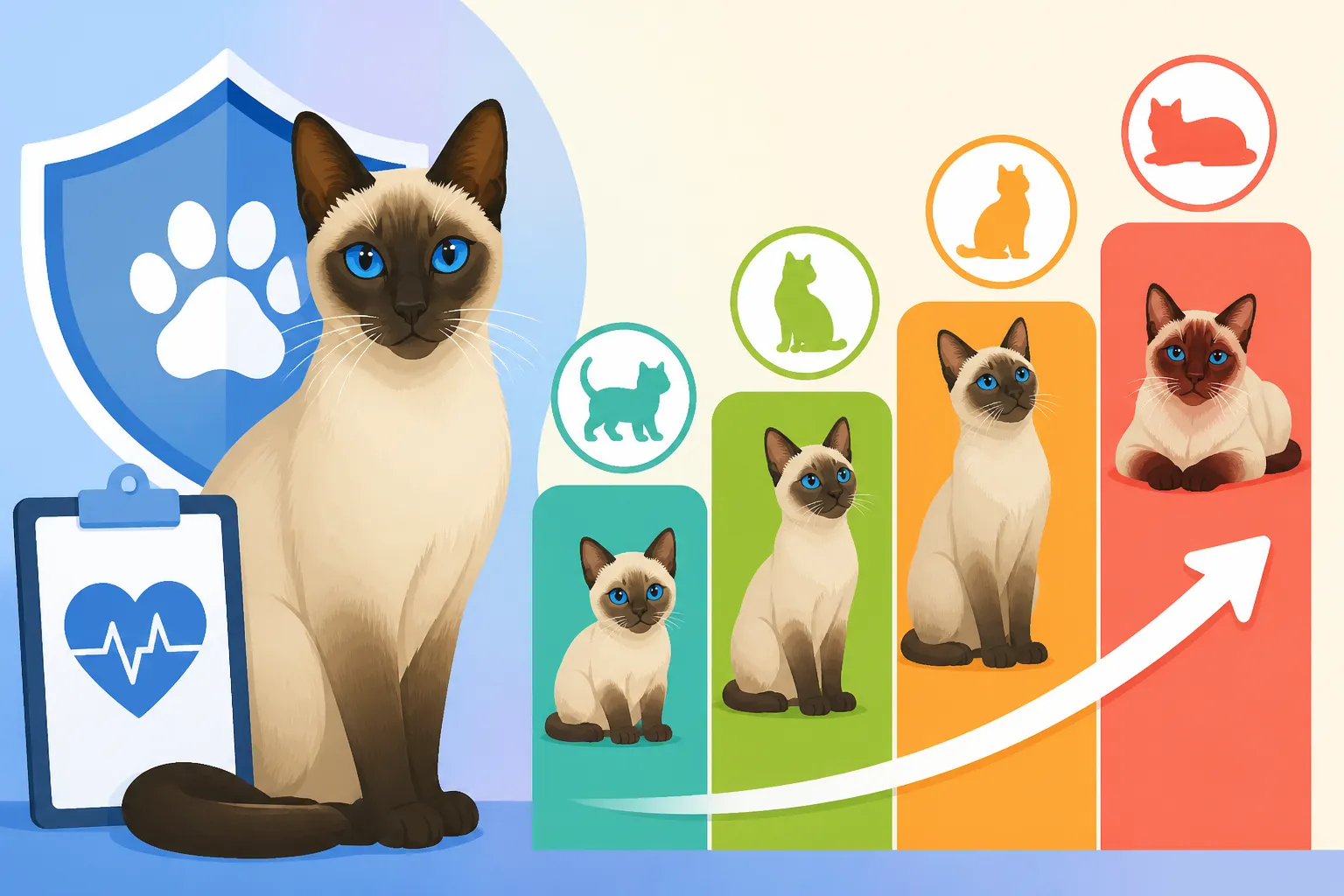
Here’s a simplified illustration of how typical premiums might trend by age bracket, without using specific figures:
| Age Bracket | Typical Premium Trend | Risk Level | Common Health Concerns (Siamese) |
|---|---|---|---|
| Kitten (0-1 year) | Lowest | Low | Accidents, parasites |
| Young Adult (1-6 years) | Moderate, gradual increase | Medium | Accidents, dental issues, early signs of genetic predispositions |
| Mature Adult (7-9 years) | Higher, more noticeable increases | Medium-High | Dental disease, arthritis, early signs of chronic conditions |
| Senior (10+ years) | Highest, steepest increases | High | Kidney disease, hyperthyroidism, heart disease, cancer, cognitive decline |
This table clearly shows why early enrollment is often recommended.
Factors Beyond Age That Influence Your Siamese Cat's Insurance Costs
While age is a colossal factor, it's not the only variable playing into your Siamese cat's insurance premium. Several other elements come into play, and understanding them can help you fine-tune your policy to fit your budget and your cat's specific needs.
Geographic Location Matters
Just like human healthcare, veterinary costs vary wildly depending on where you live. A vet visit in a major metropolitan area like New York City or Los Angeles will almost certainly cost more than the same visit in a rural town in Kansas. Insurance premiums reflect these regional differences in veterinary expenses.
- Cost of Living: High cost of living areas generally mean higher operating costs for veterinary clinics (rent, staff salaries, equipment). These costs are passed on to consumers, and therefore, to insurance providers through higher claims.
- Availability of Specialty Care: Areas with a higher concentration of veterinary specialists (oncologists, cardiologists, internal medicine experts) might also see higher average claim costs, as advanced treatments are more readily available and often more expensive. If you live in an area with a top-notch veterinary teaching hospital, your premiums might be slightly higher to reflect access to that cutting-edge (and costly) care.
Breed-Specific Health Predispositions
While Siamese cats are generally robust, they are a purebred cat and, like many breeds, have certain genetic predispositions. Insurance companies are well aware of these.
- Common Siamese Ailments: Siamese cats are known to be prone to conditions like Progressive Retinal Atrophy (PRA), Amyloidosis Is the Disease That Kills Young Siamese Cats, and certain types of cancer, particularly mediastinal lymphoma. They can also be prone to dental issues like gingivitis and tooth resorption. While pet insurance companies generally do not charge more for a Siamese just because it's a Siamese at the time of enrollment, the risk assessment for future claims will factor in these breed-specific tendencies.
- How it Impacts Premiums: If a breed is known for expensive genetic conditions, the overall baseline risk for that breed is higher, which can subtly influence premiums across the board for all ages. However, the most significant impact comes if your individual Siamese develops one of these conditions after enrollment, as it will be covered, potentially leading to future premium adjustments. This is why a thorough understanding of How Healthy the Siamese Cat Actually Is can inform your insurance decisions.
Deductible, Reimbursement, and Annual Limit Choices
As briefly touched upon, these policy choices are massive drivers of your premium cost. You have significant control over these.
- High Deductible, Lower Premium: Choosing a higher deductible (e.g., $500 instead of $100) will reduce your monthly premium. This is a good option if you have an emergency fund and are comfortable covering a larger initial chunk of a vet bill yourself.
- Lower Reimbursement, Lower Premium: Opting for a 70% reimbursement rate instead of 90% will also lower your premium. Again, this means you're taking on more of the financial risk.
- Capped Annual Limit, Lower Premium: If you choose a policy with a $10,000 annual limit instead of unlimited coverage, your premium will be lower. This can be a reasonable choice for many, but be aware that catastrophic illnesses or multiple major events in a single year could exceed this limit, leaving you to pay the rest.
The balance here is between your monthly budget and your comfort level with potential out-of-pocket expenses during a veterinary emergency. Many owners find a sweet spot around an 80-90% reimbursement rate with a moderate deductible.
Pre-Existing Conditions and Waiting Periods
These are critical considerations that can prevent coverage or delay it, impacting your overall financial outlay.
- Pre-Existing Conditions: Almost no pet insurance policy will cover conditions that existed before your enrollment or before the policy's waiting periods ended. This is why early enrollment is so beneficial. If your Siamese has chronic gingivitis before you get insurance, that specific condition likely won't be covered, even if other dental issues are.
- Waiting Periods: All pet insurance policies have waiting periods – a set amount of time you must wait after enrollment before certain coverages kick in. These vary by provider and type of coverage (e.g., a few days for accidents, a couple of weeks for illnesses, sometimes longer for orthopedic conditions). It's crucial to understand these periods to avoid unexpected out-of-pocket costs if your cat needs care shortly after you sign up. For instance, if you enroll with Chewy's pet insurance program, be sure to read their specific waiting period terms.
Strategies to Manage Pet Insurance Costs for Your Aging Siamese
It's clear that insuring an older Siamese cat can be more expensive, but that doesn't mean it's not worthwhile or that there aren't ways to manage the costs. Proactive planning and smart choices can make a significant difference in alleviating financial stress down the line.
Enroll Early: The Golden Rule
Seriously, if your Siamese is a kitten or young adult, don't wait. This is hands down the best strategy for managing long-term costs and ensuring comprehensive coverage.
- Maximized Coverage, Minimized Exclusions: By enrolling early, you get ahead of potential pre-existing conditions. Every sniffle, limp, or odd cough that happens after enrollment is generally covered, provided it's not during a waiting period. If you wait until your Siamese is 8 years old and starts showing signs of Signs a Siamese Cat's Kidneys Are Failing From Amyloid, any diagnostics or treatment for that specific issue will likely be excluded as a pre-existing condition, drastically limiting the value of your policy.
- Lower Initial Premiums: Starting young means your initial premiums are lower, giving you time to adjust to the cost before the age-related increases become more substantial. It's much easier to absorb gradual increases over time than to face a high premium from the start for an older animal.
Comparison Shop Annually
Don't just set it and forget it! Pet insurance isn't a "one and done" decision. It's a dynamic market, and your Siamese cat's needs (and your budget) will change over time.
- Check Different Providers: What was the best deal for a kitten might not be the best deal for a senior cat. Providers like Healthy Paws, Embrace, Fetch, and many others (including those you might find through Chewy's pet services hub) constantly update their plans and pricing. Spend an hour or two each year comparing quotes.
- Review Policy Details: Pay close attention to the deductible, reimbursement rate, annual limits, and any changes in terms. Sometimes a cheaper premium comes with a significant drop in coverage or a higher deductible. Make sure you're comparing apples to apples, or at least apples to slightly different apples. Look at how their terms handle chronic conditions or hereditary issues specific to Siamese cats.
Adjust Your Policy's Components
You have the power to customize your policy to fit your current financial situation, even as your Siamese ages.
- Increase Deductible: If annual premiums are becoming unmanageable, consider increasing your deductible. If you can comfortably cover a larger upfront cost, this can significantly reduce your monthly payments. Just ensure you actually have that higher deductible amount set aside in an emergency fund.
- Lower Reimbursement Percentage: Similarly, dropping from a 90% to an 80% or 70% reimbursement rate will decrease your premium. This means you'll pay a larger share of the vet bill, but it keeps the monthly cost down.
- Re-evaluate Annual Limits: If your cat has been generally healthy, you might consider a slightly lower annual limit, but exercise caution here. An unexpected major illness can quickly rack up massive bills. For a Siamese, especially an older one, conditions like cancer treatment or emergency surgery for issues related to Why a Siamese Cat's Liver Can Rupture Without Warning can easily exceed a lower annual cap.
Understand What Isn't Covered
Being realistic about policy limitations can prevent disappointment and help you budget for uncovered expenses.
- Pre-Existing Conditions: As mentioned, these are almost always excluded. If your senior Siamese has had arthritis for five years before you get insurance, that arthritis won't be covered. You'll need to budget for those medications and treatments yourself.
- Wellness vs. Illness: Remember the distinction. If you only have an accident and illness policy, routine check-ups and vaccines aren't covered. If those are important for you to budget, consider a wellness add-on or a separate savings fund. Knowing What a Siamese Cat's Yearly Bloodwork Should Cover is a routine expense to plan for.
- Exclusions: Read the fine print! Some policies might have specific exclusions for certain breed-specific conditions or types of treatments. While most reputable providers offer broad coverage, it's always wise to be fully informed.
Consider a Pet Savings Account
For some, especially if their Siamese is already older and has multiple pre-existing conditions, traditional pet insurance might not be the most cost-effective option. In such cases, creating a dedicated "pet emergency fund" or "pet savings account" can be a viable alternative.
- Self-Insuring: You essentially "self-insure" by regularly contributing money to this account. This money is available for any vet bill, without deductibles, reimbursement percentages, or annual limits from an insurance company. The downside is that you need discipline to save, and a major, unexpected bill early on could drain the fund quickly.
- Complement to Insurance: Even with insurance, a pet savings account is a fantastic idea. It can cover deductibles, reimbursement gaps, or any procedures that your policy might not cover. It's just another layer of financial security for your beloved Siamese.
The most important thing is to be proactive. Waiting until your Siamese is sick or elderly to consider insurance will severely limit your options and dramatically increase your costs. By understanding the factors involved and planning ahead, you can ensure your vocal, affectionate companion receives the best possible care throughout their long and happy life with you.
Disclaimer
This article is for general informational purposes only and does not constitute professional advice. Laws, prices and regulations vary by location and change over time. Consult a qualified professional for guidance on your specific situation.