Which Litter Box Suits a Siamese Cat
Many Siamese cat owners find themselves scratching their heads when it comes to the perfect litter box setup. These intelligent, often finicky felines have specific preferences that, if not met, can lead to frustrating accidents or refusal to use their designated spot. It’s not just about providing a box; it’s about providing the right box in the right way. This comprehensive guide will walk you through everything you need to know to choose, place, and maintain the ideal litter box that suits your discerning Siamese, making both your lives much more comfortable and clean. We'll cover everything from their unique physical and behavioral traits to the vast array of options out there, ensuring you can create a truly welcoming elimination station for your beloved Meezer.
The Siamese Cat's Unique Litter Box Preferences
Siamese cats are a breed known for their striking looks, vibrant personalities, and, let's be honest, their sometimes rather specific demands. When it comes to their litter box, these aren't just minor quirks; they're essential considerations that can make all the difference between a happy cat using their box reliably and a stressed cat seeking out alternative, less desirable spots. Understanding these preferences is the first step in ensuring a harmonious household. After all, a clean and appropriate elimination area is fundamental to a cat's well-being. This ties into the broader topic of Litter, Water and Boxes for a Siamese Cat, where all essential resources are carefully considered.
Why Size and Accessibility Matter So Much
Siamese cats, with their lean, athletic builds and surprising agility, might seem like they could contort themselves into any space. However, when it comes to their bathroom, comfort and ease are paramount. A box that is too small forces them to crouch in awkward positions, potentially stepping in their own waste, or even making them feel vulnerable because they can't turn around properly. Imagine trying to use a cramped public restroom; it’s an unpleasant experience for us, and it’s no different for a cat that values its space.
For a Siamese, a litter box should be at least one and a half times their body length, from nose to the base of their tail. This generous sizing allows them to enter, turn around completely, dig enthusiastically, and find a clean spot each time they go. If your Siamese is a particularly enthusiastic digger, a larger box also helps contain the flung litter. Moreover, accessibility is key. While a young, spry Siamese can easily leap into a high-sided box, an older cat or a kitten might struggle. For aging cats, lower entry points are crucial to prevent discomfort or pain, especially if they are starting to feel stiff or develop arthritis, an important consideration when Caring for a Siamese Cat Past Twelve. Over time, physical limitations can change rapidly, and a box that was once perfectly fine can become a painful barrier.
Privacy vs. Openness: Reading Your Cat's Cues
This is where the individual personality of your Siamese truly shines, or, well, demands attention. Some Siamese cats are incredibly secure and don't mind an open litter pan where they can keep an eye on their surroundings. They might even prefer it, feeling less ambushed or trapped. For these cats, an open pan provides a quick escape route should they feel startled. It's a bit like us preferring a public restroom with individual stalls over one with a single, shared toilet; choice and escape routes matter.
On the other hand, many Siamese crave privacy. Their intelligent and sometimes anxious nature can make them feel exposed in an open pan. A covered litter box or even a top-entry box can offer the secluded space they desire. This sense of security can be incredibly important for a shy or nervous Siamese, reducing stress and encouraging consistent litter box use. Think about how a covered box might also muffle some of their characteristic vocalizations. While a What the Siamese Cat's Meezer Yowl Sounds Like is part of their charm, they might appreciate a little acoustic privacy during their private moments, especially if they're particularly dramatic about their bathroom visits! Observing your cat's natural tendencies in other areas of the home – do they prefer hidden napping spots or sprawling out in the open? – can give you valuable clues.
Sensitivity to Scent and Texture
Siamese cats are renowned for their keen senses, and their noses are no exception. They are highly sensitive to strong odors, both pleasant and unpleasant. This means that heavily scented litters, while appealing to some human owners, can be an absolute turn-off for a Siamese. Their powerful sense of smell can perceive these artificial fragrances as overpowering and irritating, leading them to avoid the box entirely. It's a common misconception that scented litter equals cleaner; often, it just masks a problem and creates a new one for your cat.
Beyond scent, the texture of the litter itself plays a huge role. Some Siamese prefer fine, sand-like textures that are soft on their paws and allow for easy digging and covering. Others might tolerate a slightly coarser clay. However, rough, crystal, or pellet litters can be uncomfortable for their delicate paw pads. Imagine walking barefoot on sharp gravel versus soft sand; your cat feels the difference acutely. Any discomfort can lead to "litter box dancing" or, worse, complete avoidance. This sensitivity is also crucial when considering Which Litter Suits an Asthmatic Siamese Cat, as dust and strong perfumes can exacerbate respiratory issues. Always opt for low-dust, unscented options first, and introduce new textures gradually if you need to make a change.
Deciphering the Different Litter Box Styles
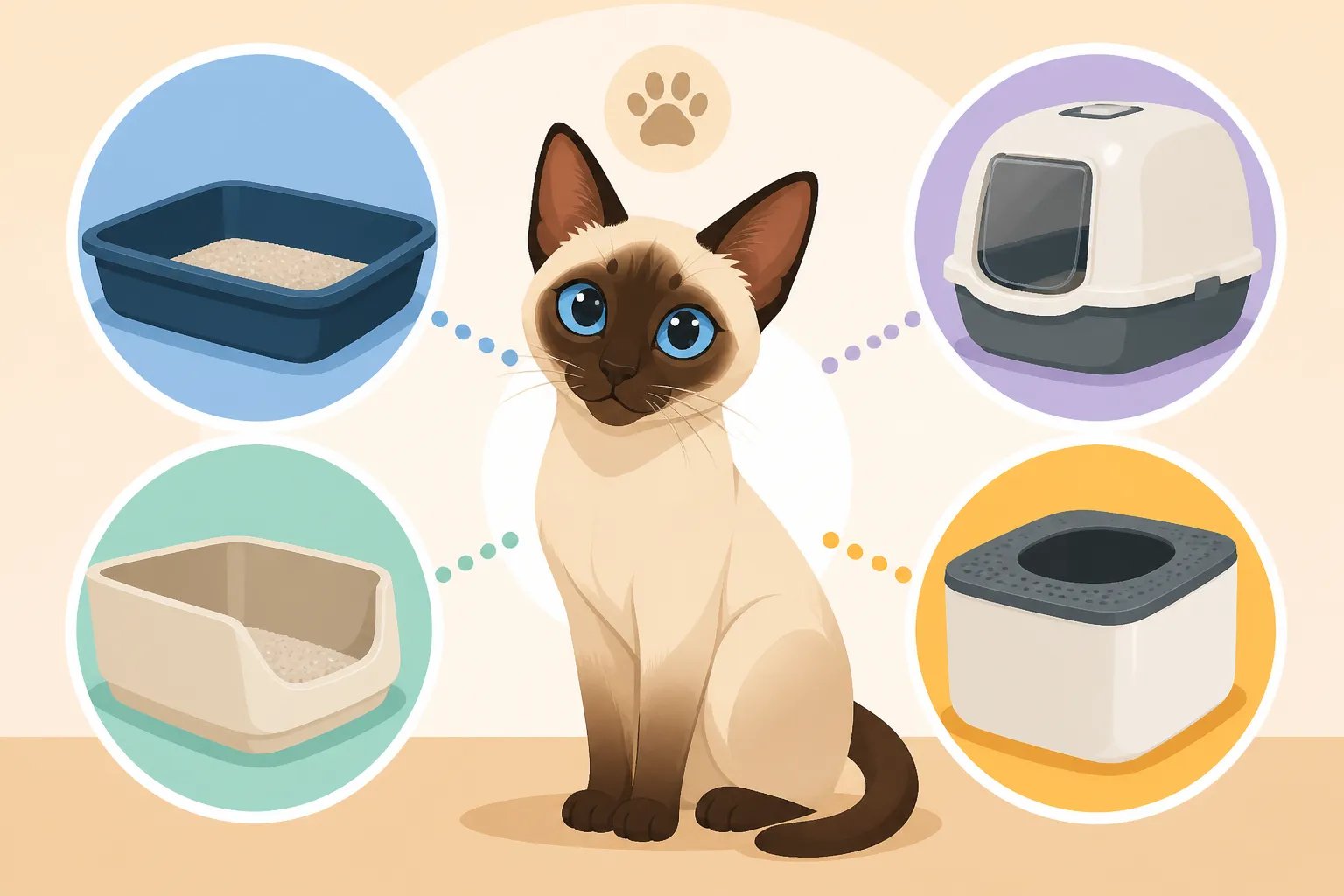
Walking down the pet aisle, you're faced with an overwhelming array of litter box options. It's easy to get lost in the marketing jargon and clever designs. For a Siamese cat owner, understanding the pros and cons of each style, specifically through the lens of your cat's unique needs, is crucial. Let's break down the most common types and how they might (or might not) suit your discerning Meezer.
Traditional Open Pans: Simple and Accessible
The classic, open-top litter pan is the most straightforward option available. It's essentially a plastic tray with raised sides. While it might seem basic, it has some significant advantages, especially for certain Siamese personalities.
Pros:
- Easy Cleaning: Without a hood or complex parts, open pans are incredibly easy to scoop daily and perform full litter changes and scrubbing. You can see all areas of the box, ensuring no hidden messes.
- Good Air Circulation: Odors have nowhere to get trapped, meaning less ammonia buildup, which is a major deterrent for sensitive Siamese noses. This also means your cat isn't breathing in stale, concentrated air while doing their business.
- Easy Access: For kittens, senior cats, or those with mobility issues, an open pan with appropriately low sides is the easiest to enter and exit. There's no awkward maneuvering required.
- Visibility and Escape Routes: Cats, being both predator and prey, appreciate being aware of their surroundings. An open pan allows them to see what's going on and provides multiple escape routes if they feel startled or ambushed by another pet or a child. This can significantly reduce stress, especially in a multi-cat household.
Cons:
- Less Privacy: For Siamese cats who prefer to do their business in solitude, an open pan might feel too exposed.
- Litter Tracking: Without a lid to contain kicks and flicks, litter tracking can be a bigger issue, requiring more frequent sweeping around the box.
- Aesthetics: Let's be honest, a soiled open litter pan isn't the most beautiful sight in your home. It's often visually unappealing.
Ideal For: Siamese cats who don't mind an open bathroom, older cats, kittens, and those in multi-cat homes where reducing ambush points is beneficial.
Covered and Hooded Boxes: The Illusion of Privacy
Covered litter boxes, often resembling a small igloo or a plastic storage bin with a lid and an entry hole, aim to provide privacy and contain messes. They're a popular choice for owners concerned about aesthetics and litter scatter.
Pros:
- Offers Privacy: Many Siamese appreciate the enclosed space, feeling more secure and unobserved while eliminating. This can be particularly beneficial for shy or nervous cats.
- Contains Odors and Litter Tracking Better: The hood acts as a barrier, trapping some odors (though this can be a double-edged sword) and significantly reducing the amount of litter tracked outside the box. This is a common reason owners opt for these.
- Visually Blends into Decor: They often look tidier than an open pan, making them more acceptable in visible areas of the home.
Cons:
- Trapped Odors: The very feature that contains odors for human noses can concentrate them inside the box, creating a highly unpleasant and overpowering environment for your cat's sensitive nose. This can lead to litter box aversion.
- Smaller Entry Points: The restricted opening can make entry and exit awkward for larger Siamese or those with mobility issues. It can also make a cat feel trapped, especially if they are sharing with another cat.
- Harder to Clean: Scooping through a small opening can be cumbersome, and the interior curves and seams can make thorough cleaning more challenging, leading to residue buildup.
- Ventilation Issues: Poor airflow can lead to a humid environment, which some cats find uncomfortable and can even promote bacterial growth.
Ideal For: Siamese cats who clearly prefer seclusion and privacy, and owners who prioritize odor and litter scatter control, provided the cat doesn't develop an aversion to the enclosed space.
Top-Entry Boxes: A Design for Diggers and Trackers
Top-entry litter boxes are a newer innovation, featuring a lid with a hole on top through which the cat enters and exits. They're designed specifically to combat litter tracking and prevent access by other pets.
Pros:
- Excellent for Containing Litter Scatter: This is their standout feature. As the cat jumps out, any litter clinging to their paws often falls back into the box through the grated lid. This significantly reduces tracking around your home.
- Deters Dogs or Small Children: The top entry makes it very difficult for curious dogs or toddlers to access the litter, preventing them from "snack time" or making a mess.
- Encourages More Digging: Some cats enjoy the confined, private space and may feel more comfortable digging vigorously without worrying about making a mess, which can be a natural stress reliever for an energetic Siamese.
Cons:
- Requires Agility to Enter: The cat must jump onto the lid and then down into the box. This is not suitable for kittens, elderly Siamese, or those with any kind of joint pain or mobility issues.
- Can Feel Confining: Like covered boxes, the enclosed nature can make some cats feel trapped or uncomfortable.
- Difficult for Older or Less Mobile Cats: As mentioned, this style is a non-starter for cats who can't jump easily.
- Cleaning Can Be Tricky: Reaching down into the box through the top hole can be awkward for daily scooping, and thorough cleaning requires removing the entire lid.
Ideal For: Young, agile Siamese cats who are enthusiastic diggers or litter flingers, as well as households with dogs or small children who might otherwise bother the litter box.
Self-Cleaning and High-Tech Options: Convenience at a Cost
These automated litter boxes use various mechanisms – rotating rakes, spinning globes, or conveyor belts – to scoop waste automatically after your cat uses the box. They aim to provide a consistently clean surface without daily human intervention.
Pros:
- Automated Cleaning: The primary benefit is convenience for the owner, providing a freshly scooped box after each use.
- Consistent Fresh Surface: Your Siamese always has a clean spot to go, which can prevent aversion due to a dirty box.
- Reduces Daily Scooping: Owners can go longer between manual scooping, though regular maintenance is still needed.
Cons:
- High Initial Cost: These units represent a significant upfront investment compared to traditional boxes.
- Mechanical Issues and Maintenance: Like any electronic device, they can break down, requiring repairs or replacements. They also have more parts to clean and maintain regularly.
- Noise Can Scare Some Siamese: The whirring, raking, or spinning sounds during the cleaning cycle can startle or even terrify some sensitive Siamese cats, leading to complete avoidance. Their inherent curiosity can quickly turn to wariness if the machine spooks them.
- Requires Specific Litter: Many self-cleaning boxes require specific types of clumping litter to function correctly, limiting your choices.
- Some Cats Dislike Moving Parts: The movement itself can be off-putting for some cats, who might view the machine as a threat.
- Not a Substitute for Monitoring: While they scoop, they don't replace the need for owners to observe their cat's elimination habits, which can be an early indicator of health issues.
Ideal For: Owners who value convenience highly and have a Siamese cat that is not easily startled by sounds or movement, and who adapts well to new technology. Always introduce these slowly, perhaps keeping a traditional box alongside it initially. Brands like Litter-Robot are popular choices in this category, and you can explore their features and various models on sites like Amazon or Chewy to see if one might be a good fit for your cat and your lifestyle.
Here's a quick comparison of these styles:
| Feature | Open Pan | Covered Box | Top-Entry Box | Self-Cleaning Box |
|---|---|---|---|---|
| Privacy Level | Low | High | High | Medium-High |
| Odor Control | Low (good ventilation) | Medium (trapped) | Medium (trapped) | High (immediate removal) |
| Litter Tracking | High | Medium | Low | Medium |
| Ease of Cleaning | High | Medium | Medium | Medium (mechanics) |
| Cat Access | Excellent | Good (can be tight) | Requires agility | Excellent (once accepted) |
| Cost | Low | Low-Medium | Medium | High |
| Best For | Seniors, kittens, wary cats | Shy cats, aesthetic-focused | Diggers, dog owners, agile cats | Convenience-seekers, non-skittish cats |
The Critical Role of Litter Box Size and Placement
Choosing the type of litter box is only half the battle. If your Siamese cat finds the box itself unsuitable, or its location inconvenient, unsafe, or simply unpleasant, even the fanciest model won't guarantee success. The dimensions of the box and where you put it in your home are fundamental to promoting consistent and healthy litter box habits.
Getting the Dimensions Just Right
We touched on this earlier, but it truly bears repeating: size matters enormously. A rule of thumb is that the litter box should be at least 1.5 times the length of your cat, from its nose to the base of its tail. This isn't just a suggestion; it's a critical comfort factor. When a Siamese cat uses the litter box, they perform a little ritual: they enter, sniff around, dig a hole, squat, cover their waste, and then usually do a little "kitty dance" to ensure everything is properly buried. If the box is too small, they can't complete this natural behavior comfortably. They might step in their own waste, feel constricted, or even simply refuse to use it because it feels too undignified.
For Siamese cats, who are often enthusiastic diggers and can sometimes send litter flying with their vigorous motions, opting for a box with higher sides can be a game-changer. This helps contain the mess and ensures that their efforts to bury are less likely to result in litter strewn across your floor. Many commercially available boxes are simply too shallow. You might even consider repurposing a large storage tote or an under-bed container as a jumbo litter box. Just be sure to cut a low entry point on one side for easy access. While a large container helps, it won't entirely solve the issue of a cat who vigorously scratches outside the box, which is a common behavior. For those instances, learning How to Cat Proof a Home for a Siamese Cat may involve considering different flooring or protective mats.
Strategic Positioning for Peace of Mind
The location of the litter box is as important as the box itself, if not more so. Cats need to feel safe and secure when they are vulnerable, and going to the bathroom is one of those times. A poorly placed box can lead to anxiety, stress, and, you guessed it, accidents outside the box.
First, avoid high-traffic areas. This means no boxes in busy hallways, laundry rooms right next to noisy washing machines, or by the front door where sudden noises can occur. A quiet corner of a spare room, a bathroom (but not one that's constantly in use or has loud ventilation fans), or a utility closet can be ideal. The goal is to find a spot where your Siamese can go about their business undisturbed.
Second, provide multiple options. The general rule of thumb, especially for multi-cat households, is one litter box per cat, plus one extra. So, if you have one Siamese, you should ideally have two boxes. If you have two Siamese, you need three. This gives them choices, reduces competition, and ensures there's always a clean, accessible spot. This concept is explored further in How Many Litter Boxes a Siamese Cat Household Needs. Placing these boxes in different areas of the house also provides options and minimizes the chances of one cat blocking access to another.
Third, consider factors like food and water. Cats instinctively avoid eliminating near where they eat or drink. Never place a litter box directly next to their food and water bowls. Imagine eating dinner in the bathroom; it's just not appealing. Furthermore, make sure the box is easily accessible at all times. If it's behind a door that frequently closes or in a cupboard that's hard to get into, your Siamese will likely find an easier, less acceptable alternative. Remember, a Siamese that feels stressed by their environment or setup might start to develop behavioral issues, and sometimes, the first sign of stress is inappropriate urination, a topic often covered when discussing Whether a Siamese Cat Urinates When Stressed.
Keeping It Pristine: Cleaning and Maintenance
No matter how perfect the litter box style or how strategic its placement, if it's not clean, your fastidious Siamese won't use it. Siamese cats are known for their meticulous grooming habits and their general disdain for anything less than sparkling. A dirty litter box is not just unappealing; it's a major source of stress and can quickly lead to behavioral problems like urinating outside the box.
The Uncompromising Need for Cleanliness
Siamese cats are notoriously fastidious creatures. To them, a dirty litter box isn't just a minor inconvenience; it's an insult to their refined sensibilities. Imagine you've been invited to a fancy restaurant, but when you step into the restroom, it's visibly unkempt and smells awful. You'd probably look for another place to eat, wouldn't you? Your Siamese feels the same way about their bathroom facilities.
This means daily scooping is non-negotiable. Twice a day is even better if you can manage it, especially in multi-cat households or if your Siamese has a high-traffic box. Clumps and solid waste should be removed promptly. Beyond daily scooping, a full litter change and thorough scrubbing of the box is essential, typically once a week or every two weeks, depending on the number of cats and the type of litter used. During this full clean, empty all the old litter, scrub the box with mild, unscented soap and water, rinse thoroughly, and then let it air dry completely before refilling with fresh litter. Harsh chemical cleaners or strong-smelling disinfectants should be avoided, as their residual scents can be just as off-putting to your cat as a dirty box. Their keen sense of smell will pick up on these odors, even if you can't.
Choosing the Right Cleaning Tools and Supplies
Having the right tools can make the unpleasant task of litter box maintenance much more bearable, and thus, more likely to be done regularly.
- Scoops: Invest in a sturdy metal scoop with appropriately sized slots for your chosen litter. Plastic scoops often bend, break, and struggle with heavy clumps. The slot size matters; too large, and clean litter falls through; too small, and it clogs.
- Liners: While convenient for full litter changes, liners can be a point of contention for diggers. If your Siamese is an enthusiastic excavator, they might tear through the liner, creating pockets where waste can get trapped underneath. If you use liners, ensure they are heavy-duty and fitted snugly. Some cats also dislike the feel or sound of the liner.
- Odor Control: Rather than relying on perfumed litters or deodorizers (which are often irritating to a Siamese's nose), focus on ventilation and frequent cleaning. Baking soda can be sprinkled at the bottom of the box before adding litter to help absorb odors naturally without offending your cat's senses. Activated charcoal inserts can also be effective. Avoid strong sprays or powders that simply mask odors, as these can deter your cat.
- Waste Disposal: Have a dedicated, lidded trash can specifically for soiled litter next to the box. This prevents odors from permeating your home and makes daily scooping a quicker, more efficient task. You can find many options for litter disposal systems on sites like Chewy or Amazon, including those with carbon filters designed to trap odors.
Remember, a clean box is a happy cat's box. Consistently maintaining a spotless environment shows your Siamese you respect their need for hygiene, fostering trust and preventing unwanted accidents.
Troubleshooting Common Litter Box Challenges with Your Siamese
Even with the perfect box and meticulous cleaning, issues can arise. Siamese cats, being the vocal and expressive creatures they are, will often signal their displeasure in ways that can be frustrating for owners. When your Siamese suddenly stops using their litter box, or develops habits like excessive digging outside of it, it's crucial to approach the problem systematically and with empathy.
When Your Siamese Decides Not to Use the Box
This is perhaps the most common and distressing problem for any cat owner. When your Siamese starts urinating or defecating outside the litter box, it's rarely out of spite or naughtiness. More often than not, it's a clear signal that something is wrong. The very first step, before trying any behavioral interventions, is always to rule out a medical issue. Urinary tract infections, bladder stones, kidney problems, diabetes, or even arthritis (making it painful to enter the box) can all manifest as inappropriate elimination. A visit to your veterinarian for a thorough check-up is paramount.
Once medical issues have been ruled out, you can start playing detective.
- Is the box itself the problem? Is it too small now that your kitten has grown? Is it a covered box that's trapping odors and making your sensitive Siamese feel claustrophobic? Is the entry too high for an aging cat?
- Is the litter the issue? Have you recently changed brands or types? Is it scented? Is the texture uncomfortable on their paws? Are you not putting enough litter in the box for them to dig comfortably?
- Is the location causing stress? Has something changed in the environment? Is it now too noisy, too high-traffic, or near a new appliance that spooks them? Has a new pet or person entered the home, making the location feel unsafe? Are there enough boxes in different locations?
- Is the box clean enough? Be brutally honest with yourself. Are you scooping daily? Are you doing full litter changes and scrubbing regularly? A Siamese's standards for cleanliness are often higher than ours.
- Is there general stress? Siamese cats are prone to stress and anxiety, which can manifest in various ways, including litter box avoidance. Changes in routine, new furniture, household conflicts, or even separation anxiety can trigger this. Understanding Whether a Siamese Cat Urinates When Stressed is key to addressing this. Sometimes, increasing playtime, providing more vertical space, or using calming diffusers can help alleviate general anxiety.
Patience and observation are key here. Don't punish your cat; that will only increase their stress and worsen the problem. Instead, focus on identifying and rectifying the underlying cause.
Addressing Litter Tracking and Digging Extravaganza
Siamese cats are known for their energetic, almost frantic, digging. It's part of their natural instinct to bury their waste, but for some, it can turn into an Olympic sport, resulting in a snowstorm of litter around the box. This, coupled with litter tracking, can be a constant source of frustration for owners.
Here are some solutions:
- High-Sided Boxes: As mentioned earlier, simply getting a box with significantly taller sides can contain much of the flung litter. You can often find large storage totes (like those from reputable brands found on Amazon or Chewy) that work perfectly, provided you cut a low entry for your cat.
- Litter Mats: Place a textured litter mat (e.g., honeycomb, woven mesh, or rubber noodle mats) directly outside the litter box. These are designed to catch and trap litter from your cat's paws as they exit, reducing the amount tracked through your home. Look for mats that are easy to clean.
- Top-Entry Boxes: If your Siamese is agile enough, a top-entry box is incredibly effective at containing litter scatter. The grated lid design forces litter off their paws before they jump out.
- Litter Type: While you want to avoid anything uncomfortable, some litter types may track less than others. Larger, heavier granules tend to track less than very fine, lightweight ones. Experiment cautiously, always prioritizing your cat's preference for texture and scent.
- Regular Cleaning: Keeping the box scooped means fewer clumps for your cat to fling around while digging.
- Paw Hygiene: While not always practical, some owners find that wiping their cat's paws (if the cat tolerates it!) after they leave the box can help. Ensure your cat has appropriate scratch posts and surfaces elsewhere to satisfy their scratching needs, which can sometimes be confused with excessive digging in the box. This also relates to How Often a Siamese Cat's Nails Need Trimming as well-maintained claws are less likely to carry out large amounts of litter.
Remember, digging is a natural cat behavior. Your goal isn't to stop it entirely but to manage the mess it creates, ensuring your home remains tidy and your Siamese feels comfortable expressing their natural instincts.
Tailoring the Litter Box Experience to Your Siamese
Ultimately, there's no single "best" litter box for every Siamese cat. Each feline friend has their own unique quirks and preferences, and your job as their human companion is to observe, adapt, and provide the best possible environment. This personalized approach is what makes owning a Siamese cat so rewarding, as you truly get to know their individual personality.
Observing and Adapting to Individual Preferences
While Siamese cats share many breed traits – their vocal nature, intelligence, and affectionate demeanor – they are also distinct individuals. What one Siamese adores, another might utterly despise. For instance, one Siamese might demand the utmost privacy in a covered box, while another feels trapped and prefers an open pan where they can survey their kingdom. This individual nuance is part of What a Siamese Cat's Temperament Is Really Like.
How to observe:
- Watch their interactions: Do they hesitate before entering a covered box? Do they scratch at the sides as if trying to get out? Do they spend an inordinate amount of time pawing around the edges of an open box, trying to "bury" imaginary litter on the wall?
- Monitor litter tracking: Is one type of litter or box design leading to more mess than another?
- Note any changes in behavior: A sudden change in litter box habits, even if it's just a subtle reluctance, is a red flag.
- Experiment cautiously: If you suspect your cat is unhappy, try introducing a second, different type of litter box (e.g., if you have a covered box, add an open pan). Place it in a different, quiet location. Offer a different type of litter. Observe which box they gravitate towards. Never make drastic changes without offering alternatives first, as this can be incredibly stressful for a cat.
The key is to be flexible. What worked for your last cat, or even another Siamese, might not work for your current one. Adapting to their specific needs shows them you care and can prevent many behavioral issues down the line.
Considering the Long Haul: Kittens to Seniors
A litter box setup that is perfect for a playful Siamese kitten might become completely unsuitable as they age. Your cat's needs will evolve throughout their life, and your litter box strategy should evolve with them. Siamese cats are known for their longevity, often living The Fifteen to Twenty Years a Siamese Cat Gets, which means you'll need to be prepared for these changes.
- Kittens: For tiny kittens, accessibility is paramount. The sides of the litter box should be very low so they can easily step in and out without struggling. Large, high-sided boxes can be intimidating. Start with small, open pans and gradually introduce larger ones as they grow.
- Adult Cats: During their prime, most Siamese cats are agile and robust. This is when you can experiment more with covered, top-entry, or even self-cleaning boxes, depending on their personality and your household needs. Continue to ensure the box is adequately sized for their full adult length.
- Senior Cats: As a Siamese cat enters their senior years, typically around The Age a Siamese Cat Is Considered Senior, mobility can become an issue. Arthritis, joint pain, or even general stiffness can make jumping into a top-entry box or stepping over high sides painful. For senior cats, low-sided, easily accessible open pans are usually the best choice. Consider placing extra boxes on each floor of your home to minimize the distance they need to travel. Their eyesight may also decline, making familiar, easily navigable setups even more important.
By staying attentive to your Siamese cat's changing needs throughout their life, you can ensure their litter box experience remains comfortable, safe, and stress-free, contributing to their overall health and happiness for many years to come.
Disclaimer
This article is for general informational purposes only and does not constitute professional advice. Laws, prices and regulations vary by location and change over time. Consult a qualified professional for guidance on your specific situation.