What an Applehead Siamese Cat Is
An Applehead Siamese is the rounder, sturdier-looking type many people picture when they hear “traditional Siamese.” The name describes a head shape, not a separate breed accepted by every registry. That can make breeder listings confusing: two cats may both be called Siamese while looking quite different. Here’s how to understand the term, recognize the type, and ask better questions before choosing a cat.
What the Applehead Siamese name means
A descriptive name, not a universally recognized breed
“Applehead Siamese” is a popular name for a Siamese-type cat with a rounded, fuller head and a more substantial appearance than the very slender, sharply wedge-headed Siamese often seen in show rings. People may also use terms such as “traditional Siamese” or “old-style Siamese,” although those labels aren’t always used consistently.
The distinction is mostly about appearance. An Applehead isn’t automatically a different breed simply because its face is rounder. Depending on the registry, breeder, and cat’s pedigree, the animal may be registered as a Siamese, recognized under another breed category, or sold with an informal description that isn’t a formal registration term.
That’s why a listing that says “Applehead Siamese” doesn’t tell you everything you need to know. It doesn’t, by itself, confirm pedigree, registration, health, or temperament. Ask the breeder what the term means in their program and which records they can provide. For a broader look at the distinction, see Whether a Traditional Siamese Cat Is the Same Breed.
How the applehead look compares with the modern wedge type
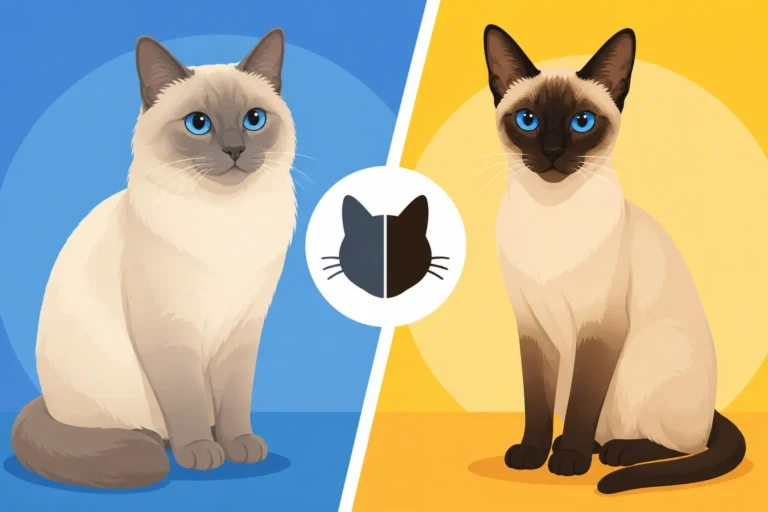
The most noticeable difference is the outline of the head. An Applehead type generally has a rounded skull, fuller cheeks, and a muzzle that appears less elongated. Its ears may look less dramatically large in proportion to the head. The body is often described as sturdy or moderately built, though individual cats can vary.
A modern wedge-type Siamese typically has a long, fine head shape that narrows toward the muzzle, with large ears set to continue the triangular outline. The body is usually long and lean, and the legs and tail can look especially slender. Those are broad visual tendencies, not a guarantee that every cat will fit one neat description.
It helps to think of these as different looks within a complicated history of breeding and standards, rather than as a simple “real Siamese versus not real Siamese” divide. Some people prefer the rounded appearance; others prefer the more elongated show type. Neither preference tells you whether an individual cat is healthy, well socialized, or a good match for your household. What a Wedge Headed Siamese Cat Is explains the contrasting look in more detail.
Applehead does not mean a guaranteed personality
Siamese cats are often described as social, vocal, and strongly attached to their people. Those traits can show up in Applehead-type cats, but head shape doesn’t reliably predict how talkative, cuddly, energetic, or independent a particular cat will be. A kitten’s early experiences, individual temperament, and home environment all matter.
If you’re choosing a kitten, pay attention to how it responds to ordinary handling and new sounds, and ask how it behaves around people and littermates. A shy kitten isn’t necessarily a problem, and an outgoing one isn’t automatically the right fit. The more useful question is whether the breeder or rescue can describe the kitten as an individual instead of relying on a type label.
People sometimes expect any Siamese to be a constant conversationalist, then feel surprised when a particular cat is quieter—or overwhelmed when it calls for attention at inconvenient times. If voice and companionship are part of your decision, What a Siamese Cat's Temperament Is Really Like and How Loud a Siamese Cat Is offer a fuller picture than appearance alone.
How to recognize an Applehead Siamese
Look at the whole cat, not just the face
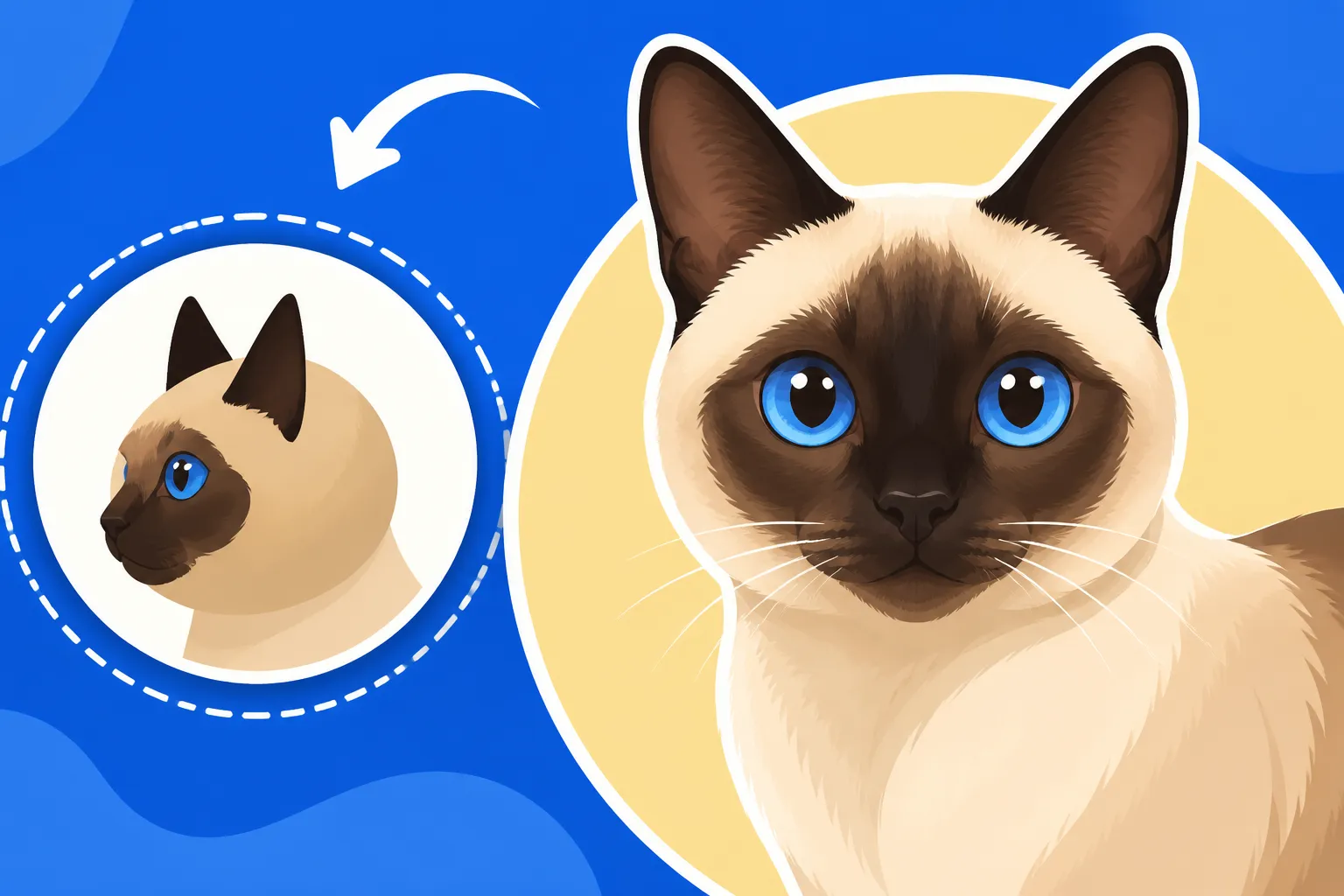
A rounded head can be a helpful clue, but it shouldn’t be the only thing you examine. Look at the cat’s proportions from several angles: the shape of the skull, the length of the muzzle, the size and placement of the ears, and the overall build. A kitten’s features may also change as it grows, so a single photo—especially a close-up—can make proportions hard to judge.
Traditional Siamese-type cats are commonly associated with the familiar pointed pattern: a lighter body with darker color on the face, ears, legs, and tail, along with blue eyes. But color and eye appearance don’t establish that a cat is an Applehead, nor do they prove pedigree. Many cats can share a pointed coat pattern.
The labels can also blur together in everyday conversation. “Applehead,” “old-style,” and “traditional” may be used as near-synonyms by one seller and treated as separate descriptions by another. If the distinction matters to you, ask for clear, unedited photos of the parents and the kitten at different ages, then ask how the breeder defines the terms they use.
Understand the relationship to the Thai cat
The Thai cat is often discussed alongside the traditional Siamese because its appearance can resemble the rounded, moderately built Siamese type. But a Thai cat and an Applehead Siamese aren’t automatically interchangeable labels. Some registries recognize the Thai as a separate breed, while “Applehead Siamese” is commonly used as a descriptive or informal term.
This difference matters if you’re looking for a cat with documented lineage or plan to show it under a particular registry’s rules. Ask which registry issued the paperwork, what breed name appears on it, and whether the seller is using “Applehead” as a visual description or as part of a formal breeding program. You can learn more in What the Thai Cat Is Next to a Siamese Cat and Why Two Siamese Cat Types Split at All.
A careful seller should be comfortable explaining the distinction without turning it into a debate about which cat is “more authentic.” If the answer is vague, or if paperwork and parental information are unavailable, treat the label as a claim to clarify rather than proof of a particular background.
Use coat color and pedigree as separate clues
Siamese point colors often include seal, blue, chocolate, and lilac in traditional breed descriptions, while some registries recognize additional colors or patterns in related categories. The exact rules depend on the registry. A cat’s point color can help describe its coat, but it doesn’t tell you whether its head is apple-shaped or whether its ancestry is documented.
Likewise, a pedigree can identify recorded ancestors without guaranteeing the cat will match the appearance you imagined. If you have a particular look in mind, ask for current photos and adult photos of relatives when available. If you care about registration, request the paperwork and confirm that the registered breed name matches what you’re seeking.
A DNA test shouldn’t be treated as a simple certificate of breed identity. Appearance, paperwork, and ancestry records each answer different questions. For more context, see Whether a DNA Test Confirms a Siamese Cat.
Choosing an Applehead Siamese responsibly
Questions to ask a breeder or rescue
Start by asking what “Applehead Siamese” means to the person using the term. Do they mean a rounded head shape, a traditional-looking Siamese, a particular line, or a cat registered as a different but related breed? A straightforward answer helps you understand what you’re being offered.
Then ask for practical details about the individual cat: age, vaccination and veterinary records, socialization, diet, and any known health concerns in the family. If it’s a breeder, ask to meet the mother or see clear information about both parents, and ask what health screening is performed. A responsible breeder should welcome reasonable questions and won’t pressure you to make a quick decision.
If you’re adopting, the cat’s history may be incomplete. That doesn’t make an adult rescue a poor choice; it simply means you may need to learn about its personality and health over time. A shelter or rescue can often tell you how the cat behaves in care, how it handles handling, and whether it has lived with other animals or children. For a helpful checklist, read What a Siamese Cat Breeder Should Have Screened and Which Health Tests a Siamese Cat Breeder Runs.
| What you want to know | What to ask | Why it matters |
|---|---|---|
| Meaning of the label | “How do you define Applehead in this listing?” | The term may describe appearance rather than formal breed status |
| Registration | “Which registry and breed name appear on the paperwork?” | Registry categories and naming conventions differ |
| Health background | “What health records and family history are available?” | Appearance alone cannot tell you about health |
| Temperament | “How does this cat behave around people and other animals?” | Individual behavior is more useful than assumptions based on type |
| Early care | “What food, routines, and social experiences is the cat used to?” | Familiar routines can make the move home easier |
Consider the cat’s needs, not just the look
An Applehead Siamese is still a companion cat with everyday needs: appropriate food, clean litter, play, a safe place to rest, and regular veterinary care. Before bringing one home, think about how much time you can give a social cat and whether your household can provide activity and interaction. A particular cat may be content with a calm routine; another may seek frequent play and company.
Set up the home before arrival. Choose a quiet room where the cat can settle, place food and water away from the litter box, and provide a scratching surface and hiding place. A familiar food can help during the first days, so ask what the cat currently eats and make any diet change gradually with veterinary guidance. If you’re gathering basic supplies, retailers such as Chewy can be one place to compare food, litter, carriers, and scratching options; the important part is choosing items that suit the cat and your home.
If you already have another pet, introduce them gradually rather than expecting instant friendship. Separate spaces, scent swapping, and short, supervised meetings can reduce pressure. An individual cat’s comfort level matters far more than whether it has an Applehead label. For more on the breed’s social needs, see A Siamese Cat Should Not Live Alone.
Be realistic about health and ongoing care
A particular head shape is not a health guarantee. A rounder face does not automatically mean a cat is healthier, and a wedge-shaped face does not automatically mean the opposite. Ask about veterinary care and family history, and establish a relationship with a veterinarian who can assess your cat as an individual.
Routine care includes preventive checkups, dental attention, vaccinations based on veterinary advice, parasite prevention when appropriate, and monitoring changes in appetite, weight, energy, or behavior. A cat who suddenly stops eating, hides unusually, or seems uncomfortable needs attention for the change itself—not reassurance based on breed type.
Plan for the practical side, too: a secure carrier, litter supplies, food your cat tolerates, and enrichment for times when you’re busy. Chewy may be convenient for replenishing everyday items, but a veterinarian is the right person to guide health-related decisions, including food choices for a cat with a medical condition. For long-term expectations, How Healthy the Siamese Cat Actually Is and How Long a Siamese Cat Lives on Average provide useful context without making promises about any one cat.
Common misunderstandings about Applehead Siamese cats
“Applehead” is not proof of pedigree
A cat can have a rounded head and still have uncertain ancestry. Conversely, a cat with documented Siamese ancestry may not have the rounder look someone expects. Appearance and pedigree are related but different questions, so avoid treating a marketing phrase as a substitute for records.
The same care applies to claims that a cat is “purebred,” “traditional,” or “rare.” Ask what documentation supports the claim and what the words mean in that seller’s context. If the answer changes depending on the question, or a seller avoids basic records, it’s reasonable to pause and look elsewhere.
Rounder does not mean calmer or easier
It’s tempting to assume that a sturdier-looking cat will be quieter or less demanding than a slim, wedge-headed Siamese. There’s no reliable shortcut like that. Two cats from the same litter can differ in confidence, playfulness, tolerance for handling, and how much they vocalize.
Think about your daily routine and what you can realistically offer. If you’re away for long stretches, ask about the cat’s ability to settle alone and consider ways to provide company and enrichment. If you live in an apartment, think about sound and neighbor comfort, not just the cat’s size. Spend time with the individual cat whenever possible, and ask people who know it to describe specific behaviors rather than give a broad label.
The best fit depends on the individual cat
The Applehead Siamese label can help you describe a look you like, especially if you’re drawn to a rounder face and a less elongated build. But it can’t tell you whether a particular cat will suit your home. A thoughtful match comes from combining appearance, reliable information, temperament, and the care you can provide.
If you keep those pieces separate, the search becomes much less confusing. Ask what the label means, verify records when they matter, and meet the cat as an individual. That approach works whether you’re considering a kitten from a breeder or an adult from a rescue—and it helps you choose for the long relationship, not just the first impression.
Disclaimer
This article is for general informational purposes only and does not constitute professional advice. Laws, prices and regulations vary by location and change over time. Consult a qualified professional for guidance on your specific situation.