How Much a Male Siamese Cat Weighs
A male Siamese can look surprisingly slender beside a stockier cat, so a number on the scale may seem worrying even when he is healthy. The challenge is that there is no single ideal weight for every male Siamese. This guide explains the usual adult range, how to judge body condition, and when a weight change deserves a vet’s attention.
Typical weight for an adult male Siamese
The usual range is a starting point, not a target
Many adult male Siamese cats weigh around 8 to 12 pounds, or roughly 3.6 to 5.4 kilograms. Some healthy males fall outside that range. A larger-framed cat may weigh more, while a smaller-framed cat may weigh less and still be in good condition.
That range is most useful as a rough reference, not a pass-or-fail test. Two male Siamese cats can weigh the same but have different body conditions: one may have a healthy amount of muscle and fat, while the other has excess fat or has lost muscle. If you are comparing your cat with a breed overview, What a Siamese Cat Weighs offers a broader look at the breed, but your own cat’s build and health history matter more than a general figure.
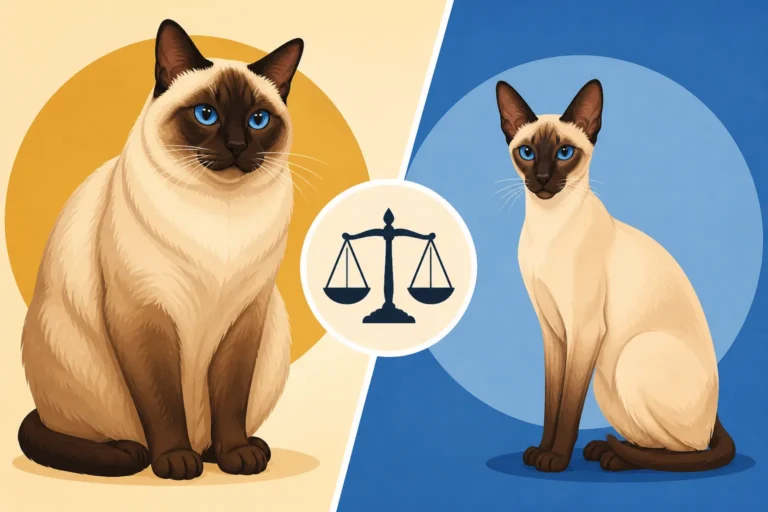
Siamese cats are often long, fine-boned, and athletic-looking. Their outline can make them seem “too thin” to someone accustomed to a rounder-bodied cat. On the other hand, the breed’s active nature does not make unexplained weight loss harmless. The meaningful question is not only “What does he weigh?” but also “Is this a healthy weight for his frame, and is it stable?”
Age and frame change what a healthy number looks like
A kitten’s weight changes as he grows, so adult ranges should not be applied to a young cat. Growth is not perfectly uniform: kittens may gain steadily, then have short periods when their progress seems slower. Your vet can assess his growth over time, particularly if he is not gaining as expected or appears unwell.
Young adult males may still be filling out after they have reached much of their height and length. An older cat may also lose muscle with age, even if the number on the scale changes only a little. That is one reason it helps to keep weight records instead of relying on memory. How Big a Siamese Cat Gets gives useful context on size and development, while The Age a Siamese Cat Is Considered Senior can help owners think about later-life changes.
| Cat or situation | What to keep in mind |
|---|---|
| Adult male Siamese | Around 8 to 12 pounds is a broad reference range, not a required target |
| Growing kitten | Track growth over time and ask your vet if progress stalls or health changes appear |
| Large-framed adult | May weigh more while still having a healthy body condition |
| Small-framed adult | May weigh less than the broad range and still be healthy |
| Older cat | Muscle loss or gradual weight change deserves attention, even if he still looks active |
Breed appearance can be misleading
A lean outline is often part of the Siamese look, but “lean” and “underweight” are not the same thing. A healthy cat should have a visible waist from above and a slight abdominal tuck from the side, without sharply jutting bones or a hollow, wasted appearance. You should be able to feel the ribs under a light layer of tissue, rather than having to press hard to find them.
A cat’s coat can also disguise changes. A sleek coat may make the body look more angular, while a fluffy coat can conceal weight loss or gain. If your cat’s shape seems different, use your hands as well as your eyes: gently feel along the ribs, spine, hips, and abdomen. What a Healthy Siamese Cat Weighs explains why body condition is more informative than a single breed-wide number.
If you are unsure whether your male is naturally fine-boned or genuinely too thin, ask your vet to score his body condition and compare it with previous records. This is particularly useful when you have adopted an adult cat and do not know what his usual weight was. Why a Siamese Cat Feels Bony can help you understand which features may be normal and which deserve closer assessment.
How to tell whether your male Siamese is at a healthy weight
Use body condition, not just the scale
A scale gives you a number; a body-condition check helps explain it. Look at your cat from above while he is standing. There should usually be a gentle narrowing behind the ribs rather than a straight-sided or rounded outline. From the side, the belly should rise slightly toward the hind legs, though the exact shape varies with age, posture, and body build.
Then gently run your hands along his ribs and back. Ribs should be easy to feel under a light covering, but they should not feel as though they are pressing against the skin. The spine and hip bones should not be prominent. If bones are very obvious, or if there is little padding over the ribs, it is worth arranging a veterinary assessment rather than trying to solve the problem by simply offering more food.
The reverse is also important. A cat can have a slender face and long legs but still carry excess fat around his abdomen or chest. If you are concerned he may be underweight, Whether a Thin Siamese Cat Is Underweight can help you separate appearance from more useful clues. For a practical hands-on check, see How to Tell If a Siamese Cat Is Too Thin.
Weigh him consistently at home
Cats rarely cooperate with a bathroom scale, but a simple routine can make home tracking possible. If you have a suitable pet scale, place it on a firm, level surface and weigh your cat under similar conditions each time. A weekly or monthly record may be useful depending on your vet’s advice and your cat’s health; weigh him more often only if a professional has recommended closer monitoring.
If you do not have a pet scale, you can weigh yourself holding your cat and then subtract your own weight. This method is less precise, especially if either number fluctuates, but it can help show a broad trend. Try to use the same scale, similar timing, and the same method each time. A quick note in your phone or on a calendar is more reliable than trying to remember whether he looked heavier last month.
Keep the record simple: date, weight, food changes, appetite, and any symptoms. If you buy food through Chewy or another retailer, save the package label or take a photo of it so you can compare the calorie information if his diet changes. The packaging is a reference, not a personal feeding prescription; your cat’s needs depend on his age, activity, health, and body condition.
Look for changes in shape and behavior
A gradual change can be easy to miss when you see your cat every day. Pay attention to whether his collar or harness fits differently, whether his waistline is changing, or whether you can feel his ribs more clearly than before. Also notice changes in appetite, thirst, litter-box habits, grooming, energy, and willingness to jump or play.
A drop in weight despite a normal or increased appetite is different from a small variation after a change in routine. Likewise, a cat who is eating less, hiding, vomiting, or seeming unusually tired should not be put on a “wait and see” diet plan. Weight change can be one clue among many, and your vet may need to examine him and decide whether testing is appropriate.
Changes can be especially subtle in an older Siamese. Muscle loss may show first along the back or hindquarters, even when the scale does not move dramatically. What Changes in an Aging Siamese Cat After Twelve discusses age-related changes, and Why an Old Siamese Cat Loses Muscle covers one possible reason an older cat’s shape can change.
Feeding and weight management for a male Siamese
Feed for his individual needs
The feeding guide on a food package is a starting estimate, not a precise prescription. It cannot account for every cat’s activity level, neuter status, age, medical conditions, or body condition. If you are unsure how much to feed, ask your vet to help set a daily amount and review it as your cat’s weight or needs change.
Measure food rather than estimating by eye. A scoop can hold more than expected, and small extras—treats, table scraps, food from another pet’s bowl—can add up. If several people in the household feed him, agree on who gives meals and how treats are counted. That simple step can prevent the familiar mystery of a cat who appears to be eating “only a little” but is receiving several untracked snacks.
Whether you use food purchased at a clinic, a local shop, or Chewy, check the calorie information on the specific package rather than assuming two foods have the same energy content. If you change foods, transition gradually unless your vet advises otherwise. For more context on meals and portions, see How Much an Adult Siamese Cat Eats and How Many Meals a Day a Siamese Cat Needs.
Keep a naturally active cat moving
Many Siamese enjoy interaction, climbing, and games that involve chasing or problem-solving. Short play sessions can make activity easier to fit into a busy day than one long session. Try a wand toy, a tossed soft toy, or a puzzle feeder, and rotate activities so he has a reason to stay engaged.
Exercise is not a substitute for a veterinary check when weight is changing unexpectedly. It is also not a reason to push an overweight cat into intense activity. Start gently, watch for reluctance or unusual fatigue, and adjust the routine to his age and mobility. A cat who used to leap onto a high shelf but now hesitates may have discomfort, not laziness.
Food puzzles can help some cats slow down and work for part of their meal. If your cat becomes frustrated or stops eating, simplify the puzzle or return to a bowl while you reassess. How Easily a Siamese Cat Gets Fat offers additional context on managing weight, while Why a Siamese Cat Burns Calories Fast discusses the breed’s energetic reputation without treating every individual as identical.
Avoid trying to correct weight at home without guidance
If your male Siamese seems thin, increasing portions may sound like the obvious fix. But unexplained weight loss can have medical causes, and extra food may delay identifying the underlying problem. A vet can help determine whether your cat needs a diet adjustment, examination, or further evaluation.
If he is overweight, avoid crash diets or sharply reducing food on your own. Cats need gradual, carefully managed weight loss; eating too little can create serious health risks. Your vet can recommend a safe approach and help you check progress. The goal is not to make every Siamese look the same. It is to support a healthy body condition and preserve strength and mobility.
When to contact your veterinarian
A sudden or ongoing change needs attention
Arrange a veterinary appointment if your cat’s weight is falling or rising without a clear explanation, if you notice a persistent change in appetite, or if his body shape is changing despite the scale seeming stable. A vet may compare his current weight with previous records, check his body condition, and ask about food, activity, thirst, urination, vomiting, or stool changes.
Bring your notes if you have them. A record showing a gradual decline over several months can be more useful than saying he “seems a little thinner.” If you adopted him recently, share any available shelter or previous veterinary records. When history is missing, the current examination still gives the vet a starting point for tracking him from here.
A single weigh-in is rarely the whole story. A cat may weigh slightly differently depending on the scale, timing, or recent meal. What matters is the pattern alongside his condition and behavior. If you are uncertain whether a change is significant, call the clinic and describe what you have noticed rather than waiting for the next routine visit.
Seek urgent care for severe symptoms
Weight concerns become more urgent when paired with signs such as difficulty breathing, collapse, profound weakness, repeated vomiting, inability to keep food or water down, or straining without producing urine. These symptoms warrant prompt veterinary advice. Do not delay care while trying a new food or supplement.
For a cat who is eating poorly, especially if he has stopped eating, contact your vet promptly for advice. Cats can become seriously unwell when they go without adequate food. Avoid force-feeding or giving human medication unless a veterinarian has specifically directed you to do so.
Make the weight record part of routine care
At wellness visits, ask the clinic to record his weight and body-condition score so you have a consistent baseline. If your cat has a health issue or is losing weight, your vet may recommend more frequent checks or bloodwork. What a Siamese Cat’s Yearly Bloodwork Should Cover provides background on preventive monitoring, but your veterinarian can determine which checks are appropriate for your cat.
A healthy male Siamese does not need to match a textbook number exactly. A weight around 8 to 12 pounds is a useful adult reference, but his frame, muscle, body condition, and personal history tell the fuller story. Track changes, feed measured portions, and ask for veterinary guidance when his weight or behavior shifts. That approach is far more useful than trying to make him fit a single number.
Disclaimer
This article is for general informational purposes only and does not constitute professional advice. Laws, prices and regulations vary by location and change over time. Consult a qualified professional for guidance on your specific situation.