What Separation Anxiety Looks Like in a Siamese Cat
It’s truly disheartening to see your beloved Siamese cat exhibit frantic behaviors the moment you grab your keys, or return home to a scene of shredded curtains and heartbroken yowls. Many Siamese owners struggle with understanding if their cat's intense reactions to their absence are just part of their quirky personality or something more serious, like genuine separation anxiety. This comprehensive guide will help you decode those distress signals, understand the root causes, and equip you with practical strategies to foster a more secure and content feline friend, even when you're not around.
Understanding the Deep Bond of a Siamese Cat
Siamese cats aren't just pets; they're family members who embed themselves deep into our lives. Their unique personality traits, from their striking blue eyes to their distinctive vocalizations, often come with an equally distinctive need for companionship. This isn't a breed that’s content to merely coexist with you; they want to participate in your life, offering boundless affection and expecting it in return.
The Siamese Cat's Innate Need for Connection
From the moment you bring a Siamese kitten home, you'll likely notice their incredible capacity for forming strong bonds. They're often described as "dog-like" in their loyalty, following you from room to room, eager to be involved in whatever you're doing. This isn't just a preference; it's often an inherent part of their temperament. Unlike some more aloof feline breeds, a Siamese thrives on interaction, conversation, and physical closeness.
This deep-seated need for connection stems from their history and selective breeding. For centuries, these cats were treasured companions, often found nestled beside royalty or monks in their homeland. They evolved to be highly interactive, intelligent, and vocal, using their distinct "meezer yowl" to communicate their needs and desires. It’s this intense social drive that makes them such wonderful, engaging companions, but it also lays the groundwork for potential anxieties if their social needs aren't met consistently.
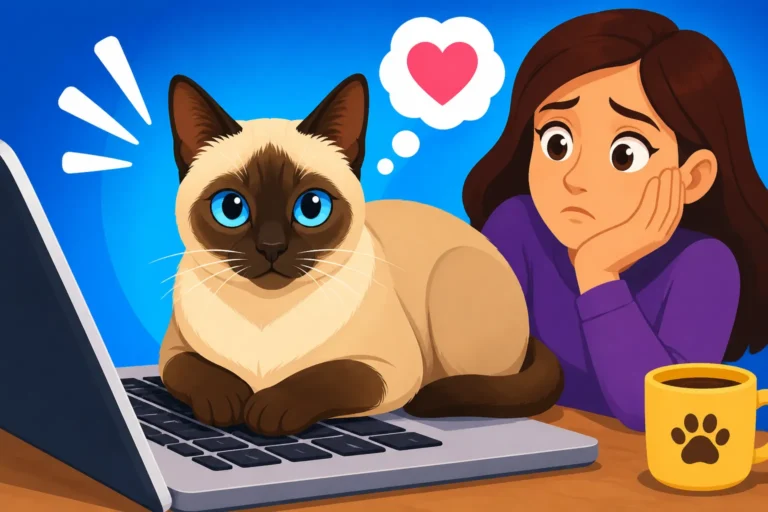
You'll often find your Siamese perched on your lap, kneading your chest, or even trying to "help" you type on your laptop. They crave that physical touch and constant presence, seeing themselves as an integral part of your daily activities. This isn't just about getting food or attention; it's about being connected to their chosen person, often forming an almost singular attachment that can be incredibly strong.
How a Siamese Cat Expresses Affection
Siamese cats have a vast repertoire for showing affection, which can be delightful but also hints at their dependency. They'll head-bonk you, purr like a motorboat, trill soft greetings, and engage in long, involved "conversations." They use their entire body to express their feelings, from a slow blink to a tail wrapped around your leg, all designed to reinforce their bond with you.
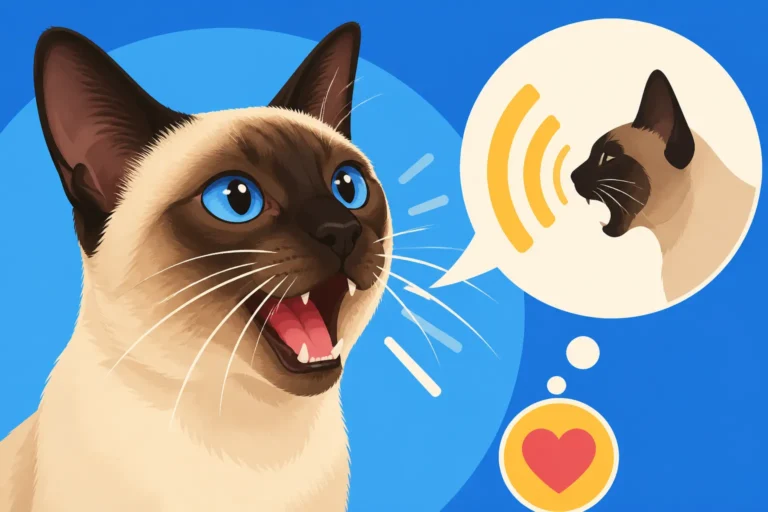
Their vocalizations are perhaps the most famous aspect of their communication. A happy Siamese will chirp and trill, especially when they greet you. They’ll engage you in lengthy "discussions" about their day or yours, often seeming to genuinely listen and respond. This constant back-and-forth communication is a cornerstone of their affectionate nature and strengthens the connection they feel with their human companions. For more on their voices, check out What the Siamese Cat's Meezer Yowl Sounds Like.
Physical closeness is another key indicator of their affection. They love to be touched, petted, and held, often seeking out the warmest spot right next to you, or even under the covers. Many Siamese will "supervise" you from a nearby perch or follow you into every room, simply wanting to be in your orbit. This constant companionship, while endearing, can become problematic if it's the only way they feel secure and loved.
When Attachment Becomes Over-Attachment
There's a fine line between a deeply affectionate cat and one who becomes overly dependent on your presence. A healthy attachment means your cat enjoys your company but can also entertain themselves and remain calm when you're not around. Over-attachment, however, signals a fragile emotional state where your cat's sense of security is entirely tied to your physical presence.
This over-attachment can manifest in subtle ways at first. Perhaps your Siamese seems a little too clingy when you're home, following you even to the bathroom, or getting agitated if a closed door separates you. They might start meowing incessantly if you leave the room for even a few minutes, turning what was once a charming trait into a demanding plea for constant attention. A Siamese Cat Will Not Be Ignored touches on how insistent they can be.
The real challenge emerges when you prepare to leave the house. An over-attached Siamese might start showing signs of anxiety the moment they sense your impending departure – the rustle of keys, putting on your shoes, or grabbing your bag. This isn't just a mild protest; it's a genuine fear of abandonment that can escalate into full-blown separation anxiety, indicating that their emotional well-being is heavily reliant on your constant presence.
Spotting the Subtle (and Not-So-Subtle) Signs of Separation Anxiety
Identifying separation anxiety in a Siamese cat can sometimes be tricky because many of their natural behaviors – like vocalizing or being attention-seeking – can be amplified by stress. However, true separation anxiety goes beyond typical Siamese antics and manifests as persistent distress triggered specifically by your absence or the anticipation of it. It’s about looking for patterns and intensity that deviate from their usual happy-go-lucky self.
Destructive Behaviors and Misdirected Energy
One of the most upsetting and unmistakable signs of separation anxiety is destructive behavior. This isn't your cat playfully batting at a loose thread on the couch; this is often intense, focused destruction that occurs while you're away. It's a clear sign of extreme stress and an attempt to cope with overwhelming emotions.
You might come home to find claw marks deeply embedded in doorframes, windowsills, or curtains – often around exit points. This kind of damage suggests your Siamese was desperately trying to get out or reach you. They might also chew on inappropriate items, like electrical cords, houseplants, or even your personal belongings that carry your scent, such as clothing or shoes. This chewing can be a self-soothing mechanism, but it can also be dangerous.
Another form of destructive behavior can be knocking things over or tearing up papers. While some cats enjoy batting objects around, a Siamese with separation anxiety might do this with a frantic energy that leaves a trail of chaos in its wake. It’s not about maliciousness; it’s about a deeply anxious mind trying to externalize its internal turmoil, often resulting in significant damage around the house. Consider browsing for some durable Amazon toys and scratchers that can withstand their anxious energy.
Excessive Vocalization: The Yowl That Breaks Your Heart
Siamese cats are known for being talkative, but there's a distinct difference between their regular "conversations" and the distressed yowling associated with separation anxiety. If your neighbors are complaining about constant, mournful cries or shrieks that only start when you leave and stop when you return, that's a huge red flag. This isn't just "talking"; it's a desperate plea for your return.
This vocalization can be relentless, lasting for hours. It’s often a low-pitched, almost mournful yowl, distinct from their playful chirps or demanding "feed me" meows. It signifies deep emotional pain and a feeling of abandonment. Some cats might even pant or hyperventilate while vocalizing, showing the physical toll this anxiety takes on them.
The sound is often a heartbreaking experience for owners, even if they only hear it captured on a pet camera or reported by a neighbor. It’s not just loud; it carries an unmistakable tone of despair. Understanding What the Siamese Cat's Meezer Yowl Sounds Like in different contexts can help you discern true distress from normal communication.
Inappropriate Elimination: A Cry for Help
Finding urine or feces outside the litter box is often one of the most frustrating and misunderstood signs of separation anxiety. Many owners mistakenly believe the cat is "getting back at them" for leaving, but in reality, it's almost always a sign of stress or an underlying medical issue. When it's linked to separation anxiety, the eliminations happen specifically when you're gone.
The locations of these "accidents" can also be telling. Often, an anxious Siamese will urinate on items that smell strongly of you – your bed, your laundry, or even your side of the couch. This isn't about marking territory in a defiant way; it's often an attempt to create comfort by surrounding themselves with your scent, which can be reassuring when they feel alone.
It's crucial to rule out medical causes first, as urinary tract infections or kidney issues can also lead to inappropriate elimination. However, if your vet gives your Siamese a clean bill of health and the behavior consistently occurs only when you're absent, separation anxiety is a very strong suspect. This behavior isn't about malice; it's a profound manifestation of their emotional distress, and they genuinely can't help it.
Changes in Eating or Grooming Habits
Anxiety can dramatically impact a cat's daily routines, including their basic needs like eating and self-care. A Siamese suffering from separation anxiety might completely lose their appetite while you're gone, only to gobble down their food ravenously the moment you walk through the door. This feast-or-famine pattern indicates that their stress levels are interfering with normal physiological functions.
On the other hand, some anxious cats might overeat out of boredom or stress, leading to weight gain. It's less common for separation anxiety than undereating, but it can happen, especially if combined with a general feeling of insecurity. Observing their eating habits via a pet camera can provide valuable insights into their behavior when alone.
Grooming habits can also change. Some cats will excessively groom themselves, licking until they create bald patches or skin lesions, a condition known as psychogenic alopecia. This is a compulsive coping mechanism for stress, where the act of licking provides a temporary sense of relief. Conversely, some cats might neglect their grooming altogether, appearing disheveled and unkempt, a sign of depression or overwhelming anxiety. Either extreme is a clear indication that something is amiss.
Hiding, Pacing, or Hyper-Vigilance Before You Leave
The signs of separation anxiety don't always wait until you're out the door. Often, a Siamese will start displaying anticipatory anxiety as soon as they pick up on your "departure cues." These cues can be as subtle as putting on a specific jacket, grabbing your car keys, or even the sound of your morning alarm if it signals an impending work day.
You might notice your cat becoming hyper-vigilant, watching your every move with intense focus. They might start pacing restlessly, winding through your legs, or trying to block your path. Some might try to hide, perhaps under the bed or in a closet, as if attempting to avoid the inevitable moment of your departure. This isn't a playful game; it's a frantic response to anticipated stress.
The moment you actually leave, the anxiety can peak, leading to frantic behaviors like jumping at windows, scratching at doors, or a sudden burst of intense vocalization. When you return, they might greet you with an exaggerated display of excitement, almost as if they were convinced you would never come back. This intense relief upon your return further underscores the depth of their separation distress. For advice on helping them manage their time alone, consider How Long a Siamese Cat Can Be Left Alone.
What Triggers Separation Anxiety in a Siamese Cat?
Separation anxiety in Siamese cats isn't usually an overnight phenomenon; it often develops due to a combination of their inherent personality and specific environmental or routine changes. Understanding these triggers is paramount to effectively addressing and mitigating the anxiety, as it allows you to tackle the root cause rather than just the symptoms.
Sudden Changes in Routine or Environment
Cats, especially highly sensitive breeds like the Siamese, are creatures of habit. They thrive on predictability and routine, and any sudden disruption can be deeply unsettling. A major change in your household schedule, such as a new work-from-home setup ending and you returning to the office, is a prime trigger. Your Siamese might have grown accustomed to your constant presence, making your sudden absence a shock.
Moving to a new home is another significant environmental trigger. Even if you're with them, the unfamiliar sights, sounds, and smells can be overwhelming. Once you start leaving them alone in this new, alien territory, their anxiety can skyrocket. Similarly, the introduction of a new pet or family member, or the departure of an existing one, can throw a sensitive Siamese into a tailspin, leading to insecurity when left alone.
Even seemingly minor shifts can have an impact. Changing feeding times, altering your sleep schedule, or even rearranging furniture can be enough to trigger unease in a highly sensitive Siamese. They rely on their environment and routine for a sense of safety, and when that structure is disturbed, their baseline anxiety increases, making them more susceptible to full-blown separation distress when you're not there to reassure them.
Past Experiences: The Shadow of Abandonment
Just like humans, cats can carry emotional baggage from their past. Rescue Siamese cats, particularly those who have been rehomed multiple times or spent time in shelters, are often more prone to separation anxiety. They may have experienced genuine abandonment or inconsistent care, making them incredibly fearful that their current guardian will also leave them for good.
A kitten who was weaned too early or didn't have enough social interaction with their mother and littermates might also develop attachment issues. These crucial early experiences lay the foundation for a cat's emotional security. If this foundation is weak, they might struggle with confidence and independence later in life, making them more vulnerable to anxiety when left alone.
Even if your Siamese has always been with you, certain events could have created a fear of abandonment. A lengthy hospitalization of yours, a period where you were frequently absent, or even a traumatic event that occurred while you were away (like a loud storm or an intruder) could embed a fear that becomes associated with your absence. These past shadows can loom large in their minds, making every departure a terrifying prospect.
Lack of Adequate Stimulation
A bored Siamese is often a destructive Siamese, and sometimes, what looks like separation anxiety might have a component of unmet stimulation needs. These cats are incredibly intelligent and energetic; they need mental and physical engagement to thrive. If they're left alone for long periods without anything interesting to do, boredom can quickly morph into frustration, then anxiety.
Imagine being stuck in a house all day with nothing to do. You'd likely start pacing, chewing on things, or becoming restless. A Siamese cat feels similarly. Without interactive toys, puzzle feeders, cat trees for climbing, or engaging window perches, their considerable energy and intelligence have no outlet. This pent-up energy, when combined with your absence, can be a potent cocktail for anxiety. Find some engaging options on Amazon for puzzle feeders and interactive toys.
This lack of stimulation is particularly acute for indoor-only Siamese cats who don't have the natural enrichment of the outdoors. They rely entirely on their indoor environment to keep them entertained and mentally fit. If that environment is sparse or static, their minds become under-stimulated, making them more prone to destructive behaviors and anxiety when their primary source of interaction – you – is gone.
Over-Reliance on a Single Person
While Siamese cats are known for bonding deeply with their families, they sometimes form an almost exclusive attachment to one particular person. This intense, singular bond can be beautiful but also precarious. If that one person is frequently absent, the cat can become utterly lost and distressed, as their entire world revolves around that individual.
This over-reliance can be fostered inadvertently. If one person is consistently the primary caregiver, the sole source of play, comfort, and feeding, the cat learns to associate all good things and security with that one individual. Other family members might be tolerated but aren't seen as a source of equal comfort or safety.
When that primary person leaves, the cat is left feeling completely adrift, even if other family members are home. This isn't a slight against others; it's a profound manifestation of their intense, singular attachment. Encouraging other family members to engage in play, feeding, and petting can help broaden the cat's comfort circle and reduce this over-reliance, providing a wider support system when their main person is away. Whether a Siamese Cat Bonds to One Person further explores this dynamic.
Distinguishing Separation Anxiety from Other Issues
It's tempting to immediately attribute any problematic behavior in your Siamese to separation anxiety, especially given their clingy nature. However, it's incredibly important to differentiate true separation anxiety from other medical or behavioral issues that might present similarly. Misdiagnosis can lead to ineffective treatments and prolonged distress for your feline friend.
Medical Conditions Mimicking Anxiety
Before you jump to behavioral conclusions, your first stop should always be the veterinarian. Many underlying health problems can manifest as behavioral changes, including increased vocalization, inappropriate elimination, or changes in appetite. Conditions like hyperthyroidism, urinary tract infections, kidney disease, or even dental pain can cause a cat to act out or become withdrawn.
For example, a Siamese with a urinary tract infection might urinate outside the litter box due to pain or increased urgency, which could be mistaken for anxiety-induced inappropriate elimination. Similarly, a cat in pain from Dental Disease in a Siamese Cat might become irritable or withdrawn, leading to behavioral changes that appear like stress. An older cat with cognitive dysfunction (dementia) might vocalize excessively or seem confused, especially at night, which could be misconstrued as anxiety.
A thorough veterinary check-up, including bloodwork and a urinalysis, is crucial to rule out these possibilities. Describe all symptoms in detail, including when they occur (e.g., "only when I'm gone"), to help your vet narrow down the possibilities. Don't skip this vital step, as treating a behavioral problem when a medical one is present will not only fail but could delay crucial care for your cat.
Behavioral Issues Not Related to Your Absence
Not every instance of problematic behavior points to separation anxiety. Sometimes, a Siamese cat might exhibit undesirable actions for reasons entirely unrelated to your departure or return. These behaviors, while still needing to be addressed, require a different approach than true separation anxiety.
For instance, inappropriate elimination could be due to an aversion to the litter box itself – perhaps it's too dirty, the litter type is disliked, the box is too small, or its location is undesirable. Territorial marking, especially in unneutered males, can also lead to spraying, which is distinct from anxiety-driven urination. If these issues occur whether you're home or not, or if they're targeted at specific areas regardless of your presence, it's likely not separation anxiety.
Similarly, destructive scratching might simply be due to a lack of appropriate scratching posts or a preference for certain textures. A cat who isn't getting enough mental or physical exercise might also act out of boredom, batting at objects or getting into mischief even when you're present. Understanding What a Bored Siamese Cat Destroys can help differentiate between boredom and anxiety.
The Difference Between Boredom and Anxiety
This distinction is perhaps the most challenging, as boredom can certainly exacerbate anxiety. However, there are key differences. A bored Siamese might be destructive, but often it's more exploratory or playful in nature, even if inconvenient for you. They might knock things off shelves, investigate cupboards, or play too roughly with objects, even when you're home. When you leave, they might simply escalate these behaviors because their primary source of entertainment has left.
Anxiety, on the other hand, is characterized by distress. The vocalizations are frantic, the destructive behaviors are often focused on exit points, and there’s a sense of desperation. A bored cat might be restless, but an anxious cat is truly suffering. The key differentiator is often the timing of the behavior: if it happens only or primarily when you are absent, and is accompanied by other signs of distress, it's more likely anxiety.
| Feature | Separation Anxiety | Boredom | Medical Issue |
|---|---|---|---|
| Timing | Occurs only or primarily when owner is absent. | Occurs when alone, but also when owner is present and unengaged. | Occurs inconsistently, or consistently regardless of owner presence. |
| Vocalization | Intense, mournful, desperate yowls/cries. | Attention-seeking meows, chirps, or silence if not engaged. | May be increased, but often sounds like pain or discomfort. |
| Destruction | Focused on exit points (doors, windows), or owner's scent items. Frenetic. | Playful, exploratory, general mischief; less frantic. | Unlikely to cause specific destruction, unless related to pain/irritation. |
| Elimination | Inappropriate urination/defecation, often on owner's items. | May occur if litter box is dirty, or for territorial marking. | Frequent, painful, or difficulty urinating/defecating. |
| Appetite | May refuse to eat when alone, then gorge upon return. | Eats normally, or overeats if boredom leads to grazing. | May have decreased or increased appetite, regardless of owner presence. |
| Grooming | Excessive licking (psychogenic alopecia) or neglect. | Normal grooming, or occasional overgrooming due to habit. | Poor grooming due to illness, or increased grooming of painful area. |
| Emotional State | Panicked, distressed, fearful. | Restless, frustrated, seeking engagement. | Pain, discomfort, lethargy, confusion. |
Strategies to Prevent and Alleviate Separation Anxiety
Addressing separation anxiety in a Siamese cat requires patience, consistency, and a multi-faceted approach. There's no quick fix, but by implementing a combination of behavioral modifications and environmental enrichment, you can help your feline companion feel more secure and independent when you're not around. The goal is to gradually desensitize them to your departures and create a positive association with their alone time.
Building Independence: Gradual Departures and Safe Spaces
One of the most effective strategies is to gradually accustom your Siamese to your absence. This means starting with very short departures and slowly increasing the duration. Begin by leaving the room for a minute or two, then return and calmly greet them. Don't make a big fuss about leaving or returning; the goal is to normalize your comings and goings.
Practice "mock departures" – grab your keys, put on your shoes, but then sit back down. Repeat this several times a day. This helps desensitize your cat to these triggers, breaking the association between these actions and your actual departure. When you do leave for real, keep it low-key. Avoid lingering goodbyes, which only heighten their anxiety.
Creating a "safe space" for your cat can also be incredibly helpful. This could be a cozy bed in a quiet room, a high perch, or even a carrier they associate with positive experiences. Fill it with their favorite blanket, a comfort toy, and perhaps a Feliway diffuser (available on Amazon) to release calming pheromones. This space should be their sanctuary, a place where they feel secure and can retreat when feeling anxious.
Enriching Their Environment: Toys, Perches, and Puzzles
A mentally and physically stimulated Siamese is a happier, less anxious Siamese. Providing ample environmental enrichment is crucial, especially for an indoor-only cat who doesn't have the natural stimulation of the outdoors. This means offering a variety of engaging activities that can keep their minds and bodies busy while you're away.
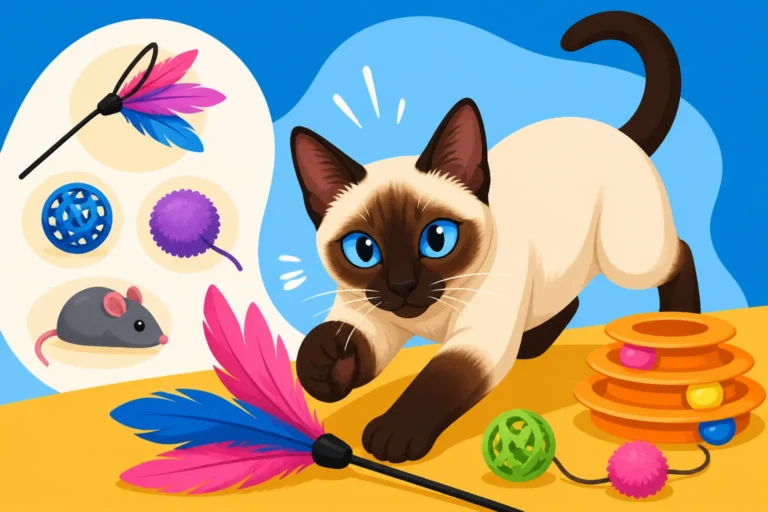
Invest in a range of interactive toys. Puzzle feeders are excellent for mental stimulation, forcing your cat to "work" for their food or treats, mimicking hunting behavior. Rotating toys regularly keeps them fresh and interesting. Consider automated laser pointers or toys that move on their own (many excellent options available on Amazon), which can provide bursts of play throughout the day.
Vertical space is also vital. Cats feel safer and more confident when they can survey their territory from a high vantage point. Tall cat trees, wall-mounted shelves, and window perches offer both physical exercise and mental engagement as they watch the world go by. Make sure these are sturdy and appealing to your Siamese. Why a Siamese Cat Destroys Cheap Cat Trees explains why quality matters.
Establishing a Predictable Routine
As mentioned, Siamese cats thrive on routine. A consistent daily schedule helps them feel secure and understand what to expect. Try to maintain regular feeding times, play sessions, and even your departure and arrival times as much as possible. This predictability reduces uncertainty, which is a significant contributor to anxiety.
For example, if your Siamese knows that after breakfast there's a 15-minute play session, followed by you leaving for work, and then a specific puzzle feeder appears, they can better anticipate and cope with your absence. This doesn't mean you can never deviate, but generally sticking to a pattern provides a calming structure to their day.
If your schedule is erratic, try to create mini-routines around your departures. For instance, always give them a special long-lasting treat or engage them in an intense play session right before you leave. This helps create a positive association with your departure, giving them something enjoyable or stimulating to focus on immediately after you're gone.
The Role of a Companion Animal (or Not)
This is a tricky one, and the answer isn't always a straightforward "yes" or "no." For some Siamese cats, a compatible feline companion can significantly alleviate separation anxiety by providing social interaction and distraction when you're not home. A second cat can offer comfort, play opportunities, and a sense of "not being alone." For more, read When a Siamese Cat Needs a Second Cat.
However, introducing a new cat must be done carefully to avoid creating more stress. Not all cats get along, and a poorly matched companion could lead to aggression, competition, or an increase in anxiety for both animals. If you consider this option, research proper introduction techniques and choose a cat with a temperament that is likely to complement your Siamese's, perhaps a laid-back and confident cat who won't be intimidated by your Siamese's strong personality.
Some Siamese cats prefer to be the sole focus of attention and may not welcome a companion, or their anxiety might be so severe that another cat won't make a difference. In these cases, focus on human-centric strategies and environmental enrichment. The decision should always be based on your individual cat's personality and needs, and perhaps with the guidance of a feline behaviorist.
Professional Help: When to Call in the Experts
While many mild cases of separation anxiety can be managed with consistent home strategies, there are times when the problem is too severe or persistent for you to tackle alone. Knowing when to seek professional help is crucial for your Siamese cat's well-being and your peace of mind. These experts can provide tailored advice and interventions that you might not have considered.
Consulting Your Veterinarian First
As always, the first point of contact for any significant behavioral change should be your veterinarian. They need to thoroughly examine your Siamese cat to rule out any underlying medical conditions that could be causing or contributing to the anxious behaviors. Remember, many illnesses can mimic anxiety symptoms, and treating a behavioral problem without addressing a physical one will be futile and can cause unnecessary suffering.
Your vet might perform blood tests, urinalysis, or other diagnostic procedures to check for issues like hyperthyroidism, kidney disease, or pain. Be prepared to provide a detailed history of the symptoms, including when they started, how frequently they occur, and any triggers you've noticed. This information is invaluable for your vet in making an accurate diagnosis.
Even if a medical cause is ruled out, your veterinarian can often offer initial advice on behavioral modification techniques. They might also suggest calming supplements or discuss the possibility of anti-anxiety medication if the anxiety is severe and impacting your cat's quality of life. This isn't usually a standalone solution but can be a helpful tool in conjunction with behavioral therapy, giving your cat the breathing room to learn new coping mechanisms.
Working with a Certified Feline Behaviorist
If your vet has ruled out medical issues and your home-based strategies aren't yielding significant results, it's time to consult a certified feline behaviorist. These professionals specialize in understanding and modifying cat behavior and can offer a much deeper level of insight and a customized treatment plan. They often have experience with the unique needs of Siamese cats and their intense personalities.
A behaviorist will conduct a thorough assessment, often involving a home visit or detailed questionnaires, to understand your cat's history, environment, and specific triggers. They will observe your cat's behavior (sometimes even remotely via video), and identify subtle nuances that you might have missed. They'll then develop a step-by-step plan that addresses the root causes of the anxiety, which might include specific desensitization exercises, counter-conditioning, and environmental modifications.
The behaviorist will guide you through implementing these strategies, providing support and adjusting the plan as needed. This process requires commitment and patience on your part, but the expertise of a professional can be invaluable in helping your Siamese overcome their separation fears. They can also help you understand your cat's communication better, as detailed in How Many Sounds a Siamese Cat Makes.
Medication as a Supporting Tool
For severe cases of separation anxiety, medication might be considered as a supportive tool, prescribed by your veterinarian or a veterinary behaviorist. It’s important to understand that medication is rarely a "cure-all" and is most effective when used in conjunction with a comprehensive behavioral modification plan. Think of it as a way to lower your cat's overall anxiety levels, making them more receptive to learning new, healthier coping mechanisms.
There are several types of anti-anxiety medications available for cats, from those that help with short-term situational anxiety to those for long-term management of chronic stress. Your vet will discuss the potential benefits, side effects, and duration of treatment. It's crucial to follow their instructions carefully and never attempt to give your cat human medication, which can be toxic.
The goal of medication is not to sedate your cat but to reduce their extreme distress to a manageable level. Once their anxiety is less overwhelming, they are more capable of engaging in enrichment activities and responding positively to behavioral training. Over time, as your cat learns to cope better, the medication might be gradually tapered off under veterinary supervision. This approach provides a crucial safety net for cats who are truly suffering.
Living with a Siamese Cat Who Suffers from Separation Anxiety
Having a Siamese cat with separation anxiety can be incredibly challenging, emotionally draining, and at times, even frustrating. It asks a lot of us as owners, requiring patience, understanding, and a willingness to adapt. However, with the right mindset and commitment, it's absolutely possible to improve your cat's quality of life and strengthen your bond even further.
Managing Your Own Emotions and Expectations
It's natural to feel upset, guilty, or even angry when your cat is exhibiting destructive or inappropriate behaviors due to anxiety. You might feel guilty about leaving them, frustrated by the damage, or saddened by their obvious distress. Acknowledge these feelings; they are valid. However, it's crucial not to let them dictate your reactions towards your cat.
Remember, your Siamese isn't acting out of spite. They are genuinely suffering from an intense fear that they cannot control. Punishing them for anxiety-driven behaviors will only increase their fear and damage your bond, making the anxiety worse. Instead, try to approach the situation with empathy and compassion, understanding that they are communicating their profound distress in the only way they know how.
Set realistic expectations. Behavioral modification is a marathon, not a sprint. There will be good days and bad days. Celebrate small victories – a shorter period of vocalization, less destruction, or a calm greeting upon your return. Don't expect immediate perfection; progress is gradual. Your consistent, calm, and loving approach is the most important factor in their recovery.
Long-Term Commitment to Their Well-Being
Treating separation anxiety in a Siamese cat is a long-term commitment. It's not about a few weeks of training; it's about making fundamental changes to your routine, environment, and interactions to build your cat's confidence and security over months, and sometimes years. This means maintaining consistency with routines, enrichment, and any prescribed behavioral techniques.
You might need to adjust your lifestyle. This could mean fewer long trips, arranging for pet sitters (not just friends, but someone who understands their anxiety), or even installing pet cameras to monitor their progress and intervene if necessary. For some cats, an Amazon pet camera that dispenses treats or allows two-way audio can offer comfort. It means being mindful of your departure cues and consistently working on desensitization.
Their well-being becomes a core part of your daily considerations. This dedication might seem like a lot, but the reward is a happier, more secure feline companion and a deeper, more trusting relationship. It's an investment in their emotional health that truly pays off in the long run.
Celebrating Small Victories
In the journey of helping a Siamese cat with separation anxiety, it's vital to acknowledge and celebrate every little step forward. Progress isn't always linear, and some days might feel like setbacks, so focusing on the positive milestones helps keep both you and your cat motivated.
Did your cat only yowl for five minutes instead of an hour today? That’s a victory! Did they choose to play with a puzzle toy for a bit before settling down, rather than immediately scratching at the door? Another win. Maybe they didn't eliminate inappropriately for two days in a row, or they simply seemed less frantic when you picked up your keys this morning.
These small victories are cumulatively building towards a more confident and independent cat. Acknowledging them helps reinforce your positive efforts and prevents burnout. It reminds you that your hard work is making a difference, even if the overall goal still feels distant. Every improvement, no matter how minor, means your Siamese is learning to cope better, and that's always something worth celebrating.
Common Misconceptions About Siamese Cat Separation Anxiety
When dealing with a Siamese cat who exhibits signs of distress when left alone, it's easy to fall prey to common misconceptions. These misunderstandings can hinder effective treatment and prolong your cat's suffering. Let's debunk some of these myths and shed light on the reality of Siamese cat separation anxiety.
"They're Just Being Naughty"
This is perhaps the most harmful misconception. When a cat urinates on your bed, claws your furniture, or yowls incessantly, it's natural to interpret these actions as misbehavior or even spite. However, this is a profoundly anthropomorphic view of cat behavior. Cats do not act out of spite or malice; they act based on instinct, emotion, and their environment.
Destructive or inappropriate behaviors stemming from separation anxiety are not acts of defiance. They are distress signals. Your Siamese cat is not trying to "get back at you" for leaving; they are experiencing intense fear, panic, and loneliness. Their actions are a desperate attempt to cope with overwhelming stress, seek comfort, or alleviate their profound anxiety.
Understanding this fundamental truth is crucial. If you believe your cat is being "naughty," you're likely to react with punishment, which will only exacerbate their fear and anxiety. Instead, approaching these behaviors as a cry for help allows you to respond with empathy and seek solutions that truly address their emotional pain.
"It's Just a Siamese Thing"
While Siamese cats are indeed known for their vocalizations, their strong attachment to humans, and sometimes their "dog-like" personalities, this doesn't mean that separation anxiety is an inherent, unavoidable trait of the breed. It's a risk factor due to their social nature, but it's not a universal guarantee.
Attributing full-blown separation anxiety to "just a Siamese thing" can lead to resignation and a lack of intervention. It implies there's nothing you can do, and that you simply have to "live with it." This is far from the truth. While some Siamese are more prone to developing anxiety, it is a treatable condition that benefits greatly from understanding and intervention. What a Siamese Cat's Temperament Is Really Like explores their natural inclinations.
Every cat is an individual, even within the Siamese breed. While their genetics may predispose them to certain temperaments, their early experiences, environment, and your interactions play a huge role in shaping their behavior. If your Siamese is suffering from separation anxiety, it's not "just a breed trait" that you can ignore; it's a genuine problem that needs to be addressed.
"They'll Grow Out of It"
Another dangerous misconception is the belief that a cat, especially a young one, will simply "grow out" of separation anxiety. While some mild kitten-related clinginess might lessen with maturity, true separation anxiety is a deep-seated behavioral issue that rarely resolves on its own. In fact, without intervention, it often gets worse over time.
Anxiety, if left unaddressed, can become deeply ingrained. The cat's fear response becomes more intense with each negative experience of being left alone. What might start as mild vocalization could escalate to destructive behavior, inappropriate elimination, and even self-harm through over-grooming. The longer the anxiety persists, the harder it can be to treat.
Early intervention is key. If you notice signs of separation anxiety in your Siamese, especially as a kitten or young adult, don't wait. Start implementing strategies, enriching their environment, and seek professional guidance if needed. Addressing the issue proactively gives your Siamese the best chance at a happy, confident life, free from the crushing fear of being alone.
Disclaimer
This article is for general informational purposes only and does not constitute professional advice. Laws, prices and regulations vary by location and change over time. Consult a qualified professional for guidance on your specific situation.