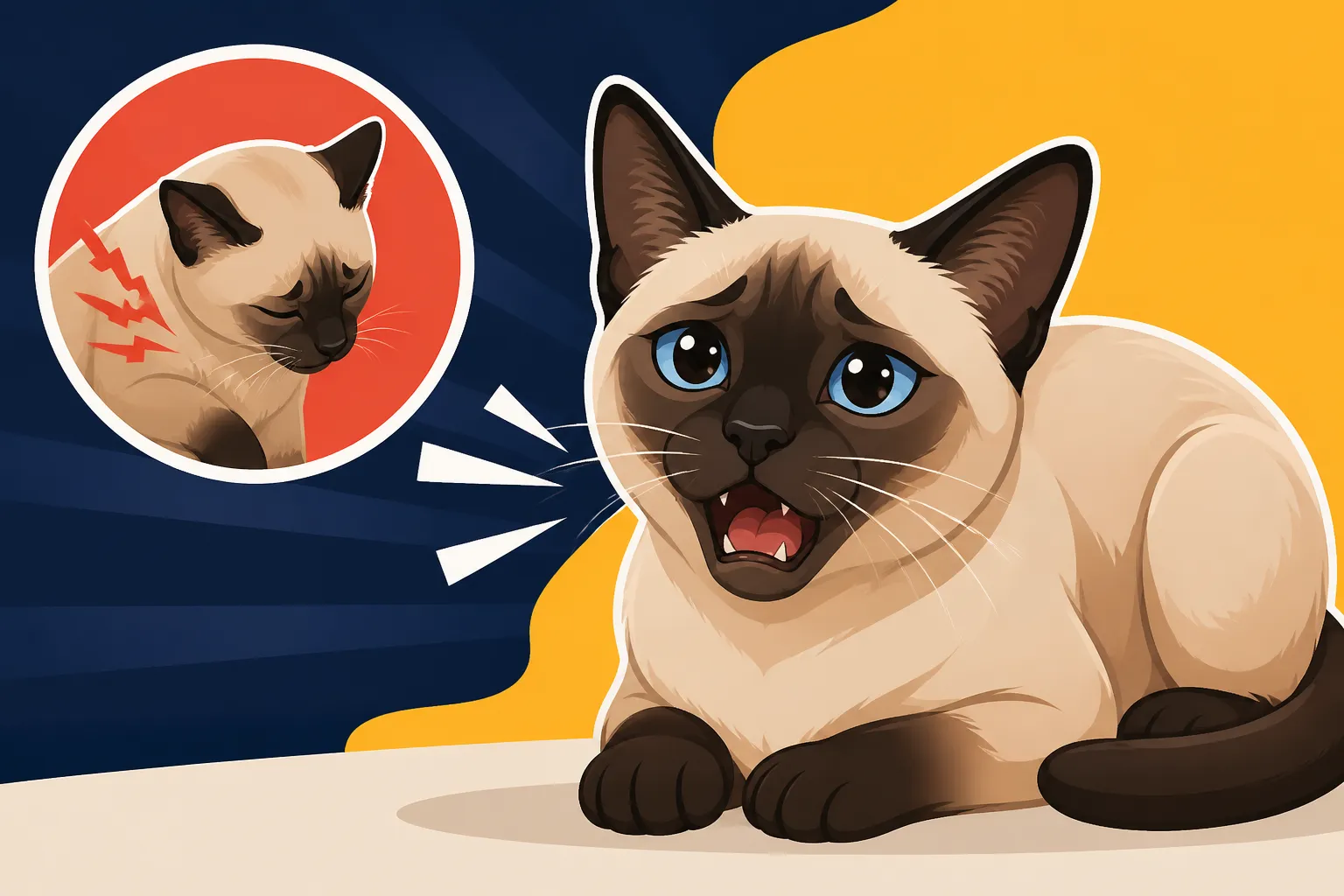
When a Siamese Cat’s Meowing Means Pain
It’s a sound that can cut right to your soul: your beloved Siamese cat, normally a chatty companion, suddenly lets out a cry that sounds… different. As a Siamese cat owner, you know their vocal range is legendary, from chirps and trills to the famous "Meezer yowl," but there's a distinct dread that washes over you when their voice shifts from demanding attention to signalling distress. This guide is here to help you discern the subtle, and sometimes not-so-subtle, vocal cues that suggest your Siamese might not just be chatting, but trying to tell you they're in pain.
The Siamese Cat's Vocal Nature: More Than Just Talking
Anyone who lives with a Siamese cat knows they are not quiet companions. They're expressive, opinionated, and they use their voices for everything. This very talkativeness, while endearing, can make it incredibly challenging to figure out when their vocalizations are just part of their charming personality and when they're a genuine cry for help. You spend your days having full conversations with them, so how do you tell the difference?
Understanding the Meezer Yowl
The "Meezer yowl" is a hallmark of the breed, a distinctive, often loud and insistent vocalization that can sound almost like a baby crying. It's their way of communicating everything from "I'm hungry, right now!" to "Pay attention to me, human, I exist!" Sometimes it's a greeting, sometimes it's a complaint about a closed door, and sometimes it's just them exercising their impressive vocal cords. What the Siamese Cat's Meezer Yowl Sounds Like explains this unique sound in more detail. It's a sound you learn to live with, perhaps even love, as it's so intrinsically Siamese.
However, even within the spectrum of a normal yowl, there are nuances. A cat might yowl loudly because they heard a strange noise outside, or because they've decided it's time for bed and you haven't. The key here is recognizing the pattern and the context. If your Siamese typically yowls when they want something, and they get what they want (food, attention, a door opened), then it's likely just standard Siamese communication. The trouble starts when the yowl changes, or when it seems to come from nowhere, with no clear demand or external trigger.
When Regular Meowing Becomes Excessive
Every Siamese owner has experienced those moments when their cat seems to be talking non-stop. Sometimes it’s a perfectly normal expression of their personality; they are just incredibly social and like to be involved in everything you do. The Siamese Cat Talks and Expects an Answer truly captures this essence. But there's a line between being a chatterbox and truly being excessive. If your Siamese suddenly starts meowing far more than usual, at odd hours, or with an intensity that seems out of character, it’s time to take notice.
Imagine your cat, usually a vocal presence, but now they're following you from room to room, letting out a constant stream of distressed-sounding meows. Or perhaps they're tucked away in a quiet corner, meowing softly but relentlessly, something they never do. This isn't just seeking attention; it's a sustained effort to communicate something deeper. It's the kind of vocalization that makes the hair on your arms stand up because it feels wrong. It’s a departure from their usual pattern, a red flag that something is amiss, and that something could very well be pain or discomfort.
Decoding the Pain Cry: Specific Vocalizations to Watch For
So, how do you distinguish between a dramatic plea for treats and a genuine cry of pain? It often comes down to the specifics of the sound itself, and what other behaviors accompany it. Our Siamese cats are masters of stoicism, often hiding pain until it becomes severe, making these vocal clues even more crucial. Signs a Siamese Cat Is Unwell can give you a broader overview of general health indicators.
Sudden Onset of Uncharacteristic Cries
One of the clearest indicators of pain is a sudden change in vocalization. If your typically quiet Siamese suddenly becomes very vocal, or your usually talkative cat starts making entirely new sounds, it's a huge warning sign. This isn't about the frequency of their meows, but the type of meow.
Think about a sudden, sharp yelp when they jump off the sofa, or a low, mournful moan while they're trying to settle down. These aren't the usual "hello" or "feed me" sounds. They might be short, sharp bursts of sound, or long, drawn-out wails that are distinctly different from their everyday "Meezer yowl." Sometimes, it's a deep guttural growl or hiss that comes out when you touch a particular part of their body, even if they're usually fine with being handled there. This uncharacteristic vocalization, especially if it appears abruptly, suggests an acute issue, possibly a sudden injury or the onset of severe discomfort.
Changes in Pitch, Volume, or Frequency
Even if the type of vocalization remains generally "meow-like," subtle shifts in pitch, volume, or frequency can be telling. A cat in pain might use a higher-pitched, more urgent tone than usual, or their meows might become softer, almost whispers, as if they don't have the energy to vocalize fully. Conversely, some cats in severe pain might let out exceptionally loud, piercing cries that are impossible to ignore.
Consider a Siamese that typically greets you with a cheerful "mrrrow!" but now offers a strained, thin "mew" instead. Or a cat known for its powerful voice who is suddenly just vocalizing in short, frequent, almost desperate sounding bursts. The consistency of their vocal efforts might change too; a cat in pain might cry out intermittently, or maintain a continuous, low-level groan. Observing these subtle alterations requires knowing your cat's baseline vocal patterns extremely well. Keep a mental note, or even a literal one, of what your cat usually sounds like. When that changes, it’s your cue to investigate further.
Meowing Paired with Other Physical Signs
Vocalizations indicating pain are rarely isolated. They almost always come with other physical or behavioral changes. It’s the combination of cues that truly paints a picture of distress. If your Siamese is crying out and exhibiting any of these behaviors, it’s a strong signal for concern:
- Changes in Posture or Movement: Is your cat hunched, stiff, limping, or reluctant to move? Are they struggling to jump onto their favorite perch or go up stairs? Are they favoring one side or holding a paw up?
- Hiding or Withdrawal: A cat in pain often seeks solitude. They might retreat to unusual hiding spots or become less interactive than usual. Why a Siamese Cat Hides Pain is a great resource for understanding this common feline behavior.
- Loss of Appetite or Thirst: Refusal to eat or drink, or a significant decrease in consumption, is always a red flag.
- Changes in Grooming: Over-grooming a specific area (licking, chewing, pulling out fur) can indicate pain or irritation there, or they might stop grooming altogether if they're feeling unwell or can't reach certain spots.
- Aggression or Irritability: A normally friendly cat might hiss, swat, or bite when approached or touched, especially if you inadvertently touch a painful spot.
- Changes in Litter Box Habits: Straining to urinate or defecate, frequent trips to the litter box with little success, or urinating outside the box could all indicate pain, often related to urinary tract issues or constipation.
- Restlessness or Inability to Settle: Pacing, constantly shifting positions, or struggling to find a comfortable spot to lie down can indicate discomfort.
- Dilated Pupils or Squinting: Their eyes can tell you a lot. Wide, unblinking eyes or squinting can be signs of pain.
- Panting or Labored Breathing: While less common for pain itself, panting can indicate extreme stress or other underlying health issues causing distress.
Here's a quick reference table for recognizing a pain cry versus a typical vocalization:
| Characteristic | Typical Siamese Vocalization | Potential Pain Vocalization |
|---|---|---|
| Sound Type | Chirps, trills, conversational meows, "Meezer yowl" | Sharp yelps, low moans, sustained wails, hisses/growls when touched |
| Pitch | Varies, often expressive, mid-range to loud | Unusually high-pitched, strained, or very soft/weak |
| Volume | Loud and clear when demanding, softer when content | Exceptionally loud and piercing, or barely audible/whispering |
| Frequency | Intermittent, follows patterns (e.g., meal times, greetings) | Constant, relentless, or sporadic sharp bursts |
| Context | Seeking attention, food, play, greeting, complaining about doors | Appears without clear external trigger or demand; associated with movement or touch |
| Accompanying Behavior | Engaged, alert, seeking interaction | Hiding, limping, aggression, restlessness, changes in appetite/litter box |
Common Ailments That Cause Vocal Pain in Siamese Cats
Once you suspect pain, understanding some common causes in Siamese cats can help you communicate with your vet more effectively. Siamese cats, like all breeds, have certain predispositions, and knowing what to look out for can make a big difference.
Dental Pain and Oral Issues
Dental disease is incredibly common in cats, and Siamese cats are unfortunately not exempt. Pain from their teeth or gums can be excruciating and often manifests as a reluctance to eat, dropping food, or a change in chewing habits. But it can also manifest as vocalizations. Imagine a sharp, unexpected pain when a piece of kibble hits a sensitive tooth, leading to a sudden yelp.
Your cat might express discomfort with a soft groan while trying to eat, or they might vocalize more after a meal. Look for signs like pawing at the mouth, bad breath, red or swollen gums, or visible broken teeth. Dental Disease in a Siamese Cat provides a deeper dive into this important topic. Regular dental check-ups are crucial, and sometimes a professional dental cleaning under anesthesia is necessary to address underlying issues. If your Siamese is vocalizing more around meal times, or if their breath is suddenly awful, dental pain is definitely a suspect.
Arthritis and Joint Discomfort
As our beloved Siamese cats age, arthritis and joint pain can become a real issue. Just like in humans, stiff and aching joints can make movement painful. This pain might not be constant, but rather triggered by certain movements, leading to a sharp cry or sustained moan. Caring for a Siamese Cat Past Twelve discusses many aspects of senior cat care, including mobility issues.
An elderly Siamese with arthritis might cry out when trying to jump onto a favorite window perch, or might emit a low moan when stretching after a nap. You might notice them being less enthusiastic about play, reluctant to use stairs, or generally moving more slowly. Why an Old Siamese Cat Yowls More is also highly relevant here, as age-related discomfort often increases vocalizations. Providing comfortable, easily accessible sleeping spots, perhaps even a heated bed from Amazon, can offer some relief, but a vet visit is essential for proper diagnosis and pain management, which might involve anti-inflammatory medications.
Internal Discomfort and Organ Pain
Internal pain, often related to organ issues, can be particularly tricky to pinpoint because it's not visible. Conditions affecting the kidneys, liver, or other abdominal organs can cause significant discomfort. Kidney Disease in an Older Siamese Cat and Heart Disease in a Siamese Cat both touch on conditions that can lead to internal pain and general malaise.
A Siamese experiencing internal pain might exhibit a more generalized, sustained vocalization, often a low moan or continuous, soft cry. They might hunch their body, appear lethargic, or show changes in appetite and litter box habits. If they resist being picked up or touched around their abdomen, that’s a very strong indicator of internal pain. For example, a cat with a urinary tract infection might cry out while attempting to urinate, or a cat with pancreatitis might become withdrawn and vocalize with a low, miserable groan. These are serious conditions that require immediate veterinary attention, as they can quickly worsen.
Urinary Tract Issues
Urinary tract infections (UTIs) or bladder stones are common causes of pain in cats, and they often lead to very specific vocalizations. Cats suffering from these issues will typically vocalize during or around trips to the litter box.
You might hear a distinct cry or yelp while your Siamese is squatting in the litter box, or an urgent, distressed meow immediately after leaving it. They might go to the litter box frequently, strain to urinate, or even start urinating in inappropriate places outside the box. The pain from inflammation or blockages in the urinary tract is intense and unmistakable to the cat. If you notice any of these signs, particularly vocalizations tied to urination, it's crucial to get your cat to the vet right away. Urinary blockages, especially in male cats, can be life-threatening emergencies.
Steps to Take When You Suspect Your Siamese Cat is in Pain
If your Siamese is vocalizing in a way that suggests pain, your immediate response is critical. Don't dismiss it as "just being a dramatic Siamese." Your quick action can make a huge difference in their comfort and recovery.
Observing and Documenting Symptoms
Before you even call the vet, start observing and documenting everything you can. The more information you can give your veterinarian, the better they can diagnose the issue. Think like a detective.
- When did the vocalization start? Was it sudden, or a gradual change?
- What does the vocalization sound like? Try to describe it in detail (sharp, soft, constant, intermittent, high-pitched, low moan).
- What triggers the vocalization? Does it happen when they move, eat, use the litter box, or when you touch a specific area?
- What other symptoms are present? Any changes in appetite, thirst, litter box habits, mobility, grooming, hiding, or aggression?
- Has anything in their routine changed recently? New food, new litter, new furniture, new people or pets in the house?
- Can you identify a specific area of pain? Gently, carefully, feel around their body. Do they react when you touch their back, a leg, their abdomen, or their mouth? Be very cautious here, as a cat in pain might lash out defensively.
Taking a short video on your phone of your cat vocalizing or attempting to move can be incredibly helpful for your vet to see. They often behave differently at the clinic, so a recording from home can provide valuable context. Keep track of how often they're eating, drinking, and using the litter box. This detailed information will be gold for your vet.
Preparing for the Vet Visit
Once you've gathered your observations, it's time to call your veterinarian. Be clear and direct about your concerns. Tell them your Siamese is vocalizing as if in pain and describe the associated symptoms. They'll likely want to see your cat as soon as possible, especially if the pain seems acute or severe. What a Siamese Cat's Yearly Bloodwork Should Cover provides insight into comprehensive health checks your vet may perform.
Before you go, make sure you have your cat's medical history handy, including any medications they're currently on. A comfortable carrier, perhaps with a soft blanket that smells like home, can help reduce stress. For cats who get particularly anxious, you might consider asking your vet if a mild sedative is appropriate to administer at home before the trip, or if a Feliway spray (often available on Amazon) in the carrier could help. Be prepared to answer a lot of questions, and don't hesitate to show them any videos or notes you've taken. The vet will likely perform a thorough physical examination, and may recommend blood tests, urine tests, X-rays, or ultrasound to pinpoint the cause of the pain. Remember, What an Aging Siamese Cat's Bills Look Like can give you an idea of potential costs, but addressing pain promptly is always the priority.
Providing Comfort at Home
While you're waiting for your vet appointment or once you've returned home with a diagnosis and treatment plan, there are things you can do to help your Siamese feel more comfortable.
- Quiet and Safe Space: Ensure your cat has a quiet, warm, and secure place to rest where they won't be disturbed. This might be a cozy bed in a low-traffic area, or a small room just for them.
- Accessibility: If mobility is an issue, make sure their food, water, and litter box are easily accessible without requiring jumps or climbs. Consider a low-sided litter box.
- Gentle Handling: Approach your cat slowly and gently. Avoid touching any areas you suspect are painful. If they need to be moved, do so carefully and supportively.
- Temperature Regulation: Siamese cats don't have a thick undercoat, so they can feel the cold more easily. Make sure their resting area is warm. A heated cat bed, readily available on Amazon, can be a real blessing for an aching cat.
- Follow Vet Instructions: Administer any prescribed medications exactly as directed. If your cat is difficult with pills, discuss options with your vet, such as liquid medications or pill pockets (also found on Amazon). Never give over-the-counter human pain medication to your cat, as many are highly toxic.
- Monitor Closely: Continue to observe your cat for any changes in their vocalizations, behavior, or physical symptoms. Report anything new or worsening to your vet immediately. Your attentiveness can be the best medicine.
Understanding when your Siamese cat's meow signifies pain is a critical skill for any owner. While their vocal repertoire is vast and often dramatic, a discerning ear and keen observation of their overall behavior can help you distinguish between a request for attention and a genuine cry for help. When in doubt, always err on the side of caution and consult your veterinarian.
Disclaimer
This article is for general informational purposes only and does not constitute professional advice. Laws, prices and regulations vary by location and change over time. Consult a qualified professional for guidance on your specific situation.